Analysis from Eliot Jacobsen show's we've hit 1.5c over the baseline on the 4-year year running average: Cryosphere faces permanent damage when world overshoots 1.5C, scientists warn | Climate science | The Guardian (https://www.theguardian.com/science/2026/nov/02/permanent-damage-crysophere-overshoots-15c-scientists-warn) 4 Tear Global Mean Surface Temperature Just Hit 1.5C : r/collapse (https://www.reddit.com/r/collapse/comments/1xkg8bt/4_tear_global_mean_surface_temperature_just_hit/) We've Entered Climate Overshoot - What Happens Now? (https://www.youtube.com/watch?v=cFSUP3uPKCE) Satellites show some of the strongest evidence the AMOC is weakening | New Scientist (https://www.newscientist.com/article/2595629-satellites-show-some-of-the-strongest-evidence-the-amoc-is-weakening/) Hosted on Acast.
How many genders are there? In this episode of Crash Course Religions, we’ll learn how religious communities construct ideas about sex, gender, and sexuality, and why these concepts aren’t as timeless or unchanging as they might seem. Introduction: Hijra 00:00 Defining Terms 0:57 Gender & Religion 1:48 Gender & Christianity 4:41 Gender & Sacred Texts 6:46 Dr. amina wadud & Muslim Prayer 8:05 Hajar 9:31 Review & Credits 11:41 *** Support us for $5/month on Patreon to keep Crash Course free for everyone forever! https://www.patreon.com/crashcourse Or support us directly: https://complexly.com/support Join our Crash Course email list to get the latest news and highlights: https://mailchi.mp/crashcourse/email Get our special Crash Course Educators newsletter: http://eepurl.com/iBgMhY Thanks to the following patrons for their generous monthly contributions that help keep Crash Course free for everyone forever: Shruti S, Ryan Lueckenotte, Spilmann Reed, Brandon Thomas, Emily Beazley, Forrest
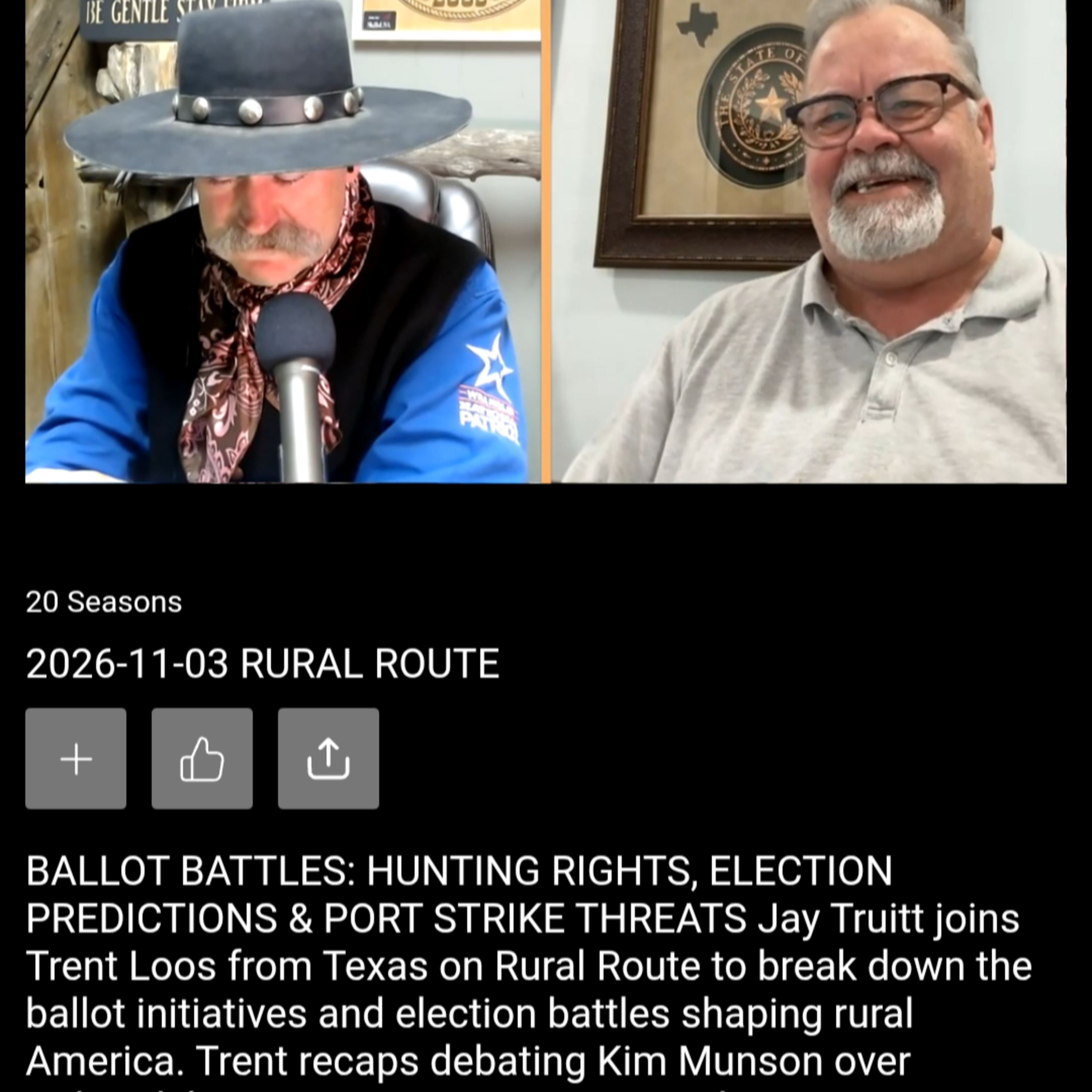
BALLOT BATTLES: HUNTING RIGHTS, ELECTION PREDICTIONS & PORT STRIKE THREATS Jay Truitt joins Trent Loos from Texas on Rural Route to break down the ballot initiatives and election battles shaping rural America. Trent recaps debating Kim Munson over Colorado’s Initiative 83, a constitutional…
Angels, aliens, and ghosts—oh my! In this episode of Crash Course Religions, we figure out how the paranormal and supernatural shows up in our religions, and outside of them. If you or someone you know identifies as “spiritual but not religious,” this one’s for you. Introduction: Spirits & Spirituality 00:00 Paranormal vs. Supernatural 0:48 "Spiritual but Not Religious" 3:08 Spiritual Practices & Culture 5:57 Ghosts & Lived Religion 8:57 Review & Credits 12:08 *** Support us for $5/month on Patreon to keep Crash Course free for everyone forever! https://www.patreon.com/crashcourse Or support us directly: https://complexly.com/support Join our Crash Course email list to get the latest news and highlights: https://mailchi.mp/crashcourse/email Get our special Crash Course Educators newsletter: http://eepurl.com/iBgMhY Thanks to the following patrons for their generous monthly contributions that help keep Crash Course free for everyone forever: Shruti S, Ryan Lueckenotte, Spilmann Reed, Br
A great honey show entry deserves more than great presentation—it also needs to give the judge the information required to evaluate it properly. In this installment of Winning at Honey, Stephanie Slater explains the often-overlooked white card used in many honey show categories. From recipes and production methods to botanical names, directions for use, inventories, and historical information, Stephanie walks through what judges need and why clear, readable documentation matters. Then the Honey Show Spotlight heads to Louisville for the 2027 North American Honey and Beeswax Championship. Stephanie talks with North American Honey Bee Expo creator Kamon Reynolds about moving the Honey Show into the main lobby, Wednesday early check-in, expanded viewing time, new VIP awards, the addition of a Jun category, and continued support from Hilco. Stephanie closes with practical check-in advice for competitors, information about introductory honey judge training, and a friendly challenge for Beck
It’s impossible to ignore the latest nutrition trend: protein-maxxing. Stroll through the grocery store and you’ll find protein chips, protein-packed ice cream, and even sparkling protein water. Not to mention the FDA’s new upturned food pyramid, which puts steak and a roast chicken at the top. Where did this protein craze come from, and how much protein do we actually need (https://www.sciencefriday.com/segments/obsessed-with-protein/)? And what about protein-maxxing’s less popular cousin, fiber-maxxing? Flora talks through the history and the science of protein and fiber with food historian Hannah Cutting-Jones and nutrition researcher Christopher Gardner. Guests: Dr. Hannah Cutting-Jones is a food historian and assistant professor at the University of Oregon. Dr. Christopher Gardner is a nutrition researcher, a professor at Stanford Medicine’s Prevention Research Center, and the author of “Food Sense: What to Eat and Why.” Transcripts for each episode are available within 1-3 days a
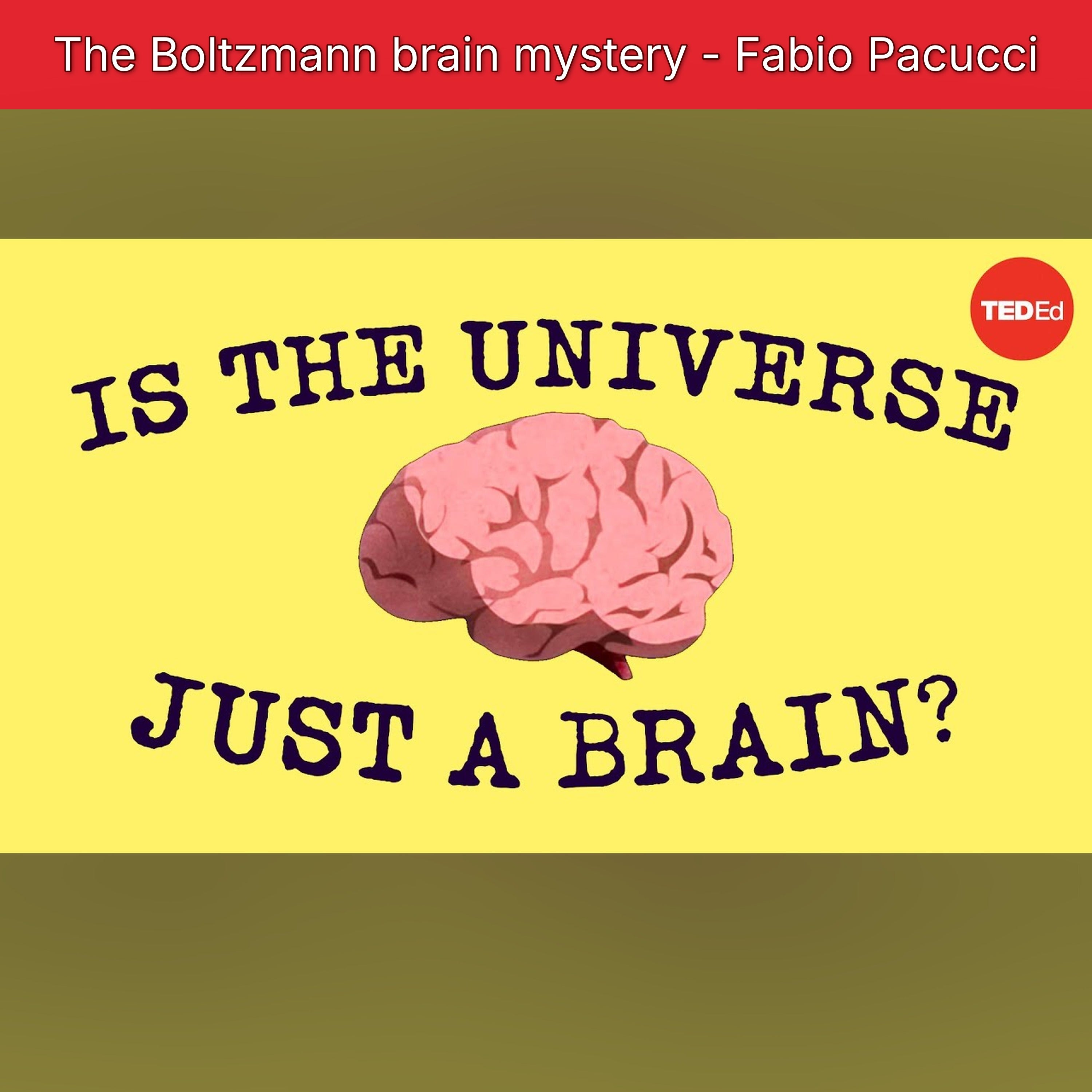
Download a free audiobook version of “The 7 1/2 Deaths of Evelyn Hardcastle“ and support TED-Ed's nonprofit mission: https://www.audible.com/ted-ed -- How do you know you’re a person who has lived your life, rather than a just-formed brain full of artificial memories, momentarily hallucinating a reality that doesn’t actually exist? That may sound absurd, but it’s kept several generations of top cosmologists up at night. They call it: the Boltzmann brain paradox. Fabio Pacucci explores this mind-numbing thought experiment. Lesson by Fabio Pacucci, directed by Skirmanta Jakaitė, Art Shot. Learn more about how TED-Ed partnerships work: https://bit.ly/TEDEdPartners Support Our Non-Profit Mission ---------------------------------------------- Support us on Patreon: http://bit.ly/TEDEdPatreon Check out our merch: http://bit.ly/TEDEDShop ---------------------------------------------- Connect With Us ---------------------------------------------- Sign up for our newsletter: http://bit.ly/TEDEd
How Do You Tell The Baby Blues From Postpartum Depression or Depression from Psychosis? What Does Postpartum Psychosis Actually Look Like? Who Is Most At Risk And Can It Be Prevented? Can People Fully Recover? You can also watch the convo on YouTube: https://youtu.be/kxyFckUKLRM (00:00) Intro (03:45) Differentiating Between Baby Blues, Depression, Psychosis, etc. (10:30) Symptoms To Watch Out For (14:09) An OBGYN Weighs In (17:56) What Happens if Someone is Flagged and What Does Treatment Look Like? (22:10) What a Pediatric Hospitalist Watches For In New Parents (24:40) What Should You Do If Something Just Feels Off? (26:42) Final Thoughts and Key Takeaways Repro Psych Academy: https://repropsychacademy.com (https://repropsychacademy.com/) Upcoming Free 11/20 PPP webinar: https://www.repropsychacademy.com/ppp-free-event Hosted by Simplecast, an AdsWizz company.
Election day at the shop, and the crew is drowning in political mailers. Nicolas, Kent, and Riley dig into the billions of pieces mailed this election season, how many trees that takes, and a contest to turn 2028’s mailers into art. Plus sports betting, fear, and Nicolas’s latest virtue signal. MckayInsAgency.com (for all your financial planning and insurance needs) BirdHunterSupply.com (for all your bird hunting supplies and dog hunting supplies)
Will we have one AI assistant that does everything, or an entire network of agents that know different parts of our lives? David Pawlan, creator of Assistant Benchmark, returns with Anish Acharya and Josh Elman to take stock of how quickly the agent landscape has changed. David has now tested more than 140 AI assistants, and they unpack what separates them, from memory and judgment to trust, shopping, and social experiences. They also explore what happens when agents start talking to each other, how they could create new kinds of social networks and serendipity, and why the most compelling agents may ultimately do more than save time. They could become a kind of secret superpower. Resources: Follow David Pawlan: https://x.com/DavidPawlan Follow Josh Elman: https://x.com/joshelma Follow Anish Acharya on X:https://x.com/illscience Stay Updated: Find a16z on YouTube: YouTube (https://www.youtube.com/@a16z) Find a16z on X (https://x.com/a16z) Find a16z onLinkedIn (https://www.linkedin.com/
A decade ago, founding a nuclear startup seemed impossible. Aside from general public concern around nuclear, meaningful progress in the space required billions of dollars. Oklo co-founder and COO Caroline DeWitte helped move the needle by securing the first venture capital-led Series A for a nuclear hardware company in 2018. The plan? Instead of designing a reactor and selling it to risk-averse utilities, Oklo adopted a model to design, build, own, and operate the plants themselves. It’s an approach that appealed to data centers and hyperscalers looking for reliable electrons without the burden of managing a nuclear facility. To fund the capital-intensive deployment of these reactors, fuel fabrication plants, and isotope facilities, Oklo went public via a SPAC, a gamble that has since paid off in three to four billion dollars raised. In this episode, host Lara Pierpoint talks with Caroline about her early entrepreneurial days, and the complexities of dealing with the Nuclear Regulator
In this episode of Science Quickly, Rachel Feltman speaks with environmental historian Edward Melillo about the tiny soybean, which has come to dominate America’s diet. When you think of soy, you may only picture a block of yummy tofu or soy milk, but this crop has quietly made its way into 60 percent of processed foods. In fact, 2026 is on track to become a record soybean harvest for the U.S. And soy doesn’t just show up on our plates: as an oil, it can power trucks, buses and even planes. Tune in to hear how this plant took over the American food system. Recommended Reading: How Seed Oils Became Controversial—And What the Science Really Says (https://www.scientificamerican.com/podcast/episode/are-seed-oils-bad-for-you-debunking-a-viral-social-media-myth/) Why corn isn’t entirely to blame for ‘corn sweat’ (https://www.scientificamerican.com/article/heres-the-deal-with-corn-sweat-its-not-all-actually-corns-fault/) Discover something new everyday: subscribe (https://www.scientificameric
Hank brings us to the next level of ecological study with ecosystem ecology, which looks at how energy, nutrients, and materials are getting shuffled around within an ecosystem (a collection of living and nonliving things interacting in a specific place), and which basically comes down to who is eating who. Table of Contents 1) Defining Ecosystems 0:49:1 2) Trophic Structure 4:44:1 a) Primary Producers 5:27 b) Primary Consumers 5:41 c) Secondary Consumers 5:49:1 d) Tertiary Consumers 5:58:2 e) Detrivores 6:08:1 3) Bioaccumulation 8:47 Crash Course is on Patreon! Want to find Crash Course elsewhere on the internet? Facebook - http://www.facebook.com/YouTubeCrashCourse Twitter - http://www.twitter.com/TheCrashCourse Instagram - https://www.instagram.com/thecrashcourse/ CC Kids: http://www.youtube.com/crashcoursekids
The United States incarcerates more people than any other nation in the world, and people across the political spectrum are calling for a change. In this episode of Crash Course Political Theory, we unpack the arguments of the prison abolition movement and the history of how we got here. Crash Course Political Theory #10 Introduction: The Prison Abolition Movement 00:00 Incarceration in the U.S. 0:38 Deterrence & Surveillance 1:20 Criminal Justice 4:07 Prison Abolition vs. Reform 7:14 Review & Credits 9:52 Sources: https://docs.google.com/document/d/1u5zJCbVA0xCurLbQwWzcxXEdlqXAPpAyYVS1quwKIis/edit?usp=sharing *** Support us for $5/month on Patreon to keep Crash Course free for everyone forever! https://www.patreon.com/crashcourse Or support us directly: https://complexly.com/support Join our Crash Course email list to get the latest news and highlights: https://mailchi.mp/crashcourse/email Get our special Crash Course Educators newsletter: http://eepurl.com/iBgMhY Thanks to the follow
Sleep better with Pillow: https://pillow.app/bettersleep Experience gentle rainfall and soothing stream sounds that create the perfect ambient backdrop for deep sleep, meditation, and relaxation. Let these calming nature sounds help you unwind, reduce stress, and enjoy peaceful rest anytime. This episode includes AI-generated content.
Discover Frank Herbert’s science fiction classic, “Dune,” which tells the story of a man catapulted into the middle of a planetary revolution. Uploaded 17-12-19 -- A mother and son trek across an endless desert. Wearing special suits to dissipate heat and recycle moisture, the travelers aren’t worried about dying of thirst. Their fears are much greater. Soon, the sound of the desert is drowned out by a hissing: a mound of sand 400 meters long bursts from the desert floor and races towards them. This is the world of “Dune.” Dan Kwartler dives into the epic story. Lesson by Dan Kwartler, directed by Recircle. Animator's website: https://www.recircle.net (https://www.recircle.net/) Sign up for our newsletter: http://bit.ly/TEDEdNewsletter Support us on Patreon: http://bit.ly/TEDEdPatreon Find us on Twitter: http://bit.ly/TEDEdTwitter Peep us on Instagram: http://bit.ly/TEDEdInstagram View full lesson: https://ed.ted.com/lessons/why-should-you-read-dune-by-frank-herbert-dan-kwartler #bookt
On today’s episode, we’re talking about the biggest El Niño season in 1000 years! We get into the impacts that are predicted to happen globally and what has happened in the past. We discuss if the predictions are still as bleak as they were, what new predictions are coming out now and how concerned you should be. To leave us a message on El Niño, or podcast topics or anything, Sidenote by AsapSCIENCE, please visithttps://www.asapscience.com/chat Source: Hosted on Acast.
In which John Green explores F. Scott Fitzgerald's novel of the Jazz Age, The Great Gatsby. John introduces you to Nick Carraway, Jay Gatsby, Daisy and Tom Buchanan, and the other characters in the novel, and tries to look beyond the surface story to figure out what this thing is ABOUT. Set in the 1920s against a conflicted backdrop of prohibition and excess, The Great Gatsby takes a close look at the American Dream as it existed in Fitzgerald's time. It turns out, it had a lot to do with money and status, and it still does today. John will cover the rich symbolism of the novel, from the distant green light to the pale gold of wealth and decay. Also, Paris Hilton drops by. Turn on the captions. You'll like it. Consider supporting local bookstores by purchasing your books through our Bookshop affiliate link https://bookshop.org/shop/complexly or at your local bookseller. Crash Course is on Patreon! Want to find Crash Course elsewhere on the internet? Facebook - http://www.facebook.com/Y
Religion and science have had some famously messy fights, but do they always have to be in conflict? In this episode of Crash Course Religions, we’ll look at some ways religion and science are more than just enemies. Introduction: The Three Sisters 00:00 Earth's Age 0:55 Creation vs. Evolution 1:51 Galileo 3:45 The Conflict Thesis 5:53 Traditional Ecological Knowledge 8:32 Review & Credits 10:56 *** Support us for $5/month on Patreon to keep Crash Course free for everyone forever! https://www.patreon.com/crashcourse Or support us directly: https://complexly.com/support Join our Crash Course email list to get the latest news and highlights: https://mailchi.mp/crashcourse/email Get our special Crash Course Educators newsletter: http://eepurl.com/iBgMhY Thanks to the following patrons for their generous monthly contributions that help keep Crash Course free for everyone forever: Shruti S, Ryan Lueckenotte, Spilmann Reed, Brandon Thomas, Emily Beazley, Forrest Langseth, Rie Ohta, oranjeez,
What if an overlooked particle played a crucial role in making our existence possible? A new cosmological theory suggests that an ancient, heavy neutrino may have briefly dominated the universe's energy after the Big Bang, influencing the delicate imbalance between matter and antimatter. Even more intriguing, its effects could have left detectable signatures in primordial gravitational waves, potentially offering scientists a new way to investigate the universe's earliest moments. This episode includes AI-generated content.
How do giant planets end up orbiting dangerously close to their stars? New simulations suggest that supersonic shock waves in their atmospheres can drain orbital energy, driving planets inward. Depending on the intensity of these disruptions, a planet may settle into a tighter orbit or lose much of its atmosphere. This mechanism could help explain the mysterious distribution of hot Jupiters and other giant exoplanets. This episode includes AI-generated content.
Explore how fiber optics uses light to transmit data over long distances, and with integrated photonics, expands our virtual world beyond the internet. Uploaded 22-04-19 -- In 2012, a team of researchers set a world record, transmitting 1 petabit of data— that’s 10,000 hours of high-def video— over a fifty-kilometer cable, in a second. This wasn’t just any cable. It was a souped-up version of fiber optics, the hidden network that links our planet and makes the internet possible. What is fiber optics and how does it work? Sajan Saini explores the vital technology. Lesson by Sajan Saini, directed by Artrake Studio. Learn more about integrated photonics: https://aimphotonics.academy (https://aimphotonics.academy/) Learn how integrated photonic chips are made: https://www.aimphotonics.com (https://www.aimphotonics.com/) Sign up for our newsletter: http://bit.ly/TEDEdNewsletter Support us on Patreon: http://bit.ly/TEDEdPatreon Find us on Twitter: http://bit.ly/TEDEdTwitter Peep us on Instag
Scientists are trying to figure out what makes something funny. We compare notes with comedians Atsuko Okatsuka (https://atsukocomedy.com/), Josh Johnson (https://www.joshjohnsoncomedy.com/), Dulcé Sloan (https://www.dulcesloan.com/), and Chris Fleming (https://chrisflemingfleming.com/) (Originally published in 2023) Guests: Allie Volpe (https://www.vox.com/authors/allie-volpe), Vox correspondent; Peter McGraw (https://leeds-faculty.colorado.edu/mcgrawp/pdf/HuRL.html), professor at University of Colorado Boulder; Caleb Warren (https://eller.arizona.edu/people/caleb-warren), professor at the University of Arizona And please email us! [email protected] We read every email. Thank you!
To hear an ad-free version of this episode, join our Patreon (http://patreon.com/cw/outsideinradio). Producer Felix Poon used to be a reckless moped driver who weaved in between semi trucks. Now he’s a cautious cyclist constantly looking over his shoulder for the slightest sign of danger, wondering why he still bikes at all. To figure it out, Felix enlists the help of other cyclists. A city bike commuter who dismisses his mom's concerns about his safety. A self-identified "fat" woman who gets back on the bike after years of not biking. And a father who wished his son would risk the kind of scraped knees and broken bones he got when he was a kid. Together, Felix and the gang consider what biking means to their lives, and what, at the end of the day, gets them back on the saddle. Featuring Reece Taylor Williams, Marley Blonsky, and Taylor Quimby. Produced by Felix Poon. For full credits and transcript, visit outsideinradio.org (http://outsideinradio.org/) CONNECT WITH US No question is t