In the world of ecology, the only constant is change - but change can be good. Today Hank explains ecological succession and how ecological communities change over time to become beautiful, biodiverse mosaics. Table of Contents 1. Primary Succession 1:56:1 2. Secondary Succession 3:36 3. Climax Community Model 5:11 4. Intermediate Disturbance Hypothesis 7:25:1 Reference: Crash Course is on Patreon! Want to find Crash Course elsewhere on the internet? Facebook - http://www.facebook.com/YouTubeCrashCourse Twitter - http://www.twitter.com/TheCrashCourse Instagram - https://www.instagram.com/thecrashcourse/ CC Kids: http://www.youtube.com/crashcoursekids
Uploaded 24-05-18 View full lesson: https://ed.ted.com/lessons/what-is-dust-made-of-michael-marder Less than a tenth the size of an ant, a dust mite’s whole world is contained in the dusty film under a bed or in a forgotten corner. This realm is right under our noses, but from our perspective, the tiny specks of brilliant color blend together into a nondescript grey. What are these colorful microscopic particles? Michael Marder explores the science of dust. Lesson by Michael Marder, animation by Mette Ilene Holmriis. Thank you so much to our patrons for your support! Without you this video would not be possible! Irindany Sandoval, William Bravante, Elizabeth Parker, Sai Krishna Koyoda, Therapist Gus, Samuel Barbas, Betsy Feathers, Maxwell Ingram, Ajinkya Deshmukh, Victoria Soler-Roig, Abdulmateen Aderinto, Pavel Maksimov, Barbara Younker, Cyrus Garay, Yvette Mocete, Mike Azarkman, Valeria Sloan Vasquez, Patricia Alves Panagides, William Biersdorf, Michael Aquilina, Vinamr L. Sachdeva,
Wildfires, hurricanes, heat waves and floods are growing more frequent and more costly, and communities are racing to adapt. But new infrastructure only helps if people use it, and warnings only work if people act on them. Gabrielle Wong-Parodi, PhD, of Stanford University, and Brett Gelino, PhD, of the University of Massachusetts Lowell, discuss what a climate-resilient community looks like; why repeated alerts can lose their urgency and how officials can convey risk without causing people to tune out; and how research can get into the hands of planners and emergency responders who need it.
Hank gets to the more violent part of community ecology by describing predation and the many ways prey organisms have developed to avoid it. TABLE OF CONTENTS Herbivory and Parasitism 1:43 Predatory Adaptation 3:39 Cryptic Coloration 4:25 Mullerian Mimicry 5:43 Batesian Mimicry 6:38 Resources: http://www.youtube.com/watch?v=37hHBgaZymo&feature=fvwrel (http://www.youtube.com/watch?feature=fvwrel&v=37hHBgaZymo) Thanks to the Boone and Crockett Club for letting us film the introduction to this video in their headquarters here in Missoula: http://www.boone-crockett.org/about/about_headquarters.asp?area=about Crash Course is on Patreon! Want to find Crash Course elsewhere on the internet? Facebook - http://www.facebook.com/YouTubeCrashCourse Twitter - http://www.twitter.com/TheCrashCourse Instagram - https://www.instagram.com/thecrashcourse/ CC Kids: http://www.youtube.com/crashcoursekids
El Niño is strengthening across the Pacific, and its effects can ripple far beyond the ocean. Chris breaks down what El Niño actually is, how it shifts weather patterns around the world, and why this event matters for people, wildlife, and ecosystems. From drought, flooding, and heat to disrupted marine food webs, coral bleaching, wildfire risk, and changing breeding patterns, this episode explores how one natural climate cycle can influence life across the planet. Chris also looks at how human-caused climate change is altering the background conditions in which El Niño now occurs, and why forecasting, preparation, and resilient ecosystems matter more than ever. Timeline 00:00 El Niño Overview 02:52 How El Niño Works 06:06 ENSO Phases Explained 07:25 Climate Change Amplifier 10:09 2026-2027 Outlook 13:00 Rainfall Drought Flood Risks 15:22 Human Impacts And Equity 21:33 Ocean Food Web Disruption 27:21 Coral Reefs Heat Stress 30:23 Terrestrial Wildlife Impacts 36:33 Forecasting And Prepa
Could comets have delivered the ingredients for life on early Earth? A University of Cambridge study challenges this long-standing theory, suggesting that high-speed impacts may have destroyed fragile organic molecules before they could trigger prebiotic chemistry. Mars may have offered more favorable conditions, but the findings raise new questions about how life’s essential building blocks first appeared. This episode includes AI-generated content.
Is quantum randomness truly fundamental, or can it emerge from deeper mathematical principles? A new analysis by Oxford researcher Jiaxuan Zhang challenges five major attempts to derive the Born rule, the foundation of quantum probability. By exposing an overlooked assumption in these approaches, the research reveals a deeper question about whether chance can ever be explained without already assuming it. This episode includes AI-generated content.
For millenia, curious minds have been trying to find a universal piece of evidence that tells us someone is lying. From polygraph tests to studies examining eye contact and body language - it seems like science has come close, but decoding lies from truth remains complicated. This episode, host Dr. Samantha Yammine welcomes Dr. Leanne ten Brinke who runs the Truth and Trust Lab and specializes in research about lies and deception. Sam also responds to a listener request to explain why this years’ El Niño is set to cause intense weather across the planet and she breaks down a new study showing how neuroplasticity leads to an increased level of eyesight for those who are profoundly deaf. Link to Show Notes HERE (https://docs.google.com/document/d/1BMoQRTyUFRi4YCa0HoPPaDracVLQhzmE9p18Z7PcDc0/edit?usp=sharing) Still curious? Terms apply. Hosted on Acast.
Together, nitrogen, oxygen and argon make up 99.93% of our air. So what’s the other .07%? Find out what makes up the air you breathe. Uploaded 10-05-21 -- Take a deep breath. In a single intake of air, your lungs swell with roughly 25 sextillion molecules, ranging from days-old compounds, to those formed billions of years in the past. In fact, many of the molecules you’re breathing were likely exhaled by members of ancient civilizations and innumerable humans since. But what exactly are we all breathing? Amy Hrdina and Jesse Kroll investigate. Lesson by Amy Hrdina and Jesse Kroll, directed by Sharon Colman. Support Our Non-Profit Mission ---------------------------------------------- Support us on Patreon: http://bit.ly/TEDEdPatreon Check out our merch: http://bit.ly/TEDEDShop ---------------------------------------------- Connect With Us ---------------------------------------------- Sign up for our newsletter: http://bit.ly/TEDEdNewsletter Find us on Twitter: http://bit.ly/TEDEdTwitt
Today, I’m delighted to connect with Dr. Zach Spiritos. A double board-certified gastroenterologist in internal medicine with a fellowship in neurogastroenterology, he founded Ever Better Medicine, a practice built around treating complex, chronic, and often underrecognized conditions at the intersection of the gut and the nervous system. In today’s conversation, Dr. Spiritos and I speak at length about how patients get dismissed by the medical system. We explore irritable bowel syndrome as immune dysregulation and common symptoms that he sees with this diagnosis. We discuss hypermobility and the 13 subtypes of Ehlers-Danlos syndrome, with hypermobility closely linked to inflammation, MCAS, and immune dysregulation. We cover several commonly missed GI complications in hypermobile patients, including how POTS and MCAS often overlap with GI dysmotility, MALS, and how nutrition and stress influence symptoms. Dr. Spiritos also shares his views on constipation and the importance of staying
Yes, Chickenology is a real word. And we have questions. Such as: should you get a chicken?! Chicken-haver and author of “Under the Henfluence” Tove Danovich stops in to recall how her casual backyard chicken experiment turned into an obsession, a lifestyle, and then a book. We chat about junglefowl, chicken competitions, egg prices, chicken statues, bird personalities, coop logistics, avian flus, shell hues, earlobes, live chicken cams, and more on this Part 1. Stay tuned next week as we address a record-breaking number of listener questions. And watch out for leghorns. Buy Tove’s book: Under the Henfluence: Inside the World of Backyard Chickens and the People Who Love Them (https://bookshop.org/p/books/under-the-henfluence-inside-the-world-of-backyard-chickens-and-the-people-who-love-them-tove-danovich/18670810?ean=9781572843219) Visit Tove’s website (https://www.tovedanovich.com/) and follow her on Instagram (https://instagram.com/tovekdanovich) and Bluesky (https://bsky.app/profile
Adam Conover joins Rachel and Lauren to talk about his newest standup special. The trio discuss human sexuality, faking male orgasms, napping while holding a heavy metal key and a plate, and an ego war concerning human spontaneous combustion. The Weirdest Thing I Learned This Week is a podcast by Popular Science. Share your weirdest facts and stories with us in our Facebook group or tweet at us! Click here to learn more about all of our stories! Links to Rachel's TikTok, Newsletter, Merch Store and More: https://linktr.ee/RachelFeltman Rachel now has a Patreon, too! Follow her for exclusive bonus content: https://www.patreon.com/RachelFeltman Link to Jess' Twitch: https://www.twitch.tv/jesscapricorn Link to all of Jess' content: https://www.jesscapricorn.com/ -- Follow our team on Twitter Rachel Feltman: www.twitter.com/RachelFeltman Produced by Jess Boddy: www.twitter.com/JessicaBoddy Popular Science: www.twitter.com/PopSci Theme music by Billy Cadden: https://open.spotify.com/artist/
Acclaimed ornithologist and writer J. Drew Lanham’s obsession with birds began when he was a kid, when he wished to take flight alongside them. He tried out cardboard wings and an umbrella, trying to defeat gravity. He kept refining his designs and finding better jump-off spots. He eventually gave up on trying to fly, but he never stopped loving birds. More info and transcript at BirdNote.org (https://www.birdnote.org/podcasts/birdnote-daily/spark-bird-drew-lanham-takes-flight). Want more BirdNote? BirdNote is a nonprofit. Hosted by Simplecast, an AdsWizz company.
Today I sit down with Brendan Graham Dempsey, Director of Research at the Institute of Applied Metatheory, where he thinks about human meaning-making systems. It’s rare that I have someone on the pod who doesn’t specialize in Asian traditions, but I thought a conversation with Brendan might help crystalize some of the ideas we’ve been discussing so far this season. We talk about what kind of spirituality is possible after postmodernism, the advantages of an integrative worldview, and how to decide which perspective should win out over others when they’re in conflict. In our conversation, it is apparent that Brendan and I are coming at this from different directions, but ultimately we discover some common ground. If you want to hear scholars and practitioners engaging in multidisciplinary conversations about Asian religious, medical, healing, and mystical traditions, then subscribe to Black Beryl wherever you get your podcasts. If you would be willing to help support the pod so we can p
SpaceX Daily Colossus 2 now leads global AI compute with 1.11 million H100 equivalents at its Memphis site. Top News Colossus 2 tops AI compute rankings SpaceXAI’s Colossus 2 cluster reached an estimated 1.11 million H100-equivalent GPUs at the Memphis facility, surpassing OpenAI’s Stargate at 1.02 million. Blackwell systems continue to be added with further expansions planned. Power, cooling, and hardware delivery remain the practical constraints on further scaling. ... Sources: finance.biggo.com (https://finance.biggo.com/news/33da14df-26b5-4e4d-a356-b4e03cad9b9d) · tradingview.com (https://www.tradingview.com/news/stocktwits:839268376094b:0-spacex-could-match-google-s-27-year-data-center-buildout-in-18-months-outpace-even-chinese-rivals-semianalysis/) · blocksandfiles.com (https://www.blocksandfiles.com/flash/2026/11/04/musks-colossus-dc-cluster-whats-the-storage-situation/5307253) · reuters.com (https://www.reuters.com/video/watch/idOVA4H3ADD/) · nasaspaceflight.com (https://www.na
Cutting emissions is the first job, but scientists say we also need to remove carbon that is already in the air, and how we do it will decide whether people trust it. Ugbaad Kosar brings a human-rights lens to the question, shaped by the 2011 drought and famine that reached her family in Somalia. In this conversation she explains the range of carbon removal approaches, from soil and forests to direct air capture and the ocean, and why the land-based options may be the ones ready to go today. She also makes the case that community input is not a courtesy but a requirement, with data centers as a real-time lesson, and shares what Carbon180's CORE framework asks of anyone building a project. You will leave with practical ways to get informed and speak up when a project is proposed near you. Show Note: 00:00 – Why Land-Based Carbon Removal Benefits Go Beyond Carbon 00:28 – Introduction to Care More Be Better 00:47 – Meet Ugbaad Kosar: Equity and Justice at Carbon180 02:26 – Ugbaad’s Journe
Is utopia just too utopian? In this episode of Crash Course Political Theory, we’ll explore visions of utopia from Plato to bell hooks. And we’ll investigate whether “the good place” is a good-for-nothing, impractical daydream—or a path to charting political futures. Crash Course Political Theory #11 Introduction: EPCOT 00:00 Plato's "Republic" 1:03 Thomas More's "Utopia" 2:41 Marxism & Critiquing Utopia 4:59 Libertarianism 7:08 Progressive Utopias 8:27 Review & Credits 9:49 Sources: https://docs.google.com/document/d/1u5zJCbVA0xCurLbQwWzcxXEdlqXAPpAyYVS1quwKIis/edit?usp=sharing *** Support us for $5/month on Patreon to keep Crash Course free for everyone forever! https://www.patreon.com/crashcourse Or support us directly: https://complexly.com/support Join our Crash Course email list to get the latest news and highlights: https://mailchi.mp/crashcourse/email Get our special Crash Course Educators newsletter: http://eepurl.com/iBgMhY Thanks to the following patrons for their generous m
Art and politics may seem like mortal enemies, but they’re more like best frenemies forever. In this episode of Crash Course Political Theory, we take a trip back in time to see how artists have shaped political perceptions and how politicians have tried and failed to stop them. Crash Course Political Theory #12 Introduction: Barbie & Beyoncé 00:00 Art & Plato 0:57 Art & the Nazi Regime 3:07 Committed Art 5:51 Autonomous Art 8:03 Confederate Statues 9:21 Review & Credits 11:29 Sources: https://docs.google.com/document/d/1u5zJCbVA0xCurLbQwWzcxXEdlqXAPpAyYVS1quwKIis/edit?usp=sharing *** Support us for $5/month on Patreon to keep Crash Course free for everyone forever! https://www.patreon.com/crashcourse Or support us directly: https://complexly.com/support Join our Crash Course email list to get the latest news and highlights: https://mailchi.mp/crashcourse/email Get our special Crash Course Educators newsletter: http://eepurl.com/iBgMhY Thanks to the following patrons for their generous
In this episode, we focus on personality and the theories relevant for the MCAT. We’ll cover key perspectives, such as psychoanalytic theory, humanistic theory, and trait theory, along with the influence of social cognitive and biological factors on personality development. You’ll get an overview of the different personality disorders, categorized into clusters like odd or eccentric behavior, dramatic or erratic behavior, and anxious or fearful behavior. You’ll also gain an understanding of specific disorders, including narcissistic personality disorder, antisocial personality disorder, and obsessive-compulsive personality disorder. Jump into the conversation: (00:00) Intro (01:01) Introduction to Personality (01:41) Defining Personality (03:27) Overview of Personality Theories (06:11) Psychoanalytic Theory: Id, Ego, and Superego (09:03) Humanistic Theory: Achieving Individual Potential (10:16) Trait Theory: Stable Traits Over Time (11:06) Five-Factor Model of Personality (12:08) Socia
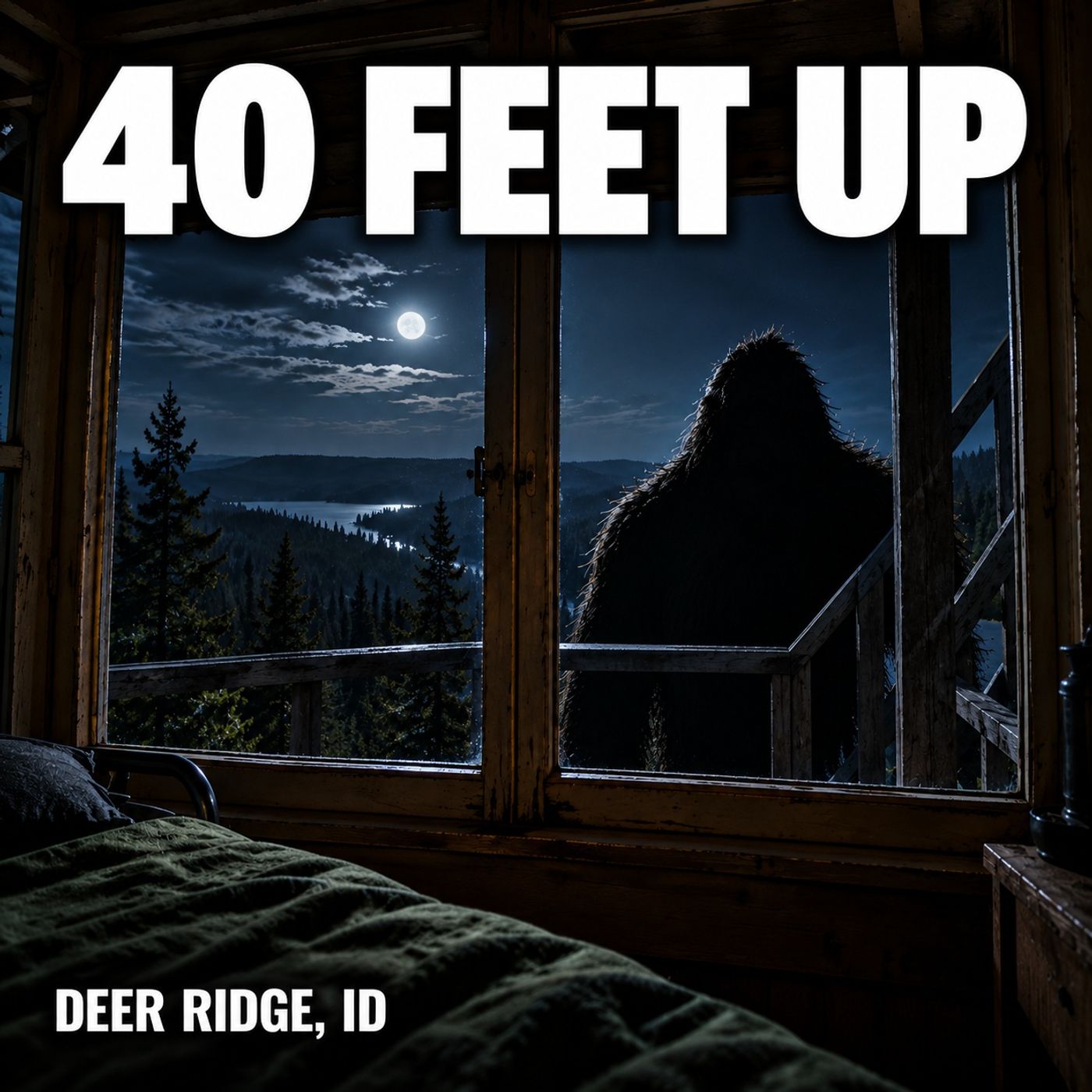
Something was climbing the stairs toward their window—40 feet above the Idaho forest. In 1990, Willie and a friend rented Deer Ridge Lookout for stargazing and hiking. On their final night, shortly after turning out the lights, they felt the entire tower tremble. Whatever was coming up paused at each landing. Then an enormous head-and-shoulders silhouette appeared in the window. Willie shares what happened next in Bigfoot Society Episode 1233, including the detail about its retreat that still leaves him searching for answers. More witnesses bring accounts from across the country: a Texas trucker describes a nine-foot figure crossing a highway in four steps, a former horseback rider recalls something that resembled forest debris standing up and walking away, and a woman remembers a fire lookout’s warning near California’s Thompson Peak. A Colorado hunter also recounts stones hitting his tent and oversized impressions discovered near camp. Remote lookouts. Isolated highways. Familiar tra
We visit a family home in the Usk Valley to investigate Wales’s first documented Leisler’s bat maternity roost. The species is rarely seen, and records in Wales are scattered, with much of the available information coming from acoustic surveys that can be difficult to interpret. The discovery offers an opportunity to learn more about a bat that remains poorly understood in Britain. We hear how Lucy and Andy discovered bats in their attic after moving into an old converted farm building. During a heatwave, young bats came down into the house, prompting the owners to seek advice from the Bat Conservation Trust and local wildlife carers. Ecologist Carys initially expected to find a more familiar species, but a closer look revealed a large Leisler’s roost alongside brown long-eared bats. We discuss what is known about Leisler’s distribution, roosting and movement. The species is recorded in parts of Wales, but there are no previous records of a maternity colony in the area. Leisler’s bats
⚠️ Content warning: This episode discusses non-suicidal self-injury (NSSI) and suicidality in adolescents. Some listeners may find this content upsetting. If you or someone you know is struggling, please reach out to a mental health professional or crisis service in your area. Learn more at 'Understanding and Responding to Self-Harm: Latest Evidence and Clinical Practice (https://www.acamh.org/event/understanding-self-harm/)' Can debt and financial stress really affect a teenager's mental health? In this episode of Mind the Kids, host Clara Faria — an academic clinical fellow in child psychiatry — sits down with researchers Nita de Neve-Enthoven and Susan Ravensbergen, PhD candidates in the Department of Psychiatry at Erasmus University Medical Center, Rotterdam, to unpack their new study on debt, experienced financial scarcity, and their links to non-suicidal self-injury (NSSI) and suicidality in adolescents at risk for psychopathology. Drawing on data from the iBerry study — a landma
Dennis Hong introduces seven award-winnning, all-terrain robots -- like the humanoid, soccer-playing DARwIn and the cliff-gripping CLIMBeR -- all built by his team at RoMeLa, Virginia Tech. Watch to the end to hear the five creative secrets to his lab's incredible technical success. (Filmed at TEDxNASA.) Uploaded 15-08-13 Talk by Dennis Hong.
Universal screening is one of the most powerful tools in a Multi-Tiered System of Supports (MTSS)—yet too often, it's also one of the most underutilized. That's what CORE Learning's Senior Director of Learning and Development Carrie Thomas Beck, Ph.D., explores with host Susan Lambert, Ed.D., on this new episode of Science of Reading: The Podcast. Together, Carrie and Susan discuss what universal screening is and why it's essential to any MTSS; how to use screening data to form groups and drive targeted instruction; how screener data reveals both individual student risk and the health of your system at the grade, building, and district level; and what a structured data-review protocol looks like in practice. Show notes: Find more Science of Reading resources on scienceofreading.amplify.com (http://scienceofreading.amplify.com/). Register for our upcoming Science of Reading program webinar series: Reading Comprehension in Action (https://go.info.amplify.com/fy26_elemlitsolutions_sormtss