Is Quantum Randomness Real? A New Challenge to the Foundations of Physics
21 min
Listen through the publisher, then discuss the episode here or arrange an in-person Roundtable. Your city determines where to meet.
Roundtables are designed for groups of four, with a shared subject and room for everyone to speak. Come for discussion, with no dating expectation.
Is quantum randomness truly fundamental, or can it emerge from deeper mathematical principles? A new analysis by Oxford researcher Jiaxuan Zhang challenges five major attempts to derive the Born rule, the foundation of quantum probability. By exposing an overlooked assumption in these approaches, the research reveals a deeper question about whether chance can ever be explained without already assuming it. This episode includes AI-generated content.
Episode information is provided by the publisher. Listening takes place on the publisher’s service.
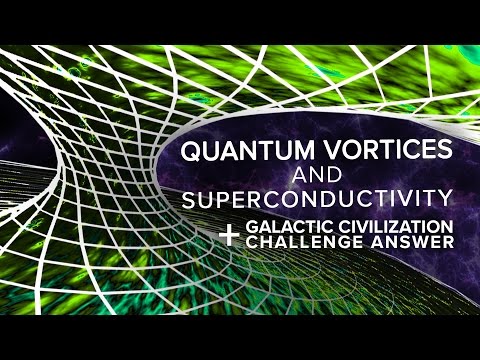
Scientists studying quantum vortices and their impact on superconductivity just won the Nobel Prize. Uploaded 02-11-16 Get your own Space Time tshirt at http://bit.ly/1QlzoBi Tweet at us! @pbsspacetime Facebook: facebook.com/pbsspacetime Email us! pbsspacetime [at] gmail [dot] com Comment on Reddit: http://www.reddit.com/r/pbsspacetime Support us on Patreon! http://www.patreon.com/pbsspacetime Help translate our videos! http://www.youtube.com/timedtext_cs_panel?tab=2&c=UC7_gcs09iThXybpVgjHZ_7g (http://www.youtube.com/timedtext_cs_panel?c=UC7_gcs09iThXybpVgjHZ_7g&tab=2) Further Sources: Nobel Prize in Physics Announcement Detailed information (PDF): The Galactic Civilization Challenge Question Previous Episode - The Many World of the Multiverse Did you correctly answer the Galactic Civilization Challenge Question? If you did Matt will take you with him when he sets out to colonize the greater galaxy. And in addition, a few randomly selected winners are getting t-shirts! If you’re liste
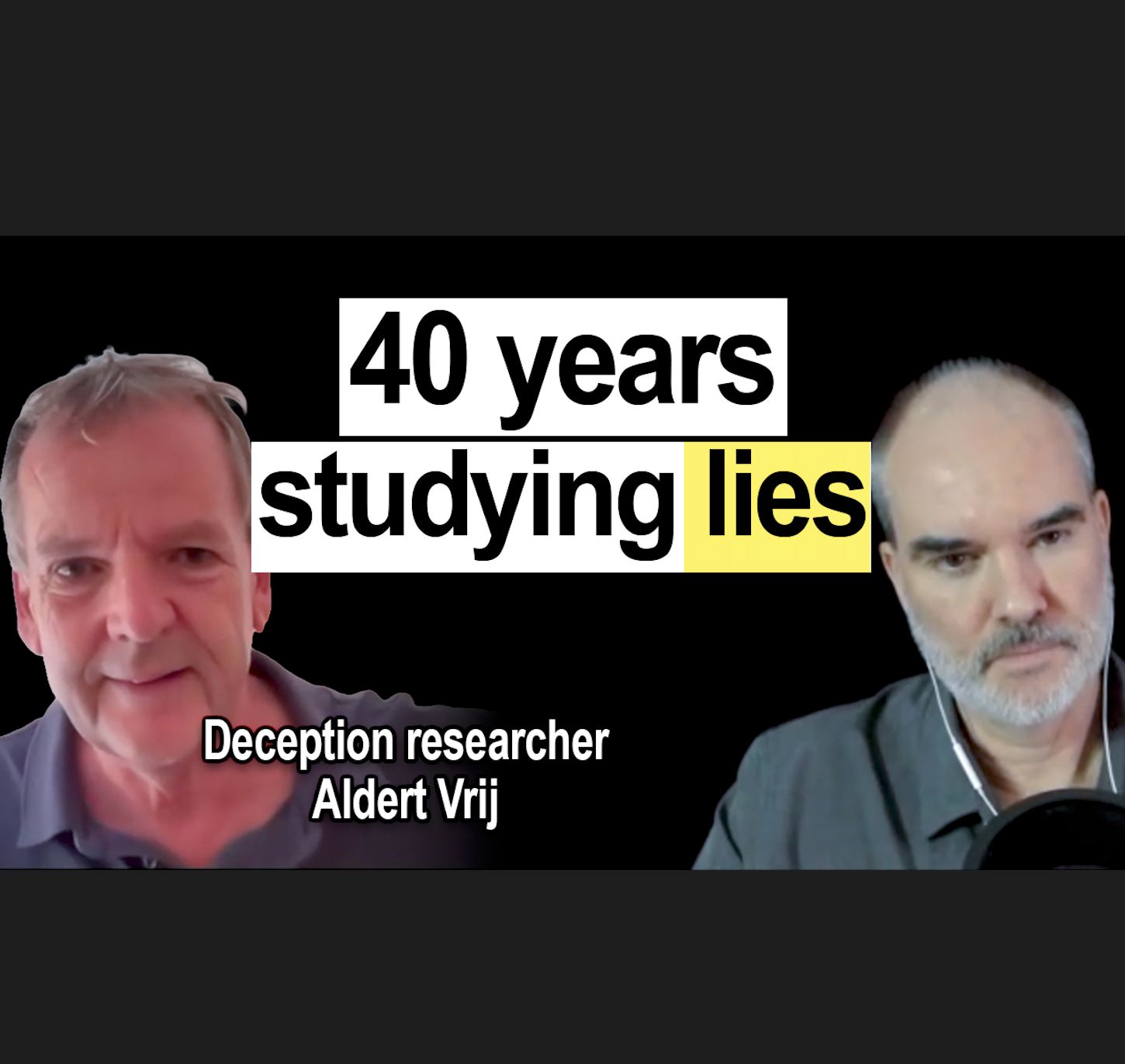
What actually works when it comes to detecting lies, and why are so many popular ideas about reading people and nonverbal behavior at odds with the scientific research? I talk with Aldert Vrij, one of the world's leading deception-detection researchers, who has spent almost four decades studying these topics. We discuss why what people say is far more revealing than their body language; why the perceived “sexiness” of reading nonverbal behavior has contributed to widespread myths and misconceptions; whether vocal behaviors like pitch, volume, and hesitation contain meaningful clues; and whether there's value in analyzing minor word choices and turns of phrase, as is done in so-called “statement analysis.” We discuss Paul Ekman's legacy as a source of faulty ideas about deception, micro-expression-based deception detection training, and the strategies that popular “body language experts” use to appear scientifically credible while simultaneously promoting ideas that conflict with the sc
A mysterious radio signal is drawing astronomers attention with its remarkably regular flashes every eight minutes. Its source challenges expectations about which stellar remnants can produce such signals, while offering a promising new way to uncover hidden objects across our galaxy. This episode includes AI-generated content.
Dig into W.W. Jacobs’ horror story, “The Monkey’s Paw,” about an artifact that grants wishes — with great consequences. -- Sergeant-Major Morris regaled his friends with epic tales from faraway lands— until one asked about an artifact the Sergeant had alluded to. Slowly, he produced the object: a mummified monkey’s paw. He explained that a holy man had imbued the paw with the power to grant three wishes to three men. But each wish comes with chilling consequences. Iseult Gillespie shares the tale of the monkey’s paw. Lesson by Iseult Gillespie, directed by Kayu Leung. Support Our Non-Profit Mission ---------------------------------------------- Support us on Patreon: http://bit.ly/TEDEdPatreon Check out our merch: http://bit.ly/TEDEDShop ---------------------------------------------- Connect With Us ---------------------------------------------- Sign up for our newsletter: http://bit.ly/TEDEdNewsletter Find us on Twitter: http://bit.ly/TEDEdTwitter Peep us on Instagram: http://bit.ly/T
Explore how the Hubble Space Telescope reveals the Universe, from iconic images to major discoveries, and how it complements the James Webb Space Telescope. "ASTROMAN: the Dark Sky Guardian" is a podcast channel that aims to explore popular science in multiple disciplines and research on interdisciplinary approaches, such as sustainability, dark-sky protection, astrophotography, space exploration, astronomy innovation, inclusive science communication, and STEAM Education by integrating science and arts. Exodus Chun-Long Sit, also known as the ASTROMAN, is a transmedia astronomy educator, popular science author, STEAM educator, and science communicator in Hong Kong. He is recently the National Astronomy Education Coordinator (Chair of Hong Kong, China) of the International Astronomical Union and President of Starrix. He was also an International Committee Member of the Dark Sky International, regularly organizing public lectures at the Hong Kong Space Museum and the Hong Kong Science Mu
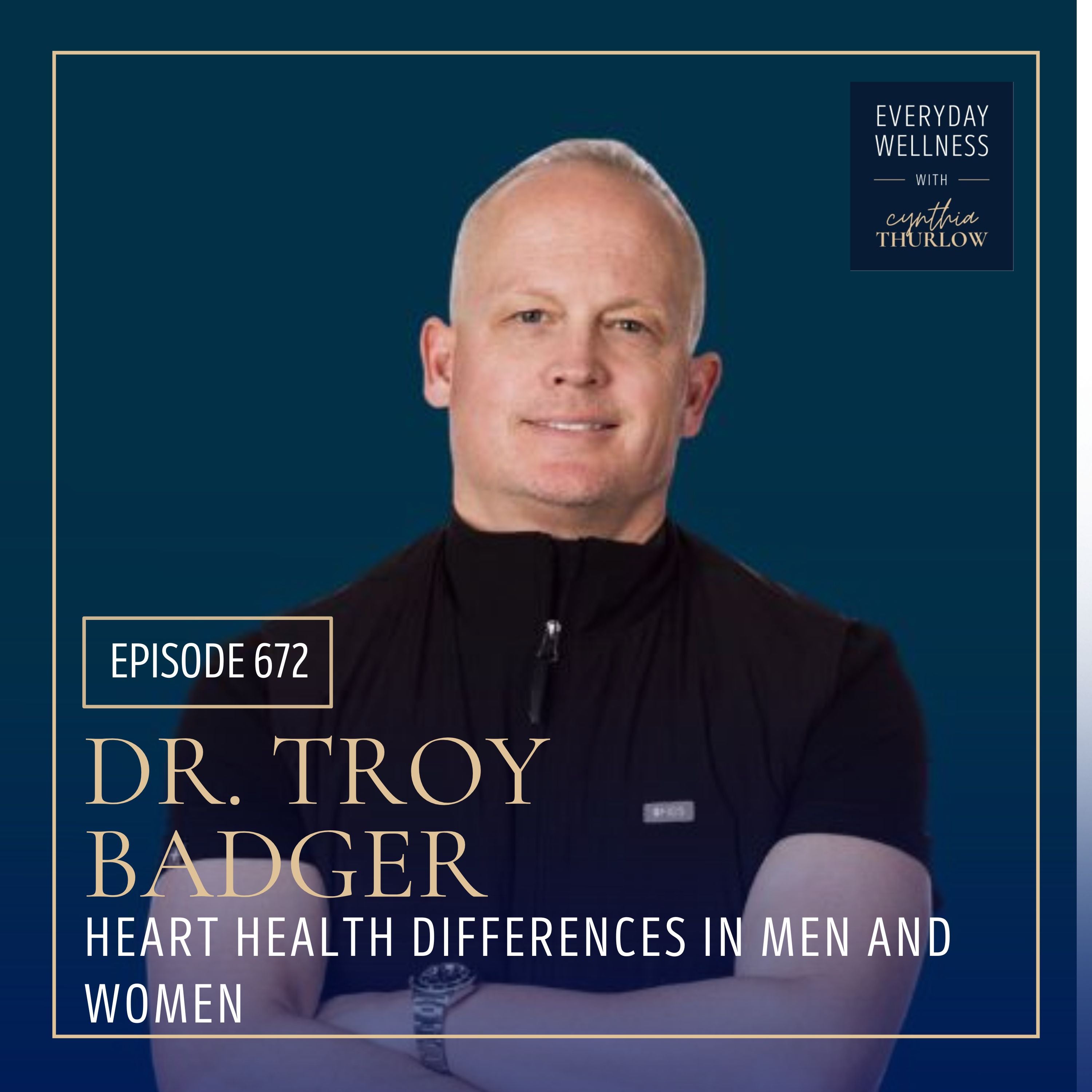
Today, I’m honored to connect with Dr. Troy Badger. He is a board-certified cardiologist and interventionalist and the founder of Cardiostrong, a concierge preventive cardiology clinic in Provo, Utah, focused on reducing cardiovascular risk, optimizing metabolic health, and improving strength and cardiorespiratory fitness for executives and athletes. In today’s conversation, we discuss Dr. Badger’s gender- and age-specific approach to heart health, including treatment differences for men and women, and diagnoses such as INOCA, SCAD, vasospastic disease, and Takotsubo. We examine emotions and their influence on heart health, coronary ischemia and cardiomyopathies, labs and diagnostics, how Dr. Badger assesses risk in his patients, and the differences between a CAC and a CCTA. Dr. Badger also shares the labs he finds essential for all patients and discusses the role of VO2 Max, cardiovascular training, and lifestyle—specifically nutrition, the use of GLP-1 drugs, and a multidisciplinary
Scientists are rethinking how particles behave when moving at extreme speeds through matter. New research into quark-gluon plasma, the exotic fluid that existed moments after the Big Bang, reveals unexpected patterns in particle motion that challenge traditional physical models. The findings could offer a powerful new way to investigate the properties of the universe’s earliest matter. This episode includes AI-generated content.
Scientists have developed a powerful computational method that could dramatically expand the world of two-dimensional materials. By examining thousands of crystal structures, researchers have uncovered promising candidates with unusual electronic and magnetic properties. The discovery could open new possibilities for next-generation electronics, spintronics, and nanotechnology, revealing how much potential remains hidden in materials we already know. This episode includes AI-generated content.
After more than four decades of searching, physicists at CERN have found evidence of an extraordinarily rare particle transformation. Detected by the upgraded LHCb experiment, this elusive process offers a new way to investigate the limits of the Standard Model and search for signs of previously unknown physics. As future collider upgrades promise far more data, scientists are preparing to explore an even deeper frontier of the subatomic world. This episode includes AI-generated content.
A striking scientific discovery should face stronger scrutiny before changing established practice.
Share your view, then see how readers voted. No sign-in required. This poll is shared across stories.
Do you agree or disagree?
Common Quandary
A Common Quandary to discuss
Another conversation to explore, separate from this news story.
A pricey AI tutor can turn B students into A students. Should schools let them use it?
An effective AI tutor adapts to each student and dramatically improves performance, but its subscription is expensive. A public school cannot provide it to everyone and worries that allowing its use will deepen existing inequality.
Should access be limited when a beneficial tool cannot yet be shared fairly?