How people respond to extreme weather risks, with Brett Gelino, PhD, and Gabrielle Wong-Parodi, PhD
31 min
Listen through the publisher, then discuss the episode here or arrange an in-person Roundtable. Your city determines where to meet.
Roundtables are designed for groups of four, with a shared subject and room for everyone to speak. Come for discussion, with no dating expectation.
Wildfires, hurricanes, heat waves and floods are growing more frequent and more costly, and communities are racing to adapt. But new infrastructure only helps if people use it, and warnings only work if people act on them. Gabrielle Wong-Parodi, PhD, of Stanford University, and Brett Gelino, PhD, of the University of Massachusetts Lowell, discuss what a climate-resilient community looks like; why repeated alerts can lose their urgency and how officials can convey risk without causing people to tune out; and how research can get into the hands of planners and emergency responders who need it.
Episode information is provided by the publisher. Listening takes place on the publisher’s service.
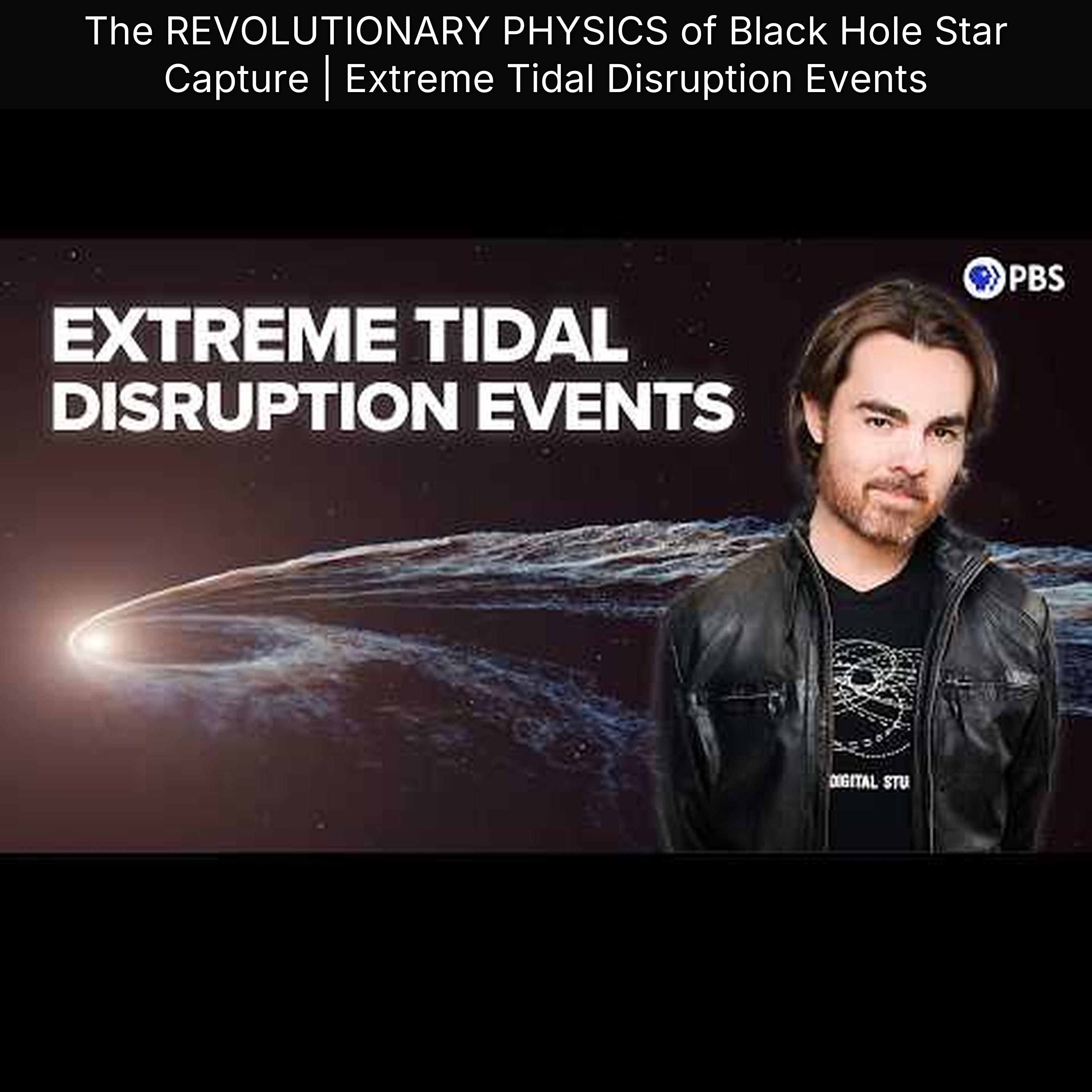
PBS Member Stations rely on viewers like you. To support your local station, go to:http://to.pbs.org/DonateSPACE Sign Up on Patreon to get access to the Space Time Discord! If you track the motion of individual stars in the ultra-dense star cluster at the very center of the Milky Way you’ll see that they swing in sharp orbits around some vast but invisible mass—that’s the Sagittarius A* supermassive black hole. These are perilous orbits, and sometimes a star wanders just a little too close to that lurking monster, leading to its utter destruction in the spectacular phenomenon known as a tidal disruption event. We’ve never seen a TDE in the Milky Way, but we’ve seen them in distant galaxies—and we now know how to spot stellar destructions so extreme that they reveal properties of the black hole itself. Check out the Space Time Merch Store Search the Entire Space Time Library Here: https://search.pbsspacetime.com/ Hosted by Matt O'Dowd Written by Matt Caplan, Andy Santarelli & Matt O'Dow
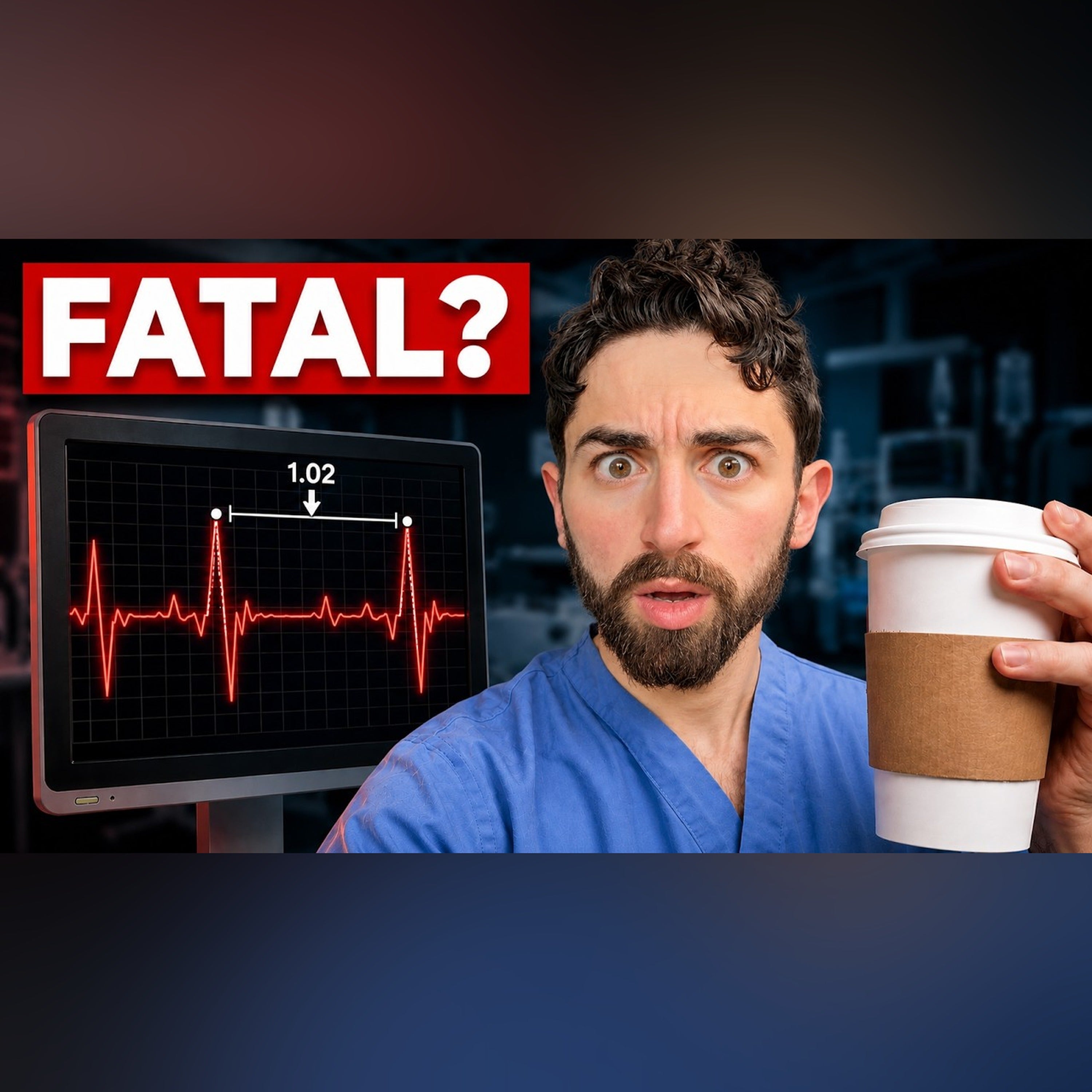
For a written breakdown, early access to content like this, and extra nuances, see the associated StayCurious Metabolism newsletter: https://staycuriousmetabolism.substack.com/p/why-you-need-to-track-your-heart?r=40ekz2 If you want to try the omega supplement I use, Accentrate Omega Max, here’s the link: https://www.fenixhealthscience.com/staycurious Heart rate variability (HRV) is more than just a number, it’s a real-time window into how well your brain, heart, and nervous system are working together. In this video, we break down what HRV actually measures, why it’s such a powerful predictor of mortality and heart attack risk, and how it reflects something deeper: your body’s ability to adapt, recover, and respond to stress. We walk through landmark studies showing that low HRV is associated with significantly higher risk of death and first cardiac events—even after controlling for traditional risk factors. But this isn’t just about risk. HRV is something you can measure today and act
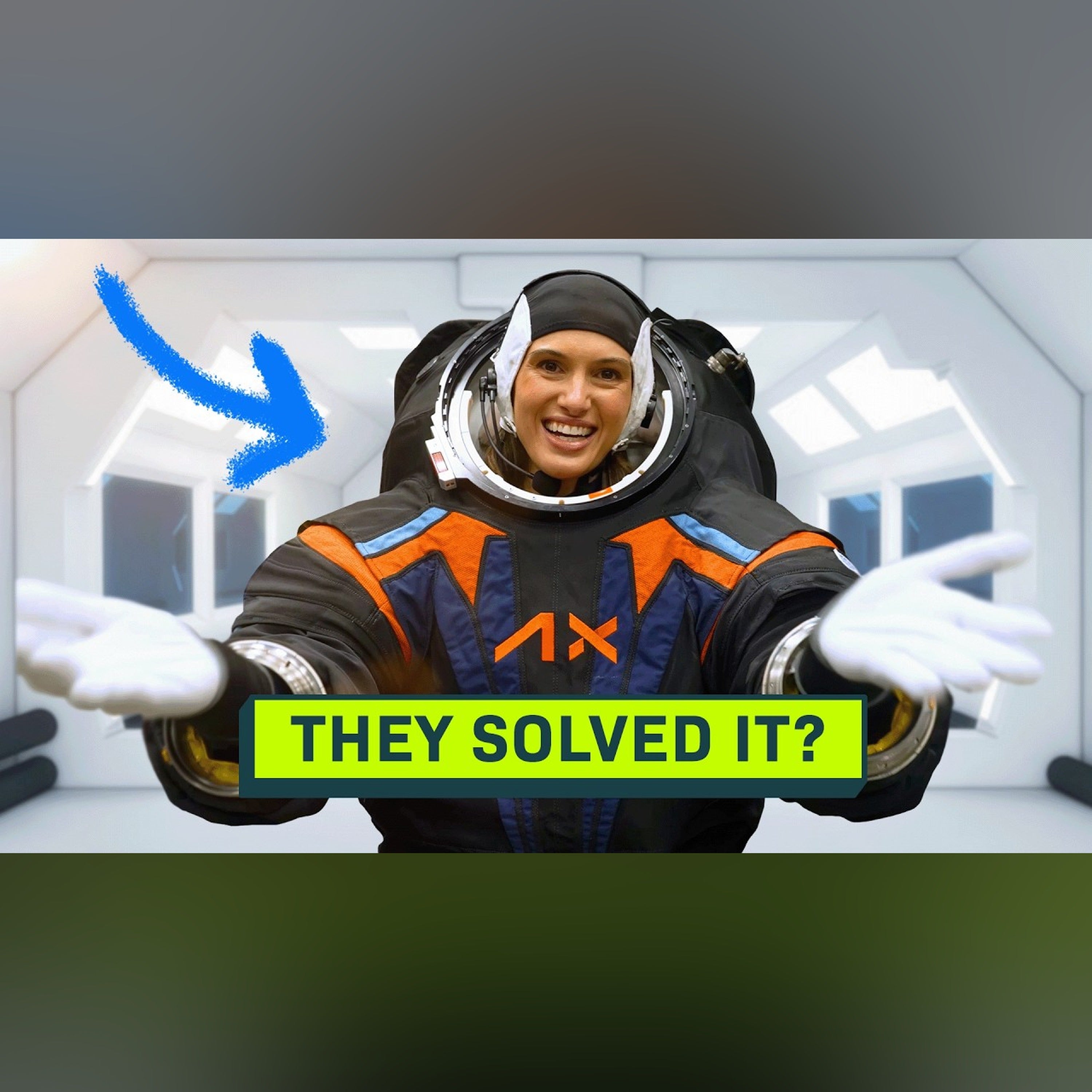
This will be the next space suit on the moon. What can it do? Only 12 people have ever walked on the moon and they all did it within just 4 years of each other. Then, for the last 50 years, no one has gone back… but that’s about to change. Soon, astronauts will return to the moon to prepare for people to live there long-term and to get us ready to send the first humans to Mars. But to do it, they need to survive outside in space and work for hours in one of the most dangerous conditions a human will ever face. The problem is, our spacesuits for the Moon haven’t been updated in decades! But now, to make this next chapter in space possible, space suits are getting a major upgrade. These new suits will give astronauts the superpower to do more, for longer… and I’m one of the first civilians to put one on. In this video, we’re taking you behind the scenes to show how Axiom Space is designing, building, and testing NASA’s new space suits. I am going to put myself and this suit to the test,
Does your relationship feel like home, or does it feel like standing on the edge of something you might lose? In Part 3 of our Relationship Anxiety series, clinical hypnotherapist and former paramedic Martin Hewlett guides you through the process of teaching your nervous system that love doesn't have to hurt to be real. We explore the physical manifestations of anxiety—the tight chest, the 2:00 AM racing mind, and the "stomach drop" when a text takes too long—and provide the tools to "turn down the alarm" of your internal survival response. If you are ready to stop "cherry-picking" evidence of disaster and start building a foundation of trust, this session is for you. In This Episode, We Cover: The Science of Safety: Understanding how your nervous system confuses love with danger. Guided Visualization: A journey into your own "safe room" where you are already enough. Rewiring the Brain: Moving from worst-case disaster reels to the reality of small, daily kindnesses. Breaking the Cycle:
Get the 200+ Page Optimal Living Daily Workbook (PDF) - Free. Want to turn today's episode into an actionable plan? Episode 3615: Becca Shern explains why the common nutrition advice of everything in moderation may not be serving people well. She looks at how heavy marketing and social norms around sugar and alcohol make it easy to overconsume while still feeling moderate, and what the actual recommended limits are. The takeaway is that taking a critical look at what moderation really means, and setting a higher standard, can build healthier habits for ourselves and the people around us. Read along with the original article(s) here: http://minimalwellness.com/reconsideringmoderation/ Quotes to ponder: "Moderation is a squishy term." "Our consumption patterns are dramatically influenced by marketing, but they're also molded by social norms." "Setting a higher standard for ourselves helps others do the same."
Explore what makes polio so dangerous, what is causing the 21st century resurgence of cases, and how we can eradicate the disease. -- In 1952, polio was everywhere: killing or paralyzing roughly half a million people annually. Yet just 10 years later, paralytic polio cases in the US dropped by 96% and we were on track to get rid of polio for good. But in recent years, the virus started striking back. So, what’s behind these recent spikes? Explore the dangers of poliovirus and the possibility of eradicating this deadly disease. Directed by Anton Bogaty. This video made possible in collaboration with Gates Ventures Learn more about how TED-Ed partnerships work: https://bit.ly/TEDEdPartner A special thanks to Ananda Bandyopadhyay, Amber Zeddies, and Kathleen O'Reilly who provided information and insights for the development of this video. Support Our Non-Profit Mission ---------------------------------------------- Support us on Patreon: http://bit.ly/TEDEdPatreon Check out our merch: htt
With the advent of AI, scams are increasingly difficult to recognize — and more costly than ever. Stacey Wood, PhD, a professor of psychology at Scripps College, discusses how scammers exploit our vulnerabilities; why some life circumstances can make us more susceptible to fraud; the psychological toll scams can take on victims; and what you can do to protect yourself and others.
Nostalgia is a bittersweet emotion, but psychologists’ research suggests that most of the time, it’s good for us – it can strengthen our relationships and give our lives meaning and continuity. Tim Wildschut, PhD, of the University of Southampton, discusses how researchers define nostalgia; why loneliness, a bad mood and even a cold day can trigger it; when it can have downsides; and how technology is changing the way we look back at the past.
Vocational training should receive the same respect as university education.
Share your view, then see how readers voted. No sign-in required. This poll is shared across stories.
Do you agree or disagree?
Common Quandary
A Common Quandary to discuss
Another conversation to explore, separate from this news story.
The restaurant gives free birthday cake. Is moving your birthday by a week close enough?
A restaurant offers a spectacular free dessert on birthdays. Your birthday was last week, but nobody took you out then. When the server asks whether anyone is celebrating, your friends point at you and wait for your answer.
How much flexibility can a harmless celebration tolerate before it becomes a lie?