In this episode of The Carbon Removal Scoop, Eve Tamme sits down with Sabine Fuss, who leads the Sustainable Carbon Management working group at the Potsdam Institute for Climate Impact Research and was a lead author of the IPCC's Special Report on 1.5°C. The trigger is UNEP's Emissions Gap Report 2026, which concludes that overshooting 1.5°C can no longer be avoided and that this temperature goal now has to be reached from above. Eve felt the carbon removal community barely registered what that means. This conversation sets out to change that. Sabine explains why a world that overshoots and comes back is not the same as one that never crossed the line, from sea level rise that keeps going to tipping points that could demand even more removals. Counterintuitively, she argues that overshoot makes emissions cuts more important, not less: carbon removal capacity is scarce, and every tonne spent offsetting residual emissions is a tonne not available for bringing temperatures back down. Then
View full lesson: http://ed.ted.com/lessons/victor-wooten-music-as-a-language Music is a powerful communication tool--it causes us to laugh, cry, think and question. Bassist and five-time Grammy winner, Victor Wooten, asks us to approach music the same way we learn verbal language--by embracing mistakes and playing as often as possible. Lesson by Victor Wooten, produced by TED-Ed.
When a young man moved back into his mother's century-old house, the only available bedroom was a small space with dark red walls and a closet that immediately made him uncomfortable. He couldn't explain why, but he began placing a laundry basket in front of the closet door. For a while, nothing particularly unusual happened. Then, late one night, he noticed something moving across his bedroom floor. Soon, he began waking to the sensation of being pulled in bed, and one encounter left him staring at a figure he couldn't explain. When he learned that the room had once belonged to an elderly woman who died in the house, he began wondering whether she had ever really left. Years later, someone else entered that bedroom and reported seeing something that raised even more questions. Was the former owner still occupying her old room—or was something else there with her? #RealGhostStoriesOnline #TrueGhostStories #HauntedBedroom #HauntedCloset #GhostlyApparitions #ShadowFigures #ParanormalEnco
Throughout history, either accidentally or through deliberate action, non-native species of animals and plants have found their way into an environment in which they didn’t naturally evolve to live in. In some cases, these species thrive in such a way that they significantly affect the balance of the ecosystem they find themselves in. These are termed invasive species. But how profound is the effect they have on other animals and plants, is it always a bad thing, and what can we do once an invasive species has taken hold in a new environment? In this episode, we’re joined by science writer and author Amy Crawford to talk about her latest book, Undesirable – Invasive Species, Humans, and Where We All Belong. She tells us about some of the most common examples of invasive species, explains how non-native species can embed themselves in new environments, and shares some ideas about how we could be managing invasive species more effectively.
This is a Grave Talks CLASSIC EPISODE! PART TWO Since opening in 1932 as Paintsville’s first “talkie,” the historic SIPP Theatre in Paintsville, Kentucky, has been a centerpiece of the community — hosting films, live performances, and gatherings for generations. With nearly a century of history inside its walls, it’s also become a location where some believe unexplained activity may still be taking place. John Marshall of Ghost Hunter Guys joins us to discuss reported paranormal experiences inside the SIPP Theatre, including organized ghost hunts, unexplained sounds, and moments investigators haven’t been able to easily explain. As we explore the theatre’s history and the activity reported there, we also discuss the Stafford House and the personal experiences that first drew John into the paranormal — experiences that continue to shape how he approaches investigations today. On this episode of The Grave Talks, we examine the mystery surrounding the SIPP Theatre and the stories that kee
In this episode, we sit down with Nicole Chivattoni and Stephanie Smith, both members of Full Moon Paranormal, an all-female paranormal investigation team in the Hudson Valley known for public ghost hunts, haunted history events, and private investigations. Nicole co-hosts the YouTube channel Alien8UK. She believes in the paranormal and brings a sceptical eye to each investigation, looking for ordinary explanations before drawing conclusions. Stephanie, the self-described “crazy Alaska girl” who grew up surrounded by the unexplained, brings a lifetime of personal experiences to the table. Together, they also host Paranormal Tea Time, where they spill the tea on ghosts, mysteries, and all things strange through weekly live chats, laughs, and deep dives. Nicole and Stephanie open up about some of their most intense encounters in the field. In one standout moment, Nicole came face-to-face with an entity that bore an uncanny resemblance to the Nun from The Conjuring. When someone as quick
Anna tests us all with an impossible moral dilemma, while she, Dan and Andy discuss YOUR facts. This week's subjects include Sagan, sinuses and South Detroit (South Dakota). Edited by James Harkin Produced by Leying Lee Team includes Tara Dorrell, Joe Mayo and Ethan Ruparelia
Post-Labor Economics: What happens when AI changes work forever? Episode release date: 7 Jun 2023 Core Ideas: Metamodernism: Narratives and emergence view of reality - Reduce suffering - Increase prosperity - Increase understanding mantra: Seek knowledge. DISCLAIMER: This is a community-driven show. -------------- Keywords: heuristic imperatives, ai masterclass, ai philosophy, superintelligence, ai innovation, machine learning, gpt, singularity
In which John Green explores exactly when Rome went from being the Roman Republic to the Roman Empire. Here's a hint: it had something to do with Julius Caesar, but maybe less than you think. Find out how Caesar came to rule the empire, what led to him getting stabbed 23 times on the floor of the senate, and what happened in the scramble for power after his assassination. John covers Rome's transition from city-state to dominant force in the Mediterranean in less than 12 minutes. Well, Rome's expansion took hundreds of years, he just explains it in under 12 minutes. The senate, the people, Rome, the caesarian section, the Julian calendar, and our old friend Pompey all make appearances, but NOT the Caesar Salad, as Julius had nothing to do with it. Chapters: Introduction: SPQR 00:00 The Roman Republic 0:41 The Roman Senate 1:15 Cincinnatus 2:14 Gaius Julius Caesar 2:49 The First Triumvirate: Pompey, Crassus, and Caesar 3:40 The End of Caesar's Reign 5:22 The Second Triumvirate: Octavian
Former CIA officer John Ramirez says the US government had foreknowledge of structured craft, and then the orbs threw the intelligence community for a loop. A secondary payload riding on a satellite started detecting the energy from these orbs, and that led to what he calls the Orb Working Group. His two engineers were read in. He wasn’t. But one day he saw the cover of a thick manual on his engineer’s desk: “UFO Propulsion Systems Operations Manual”. In this clip: • The Orb Working Group: the final UFO-related programme John dealt with • How a secondary payload on a high Earth orbit satellite started detecting radiance from orbs • Why analysts first thought it was an anomaly in the system, and how imaging satellites were then tasked • “Domes of light” all over again, and why he calls NGA the most important agency for UFO/UAP detection • The NGA West meetings in St. Louis, and why he refused to be read in • The GSA safe, and the thick “UFO Propulsion Systems Operations Manual” he saw o
This week we answer skeptics like Descartes with empiricism. Hank explains John Locke’s primary and secondary qualities and why George Berkeley doesn’t think that distinction works -- leaving us with literally nothing but our minds, ideas, and perceptions. -- Images and video via VideoBlocks or Wikimedia Commons, licensed under Creative Commons by 4.0: https://creativecommons.org/licenses/by/4.0/ -- Produced in collaboration with PBS Digital Studios: http://youtube.com/pbsdigitalstudios Crash Course Philosophy is sponsored by Squarespace. -- Want to find Crash Course elsewhere on the internet? Facebook - http://www.facebook.com/YouTubeCrashC... Twitter - http://www.twitter.com/TheCrashCourse Tumblr - http://thecrashcourse.tumblr.com (http://thecrashcourse.tumblr.com/) Support CrashCourse on Patreon: http://www.patreon.com/crashcourse CC Kids: http://www.youtube.com/crashcoursekids
Welcome to Crash Course Office Hours! Alizé Carrère and April Luginbuhl Mather answer your questions on human and physical geography, including how rocks form, how melting glaciers impact water resources, and what even is geography? Check them out here: https://info.flipgrid.com/ 00:00 Introduction 01:48 What is geography? 02:43 Place, space, and location 04:28 Site, situation and scale 09:00 How do different types of rock form? 11:35 Reducing the impacts of earthquakes and volcanoes 13:37 How is a meander formed? 16:34 Origin and formation of fjords 18:52 How can mountain ecosystems be restore from the impact of development and tourism? 22:14 Impact of melting Himalayan glaciers on water resources 26:23 What is posthumanism? 31:30 Who are significant geographers? 34:05 Different types of boundaries 37:36 What are the markers of development? 40:26 What is in a geography course? 45:30 Tips for studying geography 48:35 Why do we personally find geography interesting? 50:18 How to talk to
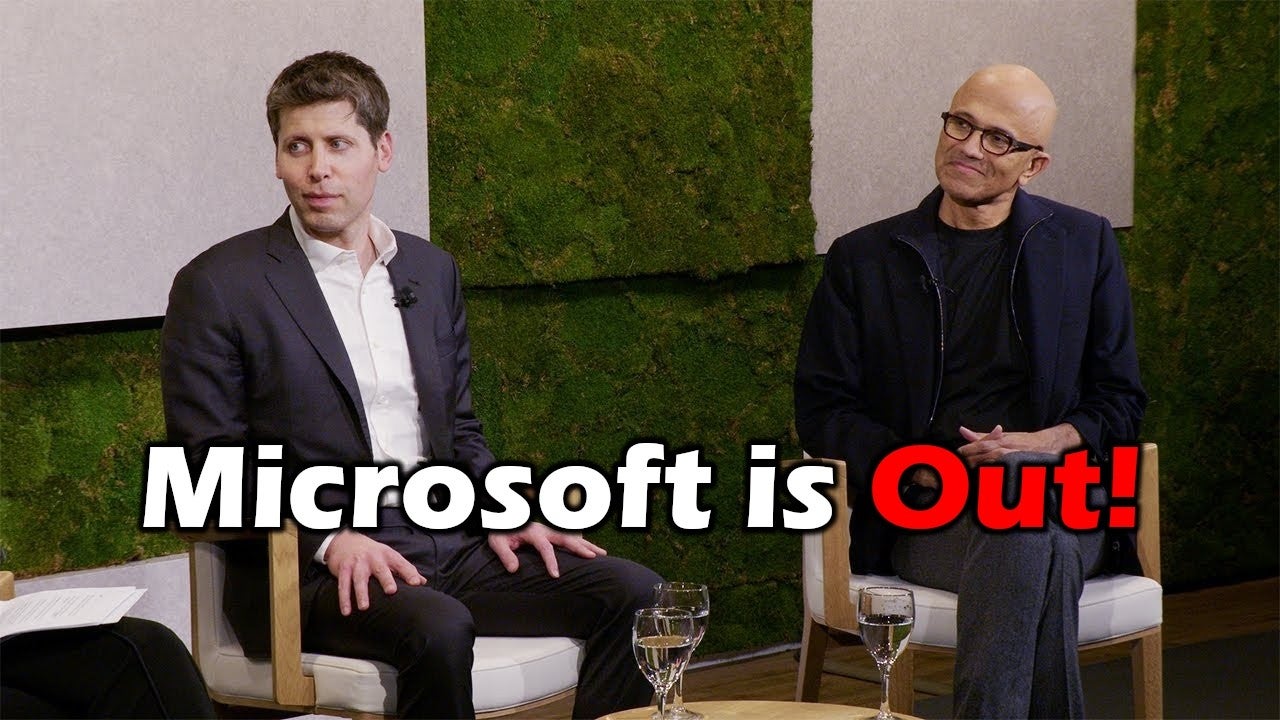
Microsoft and Apple exit OpenAI Board of Directors - Sam Altman joins Military Industrial Complex Episode release date: 12 Jul 2024 Core Ideas: Metamodernism: Narratives and emergence view of reality - Reduce suffering - Increase prosperity - Increase understanding mantra: Seek knowledge. DISCLAIMER: This is a community-driven show. ----- Keywords: heuristic imperatives, tech singularity, ai safety, ai agents, cognitive ai, deep learning, superintelligence
Today we’re going to talk about the link between population and food energy. As the world's population keeps growing, finding ways to provide enough food and water for everyone while supporting a sustainable environment can be tricky! We'll take a closer look at food chains and how energy is transferred between different trophic levels, follow the trends in human consumption as incomes rise, and talk about the two types of overpopulation as they're related to the planet's carrying capacity. Watch our videos and review your learning with the Crash Course App! Download here for Apple Devices: https://apple.co/3d4eyZo Download here for Android Devices: https://bit.ly/2SrDulJ Crash Course is on Patreon! Thanks to the following patrons for their generous monthly contributions that help keep Crash Course free for everyone forever: Vincent, Emilee Murphy, Michael Wang, Jordan willis, Krystle Young, Michael Dowling, Alexis B, Rene Duedam, Burt Humburg, Aziz, Nick, DAVID MORTON HUDSON, Perry Jo
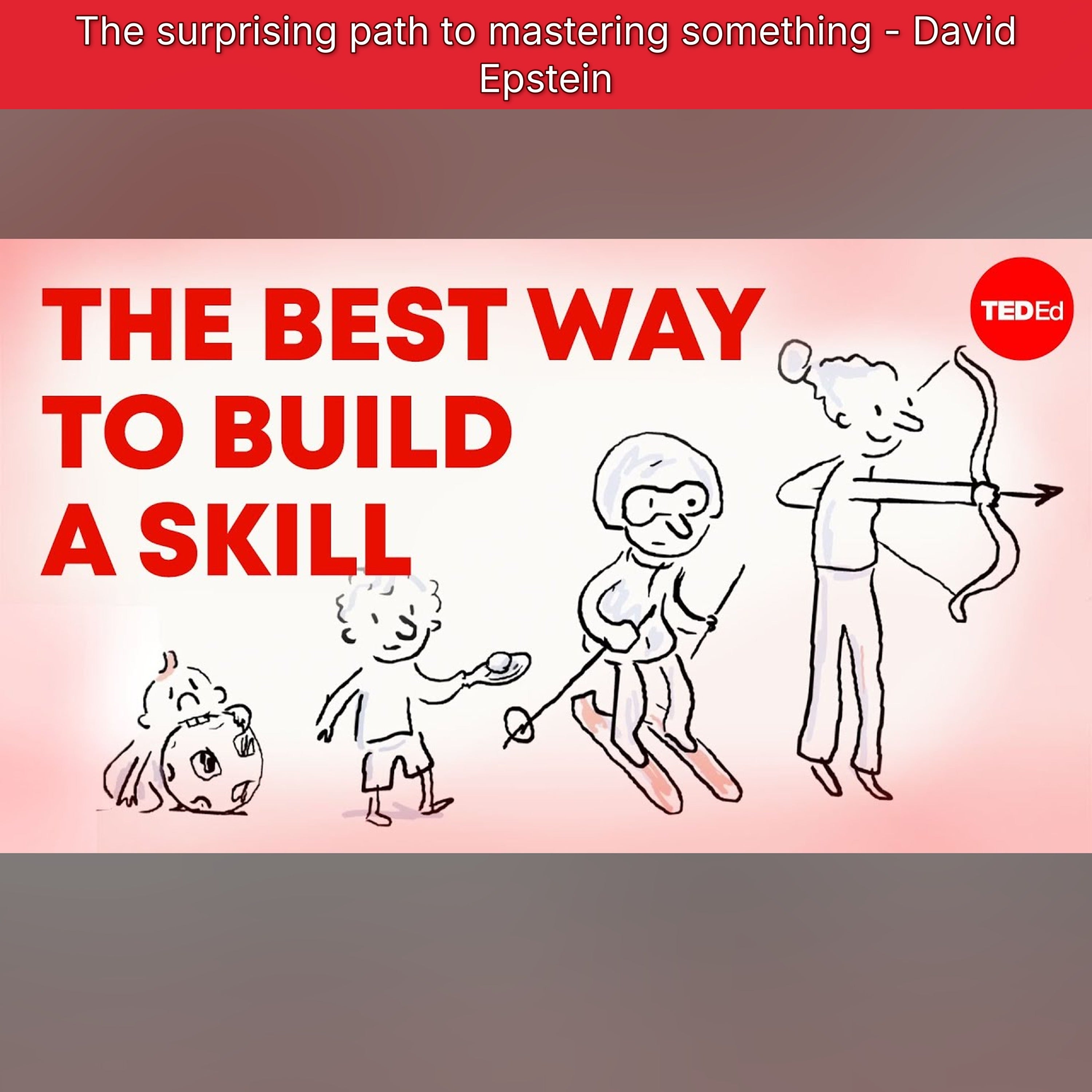
Are we building skills the wrong way? Explore how having a wide range of experience can be better than early specialization. -- There’s a common idea that it takes 10,000 hours of practice to become great at something. From an early age, we are encouraged to choose our path, focus specifically, and start racking up those hours. But, what if these head starts aren’t helping us the way we think they do? What if there’s a better way to excel? David Epstein shares how a different approach could set us up for greater success. Directed by Avi Ofer. This is an animated adaptation of a TEDx Talk given by David Epstein. You can watch the talk in full here: https://www.youtube.com/watch?v=B6lBtiQZSho Education is the ultimate idea worth spreading. That’s why we’ve launched InnovaTED — a program that helps educators develop their brightest ideas and share them with the world. Learn more: https://ed.ted.com/edtalks Support Our Non-Profit Mission ---------------------------------------------- Suppo
Plants and trees may seem pretty passive, but behind the scenes, their cells are working hard to put on a magic show. In this episode of Crash Course Botany, we’ll explore how the processes of photosynthesis and cellular respiration work, why they’re so critical for all life on Earth, and how they’re helping us to forge a greener path to the future. Chapters: Plants' Magic Show 00:00 Photosynthesis 1:27 The Light-Dependent Reactions 3:02 The Light-Independent Reactions 4:18 Cellular Respiration 5:32 Biofuels 8:50 Review & Credits 11:43 Special thanks to Hannah Bodenhausen for additional post-production support on this episode! Sources: https://docs.google.com/document/d/1PB6WdUJcABAccO-U-t6ic7WbfP2z0Pr5P9a8HMr6zh4/edit?usp=sharing Crash Course is on Patreon! Thanks to the following patrons for their generous monthly contributions that help keep Crash Course free for everyone forever: David Fanska, Andrew Woods, Tawny Whaley, Sean Saunders, Katie, DL Singfield, Ken Davidian, Stephen Aku
OpenAI: $100,000 Grants for AI Consensus Platform! Plus a Gentle Introduction to GATO Framework Episode release date: 27 May 2023 Core Ideas: Metamodernism: Narratives and emergence view of reality - Reduce suffering - Increase prosperity - Increase understanding mantra: Seek knowledge. DISCLAIMER: This is a community-driven show. ------- Keywords: chatbots, ai podcast, ai development
In which John covers the long, long history of ancient Egypt, including the Old, Middle, and New Kingdoms, and even a couple of intermediate periods. Learn about mummies, pharaohs, pyramids, and the Nile with John Green. Chapters: Introduction: Ancient Egypt 00:00 How The Nile Shaped Egypt 1:57 The Old Kingdom of Egypt 4:02 The Middle Kingdom of Egypt 6:29 The New Kingdom of Egypt 7:54 An Open Letter to King Tut 9:18 Credits 11:14 Resources: Mummies!: https://goo.gl/BvAdmj Pyramids!: http://goo.gl/aCov2j Crash Course is on Patreon! Want to find Crash Course elsewhere on the internet? Facebook - http://www.facebook.com/YouTubeCrashCourse Twitter - http://www.twitter.com/TheCrashCourse Instagram - https://www.instagram.com/thecrashcourse/ CC Kids: http://www.youtube.com/crashcoursekids
No business, no matter how innovative and amazing it is, will survive if people haven’t heard of it. If people don’t know something exists, they’ll never be able to purchase it. It’s time to work on our communication skills. *** Crash Course is on Patreon! Thanks to the following patrons for their generous monthly contributions that help keep Crash Course free for everyone forever: Eric Prestemon, Sam Buck, Mark Brouwer, Indika Siriwardena, Avi Yashchin, Timothy J Kwist, Brian Thomas Gossett, Haixiang N/A Liu, Jonathan Zbikowski, Siobhan Sabino, Zach Van Stanley, Jennifer Killen, Nathan Catchings, Brandon Westmoreland, dorsey, Kenneth F Penttinen, Trevin Beattie, Erika & Alexa Saur, Justin Zingsheim, Jessica Wode, Tom Trval, Jason Saslow, Nathan Taylor, Khaled El Shalakany, SR Foxley, Sam Ferguson, Yasenia Cruz, Eric Koslow, Caleb Weeks, Tim Curwick, David Noe, Shawn Arnold, William McGraw, Andrei Krishkevich, Rachel Bright, Jirat, Ian Dundore -- Want to find Crash Course elsewhere on
Today we’re talking about our galactic neighborhood: The Milky Way. It’s a disk galaxy, a collection of dust, gas, and hundreds of billions of stars, with the Sun located about halfway out from the center. The disk has grand spiral patterns, formed by the traffic jams of stars and nebulae, where stars are born. The central region is shaped like a bar and is mostly old, red stars. There’s also a halo surrounding us of old stars. Check out the Crash Course Astronomy solar system poster here: http://store.dftba.com/products/crashcourse-astronomy-poster -- Chapters: Introduction: The Milky Way 00:00 What is the Milky Way Galaxy? 1:15 The Milky Way's Shape 2:18 Spiral Arms of the Milky Way 4:08 Mapping the Milky Way 7:15 Outer Halo of the Milky Way 9:09 Review 10:07 -- PBS Digital Studios: http://youtube.com/pbsdigitalstudios Follow Phil on Twitter: https://twitter.com/badastronomer Want to find Crash Course elsewhere on the internet? Facebook - http://www.facebook.com/YouTubeCrashCourse Tw
Post AGI Healthcare - Longevity, Prevention, and Rejuvenation - How it will happen, what it means? Episode release date: 31 Jan 2024 Core Ideas: Metamodernism: Narratives and emergence view of reality - Reduce suffering - Increase prosperity - Increase understanding mantra: Seek knowledge. DISCLAIMER: This is a community-driven show. ---------- Keywords: post labor economics, david shapiro, artificial intelligence
Why is there consensus around atoms existing, but not around if chocolate is good for you? In this episode of Crash Course Scientific Thinking, we’ll explore why there are still things we don’t know about topics we know a lot about, and why scientific consensus is the closest thing to “the truth.” Introduction: Scientific Uncertainty 00:00 Scientific Consensus 0:33 Atomic Theory 1:28 Nutrition Science 4:21 Changing Consensus 6:48 Scientific Consensus in our Everyday Lives 7:26 Review & Credits 9:14 Sources: https://docs.google.com/document/d/1Kv2_mFsDxQURuFDxpflD45dy-pCxlqnM9iPSNYxigmQ/edit?tab=t.0#heading=h.vk5i2fgqyumq (https://docs.google.com/document/d/1Kv2_mFsDxQURuFDxpflD45dy-pCxlqnM9iPSNYxigmQ/edit?tab=t.0) *** Support us for $5/month on Patreon to keep Crash Course free for everyone forever! https://www.patreon.com/crashcourse Or support us directly: https://complexly.com/support Join our Crash Course email list to get the latest news and highlights: https://mailchi.mp/crashcou
View full lesson: http://ed.ted.com/lessons/all-of-the-energy-in-the-universe-is-george-zaidan-and-charles-morton Uploaded 12-11-13 The energy in the universe never increases or decreases -- but it does move around a lot. Energy can be potential (like a stretched-out rubber band waiting to snap) or kinetic (like the molecules that vibrate within any substance). And though we can't exactly see it, every time we cook dinner or shiver on a cold night, we know it's there. George Zaidan and Charles Morton get excited about energy. Lesson by George Zaidan and Charles Morton, animation by Pew36 Animation Studios.
Boomers were born into a world that bent itself around them. So why do they seem so annoyed by the one they built? Professor Hannah Fry and Michael Stevens (Vsauce) tackle the question the internet can't stop asking: what's the deal with boomers? Was it a baby boom that changed everything, or did everything change because of the babies? Is a "generation" even a real thing, or just a label we all agreed to believe in? And how does the flower-power rebel of the 60s become the "don't tell me what to do" voice of today? Along the way, Hannah and Michael go looking for the very first baby of every generation, find out just how long boomers might be with us, and uncover three little letters that might explain it all. ------------------- A company limited by guarantee. Registered address: 2 Redman Place, London, E20 1JQ. ------------------- ------------------- Video Producer: Adam Thornton + Oli Oakley + Jack Meek Animator: Sam Benson Video & Social: Bex Tyrrell Producer: Simona Rata + Lucy L