Where does energy come from? - George Zaidan and Charles Morton
6 min
Listen through the publisher, then discuss the episode here or arrange an in-person Roundtable. Your city determines where to meet.
Roundtables are designed for groups of four, with a shared subject and room for everyone to speak. Come for discussion, with no dating expectation.
View full lesson: http://ed.ted.com/lessons/all-of-the-energy-in-the-universe-is-george-zaidan-and-charles-morton Uploaded 12-11-13 The energy in the universe never increases or decreases -- but it does move around a lot. Energy can be potential (like a stretched-out rubber band waiting to snap) or kinetic (like the molecules that vibrate within any substance). And though we can't exactly see it, every time we cook dinner or shiver on a cold night, we know it's there. George Zaidan and Charles Morton get excited about energy. Lesson by George Zaidan and Charles Morton, animation by Pew36 Animation Studios.
Episode information is provided by the publisher. Listening takes place on the publisher’s service.
Get the 200+ Page Optimal Living Daily Workbook (PDF) - Free. Want to turn today's episode into an actionable plan? Episode 4234: In two short essays, Cylon George explains why we so often act against our own values: powerful unmet needs, not bad character, are usually what drive us. He then offers encouragement for anyone starting over after a setback, reminding listeners that beginning again never means starting from scratch and that treating yourself with kindness is part of the work of personal development. Read along with the original article(s) here: https://www.spirituallivingforbusypeople.com/why-you-do-what-you-do and https://www.spirituallivingforbusypeople.com/on-beginning-again Quotes to ponder: "We don't stray from our values because we're bad people." "To begin to understand why we do what we do, we must become intimately familiar with our needs." "It's hard work to begin again, and you don't need to be hard on yourself." We spend so much of our lives caught up in our tho
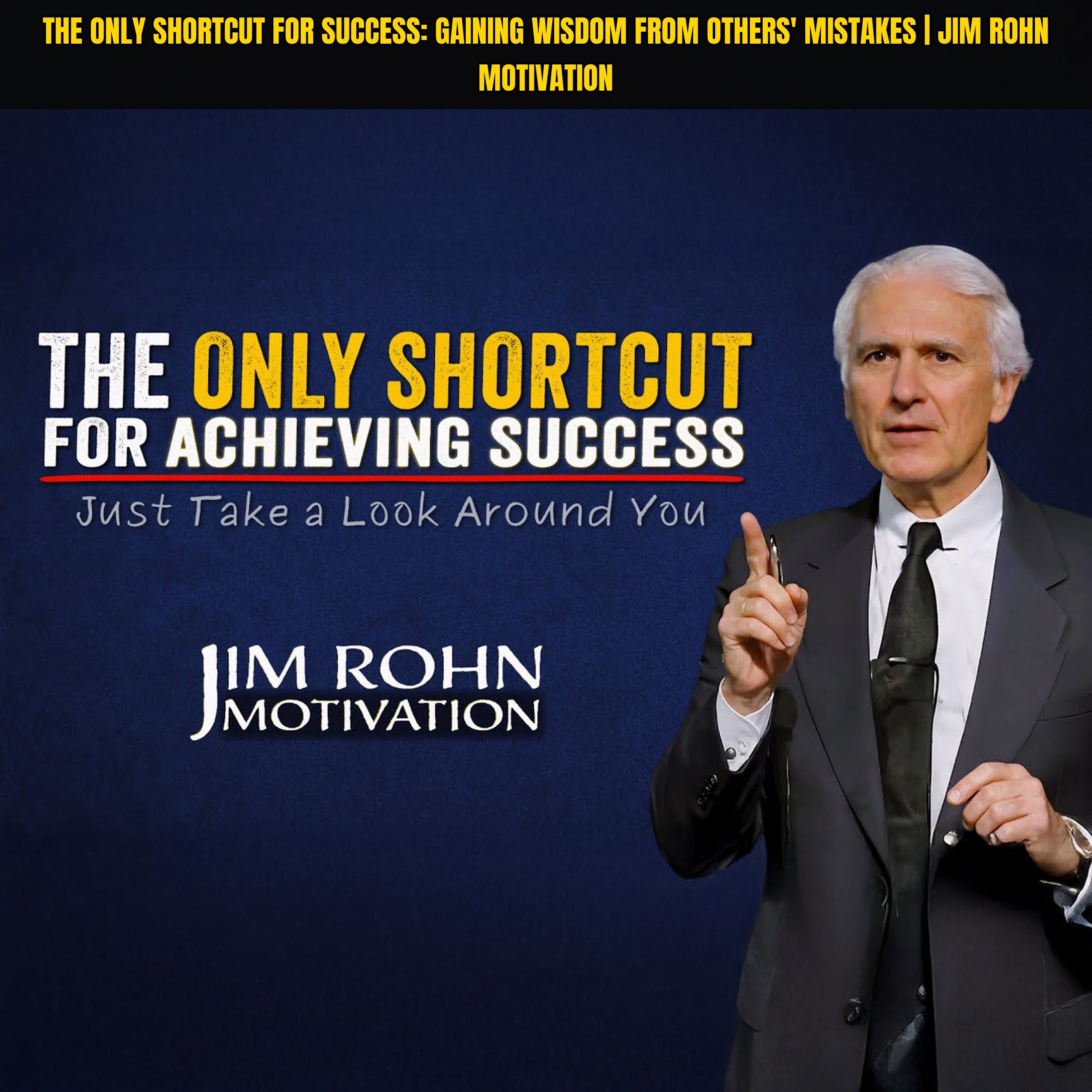
In this Jim Rohn Motivation speech, Jim Rohn reveals the truth about shortcuts to success — and why the only real shortcut is learning from mistakes that aren’t your own. Discover how to compress decades into days by leveraging wisdom, not just effort. Key Topics From This Motivational speech: The illusion of shortcuts and the truth about discipline Why learning from others’ mistakes saves years of struggle The real cost of personal errors and how to avoid them The power of mentorship, books, and biographies How wisdom accelerates your journey to success Jim Rohn teaches that while hard work and discipline are essential, wisdom is the real multiplier. Success doesn’t come from skipping effort but from skipping unnecessary pain. When you learn from the experiences of others — their scars, their failures, their lessons — you buy back time and move faster toward your goals. Every borrowed lesson saves energy, money, and years of recovery. This Jim Rohn Motivational speech Is Perfect For:
What you’re about to hear is a conversation between myself and Dr. Aseem Malhotra, a renowned consultant cardiologist, and close friend of RFK Jr.. I mention that upfront to address the elephant in the room. Our conversation centers around the latest research that colleagues and I have published on LDL cholesterol, ApoB, and their implications for heart disease, particularly in the context of metabolic health. Why are these new findings so important for understanding cardiovascular risk? Is High LDL and ApoB dangerous in the context of Metabolic Health? How can meditation impact heart disease prevention and overall heart health? Why does the scientific community move slowly when it comes to adopting new research? I encourage you to keep an open mind. Scientific narratives, health models, and medical practices evolve as new data emerges. This is the essence of the scientific method. Please Watch THIS Video: https://youtu.be/a_ROZPW9WrY NEW Paper: https://www.jacc.org/doi/10.1016/j.jacad
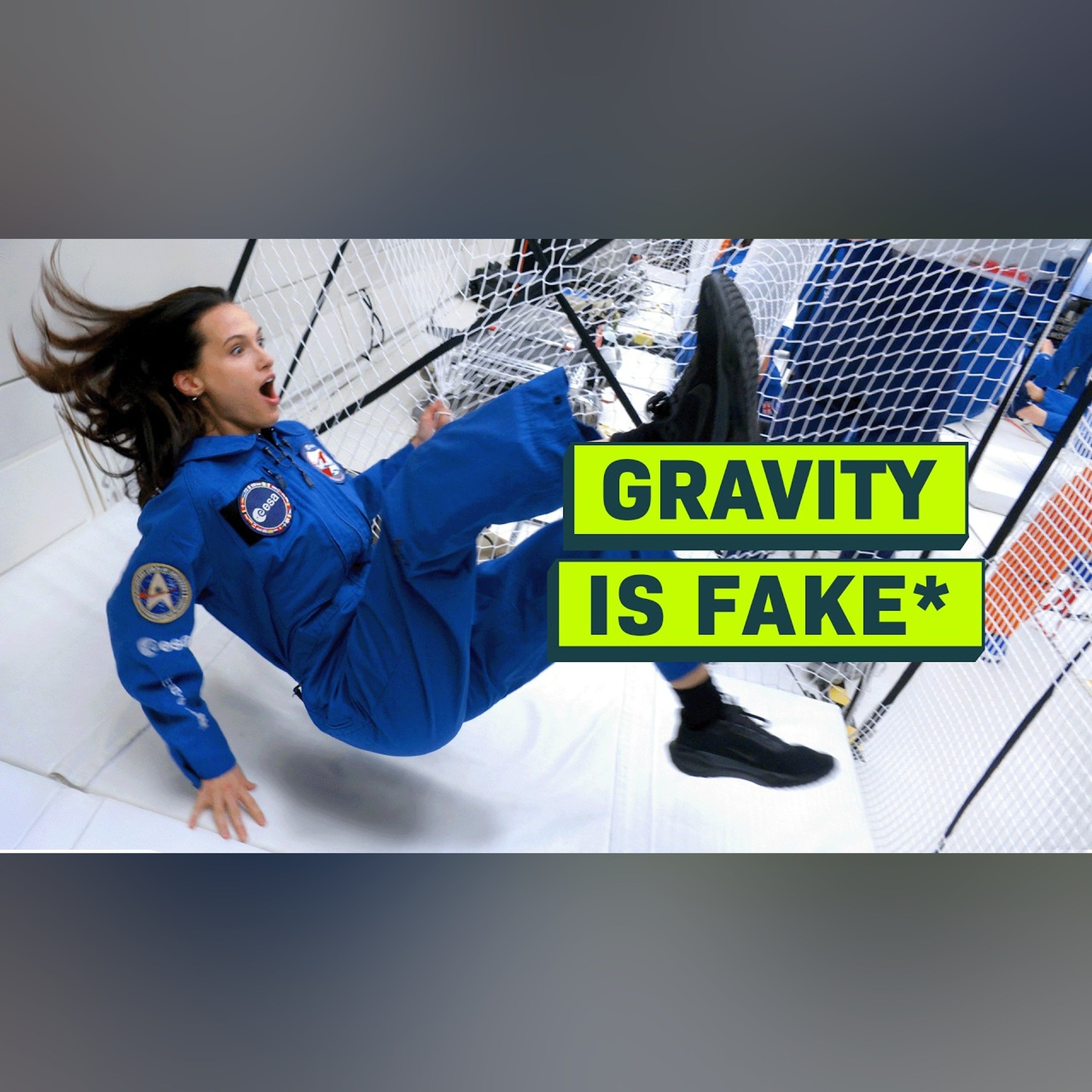
There’s a big problem with gravity… Build and learn with KiwiCo! Gravity is a lie. I went into zero gravity to explain why… But it won't be easy because gravity is actually one of the most controversial subjects in all of physics. This is not some philosophical debate. A huge amount of the tech you use every day depends on our current (limited) understanding of gravity. If we can understand gravity a little bit better, we can build more things that are huge if true! So in this video, I joined the European Space Agency on a real zero gravity flight and interviewed theoretical physicists to understand: What really IS gravity? And what are the real life sci-fi ways we might use it in the future? Chapters: 0:00 The big problem with gravity 0:58 What is a zero gravity flight? 1:40 What is gravity? 2:49 What’s Einstein’s equivalence principle? 3:40 What does zero gravity feel like? 5:52 Why is falling the same as floating? 6:58 How did gravity disappear? 9:28 Why is gravity not a force? 11:3
Join NCI University today to master human behavior and influence: Uploaded 05-11-21 This is a dive to discover the possibilities, not the case itself. Sirhan Sirhan, in full Sirhan Bishara Sirhan, (born March 19, 1944, Jerusalem), Palestinian-born Jordanian citizen who was convicted (1969) of fatally shooting U.S. Sen. Robert F. Kennedy on June 5, 1968. He received the death penalty, but the sentence was later commuted to life. Sirhan, a Christian Palestinian, was born in Jerusalem. In 1948 Jordan took control of East Jerusalem and what is now the West Bank, and the following year it granted citizenship to people living in those areas. It is believed that this is how Sirhan became a Jordanian citizen. In the 1950s, he and his family moved to the United States and eventually settled in Pasadena, California. There he attended Pasadena City College and later held odd jobs, notably working at a horse stable and later at a health food store. During this time, Sirhan became vocal in his oppo
Text me what you thought of the show (https://www.buzzsprout.com/1959372/fan_mail/new) Can working night shifts affect your fertility, ovulation or IVF success? After speaking with numerous women trying to fall pregnant while working shifts, including those undergoing expensive IVF treatment, I wanted to explore what the research actually tells us. In this episode of A Healthy Shift, we discuss how night shifts, disrupted sleep and circadian misalignment may affect reproductive health. We cover: Why the fertile window is so short. Shift work, reproductive hormones and menstrual irregularities. What research says about night shifts, fertility and IVF outcomes. The roles of sleep, stress, nutrition, weight and exercise. Practical steps for women trying to conceive while working shifts. Research links shift work with menstrual irregularities, but evidence that night shifts directly cause infertility or reduce IVF success remains uncertain. If you're trying to get pregnant while working ni
View full lesson: http://ed.ted.com/lessons/surviving-a-nuclear-attack-irwin-redlener The face of nuclear terror has changed since the Cold War, but disaster-medicine expert Irwin Redlener reminds us the threat is still real. He looks at some of history's farcical countermeasures and offers practical advice on how to survive an attack. Talk by Irwin Redlener.
Explore what makes polio so dangerous, what is causing the 21st century resurgence of cases, and how we can eradicate the disease. -- In 1952, polio was everywhere: killing or paralyzing roughly half a million people annually. Yet just 10 years later, paralytic polio cases in the US dropped by 96% and we were on track to get rid of polio for good. But in recent years, the virus started striking back. So, what’s behind these recent spikes? Explore the dangers of poliovirus and the possibility of eradicating this deadly disease. Directed by Anton Bogaty. This video made possible in collaboration with Gates Ventures Learn more about how TED-Ed partnerships work: https://bit.ly/TEDEdPartner A special thanks to Ananda Bandyopadhyay, Amber Zeddies, and Kathleen O'Reilly who provided information and insights for the development of this video. Support Our Non-Profit Mission ---------------------------------------------- Support us on Patreon: http://bit.ly/TEDEdPatreon Check out our merch: htt
Todd Humphreys forecasts the near-future of geolocation when millimeter-accurate GPS "dots" will enable you to find pin-point locations, index-search your physical possessions ... or to track people without their knowledge. And the response to the sinister side of this technology may have unintended consequences of its own. (Filmed at TEDxAustin.) Uploaded 26-06-13 Talk by Todd Humphreys.
Retraining programs should provide financial support as well as new skills.
Share your view, then see how readers voted. No sign-in required. This poll is shared across stories.
Do you agree or disagree?
Common Quandary
A Common Quandary to discuss
Another conversation to explore, separate from this news story.
An old friend refuses to use someone's new name. Do you correct them at the reunion?
At a reunion, an old friend repeatedly uses the name a former classmate had years ago. They say shared history gives the old name affectionate meaning; the classmate has clearly introduced themselves with a different name.
When does preserving your shared past deny who someone is now?