English novelist Jane Austen’s beloved works, like “Pride and Prejudice,” explored the dependence of women on marriage in British high society. Uploaded 21-03-19 -- Whether she’s describing bickering families, quiet declarations of love, or juicy gossip, Jane Austen’s writing often feels as though it was written just for you. Her dry wit and cheeky playfulness informs her heroines, whose conversational tone welcomes readers with a conspiratorial wink. Iseult Gillespie explores the sly societal satire and unique tongue-in-cheek humor of Jane Austen. Lesson by Iseult Gillespie, directed by Compote Collective. Sign up for our newsletter: http://bit.ly/TEDEdNewsletter Support us on Patreon: http://bit.ly/TEDEdPatreon Find us on Twitter: http://bit.ly/TEDEdTwitter Peep us on Instagram: http://bit.ly/TEDEdInstagram View full lesson: https://ed.ted.com/lessons/the-wicked-wit-of-jane-austen-iseult-gillespie Thank you so much to our patrons for your support! Without you this video would not be
Is the world overpopulated or underpopulated? While we worry about there being too many people for the planet to support, we can also worry about how fewer people in a given place may affect the economy, what may happen when there are more elderly people who need care than there are healthcare workers, or even be concerned about how many people are necessary to carry on other aspects of culture. Today, we'll discuss Malthusian and Boserup predictions on the planet's carrying capacity and take a close look at a popular demography tool geographers use to predict population change: the Demographic Transition Model or DTM. Watch our videos and review your learning with the Crash Course App! Download here for Apple Devices: https://apple.co/3d4eyZo Download here for Android Devices: https://bit.ly/2SrDulJ Crash Course is on Patreon! Thanks to the following patrons for their generous monthly contributions that help keep Crash Course free for everyone forever: DL Singfield, Jeremy Mysliwiec,
In this episode of Crash Course Psychology, Hank talks about OCD and anxiety disorders in the hope we'll understand what people with actual OCD have to deal with as well as how torturous anxiety disorders and panic attacks can actually be. Want more videos about psychology? Check out our sister channel SciShow Psych at https://www.youtube.com/scishowpsych -- Chapters: Introduction: Social Stigma of Psychological Disorders 00:00 What Defines an Anxiety Disorder? 1:55 Obsessive-Compulsive Disorder (OCD) 2:35 Generalized Anxiety Disorder (GAD) 4:17 Panic Disorder & Panic Attacks 4:48 Phobias & Avoidance Behaviors 6:06 The Learning Perspective 7:38 The Biological Perspective 9:14 Review & Credits 10:38 -- Crash Course is on Patreon! Want to find Crash Course elsewhere on the internet? Facebook - http://www.facebook.com/YouTubeCrashCourse Twitter - http://www.twitter.com/TheCrashCourse Instagram - https://www.instagram.com/thecrashcourse/ CC Kids: http://www.youtube.com/crashcoursekids
To get some of the old episodes heard. ~~~ Tonight’s guest is Katie Paige from Colorado in the US, And Katie will be sharing her childhood experiences of growing up on the Rocky Mountain Ranch. The Ranch is a place steeped in mystery and high strangeness, some things experienced on the ranch would include cattle mutilation, strange lights, unexplained humming sounds, black helicopters, Sasquatch encounters, and scorch marks on the ground to name but a few. Katie is an author, has spoken at several conferences, and independently investigates and researches through her Rocky Mountain Ranch Research Foundation. She also appears on the History Channel’s Beyond Skin-Walker and the Travel Channel’s UFO Witness. Katie Paige www.katiepaige.net (https://katiepaige.net/) MORE ON THIS EPISODE SHARE YOUR ENCOUNTER Apply to be a guest: Record Your Encounter: SUPPORT UFO CHRONICLES PODCAST Ko-fi: Podcast Merchandise: Follow and subscribe on X: All podcast links: Keep Watching The Skies.
For a full year, A.J. Jacobs followed every piece of health advice he could -- from applying sunscreen by the shot glass to wearing a bicycle helmet while shopping. Onstage at TEDMED, he shares the surprising things he learned. Uploaded 26-07-13 Talk by A. J. Jacobs.
Before Rome ruled a vast empire, it was a small settlement on the banks of the Tiber. But how did this humble beginning become one of the most powerful civilizations in history? Discover the legendary story of Romulus and Remus, the archaeological clues behind Rome's earliest days, and the lives of the farmers, shepherds, and warriors who shaped the young city. Explore its ancient traditions, fierce rivalries, and ambitious kings as myth and history intertwine in the story of Rome's rise. Settle in for a peaceful journey to the beginnings of a civilization that would change the world. Boring History for Sleep — Soft stories about forgotten lives and the events that shaped history.
Giraffes are hard to mistake for just about anything else. This episode explores their extraordinary height, unusually long necks, distinctive coat patterns, and the adaptations that help them survive across the landscapes of Africa. Along the way, you’ll hear about giraffe behavior, their social lives, and the surprisingly complicated biology behind being the tallest animal on Earth. Happy sleeping! Read with permission from Giraffe, Wikipedia, licensed under CC BY-SA 4.0: https://en.wikipedia.org/wiki/Giraffe
Fall asleep to this quiet science story. A Boring Science For Sleep episode about Why Deep-Sea Pressure Crushes Air-Filled Objects. Why Deep-Sea Pressure Crushes Air-Filled Objects Settle in for a quiet exploration of Why Deep-Sea Pressure Crushes Air-Filled Objects. This episode follows The Cups Go Down; Steel Titanium Glass and Ceramic; How the Squeeze Works; When the Shells Gave Way; Letting the Sea In. Listen closely or let the details drift past. If you enjoy this quiet science bedtime pace, you might also like Nature Documentary for Sleep on Spotify — same quiet rhythm, different night. Search Spotify for Nature Documentary for Sleep.
It's the end of COP31's first week, and from a distance the biggest story looks like the buses. More than 92,000 people registered for Antalya, and not all of them seem to have reached the venue. We wonder whether that's where the real deals get done. Ed King, author of the Climate Diplomacy Brief, joins Tom Rivett-Carnac, Christiana Figueres and Paul Dickinson from Antalya with the gossip and the announcements (and some reassurance for those of us who stayed home). Türkiye holds the gavel and Australia runs the negotiations, so who's actually in charge? The flagship pledge to get electricity to 35% of global energy use by 2035 doesn't say the power has to be clean. Campaigners call that a flaw. Christiana calls it creative ambiguity. Countries still can't agree whether there should be a cover decision at all. And with the UK's Andy Burnham the only G7 leader to make the trip, the clearest leadership so far has come from the Solomon Islands, with $400,000 for the Green Climate Fund. Af
Today, Clint Smith is teaching you about the Civil Rights activist and Icon, Reverend Jesse Jackson. Jackson began his career working with Martin Luther King in the 1960s, and in the 1970s he founded PUSH, an organization to advance the cause of urban, poor, and predominantly Black communities. Jackson ran for president of the United States in 1984 and 1988, and founded another organization, the Rainbow Coalition. Jackson has worked for decades for the cause of Civil Rights and his long career has served as a bridge from the work of the 1960s to the movement for Black lives today. Clint's book, How the Word is Passed is available now! https://bookshop.org/books/how-the-word-is-passed-a-reckoning-with-the-history-of-slavery-across-america/9780316492935 Sources: Marshall Frady, Jesse: The Life and Pilgrimage of Jesse Jackson (New York: Random House, 1996). Ernest R. House, Jesse Jackson and the Politics of Charisma: The Rise and Fall of the PUSH/Excel Program (Boulder: Westview Press, 19
Uploaded 18-05-15 View full lesson: http://ed.ted.com/lessons/mansa-musa-one-of-the-wealthiest-people-who-ever-lived-jessica-smith Mansa Musa, the 14th century African king of the Mali Empire, is said to have amassed a fortune that possibly made him one of the wealthiest people who ever lived. Jessica Smith tells the story of how Mansa Musa literally put his empire – and himself – on the map. Lesson by Jessica Smith, animation by Sandro Katamashvili.
Welcome to Crash Course Organic Chemistry hosted by Deboki Chakravarti! Starting next week, we'll be tackling the notoriously complicated subject of organic chemistry, and hopefully having some fun along the way! Series Sources: Brown, W. H., Iverson, B. L., Ansyln, E. V., Foote, C., Organic Chemistry; 8th ed.; Cengage Learning, Boston, 2018. Bruice, P. Y., Organic Chemistry, 7th ed.; Pearson Education, Inc., United States, 2014. Clayden, J., Greeves, N., Warren., S., Organic Chemistry, 2nd ed.; Oxford University Press, New York, 2012. Jones Jr., M.; Fleming, S. A., Organic Chemistry, 5th ed.; W. W. Norton & Company, New York, 2014. Klein., D., Organic Chemistry; 1st ed.; John Wiley & Sons, United States, 2012. Louden M., Organic Chemistry; 5th ed.; Roberts and Company Publishers, Colorado, 2009. McMurry, J., Organic Chemistry, 9th ed.; Cengage Learning, Boston, 2016. Smith, J. G., Organic chemistry; 6th ed.; McGraw-Hill Education, New York, 2020. Wade., L. G., Organic Chemistry; 8th e
This week Craig Benzine clears up the role of committees in Congress. We’ll talk about standing committees, joint committees, conference committees, and caucuses (and not the candidate-choosing kinds) as well as the staff agencies that help advise these committees and congresspeople. As most bills never even make it to the house and senate floors for a vote, the role of committees, and their respective chairpersons as gatekeepers is pretty important. There’s a lot to demystify here as the legislative process can seem pretty arcane at times, but the model, at least in theory, helps Congress run more efficiently. Produced in collaboration with PBS Digital Studios: http://youtube.com/pbsdigitalstudios Support is provided by Voqal: http://www.voqal.org (http://www.voqal.org/) Chapters: Introduction: How does Congress work? 00:00 Congressional committees 0:40 Why does Congress have committees? 1:52 How do congressional committees work? 2:44 How Congress got its leadership structure 4:09 Con
Eric Seider's Tshirts - https://www.ericseider.com/pimpgear Perma Pastures Farm - https://permapasturesfarm.com/ Cultivated Mind - https://cultivated-mind.com/cm/Bond/ Azure Standard - https://www.azurestandard.com/?a_aid=dd1f60ff5d Promo Code - FOODFORHEALTH15 Cell Saviors - https://www.cellsaviors.org/fulvic WAVwatch - $100 Off - https://buy.wavwatch.com/?ref=billy100 Promo Code: BILLY100 EMF Rocks - https://emfrocks.com/PERMAPASTURESFARM If you would prefer to send a check: Living Soil Foundation PO Box 2098 Mars Hill, NC 28754 Richardson Nutritional Center https://rncstore.com/perma Promo Code: perma Above Phone - https://abovephone.com/perma/ Promo Code - PERMA $50 Off
In this episode of The Carbon Removal Scoop, Eve Tamme and Sebastian Manhart sit down with Julia Strong, Founder and Executive Director of the Symbiosis Coalition, the buyers' group whose members, Google, Microsoft, Meta, Salesforce, McKinsey, Bain and REI, have committed to purchase more than 20 million tonnes of nature-based carbon removal. Julia's starting point is that today's nature-based projects look very different from the ones that earned the sector its reputation, and that the world cannot afford to count them out. Julia walks through what she calls the next generation of projects, from dynamic baselines and conservative leakage deductions to digital monitoring, and explains why Symbiosis treats local communities as a driver of durability rather than a co-benefit. She draws a direct line to how corporate power purchase agreements de-risked renewables, and points to Living Carbon as evidence the model is starting to work: a Symbiosis offtake followed a few weeks later by $500
Seven whiny emails, some light threatening, and a few passive-aggressive cc’s later, Jenny looks back at a stalled project and wonders how a skilled leader got herself in this mess: https://podcasts.apple.com/us/podcast/the-center-for-medical-simulation/id1279266822 This week on Curious Now, we’re looking at measuring and marking our own contributions when we find ourselves in a mess, whether personal or at work. We’re often blind to our contributions, because how we are framing the situation in our own mind is part of what contributes to our actions, and those actions contribute to the results we get, and we’re usually not aware of that process. Workout of the week: Reverse engineer a mess that you’re in. What are the results that you’re getting, what are you doing or not doing that’s contributing to those results, and what beliefs or feelings are you holding that are leading to those actions/inactions? Leadership Coaching from Jenny Rudolph: https://harvardmedsim.org/personal-leaders
Dig into the science of what makes period cramps so painful, and find out what we still don’t know about this common experience. -- Period pain affects hundreds of millions of people. Anywhere from 50 to 90% of people who menstruate deal with painful abdominal or pelvic cramps during their period. Individual experiences can vary, from mild discomfort, to throbbing aches, to contraction-like cramps that rival the pain of labor. So, why do menstrual cramps hurt so much? Chen X. Chen explains this surprisingly common experience. Lesson by Chen X. Chen, directed by Caitlin McCarthy. Support Our Non-Profit Mission ---------------------------------------------- Support us on Patreon: http://bit.ly/TEDEdPatreon Check out our merch: http://bit.ly/TEDEDShop ---------------------------------------------- Connect With Us ---------------------------------------------- Sign up for our newsletter: http://bit.ly/TEDEdNewsletter Find us on Twitter: http://bit.ly/TEDEdTwitter Peep us on Instagram: http
When a husband and father died suddenly in a tragic accident, his wife was left trying to comfort their two young children while struggling with her own overwhelming grief. On their first night back home, the three slept together, hoping to find some comfort in one another. But as she lay awake, something unexpected appeared beside the bed. Although its appearance was unsettling, she felt an unmistakable sense of love and peace. She believed her husband had somehow returned. The following evening brought another extraordinary experience. And over the next several days, she wasn't the only one who began noticing things that seemed connected to him. There were familiar scents, unexplained sounds, and encounters that left the family wondering whether he was still close by. Had he found a way to come home one more time—to comfort the family he'd left behind? #RealGhostStoriesOnline #TrueGhostStories #AfterDeathCommunication #SpiritVisitation #SignsFromBeyond #LifeAfterDeath #LovedOnesInSpi
In the late 1950s the scientist and novelist C.P. Snow declared that there’s a deep divide between the world of the arts and the world of science, as he famously said they are two cultures. He argued that, oftentimes, those involved in the arts have little knowledge or interest in science and the same vice versa. Even at the time this was a controversial opinion, but it’s an idea that has never truly gone away. In this episode, we’re joined by Prof Anne Osbourn, a biologist based at the John Innes Centre and founder of the Science, Art and Writing (SAW) Trust to talk about the crossover between art and science and to share some poems from her collection Rockall. She talks to us about her lifelong love of both science and the arts, how creative thinking is essential in both disciplines, and shares the work the SAW Trust does on encouraging us all to explore every aspect of the way we view the world.
This is a Grave Talks CLASSIC EPISODE! PART TWO At just five years old, Connie LaFave experienced her first encounter with the paranormal — an event that set the tone for the rest of her life. What might have been dismissed as childhood imagination instead became the beginning of repeated and increasingly intense experiences. Over the years, Connie faced phenomena that extended far beyond simple ghost sightings. Her accounts include possession-like episodes, unexplained presences, and even encounters involving ghostly animals. These events were not isolated moments but recurring experiences that shaped how she viewed the world and her place within it. Rather than retreat from what she couldn’t explain, Connie chose to confront it. Her journey led her toward helping others who find themselves overwhelmed or frightened by paranormal activity, offering guidance rooted in personal experience rather than theory. #TheGraveTalks #ConnieLaFave #ParanormalExperiences #PossessionStories #GhostEn
Mission Operations Engineer Ian Orzechowski joins us to demystify what it actually takes to operate satellites in space. We discuss managing small satellite constellations, the transition from multi-million-dollar bespoke satellites to commercial off-the-shelf hardware, and how satellite operations balance attitude control, battery health, and command authority (the ABCs of mission ops). Ian also shares stories about recovering tumbling satellites using torque rods, handling solar storm radiation, thermal management in a vacuum, orbital mechanics, collision avoidance maneuvers, and why testing hardware on the ground can sometimes do more harm than good. Discussion Resources & Links Hubble Network (https://hubble.com/) – Satellite constellation enabling direct-to-satellite Bluetooth Low Energy (BLE) connectivity The Amp Hour #728: Space Age Bluetooth with Alex Haro (https://theamphour.com/728-space-age-bluetooth-with-alex-haro/) – Deep dive into Hubble Network's underlying BLE-to-satell
How can you do more to protect our oceans? And could you help to address youth unemployment in coastal areas at the same time? These were the questions that Wietse van der Werf was attempting to answer when he set up the Sea Ranger Service in 2016. In this episode, Wietse discusses the wide-ranging conservation work that the ambitious social enterprise has undertaken over the last decade, and how it has created employment opportunities for young people at the same time. Also joining us is Molly King, who made it through the arduous Sea Ranger bootcamp to become one of the UK's first ever Sea Rangers. She tells us about her experience of conducting marine bird surveys in the Celtic Sea, as well a precarious voyage to the Netherlands to monitor shipwrecks. Find out more about the Sea Ranger Service, including details of how to apply for the next Sea Ranger bootcamp, at searangers.org (https://searangers.org/) Photo: Oliver Hurley This episode was presented by Oliver Hurley, hosted by Pau
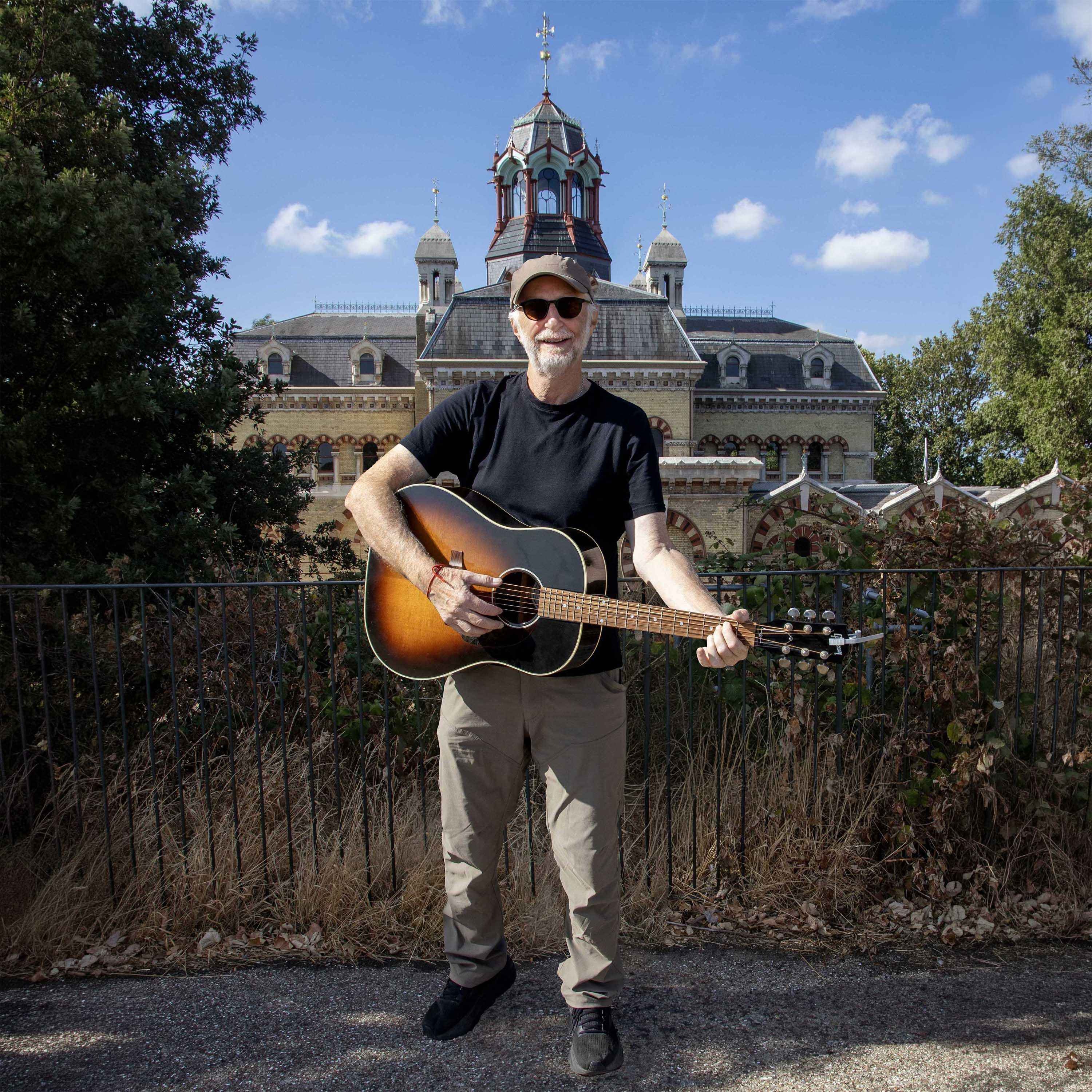
Who better to join us on our 100th walk than Billy Bragg? He takes Matthew along the route of the Northern Outfall Sewer in East London, which was designed by Joseph Bazalgette as part of his revolutionary waste disposal system for London. Nowadays, thank goodness, it is covered by a Greenway which welcomes walkers and cyclists. Along the way Billy reflects on its history, talks about his own early musical career, sings a new song about a Victorian shipping disaster on the Thames, unleashes his ode to the A13 trunk road and visits the grave of his great grand parents. It is a moving, enlightening and often very funny journey in the company of a legendary musician and campaigner. --- Celebrate 100 walks with a piece of Folk on Foot history! Our specially commissioned art print features the names of all 100 walks, with just 100 copies available. Make one yours before they're gone: https://www.folkonfoot.com/print --- We rely on support from our listeners to keep this show on the road. If
Dan, James, Anna and Andy discuss shopping, sneezing and Skiantos. They can't harm you, if they can't find you! Use code [FISH] at the link below and Edited by James Harkin Produced by Leying Lee Team includes Tara Dorrell, Joe Mayo and Ethan Ruparelia