BDSM has become increasingly visible in popular culture, but how much do people really understand about dominance and submission? Being dominant doesn't necessarily mean being aggressive or controlling, just as being submissive doesn't mean being weak or powerless. In fact, healthy power exchange often looks very different from what we see in the media. In this episode, we're separating fact from fiction and exploring the real psychology of kink. My guest is Shelby Devlin (https://www.shelbydevlin.com/), a sex and intimacy coach, educator, and author specializing in BDSM, kink, and fetish. With over twenty years of experience in the BDSM community, she blends academic expertise with hands-on practice as a coach and instructor at the Somatica Institute. She is author of the new book The Pleasure Protocol: A Contemporary Guide to BDSM. (https://link.amazon/B09jEPhVx) Some of the specific topics we cover include: What does popular culture get wrong about kink? What separates a skilled dom
Today Hank explains the skeletal system and why astronauts Scott Kelly and Mikhail Kornienko are out in space studying it. He talks about the anatomy of the skeletal system, including the flat, short, and irregular bones, and their individual arrangements of compact and spongy bone. He'll also cover the microanatomy of bones, particularly the osteons and their inner lamella. And finally, he will introduce the process of bone remodeling, which is carried out by crews of osteocytes, osteoblasts, and osteoclasts. Pssst... we made flashcards to help you review the content in this episode! Find them on the free Crash Course App! Download it here for Apple Devices: https://apple.co/3d4eyZo Download it here for Android Devices: https://bit.ly/2SrDulJ Chapters: Introduction: Astronaut Bones 00:00 Structure of the Skeletal System: Axial & Appendicular Bones 2:33 Bone Shapes: Long, Short, Flat, and Irregular 3:11 Internal Bone Structure 3:47 Osteons and Their Lamellae 5:05 Osteoblasts and Osteoc
In which John Green teaches you about what is often called the Reagan Era. Mainly, it covers the eight years during which a former actor who had also been governor of the state of California was president of the United States. John will teach you about Reagan's election victory over the hapless Jimmy Carter, tax cuts, Reagan's Economic Bill of Rights, union-busting, and the Iran-Contra among other things. Learn about Reagan's domestic and foreign policy initiatives, and even a little about Bonzo the Chimp. Hey teachers and students - Check out CommonLit's free collection of reading passages and curriculum resources to learn more about the events of this episode. Ronald Reagan signaled a shift to conservative values on the role of government, discussed in his "Time for Choosing" Speech: https://www.commonlit.org/texts/from-a-time-for-choosing-speech America turned to President Reagan for comfort in times of tragedy, including following the Challenger Disaster: https://www.commonlit.org/
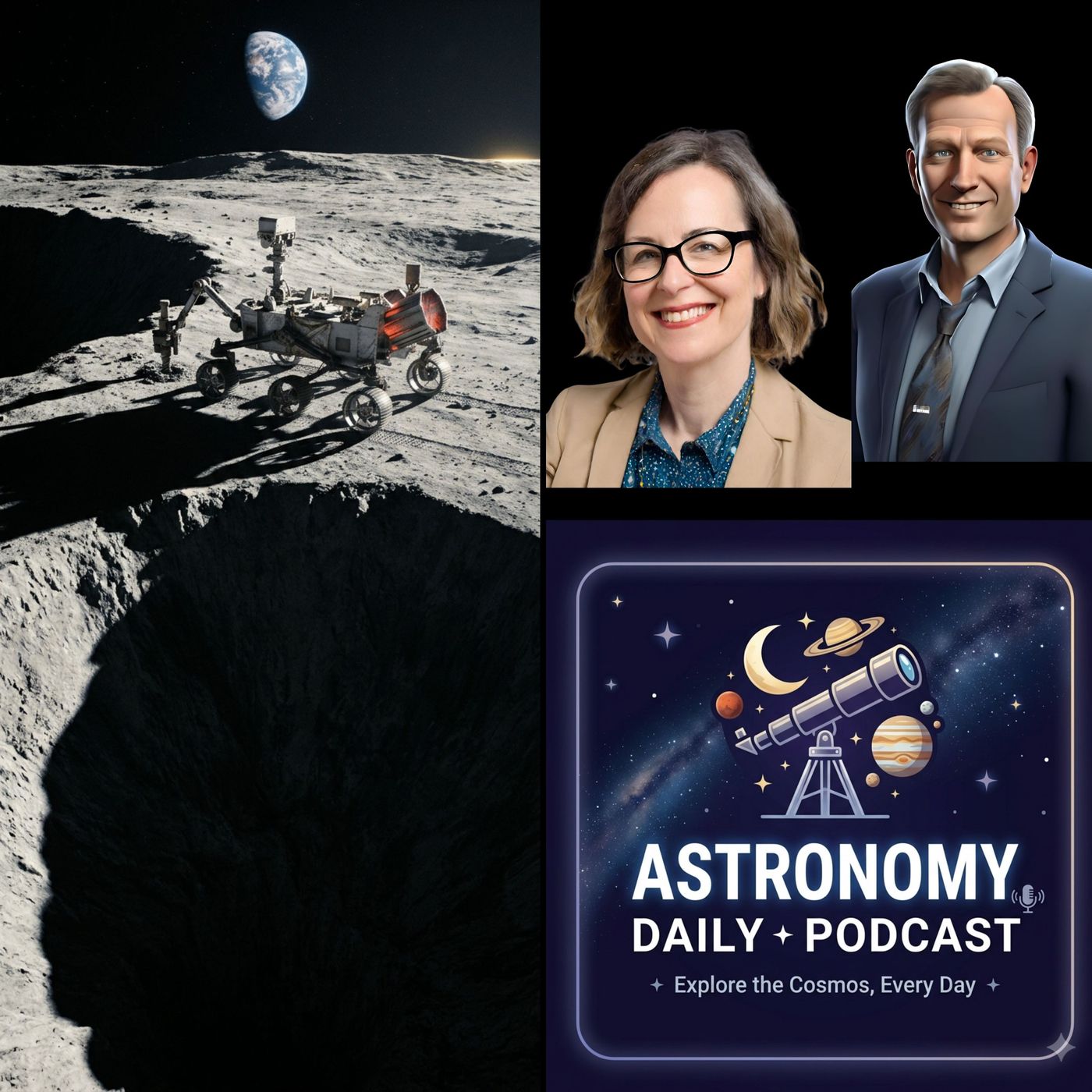
Show notes NASA turns Curiosity's spare test-bed rover into PROMISE, a nuclear-powered rover bound for the Moon's south pole, as part of a sweep of Moon Base awards. Plus: a theory of 'gravitational reconnection' hidden in Einstein's equations, a record 9.7-picokelvin quantum gas aboard China's Tiangong space station, ESCAPADE's twin burns over southern Australia, and a both-hemispheres skywatch. NASA's PROMISE rover and the Moon Base awards NASA Release 26-095 (7 Nov 2026) and PROMISE mission page. JPL is converting the duplicate Curiosity test-bed rover, powered by a flight-spare MMRTG, for a late-2028 launch and an 18-month mission at the lunar south pole. Blue Origin: $94M base + $140M option to deliver it on Mark 1. Also: eight CLPS 2 companies ($10B maximum, 10 years), CLPS 1 raised to $4.2B, six VADR task orders (~$1.3B), a 2028 Starship cislunar communications demo. https://www.nasa.gov/news-release/nasa-awards-moon-base-transportation-technology-science-projects/ https://www.n
In partnership with Frontiers Science House, we bring you the next installment of our Why? series. Today, we tackle one of science's most hotly debated fields and ask: Why geoengineering? What do we mean by it? Can reflecting the sun really help improve the climate? And what are the arguments for and against it? We hear from Martin Stew, science correspondent for ITV News; Dakota Gruener, CEO of Reflective, which aims to accelerate sunlight-reflection research; and Mark Maslin at University College London and David Keith at the University of Chicago, who put geoengineering on trial. Like this podcast?
As the nights draw in, many of us can experience low mood. But for a small proportion of people a more intense depression develops through the winter months. It’s a phenomenon that since the 1980s has been labelled seasonal affective disorder, or Sad, and can be debilitating for sufferers. To find out more about the latest scientific understanding of Sad, Ian Sample speaks to Russell Foster, professor of circadian neuroscience at the University of Oxford. He explains what scientists think the mechanism for the condition could be and what the evidence says about the best way to tackle it. • In the UK and Ireland, Samaritans can be contacted on freephone 116 123. In the US, you can call or text the 988 Suicide & Crisis Lifeline at 988 or chat at 988lifeline.org. In Australia, the crisis support service Lifeline is 13 11 14. Other international helplines can be found at befrienders.org.
Battery factories can now produce roughly twice the storage cells the world installs each year, yet cell prices rose in 2026. Lithium, tariffs and sourcing rules, not manufacturing costs, now decide what a battery costs and where it can be sold. Iola Hughes, Head of Research at Benchmark Mineral Intelligence, returns to Transmission to explain what is really moving the global battery market, from Chinese factory lines to US tariff schedules. They cover: Why a storage cell costs around $50/kWh in China, while US prices are ticking up, and why there's no longer one global battery price. What China's anti-involution campaign means for an industry with 6 to 6.5 TWh of cell capacity running at around 50% utilisation. Why over 1 GWh of sodium-ion storage projects were cancelled this year, and why new chemistries must beat where lithium-ion will be in five years, not where it is today. How Bulgaria installed over 5 GWh of battery storage this year and overtook Germany, as average project size
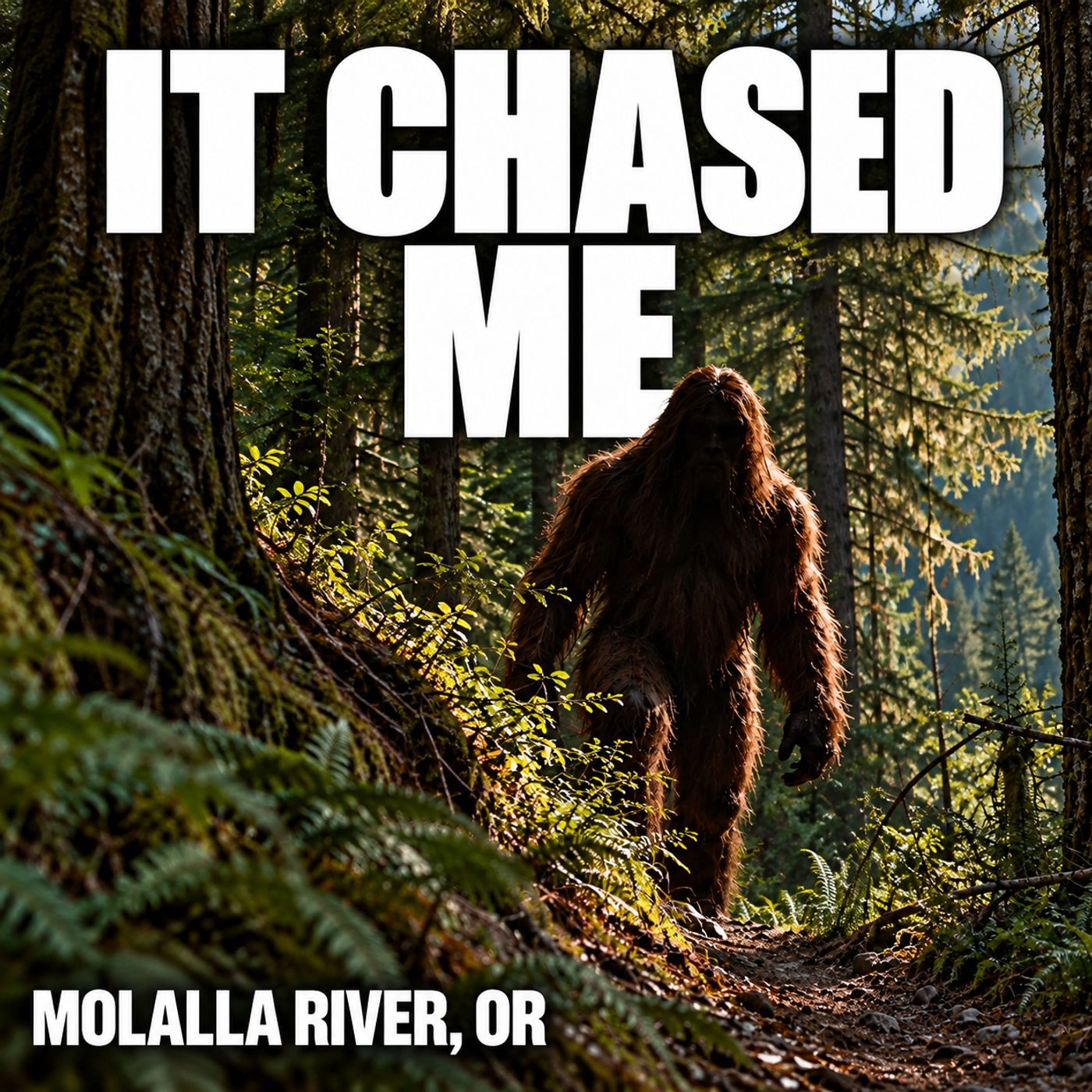
Every time Ed answered the screams, they sounded closer to camp. Then the woods went silent. Deep in Oregon’s Molalla River Corridor, Ed says something came crashing through the trees, emerged just feet away, and stared at him. When he ran for his truck, it followed. His escape ended with a friend firing warning shots. On this episode of Bigfoot Society, Ed recounts the repeated encounters that drew him back to a remote campsite his group called “Bigfoot Camp.” He describes exchanging calls with something on the mountainside, watching three figures bend a tree toward the ground, and hearing a scream during a hunting trip that he says made the ground vibrate beneath him. What had he been calling into camp—and what happened when it finally reached him? Hear Ed’s firsthand account of Bigfoot encounters in the Oregon woods and the pursuit he still struggles to remember in full. Originally released as Episode 580 on 11/6/24. Get the free Bigfoot hotspots report: https://bit.ly/bfsreport Fol
Why, why, why does our education system look so similar to the way it did 50 years ago? Millions of students were failing then, as they are now -- and it's because we're clinging to a business model that clearly doesn't work. Education advocate Geoffrey Canada dares the system to look at the data, think about the customers and make systematic shifts in order to help greater numbers of kids excel. Uploaded 16-08-13 Talk by Geoffrey Canada.
When you think about the technology that helps us prevent outbreaks, what do you think of? Vaccines? Lab tests? Medications? What about toilets? That's right! Toilets are an important piece of technology that can help us prevent outbreaks! Toilets are a part of infrastructure, the important system that we'll be talking about in this episode of Crash Course Outbreak Science. We'll look at how from physical infrastructure, from toilets, to sewers, to roads, and more, creates healthier environments for us and helps us prevent and deal with outbreaks. This episode of Crash Course Outbreak Science was produced by Complexly in partnership with Operation Outbreak and the Sabeti Lab at the Broad Institute of MIT and Harvard—with generous support from the Gordon and Betty Moore Foundation. Episode Sources: https://journals.plos.org/plosone/article?id=10.1371/journal.pone.0016085 (https://journals.plos.org/plosone/article?id=10.1371%2Fjournal.pone.0016085) https://journals.plos.org/plosmedicine/
Today we’re going to take a closer look at these beautiful but dangerous landforms as we explore the different types of volcanoes and trace the patterns of volcanic activity around the world. From the explosive power of a stratovolcano like Mount St. Helens in Washington to the quiet but consistent eruptions of a shield volcano like Kīlauea in Hawaiʻi, volcanoes are like windows into the center of the Earth helping us understand more about how it all works. Watch our videos and review your learning with the Crash Course App! Download here for Apple Devices: https://apple.co/3d4eyZo Download here for Android Devices: https://bit.ly/2SrDulJ Crash Course is on Patreon! Thanks to the following patrons for their generous monthly contributions that help keep Crash Course free for everyone forever: Michael M. Varughese, Ben Follows, Kyle & Katherine Callahan, Laurel A Stevens, Chris Routh, Evan Lawrence Henderson, Vincent, Emilee Murphy, Michael Wang, Jordan willis, Krystle Young, Michael Dow
What even is a word? Well… linguists don’t really know! But that’s ok! When linguists want to get super specific, we don’t even talk about words, we talk about morphemes instead. In this episode of Crash Course Linguistics, we’re diving into the topic of morphology and what makes up these things we call words. Want even more linguistics? Check out the Lingthusiasm podcast, hosted by the writers of Crash Course Linguistics: https://lingthusiasm.com/ Check out Self-Evident on PBS Voices: https://youtu.be/Bwsne4eMVyU Acknowledgements: Daniela Diedrich, William Forshaw, Hannah Gibson, Diane Lillo-Martin *** Watch our videos and review your learning with the Crash Course App! Download here for Apple Devices: https://apple.co/3d4eyZo Download here for Android Devices: https://bit.ly/2SrDulJ Crash Course is on Patreon! Thanks to the following patrons for their generous monthly contributions that help keep Crash Course free for everyone forever: Catherine Conroy, Patty Laqua, Leonora Rossé Muñ
In 2011, President Barack Obama presented Jonathan Lundgren with the Presidential Early Career Award for Scientists and Engineers for his work as an entomologist and researcher. This is a pretty high honour, in fact it’s the highest. Jonathan came to Australia as a special guest of VicNoTill in 2016. He visited farms in our network and spoke at our annual conference about something we hadn’t heard much about in Australia at that time. Regenerative agriculture. What many of our farmers may not have realised in 2016 was that this highly-decorated, knowledgeable and enthusiastic researcher was having a pretty rough time. What he was discovering through his research didn’t line up with what the government who employed him wanted to hear. Back in 2016 Jonathan warned that the agricultural industry was using so many pesticides because it had created a pest problem. The solution he presented was to diversify farming, and to only 'resort to' using pesticides, herbicides, fungicides, not use th
Chronic illness is more than a physical battle Chronic illness is more than a physical experience—it can profoundly impact our mental health, relationships, and sense of self. In this episode, Ann Kelley sits down with Destiny Davis, LPC, CRC, a therapist specializing in chronic illness, to explore the emotional toll of living with unexplained symptoms, delayed diagnoses, and medical invalidation. Together, they discuss how chronic conditions like MCAS, chronic fatigue, and long COVID challenge our understanding of illness, and why being believed is often an essential part of healing. Through personal experiences and clinical insights, Destiny shares how acceptance and commitment therapy (ACT), pacing, and grief work can help individuals navigate chronic illness without losing sight of their values and identity. They also discuss the importance of challenging medical bias, supporting loved ones without trying to fix them, and creating safer, more compassionate therapeutic spaces. Disco
We’ve learned a lot about plants throughout this series, but there’s much more to discover. In this episode of Crash Course Botany, we’ll peek into the future of botany. We’ll consider current plant mysteries, bridges between Western science and traditional knowledge, and what it might take to garden on the moon. Chapters: Our Plant Elders 00:00 Plant Sensory Perception 1:35 Plant Communication 3:24 Plants in Space 5:06 Ethnobotany 7:11 Solving Global Problems with Plants 9:03 Review & Credits 11:15 Sources: https://docs.google.com/document/d/1PB6WdUJcABAccO-U-t6ic7WbfP2z0Pr5P9a8HMr6zh4/edit?usp=sharing *** Crash Course is on Patreon! Thanks to the following patrons for their generous monthly contributions that help keep Crash Course free for everyone forever: Leah H., David Fanska, Andrew Woods, Tawny Whaley, Sean Saunders, DL Singfield, Ken Davidian, Stephen Akuffo, Toni Miles, Steve Segreto, Kyle & Katherine Callahan, Laurel Stevens, Burt Humburg, Aziz Y, Perry Joyce, Scott Harrison
By dissecting a cockroach ... yes, live on stage ... TED Fellow and neuroscientist Greg Gage shows how brains receive and deliver electric impulses -- and how legs can respond. "The Cockroach Beatbox" was animated by the TED-Ed Animation Team (Jeremiah Dickey, Biljana Labovic, Celeste Lai, Kari Mulholland and Franz Palomares) View the full lesson: http://ed.ted.com/lessons/the-cockroach-beatbox
She was sitting alone in a neighborhood café when her mother called to say her father had been taken to the hospital. He was awake and talking, and no one yet knew how serious it was. Her mother told her not to make the two-hour drive until they knew more. Then an elderly man in the next booth noticed how upset she was and started talking to her. He listened, made her laugh, and finally gave her some very simple advice: if she wanted to see her father, she should go. She did—and arrived in time for hours with him she would never have gotten back. Two weeks later, she returned to the café hoping to thank the stranger who had helped her make that decision. The waitress knew exactly who she was describing. There was just one problem. #GhostStories #Afterlife #SpiritEncounter #SignsFromBeyond #Paranormal #LifeAfterDeath #FinalGoodbye #Unexplained #GhostStory #Ghosts #Paranormal Love real ghost stories? Want even more? Want even more? Stay connected with us on social: Instagram: https://www
Are we in the center of the universe? Or does it just feel like it sometimes? Neil deGrasse Tyson and comedian Jordan Klepper tackle a grab bag of fan questions on curiosity, conspiracy, and cosmology. Thanks to our Patrons James Isminamo, Michael Kahn, Mathew Anderson, matthew yatsko, George Crenshaw, Cathy Ferreira, Friend, Lou Incognito, Halo, Tjerk Eikmans, Darlene Elkins, Antonio Jr Mangia, Paul Stumbo, John Adames, Ken Hedden, Jason Pennington, James Meler, Brian Melcher, Hoda Vala, Sazonao, Griff, Matthew Tucker, and Aaron Egigian for supporting us this week. Hosted by Simplecast, an AdsWizz company.
This is a Grave Talks CLASSIC EPISODE! Award-winning filmmaker, author, and historian Larry Eissler III joins The Grave Talks to discuss his latest documentary projects centered on one of the most famous and controversial paranormal cases in American history—the Watseka Wonder. Larry shares insight into The Séance and The Séance: Bloodlines, both filmed on location at the historic Roff House, where the original events took place. Working with paranormal investigators and psychic mediums, the films combine historical documentation with modern séance work in an effort to better understand what happened there. The Watseka Wonder dates back to the late 1870s, when teenage girl Lurancy Vennum fell ill and claimed the spirit of a deceased girl, Mary Roff, had taken control of her body. She spoke as Mary, recognized her family, and lived for weeks as someone else entirely. No clear explanation has ever emerged—and nearly 150 years later, the case continues to raise unsettling questions. For m
Waste, whether that's in food, farming or other industries, is the focus for COP31, the climate change talks being held in Turkey. Tens of thousands of delegates will meet over the next 10 days, and they'll be discussing ways to reduce the impact of waste on the planet and trying to agree new targets. The Waste and Resources Action Programme, or WRAP, is calling on the COP to formally recognise the damage caused by food waste and to commit to global policies to tackle it. It's peak season for British-grown root veg - and that's what we're looking at all week. Traditionally crops like carrots, celeriac and beetroot are grown in fertile soils, ploughed and tilled, to create a fine tilth or bed, for sowing seeds and producing consistent crops. One market garden in Gloucestershire is doing the complete opposite, growing 50 types of vegetables in an organic regenerative system. How do you produce root veg in the stony soils of the Cotswolds, without digging? School milk has been on the menu
En réponse à une question sur le fait de se tourner vers l'intérieur, Sadhguru demande : sommes-nous même sûrs de ce qui est à l'intérieur et de ce qui est à l'extérieur de nous-mêmes ? La première étape de la compréhension, explique-t-il, est de laisser de côté les choses que nous ne connaissons pas et de travailler à la clarté de la perception. En conversation avec le Mystique, Vinita Bali avec Sadhguru, Conscious Planet:https://consciousplanet.org/fr Sadhguru App (Download):https://onelink.to/sadhguru__app !!!
Two “super-puff” planets appear to orbit a bright star about 1100 light-years from Earth. They’re as big as Jupiter, the giant of our own solar system. But they’re only a few percent the mass of Jupiter. That makes them extremely puffy – the least-dense worlds yet seen – less dense than cotton candy. Such planets are called super-puffs. The planets orbit the star TOI 791. It’s a little bigger and heavier than the Sun, and a few times brighter. But it’s too far south to see from all but a sliver of the United States. The planets were discovered by TESS, a planet-hunting space telescope. But it took years for astronomers to winnow out their details. They used almost a dozen ground-based telescopes, including one near the south pole. The planets periodically pass in front of their star, dimming the star’s light. But the gravity of each planet tugs at the other, changing the timing of these transits. The scope of the change revealed the masses of the planets. One planet orbits at a little
You are standing in the grocery store, navigating a labyrinth of aisles stacked high with colorful boxes, bags, and cans. You reach for a loaf of bread that promises to stay soft for weeks, a box of crackers that will be crisp a year from now, and a frozen dinner that offers a complete meal with a three year shelf life. It feels like a modern miracle of convenience and value. You are a strategic person, a peak performer who values efficiency. This food seems to align perfectly with a busy, optimized lifestyle. But have you ever stopped to ask the fundamental question: What has been done to this food to make it last so long? And more importantly, What is the cost of that longevity to my own health and vitality? The truth is, the modern grocery store is not primarily a purveyor of nutrition. It is a warehouse. And for the manufacturers who supply it, the single most important metric is not how well a food nourishes your body, but how long it can survive in the complex, time-consuming jou
Did you know that Polymers save the lives of Elephants? Well, now you do! The world of Polymers is so amazingly integrated into our daily lives that we sometimes forget how amazing they are. Here, Hank talks about how they were developed, and the different types of Polymers that are common in the world today, including some that may surprise you. Pssst... we made flashcards to help you review the content in this episode! Find them on the free Crash Course App! Download it here for Apple Devices: https://apple.co/3d4eyZo Download it here for Android Devices: https://bit.ly/2SrDulJ -- Table of Contents Commercial Polymers & Saved Elephants 0:00 Ethene AKA Ethylene 2:29 Addition Reactions 3:08 Ethene Based Polymers 4:44 Addition Polymerization & Condensation Reactions 6:32 Proteins & Other Natural Polymers 8:33 -- Crash Course is on Patreon! Want to find Crash Course elsewhere on the internet? Facebook - http://www.facebook.com/YouTubeCrashCourse Twitter - http://www.twitter.com/TheCrashC