JONATHAN LUNDGREN - The bigger the farm, the sicker you are
57 min
Listen through the publisher, then discuss the episode here or arrange an in-person Roundtable. Your city determines where to meet.
Roundtables are designed for groups of four, with a shared subject and room for everyone to speak. Come for discussion, with no dating expectation.
In 2011, President Barack Obama presented Jonathan Lundgren with the Presidential Early Career Award for Scientists and Engineers for his work as an entomologist and researcher. This is a pretty high honour, in fact it’s the highest. Jonathan came to Australia as a special guest of VicNoTill in 2016. He visited farms in our network and spoke at our annual conference about something we hadn’t heard much about in Australia at that time. Regenerative agriculture. What many of our farmers may not have realised in 2016 was that this highly-decorated, knowledgeable and enthusiastic researcher was having a pretty rough time. What he was discovering through his research didn’t line up with what the government who employed him wanted to hear. Back in 2016 Jonathan warned that the agricultural industry was using so many pesticides because it had created a pest problem. The solution he presented was to diversify farming, and to only 'resort to' using pesticides, herbicides, fungicides, not use them as a first option. Lundgren has been running his own regenerative farming system to prove farmers can produce high yields, big profits and enough food by rotating crops to suppress pest populations naturally. Ten years on and Jonathan work in the science field is gathering momentum and traction. Earlier this year, he was invited back to the White House to meet with President Trump to talk about regenerative agriculture, and in October his foundation Ecdysis, released the first Research Paper from the 1000 Farms project. The key finding? The bigger your farm, the sicker you are. The 1000 Farms project has just landed in Australia, and Farmers helping Farmers president Michael Gooden’s farm is one of around 16 being researched. In this episode Michael has a long list of questions but before he can begin, Jonathan turns the tables and starts interviewing him. He is seeking answers from Australian farmers like Michael who manage regenerative systems because they are the ones defining what ‘regenerative’ is. Farmers helping farmers knows how to bring people together and be a tool for change. Science is still catching up. Read a full copy of the 1000 Farms Report Regenerative agriculture: connecting soil carbon storage, biodiversity, and profit HERE. (https://iopscience.iop.org/article/10.1088/2976-601X/ae8f4e)
Episode information is provided by the publisher. Listening takes place on the publisher’s service.
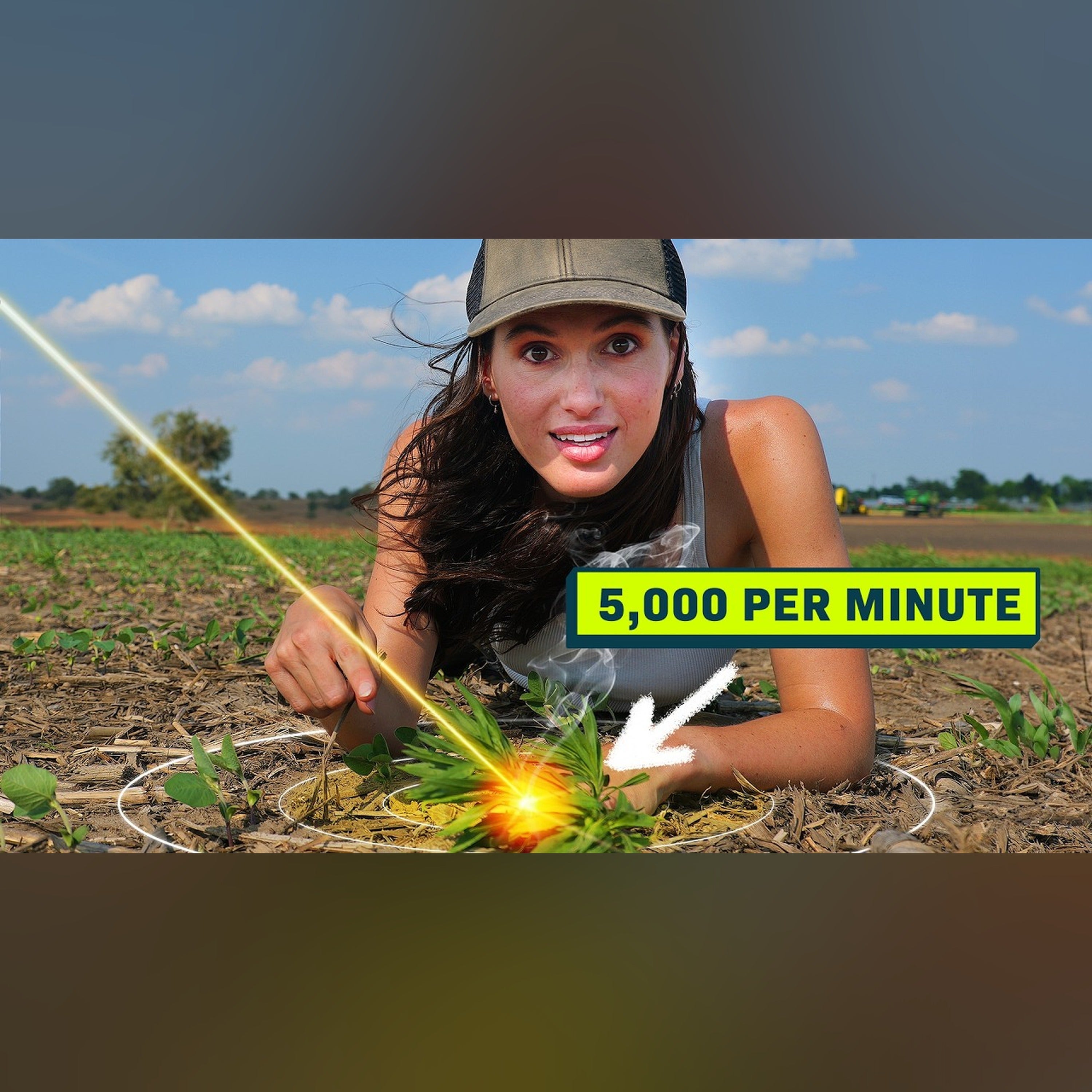
Growing food doesn’t look like I thought… Learn more about Dropbox for teams: https://www.dropbox.com/cleo Thanks Dropbox for sponsoring this video! Right now, we’re living through one of the most pivotal moments in food history… and most people have no idea it’s happening. Experts are calling the “Fourth Agricultural Revolution” and it’s here because we’re facing a big problem: The world’s population is rising, so experts say we’ll need to increase food output to catch up with our current population and feed those new people. But we’ve got to do it in ways that actually protect the Earth long term. Right now, farmers are in a fight to feed the world. So let me show you some of the coolest machines they’re using to do it… Chapters: 0:00 What’s the fourth agricultural revolution? 01:15 Why do we need more food? 1:54 Where does farming tech get tested? 3:00 What were the first 3 agricultural revolutions? 3:58 How do we feed billions more people… better? 4:31 How do farmers grow more food
After her father died suddenly, she inherited more than the family farm. She inherited the responsibility of keeping it running without the man who had spent nearly his entire life there. Then the longtime farmhands began quietly sharing strange experiences. One heard her father whistling outside the machine shed. Another heard his familiar footsteps in an empty barn. Someone else saw a man wearing his old brown work jacket standing beside a gate—only to look again and find no one there. She told them grief and memory could make familiar sounds feel more meaningful than they were. Then one evening, while working alone after everyone else had gone home, she heard three notes outside the barn. It was a whistle she had known since childhood. And nobody else on the farm would have understood what it meant. #GhostStories #FamilyGhost #SpiritVisit #HauntedFarm #Afterlife #SignsFromBeyond #Paranormal #FatherAndDaughter #Unexplained #Signs Love real ghost stories? Want even more? Want even mor
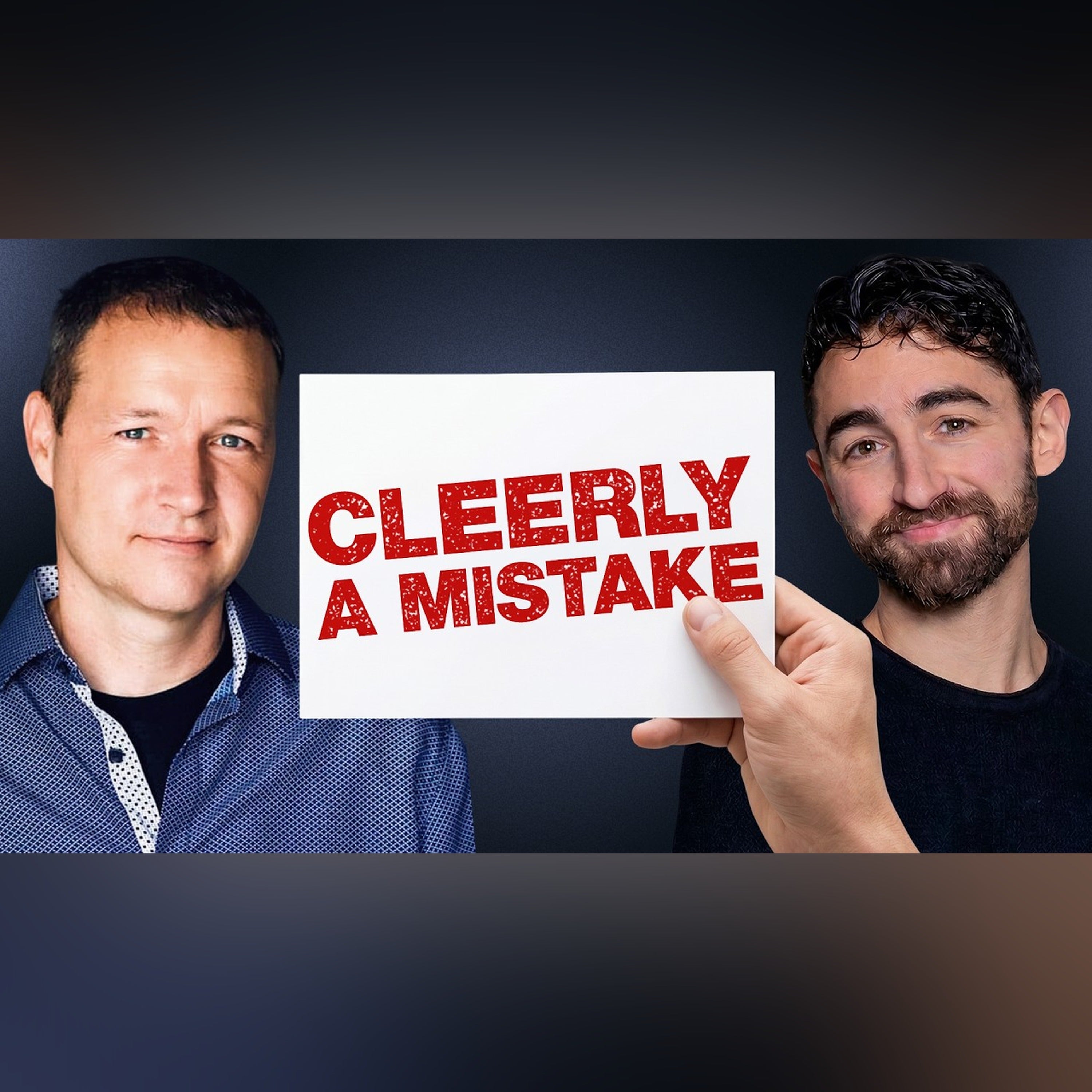
For the written breakdown, see this letter: https://staycuriousmetabolism.substack.com/p/we-want-to-retract-our-own-paper?r=40ekz2 In this conversation, I sit down with my friend and colleague Dave Feldman to explain why we’re seeking to retract our own study. For context: on April 7th, 2025 we published results from a trial of ~100 individuals on low-carb diets whose LDL cholesterol dramatically increased—so-called “lean mass hyper-responders.” We set out to answer a critical question: does this group experience accelerated plaque progression, and what predicts that risk? Our original headline finding—that LDL cholesterol and ApoB did not predict plaque progression—still stands. However, the plaque progression data itself was based on an AI-guided analysis conducted by the company Cleerly. After publication, we discovered that their analysis was performed inappropriately (unblinded) with data suggesting errors or bias in the analysis. Unfortunately, the company declined to reanalyze o
In this week's Podcast: I’ve just pumped out a 300kg barrel of honey and at the bottom was a thick, granulated layer of sugary goodness. It got me thinking about why honey granulates, the science behind it all, why that’s a good thing and how, we beekeepers, can use it to our advantage. Hi, I’m Stewart Spinks, welcome to Episode 418 of my podcast, Beekeeping Short and Sweet. References: Manikis, I., & Thrasivoulou, A. (2001). The relation of physicochemical characteristics of honey and the crystallization rate. Apiacta, 36(2), 106–112. Escuredo, O., Míguez, M., Fernández-González, M., & Seijo, M. C. (2014). Nutritional value and antioxidant activity of honeys produced in a European Atlantic area. Food Chemistry, 154, 44–51. Venir, E., Spaziani, M., & Maltini, E. (2010). Crystallization in “Tarassaco” (Dandelion) Italian honey studied by DSC. Food Chemistry, 122(2), 410–415. Krishnan, R., Mohammed, T., Kumar, G. S., & Arunima, S. H. (2021). Honey crystallization: Mechanism, evaluation a
Thanks to Brilliant for supporting PBS. Learn more at: https://www.brilliant.org/spacetime Uploaded 02-12-19 PBS Member Stations rely on viewers like you. To support your local station, go to: http://to.pbs.org/DonateSPACE The universe is big, really, really big. Although according to a new paper, it may literally be infinitely smaller than we previously thought. Sign Up on Patreon to get access to the Space Time Discord! Check out the Space Time Merch Store Hosted by Matt O'Dowd Written by Matt O'Dowd Graphics by Leonardo Scholzer and Adriano Leal Directed by: Andrew Kornhaber Executive Producers: Eric Brown and Andrew Kornhaber End Credits Music by J.R.S. Schattenberg: https://www.youtube.com/channel/UCRl6-nb4iOnsij-vnpAjp0Q Every time you walk out the door, light from the Big Bang strikes your face, enters your eyes. This is the cosmic microwave background radiation - the left-over heat-glow from the very early universe. We can’t see this microwave light with our eyes, but we can ca
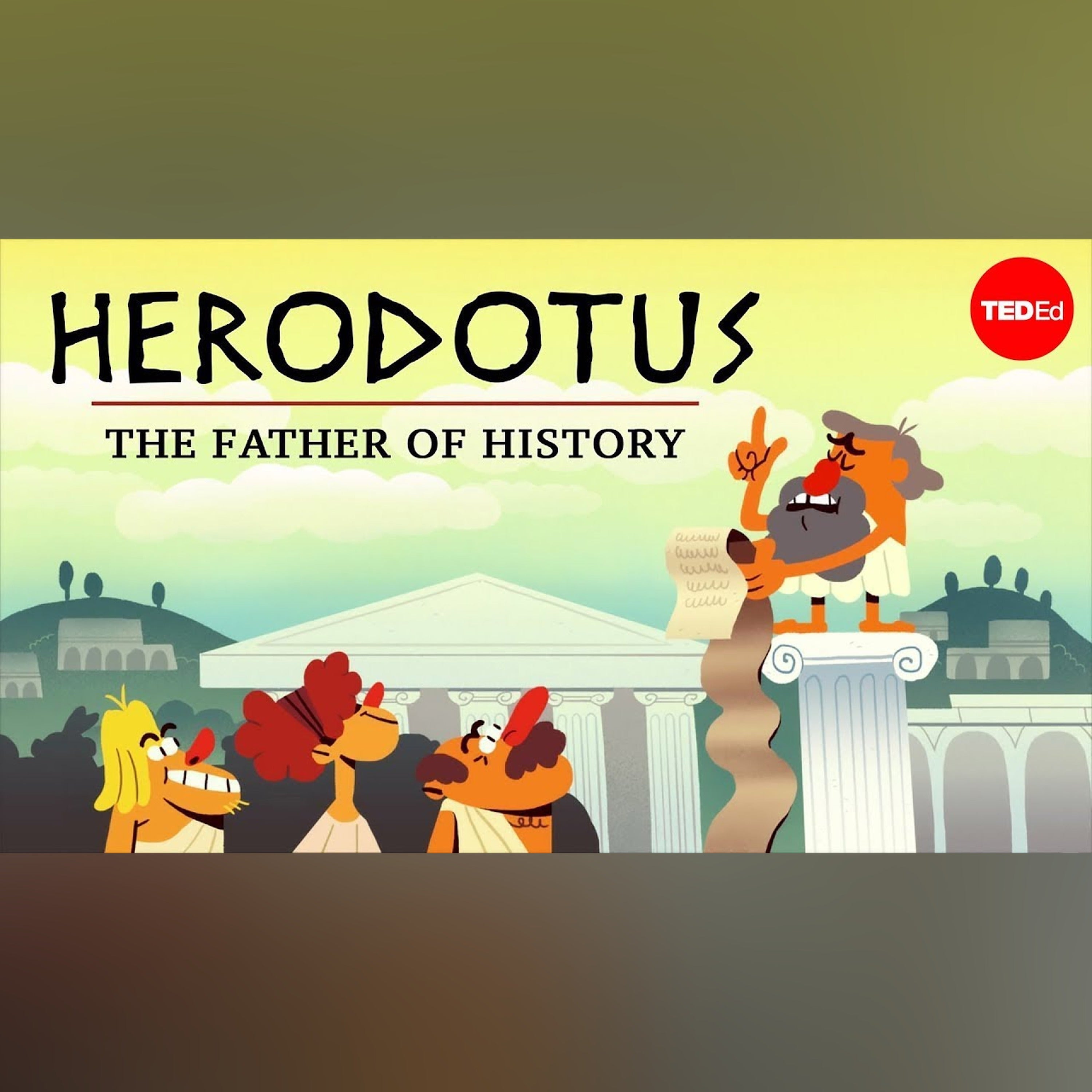
Uploaded 11-12-17 View full lesson: https://ed.ted.com/lessons/why-is-herodotus-called-the-father-of-history-mark-robinson 2,500 years ago, the writing of history as we know it didn’t exist. The past was recorded as a list of events, with little explanation for their causes beyond accepting things as the will of the gods. Herodotus wanted a deeper understanding, so he took a new approach: looking at events from both sides to understand the reasons for them. Mark Robinson explains how “history” came into being. Lesson by Mark Robinson, directed by Remus and Kiki Thank you so much to our patrons for your support! Without you this video would not be possible! Daniel Day, Nick Johnson, Bruno Pinho, Javier Aldavaz, Rodrigo Carballo, Marc Veale, Boytsov Ilya, Bozhidar Karaargirov, Darren Toh, ilya bondarik, maxi kobi einy, Runarm , Misaki Sato, Peter Koebel, Levi Cook, Alex Kongkeo, Craig Sheldon, Andrew Bosco, Catherine Sverko, Nik Maier, Robert Sukosd, Mark Morris, Tamás Drávai, Adi V, Pet
Travel providers should disclose meaningful environmental impacts alongside prices.
Share your view, then see how readers voted. No sign-in required. This poll is shared across stories.
Do you agree or disagree?
Common Quandary
A Common Quandary to discuss
Another conversation to explore, separate from this news story.
You are not sick—you just cannot face work today. Do you call in sick?
Your employer offers sick leave but no personal days. You are not physically ill, yet you feel exhausted and know a day away would help. Saying you are sick is the only way to take paid time off without explanation.
Do unjust workplace rules change the duty to be truthful?