Atoms are a lot like us - we call their relationships "bonds," and there are many different types. Each kind of atomic relationship requires a different type of energy, but they all do best when they settle into the lowest stress situation possible. The nature of the bond between atoms is related to the distance between them and, like people, it also depends on how positive or negative they are. Unlike human relationships, we can analyze exactly what makes chemical relationships work, and that's what this episode is all about. If you are paying attention, you will learn that chemical bonds form in order to minimize the energy difference between two atoms or ions; that those chemical bonds may be covalent if atoms share electrons, and that covalent bonds can share those electrons evenly or unevenly; that bonds can also be ionic if the electrons are transferred instead of shared: and how to calculate the energy transferred in an ionic bond using Coulomb's Law. Pssst... we made flashcards
Practice more problem-solving at https://brilliant.org/TedEd/ Uploaded 11-08-20 -- You’re the chief advisor to an eccentric king who needs to declare his successor. He wants his heir to be good at arithmetic, lucky, and above all else, honest. So he’s devised a competition to test his children, and ordered you to choose the winner. The future of the kingdom is in your hands. Can you find the worthiest successor? Dan Katz shows how. Lesson by Dan Katz, directed by Artrake Studio. Animator's website: https://www.artrake.com (https://www.artrake.com/) Sign up for our newsletter: http://bit.ly/TEDEdNewsletter Support us on Patreon: http://bit.ly/TEDEdPatreon Find us on Twitter: http://bit.ly/TEDEdTwitter Peep us on Instagram: http://bit.ly/TEDEdInstagram View full lesson: https://ed.ted.com/lessons/can-you-solve-the-cheating-royal-riddle-dan-katz Thank you so much to our patrons for your support! Without you this video would not be possible! Clement, Hadi Salahshour, FAWWAZ GHUWAIDI, Dino
On its own, a huge DNA sequence is a meaningless pile of data — so, how do biologists figure out what it means? They turn to the power of bioinformatics! In this episode, we’ll learn what bioinformatics is, how it works, and how scientists have used it to better understand everything from evolution to a viral epidemic. Introduction: Pizza Data 00:00 Bioinformatics 1:20 Algorithms 2:33 The Human Genetic Code 3:28 The BRCA1 Gene 5:07 Transcriptomes 6:14 The Zika Virus 7:22 Bioinformatics & Programming 8:57 Review & Credits 10:07 This series was produced in collaboration with HHMI BioInteractive, committed to empowering educators and inspiring students with engaging, accessible, and quality classroom resources. Visit https://BioInteractive.org/CrashCourse (https://biointeractive.org/CrashCourse) for more information. Are you an educator looking for what NGSS Standards are covered in this episode? Check out our Educator Standards Database for Biology here: https://www.thecrashcourse.com/bi
Metabolism is a complex process that has a lot more going on than personal trainers and commercials might have you believe. Today we are exploring some of its key parts, including vital nutrients -- such as water, vitamins, minerals, carbs, fats, and proteins -- as well as how anabolic reactions build structures and require energy, while catabolic reactions tear things apart and release energy. Pssst... we made flashcards to help you review the content in this episode! Find them on the free Crash Course App! Download it here for Apple Devices: https://apple.co/3d4eyZo Download it here for Android Devices: https://bit.ly/2SrDulJ -- Chapters: Introduction: Metabolism 00:00 Metabolism, Anabolism, & Catabolism 2:30 Essential Nutrients: Water, Vitamins, Minerals 3:47 Carbohydrates 4:44 Lipids 5:53 Proteins 7:15 Review 9:22 Credits 9:57 *** Crash Course is on Patreon! Thanks to the following Patrons for their generous monthly contributions that help keep Crash Course free for everyone foreve
From cave paintings to public murals, humans have told stories with art for thousands of years. In this episode of Crash Course Art History, we discover that visual storytelling is elementally human — and so is competing over whose story is told. Introduction: Narrative Art 00:00 History as Story 00:55 Contradictory Stories 04:10 Official & Unofficial Stories 07:01 Review & Credits 08:51 Image Descriptions: https://docs.google.com/document/d/1ETiCxe4GrVzFii7dBhF42oHx1EUCCh5y12wbtUjsH8A/edit Sources: https://docs.google.com/document/d/1GW2NKzhpMNMmRyAFJVhFJG9cSfUOMRL-QrcWuHcWcIA/edit?usp=sharing *** Crash Course is on Patreon! Thanks to the following patrons for their generous monthly contributions that help keep Crash Course free for everyone forever: Leah H., David Fanska, Andrew Woods, DL Singfield, Ken Davidian, Stephen Akuffo, Toni Miles, Steve Segreto, Kyle & Katherine Callahan, Laurel Stevens, Burt Humburg, Perry Joyce, Scott Harrison, Mark & Susan Billian, Alan Bridgeman, Breann
Discover the engineering innovations that made building Burj Khalifa, the world’s tallest skyscraper, possible. Uploaded 20-04-21 -- In 2004, construction began on a new building in Dubai, promising a revolutionary design that would dwarf the rest of the world’s skyscrapers. Five years later, the 828-meter Burj Khalifa was complete, surpassing the previous record-holder by over 60%. What innovations allowed for such a huge leap in height? Alex Gendler digs into the architecture of this unprecedented project. Lesson by Alex Gendler, directed by WOW-HOW Studio. Support Our Non-Profit Mission ---------------------------------------------- Support us on Patreon: http://bit.ly/TEDEdPatreon Check out our merch: http://bit.ly/TEDEDShop ---------------------------------------------- Connect With Us ---------------------------------------------- Sign up for our newsletter: http://bit.ly/TEDEdNewsletter Find us on Twitter: http://bit.ly/TEDEdTwitter Peep us on Instagram: http://bit.ly/TEDEdInsta
Losing his brother was especially difficult because pandemic restrictions meant they could only say their final goodbyes over a video call. Before his death, his brother had expressed one heartfelt wish: that his two surviving siblings would find a way to repair their strained relationship. A few months later, the family suffered another loss when a beloved dog passed away. Then came an unusually vivid dream in which his brother appeared, bringing someone very special along with him. The reunion felt remarkably real, right down to the sensation of being able to touch and embrace them. But the dream also included a conversation about a family disagreement, with details the listener later discovered were accurate. And another unexpected encounter involving a medium would raise even more questions. Was this simply a comforting dream during a time of grief, or had his brother found a way to reach him from the other side? #RealGhostStoriesOnline #TrueGhostStories #VisitationDreams #AfterDea
He loves hearing stories of ghosts, unexplained encounters, and possible messages from people who have died. But there’s one belief he was raised with that makes listening to those experiences a little more complicated. As a Christian, he was taught that ghosts aren’t actually the spirits of the dead. Instead, what appears to be a deceased loved one could be something far darker using a familiar face to deceive the living. That leaves him with an unsettling question. What about the encounters that seem loving, comforting, or even protective? Are people truly being visited by those they’ve lost—or could something else know exactly who we most want to see? And if something looks, sounds, and behaves like someone you loved, how would you ever know the difference? #RealGhostStoriesOnline #Ghosts #FamiliarSpirits #Paranormal #SpiritCommunication #Afterlife #DemonicEntities #ChristianityAndTheParanormal #Supernatural #TrueGhostStories Love real ghost stories? Want even more? Want even more?
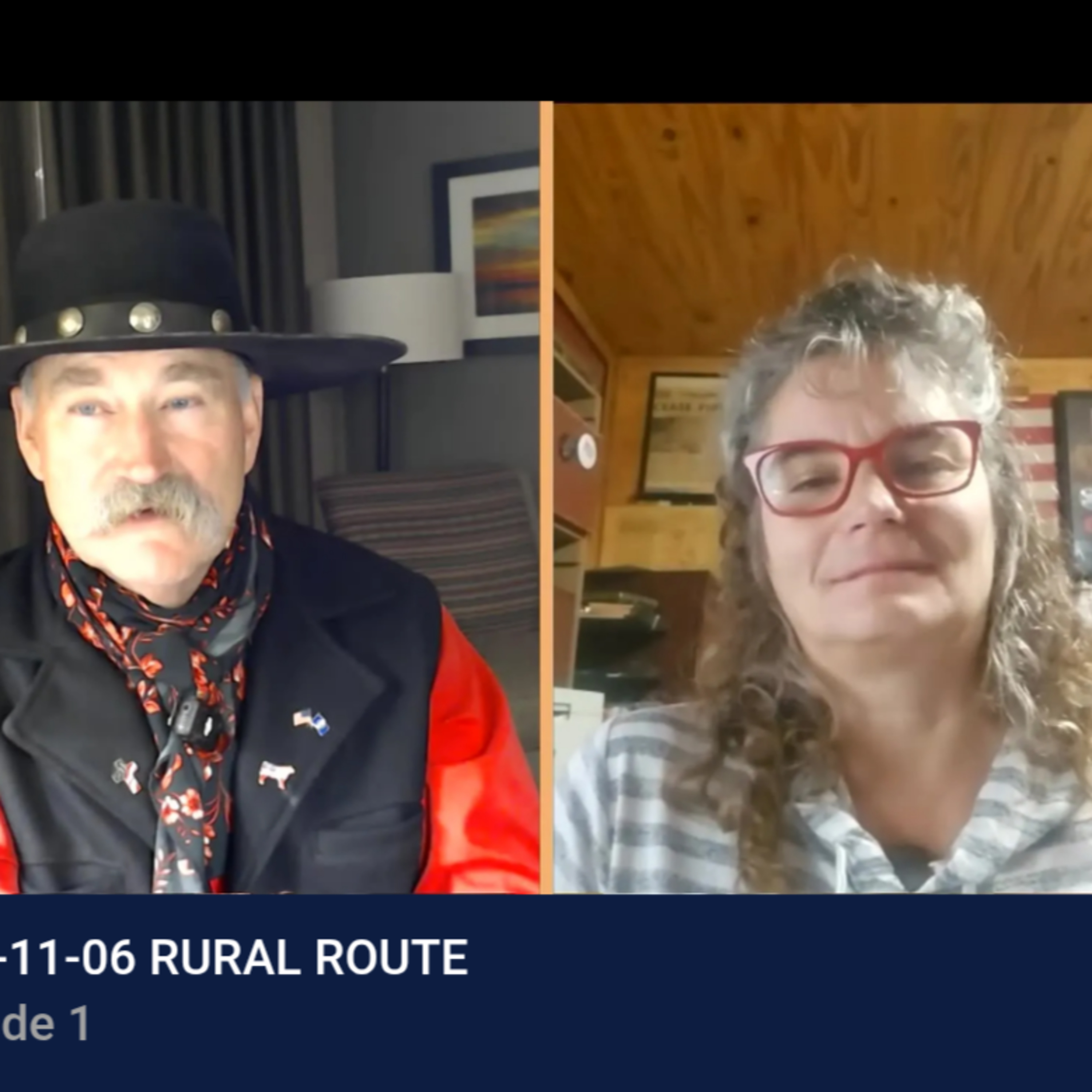
CORPORATE TAX BREAKS, ENERGY GIANTS, AND SECRET DRONE TRAINING IN KANSAS Kansas grassroots advocate Angel Cushing joins Trent Loos on Rural Route to expose how corporate tax breaks drain half of state revenue and drive up taxes for families. They break down a Barber County lawsuit against Google’s…
In which John Green teaches you about the Progressive Era in the United States. In the late 19th and early 20th century in America, there was a sense that things could be improved upon. A sense that reforms should be enacted. A sense that progress should be made. As a result, we got the Progressive Era, which has very little to do with automobile insurance, but a little to do with automobiles. All this overlapped with the Gilded Age and is a little confusing, but here we have it. Basically, people were trying to solve some of the social problems that came with the benefits of industrial capitalism. To oversimplify, there was a competition between the corporations' desire to keep wages low and workers' desire to have a decent life. Improving food safety, reducing child labor, and unions were all on the agenda in the Progressive Era. While progress was being made, and people were becoming freer, these gains were not equally distributed. Jim Crow laws were put in place in the south, and i
Can animals create, or even enjoy music? Ann rips through the animal kingdom to check out the musical talent of some likely and unlikely performers. Featuring: Dr. Stuart Watson, University of Zurich. Dr. Chiara De Gregorio, University of Torino. Assistant Professor Adena Schachner, University of California. David Teie, Musician and composer, Music for Cats. Associate Professor Cameron Webb, University of Sydney and NSW Health Pathology. Featured sounds: Musical Stimuli for Parrots by Adena Schachner, Fostog's Touch by David Teie (music for cats) and Marlene McCohen (https://www.youtube.com/@MARLENEMCCOHEN) (YouTube) and her Amazon parrot Lucy. Production: Ann Jones, Presenter / Producer. Petria Ladgrove, Producer. Additional mastering: Hamish Camilleri. For more about bird song and music click here (https://www.abc.net.au/listen/programs/scienceshow/is-birdsong-music/9416572). This episode of What the Duck?! was originally broadcast in 2023 and produced on the land of the Wadawarrung
Oxidation-reduction reactions are going on around us, and inside us, all the time, and we can make redox reactions in organic chemistry easier to understand by tracking carbon-oxygen bonds. In this episode of Crash Course Organic Chemistry, we’ll focus on alkene redox reactions and revisit our 3-part secret handshake to help us better understand patterns and predict the products of these reactions. Series Sources: Brown, W. H., Iverson, B. L., Ansyln, E. V., Foote, C., Organic Chemistry; 8th ed.; Cengage Learning, Boston, 2018. Bruice, P. Y., Organic Chemistry, 7th ed.; Pearson Education, Inc., United States, 2014. Clayden, J., Greeves, N., Warren., S., Organic Chemistry, 2nd ed.; Oxford University Press, New York, 2012. Jones Jr., M.; Fleming, S. A., Organic Chemistry, 5th ed.; W. W. Norton & Company, New York, 2014. Klein., D., Organic Chemistry; 1st ed.; John Wiley & Sons, United States, 2012. Louden M., Organic Chemistry; 5th ed.; Roberts and Company Publishers, Colorado, 2009. McM
In which John Green teaches you about the massive immigration to the United States during the late 19th and early 20th centuries. Immigrants flocked to the US from all over the world in this time period. Millions of Europeans moved to the US where they drove the growth of cities and manned the rapid industrialization that was taking place. In the western US many, many Chinese immigrants arrived to work on the railroad and in mines. As is often the case in the United States, the people who already lived in the US reacted kind of badly to this flood of immigrants. Some legislators tried to stem the flow of new arrivals, with mixed success. Grover Cleveland vetoed a general ban on immigration, but the leadership at the time did manage to get together to pass an anti-Chinese immigration law. Immigrants did win some important Supreme Court decisions upholding their rights, but in many ways, immigrants were treated as second-class citizens. At the same time, the country was rapidly urbanizin
Dig into the history of pandemics to learn how viruses and disease spreads and what we can do to stop future outbreaks. -- In our increasingly globalized world, a single infected person can board a plane and spread a virus across continents. Mark Honigsbaum describes the history of pandemics and how that knowledge can help halt future outbreaks. Lesson by Mark Honigsbaum, directed by Patrick Blower. Animator's website: http://www.patrickblower.com (http://www.patrickblower.com/) Educator's website: http://www.markhonigsbaum.co.uk (http://www.markhonigsbaum.co.uk/) Sign up for our newsletter: http://bit.ly/TEDEdNewsletter Support us on Patreon: http://bit.ly/TEDEdPatreon Find us on Twitter: http://bit.ly/TEDEdTwitter Peep us on Instagram: http://bit.ly/TEDEdInstagram View full lesson: http://ed.ted.com/lessons/how-pandemics-spread
In which John Green teaches you how the Civil War played a large part in making the United States the country that it is today. He covers some of the key ways in which Abraham Lincoln influenced the outcome of the war, and how the lack of foreign intervention also helped the Union win the war. John also covers the technology that made the Civil War different than previous wars. New weapons helped to influence the outcomes of battles, but photography influenced how the public at large perceived the war. In addition, John gets into the long-term effects of the war, including the federalization and unification of the United States. All this plus homesteading, land grant universities, railroads, federal currency, and taxes. Check out the US National Archives Flickr. They have an awesome collection of Matthew Brady Civil War photography here: http://www.flickr.com/photos/usnationalarchives/collections/72157622495226723/ Hey teachers and students - Check out CommonLit's free collection of re
So we've been talking about civil rights for the last few episodes now, and we're finally going to wrap this discussion up with the rather controversial topic of affirmative action. We'll explain what exactly affirmative action is, who it is for, and why it still exists. Now, affirmative action is a pretty problematic concept. So we'll get into the court's rationalization for it in the 70s as well as its fall from favor in more recent years. Now, people tend to have pretty strong, and varying opinions, about this stuff - so we'll start talking about how these opinions are informed next week when we start our discussion on politics. Produced in collaboration with PBS Digital Studios: http://youtube.com/pbsdigitalstudios Support is provided by Voqal: http://www.voqal.org (http://www.voqal.org/) All attributed images are licensed under Creative Commons by Attribution 4.0 Want to find Crash Course elsewhere on the internet? Facebook - http://www.facebook.com/YouTubeCrashCourse Twitter - ht
Tonight, we’re joined by Derek Condit in Washington State, a U.S. Army veteran and retired correctional officer whose unusual experiences have followed him from the forests of the Pacific Northwest to the grounds of a maximum-security prison. On his way to work one night, Derek watched an enormous figure cross Highway 2 in just three strides. Years later, while hiking near Mount Baker, he describes the forest falling completely silent before a face appeared from behind a cedar tree. What followed left him wondering whether the encounter had involved more than simply being watched, and whether an object left on the trail was intended for him. During overnight patrols at the Washington State Reformatory in Monroe, Derek also witnessed a strange white spiral forming near the prison. Then came three low-flying, unmarked helicopters. He could hear the first and the third, but says the aircraft between them passed overhead in complete silence. Inside the prison, a locked gate and a terrified
What would you do? Tell us (https://www.buzzsprout.com/2563598/fan_mail/new) What happens when the career you’ve worked so hard for leaves you feeling like you’ve got nothing left to give? We know how you feel, but don't worry, it's not all doom and gloom! This week, Brendan and Charlotte are joined by Dr James Greenwood for an honest conversation about burnout, compassion fatigue and juggling veterinary life with parenthood—and where pottery fits into it all! We talk about stepping away from vet med for family or health reasons, the feelings that can come with taking a break, and how daunting it can be to get back on the bike again. From rebuilding confidence to finding space for life outside the consulting room, we explore what a sustainable career in this profession might look like. Expect humour, some difficult conversations and a reminder that you don’t have to have everything figured out to take your next step. Whether you’re feeling stretched, considering time out or finding you
Why aren’t commercial flights getting faster? Dig into the technological and environmental problems facing supersonic flight. Uploaded 15-04-21 -- In 1996, a British Airways plane flew from New York to London in a record-breaking two hours and fifty-three minutes. Today, however, passengers flying the same route can expect to spend no less than six hours in the air — twice as long. So why, in a world where everything seems to be getting faster, have commercial flights lagged behind? Alex Gendler details the problems facing supersonic flight. Lesson by Alex Gendler, directed by Zedem Media. Support Our Non-Profit Mission ---------------------------------------------- Support us on Patreon: http://bit.ly/TEDEdPatreon Check out our merch: http://bit.ly/TEDEDShop ---------------------------------------------- Connect With Us ---------------------------------------------- Sign up for our newsletter: http://bit.ly/TEDEdNewsletter Find us on Twitter: http://bit.ly/TEDEdTwitter Peep us on Inst
The Battle of the Alamo has become one of the most enduring legends of American history. Remembered as a heroic last stand against overwhelming odds, the 1836 siege occupies a powerful place in the story of Texas independence. Yet behind the familiar image of brave defenders surrounded by a vast army lies a much more complicated history. Travel back to Mexican Texas, when political tensions, competing visions of government, and growing conflicts over slavery and immigration pushed the region toward rebellion. Discover why American settlers and Tejano residents joined the fight for independence, how the Alamo became a strategic stronghold, and why figures such as William Barret Travis, James Bowie, and Davy Crockett became part of its enduring legend. Explore the thirteen-day siege, the Mexican army under General Antonio López de Santa Anna, and the events that led to the fortress's fall in March 1836. Beyond the battlefield, examine how the defeat became a rallying cry for the Texan re
Fall asleep to this quiet science story. A Boring Science For Sleep episode about Why Mars Missions Take Months to Reach Their Goal. Why Mars Missions Take Months to Reach Their Goal Settle in for a quiet exploration of Why Mars Missions Take Months to Reach Their Goal. This episode follows Halfway and Still Curving; The Ring, the Shield, the Watchers; Aiming Where Mars Will Be; Missed Windows and Quiet Recoveries; Braking Into a New Home. Listen closely or let the details drift past. If you enjoy this quiet science bedtime pace, you might also like Psalms for Sleep on Spotify — same quiet rhythm, different night. Search Spotify for Psalms for Sleep.
Why spend all that effort chasing after prey when you could just convince them to come to you? This episode, we explore the many and varied ways that predators lure their prey, from dangling lights to strategically-placed bait. And we’ll discuss the evolutionary pros and cons of this life strategy, and how all sorts of animals – and plants – make the most of it. In the news: big Jurassic bugs, big Jurassic belemnites, ocean amphibians, and aquatic anatomy. Time Markers: Intro & Announcements: 00:00:00 News: 00:05:35 Main discussion, Part 1: 00:38:50 Main discussion, Part 2: 01:29:25 Patron question: 01:55:20 Submit your question for the End of the Year Q&A! Got a topic you want to hear about? Submit your episode request here: https://commondescentpodcast.com/request-a-topic/ Lots more ways to connect with us: https://linktr.ee/common_descent The Intro and Outro music is “On the Origin of Species” by Protodome. More music like this at http://ocremix.org Musical Interludes are "Professor
If cells and organs never talked to each other, an animal would fall apart faster than a boy band after the popular one goes solo. Thankfully, that’s where the nervous and endocrine systems come in! In this episode of Crash Course Biology, we’ll learn how they use neurons, hormones, and more to keep animals’ bodies coordinated. Introduction: Internal communication in animals 00:00 Why communication matters 01:01 The nervous system 01:58 What happens when you step on a Lego? 03:48 Hormones 06:19 Fight or Flight 08:01 Review & Credits 09:07 This series was produced in collaboration with HHMI BioInteractive, committed to empowering educators and inspiring students with engaging, accessible, and quality classroom resources. Visit https://BioInteractive.org/CrashCourse (https://biointeractive.org/CrashCourse) for more information. Are you an educator looking for what NGSS Standards are covered in this episode? Check out our Educator Standards Database for Biology here: https://www.thecrashc
To order Suicidal Empathy: https://lnk.to/SuicidalEmpathy _______________________________________ If you appreciate my work and would like to support it: _______________________________________ This clip was posted on November 7, 2026 on my YouTube channel as THE SAAD TRUTH_2121: https://youtu.be/Svs50vlM2PE _______________________________________ I count on my fans to support my efforts. You can donate via Patreon, PayPal, and/or SubscribeStar. _______________________________________ Dr. In addition to his scientific work, Dr. _______________________________________ Note: The use of the three embedded clips falls under the Fair Use clause (for critique/educational purposes).