In this calm and sleepy facts episode, we step outside into the hushed and beautiful world of snow. We begin high inside a winter cloud, where a tiny speck of dust gathers water vapor and slowly grows into a delicate six sided crystal, shaped by every layer of cold air it passes through on its long, gentle fall. Along the way, we meet the patient people who first revealed the hidden beauty of snowflakes, from Wilson Bentley, the Vermont farmer who photographed more than five thousand of them, to Ukichiro Nakaya, the scientist who grew the first artificial snowflakes in his laboratory. We discover why fresh snow makes the world fall so quiet, how the snowpack quietly records each storm in its layers, and how mice and voles stay warm in hidden tunnels beneath the snow while foxes listen from above. We also visit some of the snowiest places on Earth, explore winter traditions from around the world, and travel beyond our planet to the carbon dioxide snow of Mars and the icy snowfall of Sat
View full lesson: http://ed.ted.com/lessons/mysteries-of-vernacular-dynamite-jessica-oreck-and-rachael-teel With an explosive meaning, the word dynamite's past is as historical as it is etymological. Jessica Oreck and Rachael Teel describe how Alfred Nobel invented dynamite. Lesson by Jessica Oreck and Rachael Teel, animation by Jessica Oreck.
This is a Grave Talks CLASSIC EPISODE! Losing someone you love as a child can leave questions that never fully go away. The wish for one more moment, one more conversation, one more chance to see them again can stay with you for years. For eight-year-old Jon Kozuska, that impossible wish may have come true. Late one night inside his grandparents’ old Victorian home, Jon headed downstairs for a glass of water. As he reached the landing, he stopped cold. Walking past the bottom of the stairs was his grandfather—solid, full color, completely real. The only problem was that his grandfather had already passed away. That single encounter would stay with Jon for the rest of his life, sparking a fascination with the paranormal that grew from childhood ghost books into real-world investigations and experiments designed to uncover what may exist beyond death. #TheGraveTalks #GhostStories #Paranormal #Apparition #LifeAfterDeath #HauntedHouse #VictorianHouse #Supernatural #ParanormalPodcast #Spiri
Miles had never sleepwalked before, so his parents were startled when their six-year-old began appearing in their bedroom in the middle of the night. He seemed half asleep, remembered nothing the following morning, and otherwise behaved completely normally. What he said during those episodes was harder to explain. Miles began revealing private details from his parents’ childhoods—memories they had never shared with him and, in some cases, had barely spoken about with anyone. Whenever they asked how he knew, he mentioned someone he called “the dark man.” His parents tried sleepwalking, overheard conversations, and coincidence as explanations. Then Miles began knowing things that hadn’t happened yet. And eventually, they started wondering whether the problem wasn’t their son at all—but something inside their house. #GhostStories #Paranormal #TheDarkMan #HauntedHouse #Sleepwalking #ParanormalChild #SpiritCommunication #Unexplained #Supernatural #Paranormal #UnexplainedActivity Love real g
Some people come into your life for a reason, some for a season, and some for a lifetime. Understanding the difference can have a profound impact on your relationships, emotional wellbeing and personal growth. In this episode of The Strong Life Project, Shaun O’Gorman explores the reality of human relationships, why people enter and leave […] The post EP 3889 A reason, A season or A lifetime (https://www.thestronglifeproject.com/the-strong-life-podcast/ep-3889-a-reason-a-season-or-a-lifetime/) appeared first on The Strong Life Project (https://www.thestronglifeproject.com/).
In which John Green teaches you a bit about the 4th of July. In this special short Crash Course, John celebrates American Independence Day by teaching you how the holiday came to be on the 4th of July, and the many ways that Americans celebrate the day. This is a little different than the normal Crash Course episode, so be prepared. Hey teachers and students - Check out CommonLit's free collection of reading passages and curriculum resources to learn more about the events of this episode. Famous abolitionist and freed slave Frederick Douglass ponders the history of the Fourth of July in the context of ongoing slavery in his famous "What to the Slave is the Fourth of July?” Speech: https://www.commonlit.org/texts/what-to-the-slave-is-the-fourth-of-july Chapters: Introduction 00:00 The Declaration of Independence 0:29 July 4, 1776 1:25 How Americans Celebrate Independence Day 1:43 July 4: When Presidents Die 3:56 Americans Love Eating! 4:15 Happy Fourth of July from Crash Course! 4:45 Cr
Nachos are great...if you are among the lucky ones whose bodies can digest them. When digestion goes according to plan, the small intestine performs most of your chemical digestion in the duodenum, while accessory organs including the liver, gallbladder, and pancreas contribute enzymes that all but finish the job. Then your large intestine, which is actually shorter than the small intestine, tries to extract the last bit of nutrition, including the occasional attempt to turn nachos into energy, which for most humans, ends in gassy failure. Pssst... we made flashcards to help you review the content in this episode! Find them on the free Crash Course App! Download it here for Apple Devices: https://apple.co/3d4eyZo Download it here for Android Devices: https://bit.ly/2SrDulJ Chapters: Introduction: Lactose Intolerance 00:00 The Small Intestine 1:41 Parts of the Small Intestine: Duodenum, Jejunum, Ileum 2:53 The Duodenum 3:16 The Liver 4:17 The Gallbladder 5:14 The Pancreas 5:35 The Large
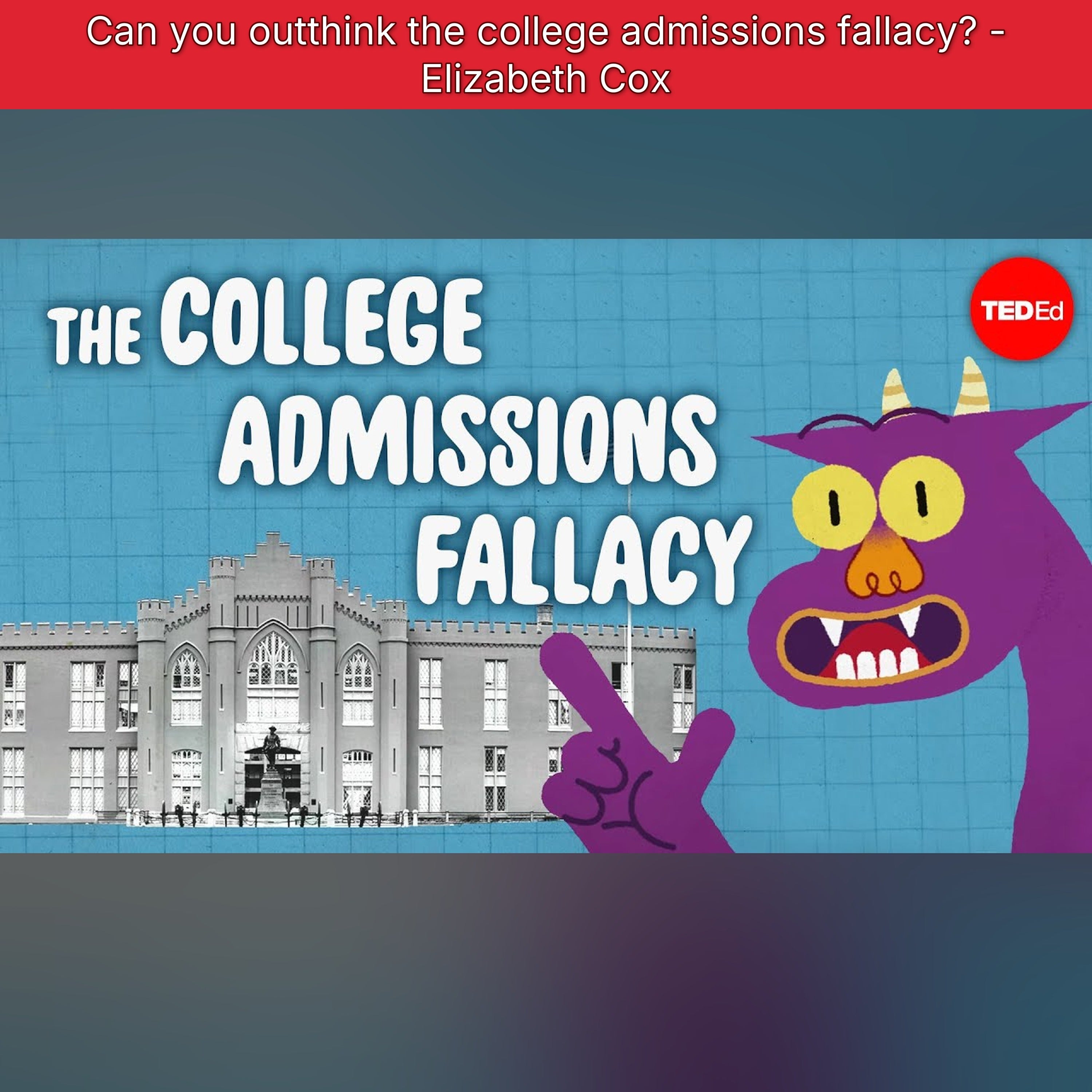
Explore the circular reasoning fallacy, which occurs when the end of an argument comes back to the start without having proven itself. -- It’s 1990. A prospective student has filed a complaint about Virginia Military institute’s admissions policy that excludes women. The state argues that VMI’s single sex education is an “important governmental objective” and that the exclusion of women from VMI is essential to that objective. Can you spot the problem with this argument? Elizabeth Cox explores the circular reasoning fallacy. Lesson by Elizabeth Cox, directed by TOGETHER. Support Our Non-Profit Mission ---------------------------------------------- Support us on Patreon: http://bit.ly/TEDEdPatreon Check out our merch: http://bit.ly/TEDEDShop ---------------------------------------------- Connect With Us ---------------------------------------------- Sign up for our newsletter: http://bit.ly/TEDEdNewsletter Find us on Twitter: http://bit.ly/TEDEdTwitter Peep us on Instagram: http://bit.l
Join our YouTube channel (https://www.youtube.com/@DrMattDrMike)to watch free educational videos and to watch these podcasts!! *This content is for educational purposes only and does not constitute medical advice. Watch these episodes now on YouTube!! (https://www.youtube.com/@DrMattDrMike) Want ad free listening and early access? Become a member! https://drmattdrmike.supercast.com/ Click Here: NEWSLETTER SIGN-UP (https://forms.gle/98bavCuhs9pRxhYW8) Want to send us a question or topic? Email: [email protected] YouTube: https://www.youtube.com/@DrMattDrMike/ Instagram: @drmattdrmike TikTok: @dr_mike_todorovic Hosted on Acast. See acast.com/privacy (https://acast.com/privacy) for more information.
Carbon-carbon double bonds are pretty common in nature, but triple bonds between carbons, called alkynes, are not. When alkynes do pop up in nature, it’s usually in a compound that’s toxic to humans, however, we can synthesize alkynes that are life saving medicines and materials. In this episode of Crash Course Organic Chemistry, we’ll learn about alkynes and some of the reactions we can use them in (hint: it’s a lot of the same reactions we used for alkenes!) Series Sources: Brown, W. H., Iverson, B. L., Ansyln, E. V., Foote, C., Organic Chemistry; 8th ed.; Cengage Learning, Boston, 2018. Bruice, P. Y., Organic Chemistry, 7th ed.; Pearson Education, Inc., United States, 2014. Clayden, J., Greeves, N., Warren., S., Organic Chemistry, 2nd ed.; Oxford University Press, New York, 2012. Jones Jr., M.; Fleming, S. A., Organic Chemistry, 5th ed.; W. W. Norton & Company, New York, 2014. Klein., D., Organic Chemistry; 1st ed.; John Wiley & Sons, United States, 2012. Louden M., Organic Chemistr
View full lesson: http://ed.ted.com/lessons/the-emergence-of-drama-as-a-literary-art-mindy-ploeckelmann When presented with the problem of hoards of illiterate commoners, English clergymen in the 11th century created plays to spread word about the Bible. Eventually, the plays moved out of the church and into the streets. Mindy Ploeckelmann tracks the development of drama from mystery plays to morality plays and, eventually, to Shakespeare. Lesson by Mindy Ploeckelmann, animation by Johnny Chew.
This is a Grave Talks CLASSIC EPISODE! PART TWO For John Paul Newland, death was never a distant idea. Growing up in the shadow of multiple war zones, mortality became part of everyday life long before he was old enough to fully understand it. But one ordinary moment would change the way he viewed the world forever. As a young man, John looked out into his garden and saw a woman calmly buying oranges. At first, nothing about the scene seemed unusual—until he realized there was no market, no vendor, and no woman actually standing there. It was a glimpse into something impossible. And it would not be the last time he encountered the dead walking among the living. Over the years, John experienced a series of encounters with the spirit world that challenged everything he thought he understood about life, death, and what may exist beyond both. #TheGraveTalks #GhostStories #Paranormal #SpiritWorld #Haunted #LifeAfterDeath #Supernatural #ParanormalPodcast #SeeingGhosts #Apparition #Unexplaine
This is a Grave Talks CLASSIC EPISODE! Do Ouija boards hold power on their own, or do they only become something more when we engage with them? For Chris Garcia, the question of connection goes far deeper than any single tool. Chris’s relationship with the unseen began at the age of five, when he first became aware of his spirit guides. That early sensitivity never faded. Instead, it quietly shaped the course of his life, influencing his choices and eventually leading him to help others recognize and communicate with their own guides and loved ones beyond the physical world. Rather than focusing on fear or spectacle, this conversation explores the role of spirit guides, how communication with them works, and why intention matters far more than objects like Ouija boards. Chris offers a grounded perspective on spiritual connection—one rooted in awareness, responsibility, and understanding. Whether you approach the subject with skepticism or belief, this discussion challenges common assum
Rami Hammoud finished 6th in the 2026 World Series of Poker Main Event, winning $1.75 million. Before the final table, he hired me (Zach Elwood) to study poker tells/behavior in the footage of his opponents. In this talk, Rami shares the story behind his journey to winning a life-changing amount of money, including how he almost left Las Vegas before the Main Event began, and how a mindset of having nothing to lose helped him play fearlessly. He talks about how studying poker tells transformed his approach to the game, sharing specific hands where behavioral clues helped him make decisions—and others where relying on such clues backfired. We discuss the psychology of high-stakes decisions, why even highly experienced poker players can be reluctant to trust behavioral reads, how the fear of looking foolish can lead to suboptimal decision-making. We also talk about some dynamics from the final table, including a call that many people thought was one of the worst calls in the history of W
When it comes to animal reproduction, there’s no one-size-fits-all strategy. Some animals need a mate, others don’t, and for some, it depends! In this episode, we’ll learn about sexual and asexual reproduction, internal and external fertilization, and all the ways that life, uh… finds a way. Introduction: Reproduction 00:00 Asexual reproduction 01:33 Sexual Reproduction 04:48 Fertilization 05:58 Sexes 08:01 Review & Credits 11:11 This series was produced in collaboration with HHMI BioInteractive, committed to empowering educators and inspiring students with engaging, accessible, and quality classroom resources. Visit https://BioInteractive.org/CrashCourse (https://biointeractive.org/CrashCourse) for more information. Are you an educator looking for what NGSS Standards are covered in this episode? Check out our Educator Standards Database for Biology here: https://www.thecrashcourse.com/biologystandards Check out our Biology playlist here: https://www.youtube.com/playlist?list=PL8dPuuaL
Today, Craig is going to wrap up our discussion of discrimination by looking more closely at those “discrete and insular minorities” referenced in the 14th Amendment. We’ll talk about instances of discrimination of Asian, European, and Latino immigrants, Native Americans, non-English speakers, people with disabilities, and LGBT people. We’ll also talk about federal and state responses to this discrimination. It’s a lot to cover, and we’ll only scratch the surface of the battles these groups fought (and are still fighting) for equality, but we will give you some historical context for the discrimination that has occurred and the court decisioned made to help defend these groups. Produced in collaboration with PBS Digital Studios: http://youtube.com/pbsdigitalstudios Support is provided by Voqal: http://www.voqal.org (http://www.voqal.org/) All attributed images are licensed under Creative Commons by Attribution 4.0 Want to find Crash Course elsewhere on the internet? Facebook - http://w
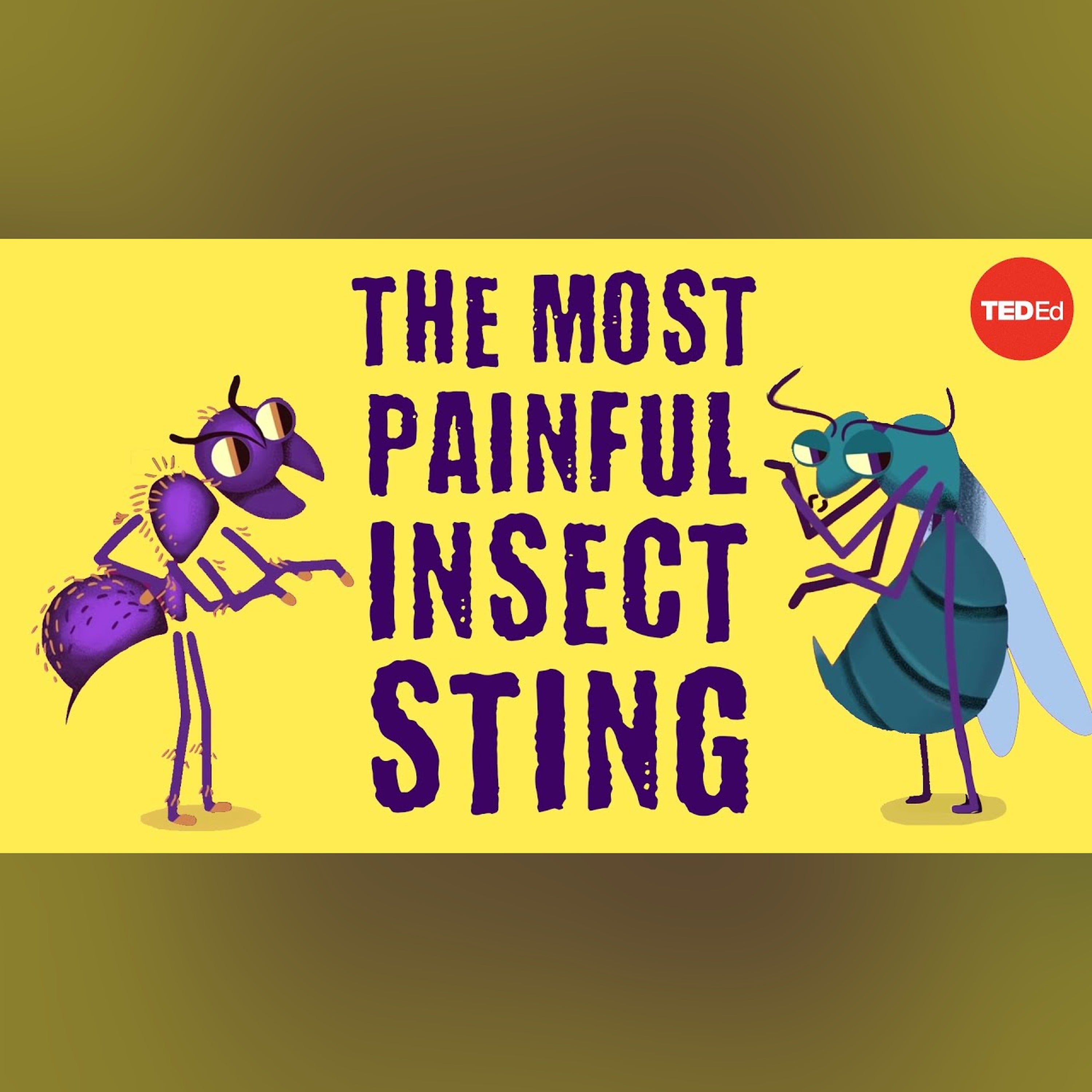
Find out whether a honeybee, a tarantula hawk wasp, or a bullet ant has the most painful insect sting, and what each of their stings feel like. Uploaded 19-04-21 -- One of these three creatures is thought to possess the world’s most painful insect sting: there’s an ant that forages in rainforest canopies, a bee that protects a hive of delectable honey, and a wasp that paralyzes tarantulas. So which has the nastiest sting? Justin Schmidt describes and ranks the pain inflicted by each insect. Lesson by Justin Schmidt, directed by Nicholas Paim, Alopra Studio. Support Our Non-Profit Mission ---------------------------------------------- Support us on Patreon: http://bit.ly/TEDEdPatreon Check out our merch: http://bit.ly/TEDEDShop ---------------------------------------------- Connect With Us ---------------------------------------------- Sign up for our newsletter: http://bit.ly/TEDEdNewsletter Find us on Twitter: http://bit.ly/TEDEdTwitter Peep us on Instagram: http://bit.ly/TEDEdInstagr
By the summer of 1945, Japan's cities were burning, its people were starving, and its military leaders were preparing for a final battle on home soil. Even the destruction of Hiroshima did not bring an immediate surrender. Historian James Scott, author of Empire of Ashes, talks with Michael Shermer about why Japan kept fighting and why he believes Nagasaki was decisive. Could the war have ended without the atomic bombs? A Pulitzer Prize finalist and New York Times bestseller, James M. Scott is the author Black Snow, Rampage, Target Tokyo, The War Below, and The Attack on the Liberty, and co-author, with Jack Carr, of Targeted: Beirut. In addition, Scott, a former Nieman Fellow at Harvard, is a sought-after public speaker who leads battlefield tours and lectures at institutions around the world. His new book is Empire of Ashes.
View full lesson: http://ed.ted.com/lessons/the-science-of-static-electricity-anuradha-bhagwat Uploaded 09-04-15 We’ve all had the experience: you’re walking across a soft carpet, you reach for the doorknob and … ZAP. But what causes this trademark jolt of static electricity? Anuradha Bhagwat sheds light on the phenomenon by examining the nature of matter. Lesson by Anuradha Bhagwat, animation by Artrake Studio.
Life is chaos and the universe tends toward disorder. But why? If you think about it, there are only a few ways for things to be arranged in an organized manner, but there are nearly infinite other ways for those same things to be arranged. Simple rules of probability dictate that it's much more likely for stuff to be in one of the many disorganized states than in one of the few organized states. This tendency is so unavoidable that it's known as the 2nd Law of Thermodynamics. Obviously, disorder is a pretty big deal in the universe and that makes it a pretty big deal in chemistry - it's such a big deal that scientists have a special name for it: entropy. In chemistry, entropy is the measure of molecular randomness or disorder. For the next thirteen minutes, Hank hopes you will embrace the chaos as he teaches you about entropy. Pssst... we made flashcards to help you review the content in this episode! Find them on the free Crash Course App! Download it here for Apple Devices: https://
Language is constantly changing. Today’s small changes could lead to entirely new dialects or languages in the future. We can’t predict how these changes will occur, but we can better understand the path a language has taken through historical linguistics. In this episode of Crash Course Linguistics, we’ll learn about how and why languages change, what happens when languages come into contact with each other, how linguists piece together the history of a language, and more! Acknowledgment: Kirby Conrod Want even more linguistics? Check out the Lingthusiasm podcast, hosted by the writers of Crash Course Linguistics: https://lingthusiasm.com/ *** Watch our videos and review your learning with the Crash Course App! Download here for Apple Devices: https://apple.co/3d4eyZo Download here for Android Devices: https://bit.ly/2SrDulJ Crash Course is on Patreon! Thanks to the following patrons for their generous monthly contributions that help keep Crash Course free for everyone forever: Eric P
Explore the incredible adaptations of Elysia chlorotica, a species of sea slug that can photosynthesize food. -- The species of slug known as Elysia chlorotica may not look like much— it resembles a bright green leaf— but it’s one of the most extraordinary creatures on our planet. Living in marshes along the coast of North America, it can go about a year without eating. During that time, it lives like a plant. How is this possible? Luka Seamus Wright digs into the incredible adaptations of these mixotrophs. Lesson by Luka Seamus Wright, directed by Denis Chapon. Support Our Non-Profit Mission ---------------------------------------------- Support us on Patreon: http://bit.ly/TEDEdPatreon Check out our merch: http://bit.ly/TEDEDShop ---------------------------------------------- Connect With Us ---------------------------------------------- Sign up for our newsletter: http://bit.ly/TEDEdNewsletter Find us on Twitter: http://bit.ly/TEDEdTwitter Peep us on Instagram: http://bit.ly/TEDEdIn
Throughout this series, and in our real lives, we've seen the chaos and devastation that outbreaks can cause. But there's good news! Eventually, outbreaks come to an end. In this episode, we'll look at some of the important tools of outbreak response, particularly vaccines, and also discuss the important work that happens in the aftermath of an outbreak. This episode of Crash Course Outbreak Science was produced by Complexly in partnership with Operation Outbreak and the Sabeti Lab at the Broad Institute of MIT and Harvard—with generous support from the Gordon and Betty Moore Foundation. Episode Sources: https://www.cdc.gov/foodsafety/outbreaks/investigating-outbreaks/investigations/decision.html#:~:text=An%20outbreak%20is%20over%20when,the%20investigation%20continues%20or%20restarts. (https://www.cdc.gov/foodsafety/outbreaks/investigating-outbreaks/investigations/decision.html) https://www.lung.org/lung-health-diseases/lung-disease-lookup/severe-acute-respiratory-syndrome-sars#:~:text
In the aftermath of an 8-20 solar mass star’s demise, we find a weird little object known as a neutron star. Neutron stars are incredibly dense, spin rapidly, and have very strong magnetic fields. Some of them we see as pulsars, flashing in brightness as they spin. Neutron stars with the strongest magnetic fields are called magnetars and are capable of colossal bursts of energy that can be detected over vast distances. Check out the Crash Course Astronomy solar system poster here: http://store.dftba.com/products/crashcourse-astronomy-poster -- Chapters: Introduction: Neutron Stars 00:00 Electron Degeneracy 0:51 Neutron Degeneracy 1:28 Neutron Star Characteristics 2:24 Pulsars 5:56 Magnetars 8:15 Review 11:48 -- PBS Digital Studios: http://youtube.com/pbsdigitalstudios Follow Phil on Twitter: https://twitter.com/badastronomer Want to find Crash Course elsewhere on the internet? Facebook - http://www.facebook.com/YouTubeCrashCourse Twitter - http://www.twitter.com/TheCrashCourse Tumblr -