You're already learning on YouTube — why not get college credit for it? https://link.gostudyhall.com/my1 One of the most challenging parts of going to college is feeling like you belong. You're away from home, maybe for the first time. You're around a whole new group of people in an entirely new setting. Maybe you're also on your own for the first time. There's a lot to take in and a lot to adjust to. In this episode, Erica goes through ways you can work to make sure you feel like you belong and have a place! *** Now you can take top-tier college courses with Study Hall! Study Hall videos are available to watch at no cost, and first-year courses are $25 to sign-up and begin coursework. Sign up at https://link.gostudyhall.com/my1 Follow Study Hall on socials! Twitter: https://twitter.com/gostudyhall Instagram: https://Instagram.com/GoStudyHall (https://instagram.com/GoStudyHall) Facebook: https://www.facebook.com/GoStudyHall Learn more about Federal Student Aid: https://studentaid.gov/h
In which John Green teaches you WHY World War I started. Or tries to anyway. With this kind of thing, it's kind of hard to assign blame to any one of the nations involved. Did the fault lie with Austria-Hungary? Germany? Russia? Julius Caesar? One thing we can say for sure is that you can't blame the United States of America for this one. Woohoo! Well, you can hardly blame the US. Crash Course is on Patreon! Want to find Crash Course elsewhere on the internet? Facebook - http://www.facebook.com/YouTubeCrashCourse Twitter - http://www.twitter.com/TheCrashCourse Instagram - https://www.instagram.com/thecrashcourse/ CC Kids: http://www.youtube.com/crashcoursekids
Sleep better with Pillow: https://pillow.app/bettersleep Immerse yourself in gentle flowing stream sounds designed to promote deep calm, peaceful rest, and relaxation. Perfect for sleep, meditation, or creating a soothing ambient atmosphere to help you unwind and focus. This episode includes AI-generated content.
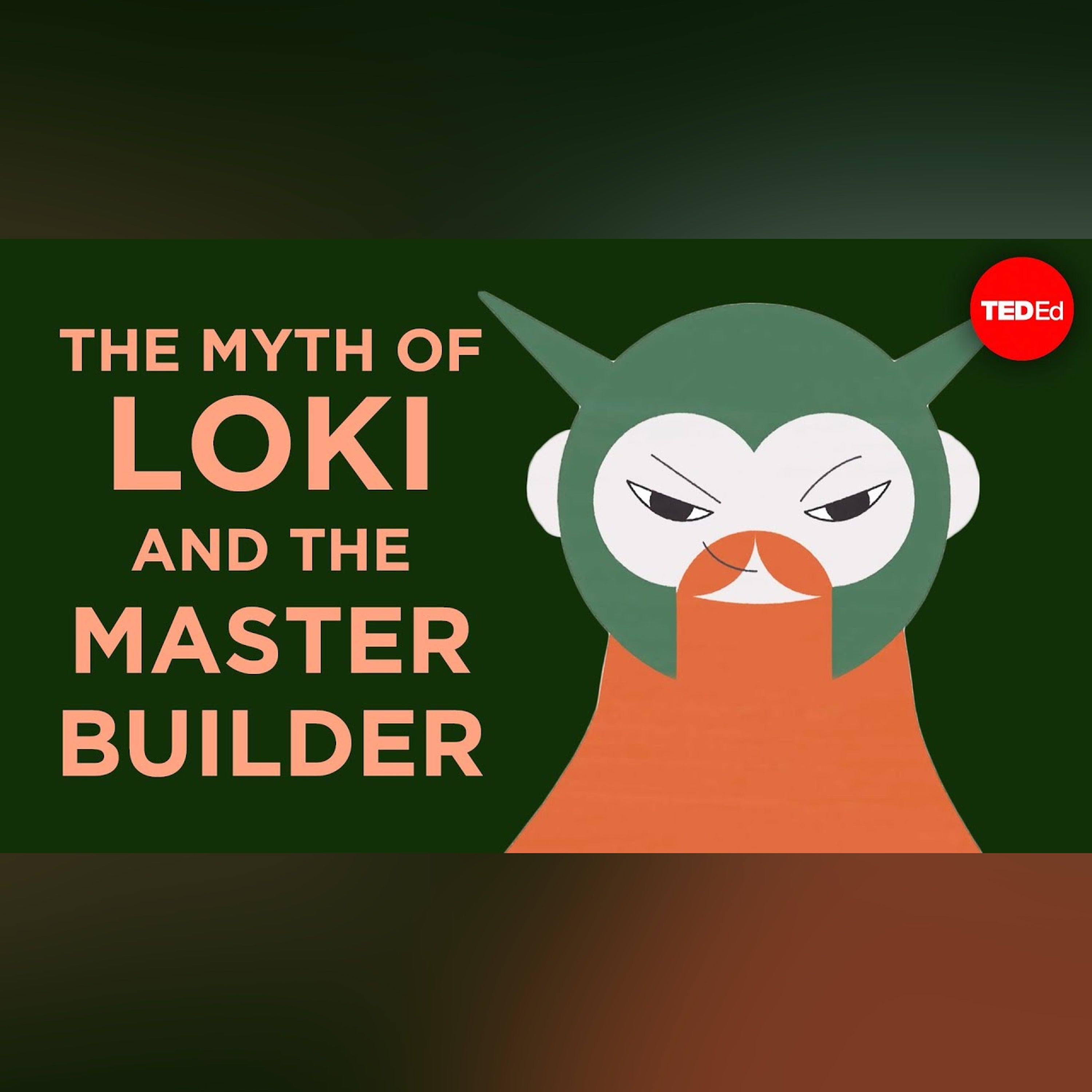
Dive into the Norse myth of how Loki tricked a stranger into building the great wall of Asgard to keep the realm safe from giants. Uploaded 14-11-19 -- Asgard, a realm of wonders, was where the Norse Gods made their home. There Odin’s great hall of Valhalla towered above the mountains and Bifrost, the rainbow bridge, anchored itself. Though their domain was magnificent, it stood undefended from the giants and trolls who sought to destroy them. But a stranger appeared and made the gods an offer. Alex Gendler details the myth of the master builder. Lesson by Alex Gendler, directed by Hype CG. Animator's website: https://www.hype.cg (https://www.hype.cg/) Sign up for our newsletter: http://bit.ly/TEDEdNewsletter Support us on Patreon: http://bit.ly/TEDEdPatreon Find us on Twitter: http://bit.ly/TEDEdTwitter Peep us on Instagram: http://bit.ly/TEDEdInstagram View full lesson: https://ed.ted.com/lessons/the-myth-of-loki-and-the-master-builder-alex-gendler Thank you so much to our patrons fo
Hosts Fran Chismar and Tom Knezick are back with a brand new episode of The Buzz. There is a major event announcement! Tom and Fran follow up with some of the events they have been able to attend. “That’s Hot” is fall friendly this week. “This or That” puts our stamp on the top 10. Tom's article sparks an interesting conversation about the perils of bees. We are giving listener shoutouts! Did Tom and Fran fit in "Build-A-Plant Workshop? Make sure you stay for the secret. Intro music by RJ Comer, Outro music by Dave Bennett. That’s Hot – Fran’s Plant (https://www.wildflower.org/plants/result.php?id_plant=SOOD) / Tom’s Plant (https://www.wildflower.org/plants/result.php?id_plant=muca2) Read Fran’s Article (https://www.nj.com/news/2026/10/bigfoot-hunters-say-nj-is-a-hotbed-for-sightings-meet-the-people-still-searching-for-sasquatch.html) / Read Tom’s Article (https://www.ijpr.org/environment-energy-and-transportation/2026-11-03/klamath-river-restoration-wild-bees-bee-hotels) Have a questi
A retired pope answers a philosopher's questions about Adam, original sin and life on other planets. Jimmy Akin and Dom Bettinelli read Benedict XVI's 2014 letter and ask whether the Vatican could be hiding proof of aliens. The post Benedict XVI on Aliens and the Vatican UFO Claims (https://sqpn.com/2026/11/benedict-xvi-on-aliens-and-the-vatican-ufo-claims/) appeared first on StarQuest Media (https://sqpn.com/).
Alien-hunting telescope “Breakthrough Listen” detected a faint pulsing signal… but then it disappeared. Now they’re searching the centre of our galaxy for the source. Is this one of the thousands of missing pulsars scientists predicted should exist, but can’t seem to find? And could this discovery finally prove general relativity?▀▀▀▀▀▀
This week, hackers infiltrated supermarket fridges and freezers across Europe, sending their temperatures sky-high. Millions of euros worth of food had to be thrown away. Reports say the cyber attacks were a deliberate attempt to disrupt Europe’s food supply. However, for Unexpected Elements, the news story has inspired the team to investigate some really cool science. First, we take the plunge into the fascinating world of fungi. New research published this year has been looking at its ice-freezing properties, which could be used for everything from freezing human tissue to engineering the weather. We then learn about a high school ice-cream experiment that resulted in a puzzling physics phenomenon. Next, Professor Naoko Kurahashi-Neilson from Dexter University joins us to explain how a James Bond-esque base under the Antarctic ice is helping astronomers to see the Universe in a whole new light. Plus, what food need to go in the fridge, and how can you brew a good cup of tea at high a
This week I am talking to Grant Cameron about his book 'UFO Sky Pilots: Pilots of Peace and Oneness'. In 2013, an elderly lady approached me, claiming she had flown a flying saucer. After 38 years of UFO research, I found this story compelling. At first, I thought the story was a little unbelievable, but I understood that the witness was of sound mind and had an amazing story to tell. Since that incident, more than 50 witnesses have told me the exact same details. One account is a story. Two accounts are evidence. Fifty accounts require an investigation. Why would they let these people fly the craft, and how can someone fly a ship that might have technology 1000 years or more advanced than ours? These witnesses are some of the 14% of experiencers who responded to the FREE survey question saying they had flown the ship. In this book, I present over three dozen+ UFO Sky Pilots that I have interviewed about their experiences. They all tell the same fantastic story with similar accounts. T
Soil brings together all four spheres of physical geography, and understanding soil composition is kind of like baking! So in today's episode, we're going to show you how to create the perfect soil cake, examine its different soil horizons, and then take you on a trip along the 20th meridian from the Congo to northern Europe to show you how the composition of soil varies dramatically with the environment. Soils are the foundation of life on Earth, from the local ecosystems of plants and animals to the crops we grow and food we eat, so it is up to us to care for it as we decide how to manage our land and resources. Watch our videos and review your learning with the Crash Course App! Download here for Apple Devices: https://apple.co/3d4eyZo Download here for Android Devices: https://bit.ly/2SrDulJ Crash Course is on Patreon! Thanks to the following patrons for their generous monthly contributions that help keep Crash Course free for everyone forever: Vincent, Emilee Murphy, Michael Wang,
Scientists Test Carbon Dioxide Exposure To Help Clear Alzheimer's-Related Proteins From The Brain Researchers at the University of New Mexico are investigating whether intermittent exposure to carbon dioxide-enriched air can stimulate the brain's glymphatic waste-clearance system and increase the movement of proteins associated with Alzheimer's disease into the bloodstream. In a preliminary human experiment involving 12 participants, alternating between ordinary air and air containing 5% CO2 for approximately 30 minutes produced rhythmic changes in cerebral blood vessels, followed by temporary increases in blood levels of amyloid-beta. Participants with signs of cognitive decline also showed a tau-related response. The findings, reported in July 2026, build on a 2025 study published in npj Parkinson's Disease demonstrating that intermittent carbon dioxide exposure stimulated cerebrospinal fluid movement and increased circulating levels of several neurodegeneration-related proteins. Alt
Voyager 1 passes the "light day" 25 billion-kilometre milestone. We also ask whether artificial sweeteners are bad for us but still better than sugar, hear what would happen if the thyroid gland stopped working, wonder why we sometimes hear sounds that aren't there, and hear how do we decide whether a young animal is a cub or a kitten. Also, where did the water go from my ice cube tray, and what do we know about the Microsoft outage? Like this podcast?
Many organizations have made it their mission to expand the rights of Black Americans. The NAACP and the Urban League are examples of influential organizations with long histories. But a long history or extensive membership isn't always necessary to have an impact. Today, we'll learn about the Black Panthers. They were a relatively small, relatively short-lived political party that had an outsized impact on US history. Clint's book, How the Word is Passed is available now! https://bookshop.org/books/how-the-word-is-passed-a-reckoning-with-the-history-of-slavery-across-america/9780316492935 Sources and References Peniel E. Joseph, Waiting ’ Til the Midnight Hour: A Narrative History of Black Power in America (New York: Henry Holt, 2006). Malcolm X, The Autobiography of Malcolm X, With the assistance of Alex Haley (New York: Ballantine, 1992). Manning Marable, Malcolm X: A Life of Reinvention (New York: Viking Press, 2011). Ilyasah Shabazz, Growing up X: A Memoir by the Mother of Malcolm
"Why does it feel nearly impossible to start tasks? Or stop doing others?" "Why is my brain so noisy all of the time?" And "why has no one noticed how much I'm struggling?" These are just a few things an adult with undiagnosed ADHD might ask themselves. For a long time, women with ADHD have flown under the radar of diagnosis, and had little chance of receiving tailored support, medication, or even answers to those questions. As you'll no doubt have noticed, this is beginning to shift. In this episode, join Ella Rhodes as she speaks with psychologists Dr Eve Holden (Durham University) and Helena Koyabashi-Wood (University of St Andrews), who have been investigating the experiences of late-diagnosed women with ADHD. Credits Host: Ella Rhodes Editor: Emma Barratt Audio wizardry: Jeff Knowler Hungry for more? Check out this issue of our magazine, The Psychologist (https://www.bps.org.uk/psychologist-issue/2024/january/psychologist-januaryfebruary-2024), on neurodivergence. Or read more abo
What was matter like in the universe's earliest moments? Physicists at MIT and UCSB have developed a new theoretical approach to studying quark-gluon plasma, the extreme state of matter that existed just after the Big Bang. Drawing on ideas connected to Einstein's work, their findings offer fresh insights into how particles move and interact under some of nature's most extreme conditions. This episode includes AI-generated content.
A controversial new cosmological model proposes that the universe could be 26.7 billion years old, challenging conventional explanations of cosmic evolution. Developed by researchers at the University of Ottawa, the theory explores whether changing fundamental constants could explain observations traditionally attributed to dark matter and dark energy. If further tests support the model, it could reshape some of our deepest assu This episode includes AI-generated content.
Explore the science of why mixing drugs and drug interactions with other substances can lead to dangerous health complications. -- Which of the following is risky behavior: a person taking cholesterol medicine with grapefruit juice? Or a person taking Acetaminophen before going out for drinks? Or a person on blood thinners who takes an aspirin? Turns out, all of them are risky. Each has inadvertently created a drug interaction that could lead to serious complications. Céline Valéry describes the dangers of mixing substances. Lesson by Céline Valéry, directed by Cabong Studios. Animator's website: https://www.cabongstudios.com.br/ Sign up for our newsletter: http://bit.ly/TEDEdNewsletter Support us on Patreon: http://bit.ly/TEDEdPatreon Find us on Twitter: http://bit.ly/TEDEdTwitter Peep us on Instagram: http://bit.ly/TEDEdInstagram View full lesson: https://ed.ted.com/lessons/the-dangers-of-mixing-drugs-celine-valery Thank you so much to our patrons for your support! Without you this v
In Good Vibes Only: Phenomenology and the Biopolitics of Algorithmic Legitimation (https://bookshop.org/a/12343/9781478039334), Robin James argues that “vibes” have become a way for how we see ourselves and understand our tastes, as well as how corporations and governments see us in order to categorize and control. Vibes, according to James, are an orientation that situate beings and things in space with others, closer to some things than others, facing is certain directions, and more likely to be grouped together. Drawing from a diverse set of theoretical and methodological perspectives, including continental feminist philosophy, critical philosophy of race, phenomenology, and popular music studies, James walks the reader through how vibes are understood, the mathematical models that vibes are based on, and how vibes function as a new form of biopower and therefore as a means of categorization and control. You can find a transcript of our conversation here (https://docs.google.com/doc
A daring reassessment of the critical method that reshaped the humanities and an invitation to imagine new ways of doing history. The genealogical method—a mode of historical analysis that shows that what looks timeless is in fact contingent, bound to shifting relations of meaning, knowledge, and power—has become the dominant paradigm of humanistic inquiry. In The Genealogy of Genealogy (https://bookshop.org/a/12343/9780226847313), Jason Ānanda Josephson Storm turns this influential practice back on itself, tracing its unlikely rise through Nietzsche and Foucault and uncovering its suppressed ties to eugenics and racism. He rethinks the very stakes of critical history and proposes new tools for thinking about historical continuity, change, and difference. Provocative and timely, The Genealogy of Genealogy offers both a diagnosis and a vision, challenging scholars across the humanities and social sciences to rethink how we write history and whether our most trusted methods are fit for t
Professor Karl Figlio has accomplished a remarkable feat: Under the heading "seminal masculinity", he has named and described a seemingly new dimension of masculinity that heretofore has been hiding in plain sight. Listen to this interview discussing Rethinking the Psychoanalysis of Masculinity: From Toxic to Seminal (https://bookshop.org/a/12343/9781032594651)(Routledge, 2023) In true psychoanalytic fashion he started his exploration by wondering about a surface phenomenon, namely the widespread use of the term "toxic" in reference to "masculinity" in the culture and teased out its connections to unconscious phantasy in which toxic masculinity is only the destructive underbelly of seminal masculinity, the latter being a internal position of collaboration and reparation. He links the pair of seminal versus toxic masculinity to a primal seminal ambivalence that has the subject torn between hope for renewal, creativity and collaboration and the desolation of the seeds of reparation faili
Fireworks have been lighting up our autumn skies for centuries - but what’s actually going on inside those dazzling bursts of colour, sound and stars? Hannah and Dara set out to discover the science behind the sparkle. From the chemistry that creates vivid reds, greens and blues, to the physics that launches shells high above our heads before exploding into perfectly planned patterns, they learn that every firework is a carefully choreographed feat of engineering. Along the way, they explore why some fireworks whistle while others crackle, trace the remarkable history of fireworks from ancient China to modern-day spectacles, and ponder whether drones and laser shows could one day replace the traditional fiery festivities. If you have a curious question for our team, get in touch via [email protected]. Contributors: Jackie Akhavan - Professor of Explosive Chemistry at Cranfield University John Withington - histroian broadcaster and author of ‘A History of Fireworks from Their Origi
We continue our tour of the nervous system by looking at synapses and the crazy stuff cocaine does to your brain. Pssst... we made flashcards to help you review the content in this episode! Find them on the free Crash Course App! Download it here for Apple Devices: https://apple.co/3d4eyZo Download it here for Android Devices: https://bit.ly/2SrDulJ Chapters: Introduction: What are Synapses? 00:00 Electrical vs Chemical Synapses 1:58 How Electrical Synapses Work: Gap Junctions 2:56 How Chemical Synapses Work: Neurotransmitters 4:01 How Neurotransmitters Work 5:33 How Cocaine Works 7:44 Review 9:52 Credits 10:37 Crash Course is on Patreon! Want to find Crash Course elsewhere on the internet? Facebook - http://www.facebook.com/YouTubeCrashCourse Twitter - http://www.twitter.com/TheCrashCourse Instagram - https://www.instagram.com/thecrashcourse/ CC Kids: http://www.youtube.com/crashcoursekids
View full lesson: http://ed.ted.com/lessons/debunking-the-myths-of-ocd-natascha-m-santos Uploaded 19-05-15 There’s a common misconception that if you like to meticulously organize your things, keep your hands clean, or plan out your weekend to the last detail, you might be OCD. In fact, OCD (Obsessive Compulsive Disorder) is a serious psychiatric condition that is frequently misunderstood by society and mental health professionals alike. Natascha M. Santos debunks the myths surrounding OCD. Lesson by Natascha M. Santos, animation by Zedem Media.
In which John Green, Hank Green, and Emily Graslie teach you about, well, everything. Big History is the history of everything. We're going to start with the Big Bang, take you right through all of history (recorded and otherwise), and even talk a little bit about the future. It is going to be awesome. In the awe-inspiring sense of the word awesome. In this episode, we walk you through the start of everything: The Big Bang. We'll look at how the universe unfolded at its very beginning, and how everything in the universe that we know today came into being. So that's kind of a big deal, right? For more information, visit www.bighistoryproject.com Crash Course is on Patreon! Want to find Crash Course elsewhere on the internet? Facebook - http://www.facebook.com/YouTubeCrashCourse Twitter - http://www.twitter.com/TheCrashCourse Instagram - https://www.instagram.com/thecrashcourse/ CC Kids: http://www.youtube.com/crashcoursekids