English-language podcasts

Bedtime Astronomy

Could the Universe Be 26.7 Billion Years Old? A New Theory Challenges Cosmology

25 min

Listen through the publisher, then discuss the episode here or arrange an in-person Roundtable. Your city determines where to meet.

Roundtables are designed for groups of four, with a shared subject and room for everyone to speak. Come for discussion, with no dating expectation.

A controversial new cosmological model proposes that the universe could be 26.7 billion years old, challenging conventional explanations of cosmic evolution. Developed by researchers at the University of Ottawa, the theory explores whether changing fundamental constants could explain observations traditionally attributed to dark matter and dark energy. If further tests support the model, it could reshape some of our deepest assu This episode includes AI-generated content.

Episode information is provided by the publisher. Listening takes place on the publisher’s service.

Listen at the source ↗

Featured places to meet in Palo Alto, CA

Explore these places and arrange a conversation through ThinkMatch.

City guide for Palo Alto, CA

More from Bedtime Astronomy

Bedtime Astronomy

The Universe Through a Gravitational Lens: Euclid’s Record Discovery

22 min

The Euclid space telescope has uncovered a remarkable collection of cosmic gravitational lenses, offering new opportunities to investigate some of the universe’s greatest mysteries. These natural magnifying glasses reveal distant galaxies through the distortion of light, providing astronomers with valuable clues about dark matter, cosmic structure, and the hidden architecture of the universe. This episode includes AI-generated content.

Discuss this episode

Community Poll

News reports should clearly separate verified facts from the writer's interpretation.

Share your view, then see how readers voted. No sign-in required. This poll is shared across stories.

Do you agree or disagree?

Choose one answer

Common Quandary

A Common Quandary to discuss

Another conversation to explore, separate from this news story.

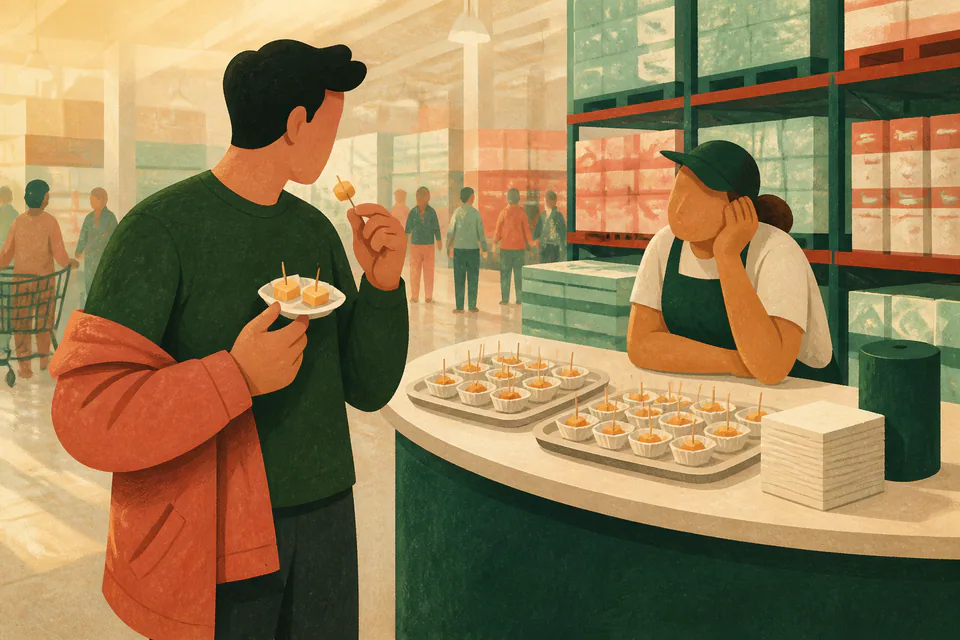
You love the free sample but will never buy it. How many times may you circle back?

A warehouse store is offering delicious samples. You have no intention of purchasing the product, but the employee seems bored and has trays to spare. After taking two, you consider removing your jacket and returning for a third.

Is exploiting generosity wrong when the giver appears not to care?

Explore this quandary