This is a Grave Talks CLASSIC EPISODE! PART TWO Built as a modest homestead in the 1840s, the May-Stringer House has endured more than a century of transformation — and tragedy. Over time, it evolved from a family home into a boarding house and later a repository of local history. Along the way came untimely deaths, unmarked graves, and a growing sense that something never truly moved on. Today, the May-Stringer House is considered one of Florida’s most paranormally active locations. Visitors and investigators alike report disembodied voices, shadow figures, and unexplained movement throughout the home. Some believe the spirits are former residents, bound to the place by unfinished lives. Others suspect the countless artifacts housed within its walls may act as anchors, holding onto energy from the past. Paranormal investigator Christian Paul has spent time exploring the house’s darker layers, documenting experiences that challenge simple explanations. His encounters raise unsettling q
Trees are one of the greatest investments you can make in a garden, but how do you choose the right one? In this episode, BBC Gardeners' World presenter Frances Tophill explores the many benefits trees bring, from supporting wildlife and improving air quality to creating shade, beauty and year-round interest. Frances shares her favourite trees for gardens large and small, offers practical advice on planting and caring for them, and explains how to manage mature trees with confidence. Whether you're planting your first tree or nurturing an established garden, this episode is full of expert advice and inspiration.
Everywhere you look on Earth, you’ll find wonderful and diverse living things, from tiny tardigrades to soaring sequoias. And incredibly, everything alive today, and everything that’s ever lived, is related. In this episode of Crash Course Biology, we reveal how the evolutionary relationships between living things define their place on a single, great Tree of Life, and we learn what that tree can tell us about our own place among the planet’s biodiversity. Chapters: Ravens & Rhinos 00:00 The Tree of Life 1:08 Prokaryotes 3:48 Eukaryotes 4:57 Plants 6:39 Fungi 7:43 Animals 8:59 Review & Credits 11:47 This series was produced in collaboration with HHMI BioInteractive, committed to empowering educators and inspiring students with engaging, accessible, and quality classroom resources. Visit https://BioInteractive.org/CrashCourse (https://biointeractive.org/CrashCourse) for more information. Are you an educator looking for what NGSS Standards are covered in this episode? Check out our Educa
Photosynthesis is a powerful process that is responsible for some of life’s most vital functions. In fact, consumers like us rely on photosynthetic producers to harness energy from the sun so that we can survive and thrive. In this episode of Crash Course Biology, we’ll explore photosynthesis in two acts, and learn how the process works inside and out. Chapters: How Can We Feed the World? 00:00 Producers & Photosynthesis 1:26 Chloroplasts 4:04 The Light-Dependent Reactions 5:01 The Calvin Cycle 7:30 Carbon Fixation 10:27 Review & Credits 11:33 This series was produced in collaboration with HHMI BioInteractive, committed to empowering educators and inspiring students with engaging, accessible, and quality classroom resources. Visit https://BioInteractive.org/CrashCourse (https://biointeractive.org/CrashCourse) for more information. Are you an educator looking for what NGSS Standards are covered in this episode? Check out our Educator Standards Database for Biology here: https://www.thec
Today Hank talks about the deliciousness of alkenes & alkynes, their structures, and how to remember which is which by simply knowing the alphabet. Also, he breaks down hydrogenation, halogenation, polymerization, and triglycerides all while helping us figure out the meaning of different names for fats. Pssst... we made flashcards to help you review the content in this episode! Find them on the free Crash Course App! Download it here for Apple Devices: https://apple.co/3d4eyZo Download it here for Android Devices: https://bit.ly/2SrDulJ -- Table of Contents Alkenes & Alkynes 1:14 Naming Rules 1:39 Cis-Trans Isomerism 3:29 Hydrogenation, Halogenation, Polymerization, and Triglycerides 4:40 Meanings of Fat Names 5:50 -- Crash Course is on Patreon! Want to find Crash Course elsewhere on the internet? Facebook - http://www.facebook.com/YouTubeCrashCourse Twitter - http://www.twitter.com/TheCrashCourse Instagram - https://www.instagram.com/thecrashcourse/ CC Kids: http://www.youtube.com/cra
Explore the cognitive benefits of risky play and how we can design better playgrounds that promote fun, agency, and development. -- The best play environments offer freedom and novelty that kids can explore as much or as little as they like. But traditional playgrounds don’t offer much flexibility— swings, slides, and climbing frames are hardly novel structures. So, how do we create better play spaces? Explore the cognitive benefits of risky play and how we can design playgrounds that promote fun, agency, and development. Directed by AIM Creative Studios. This video made possible in collaboration with the LEGO Group and the LEGO Foundation Learn more about how TED-Ed partnerships work: https://bit.ly/TEDEdPartner Support Our Non-Profit Mission ---------------------------------------------- Support us on Patreon: http://bit.ly/TEDEdPatreon Check out our merch: http://bit.ly/TEDEDShop ---------------------------------------------- Connect With Us -----------------------------------------
What’s a human? And how did we become humans, anyway? In this episode of Crash Course Biology, we’ll meet some of our closest relatives and trace how we evolved into the brainy, inventive, complex species we are today. Chapters: The First Humans 00:00 What is a Human? 1:18 Hominins 2:31 Dr. Xinzhi Wu 4:09 Hominin Interbreeding 5:32 How Humans Evolved 7:02 Review & Credits 11:44 This series was produced in collaboration with HHMI BioInteractive, committed to empowering educators and inspiring students with engaging, accessible, and quality classroom resources. Visit https://BioInteractive.org/CrashCourse (https://biointeractive.org/CrashCourse) for more information. Are you an educator looking for what NGSS Standards are covered in this episode? Check out our Educator Standards Database for Biology here: https://www.thecrashcourse.com/biologystandards Check out our Biology playlist here: https://www.youtube.com/playlist?list=PL8dPuuaLjXtPW_ofbxdHNciuLoTRLPMgB Watch this series in Spanis
In which John Green teaches you about nation-building and nationalism in Latin America. Sometimes, the nations of Latin America get compared to the nations of Europe and are found wanting. This is kind of a silly comparison. The rise of democratic, economically powerful nations in Europe came about under a very different set of circumstances than the way nations arose in Latin America, so the regions are necessarily a lot different. But why? John will explore whether it was a lack of international war which impeded Latin America's growth, which sounds like a crazy thing to say, but you should hear him out. Citations: Citation 1: Centeno, Miguel Angel. Blood and Debt: War and the Nation-state in Latin America. Penn State U. Press. University Park, PA. 2002 p. 86 Citation 2: Centeno p. 90 Citation 3: Centeno p. 175 Citation 4: Centeno p. 275 Crash Course is on Patreon! Want to find Crash Course elsewhere on the internet? Facebook - http://www.facebook.com/YouTubeCrashCourse Twitter - htt
In which John Green teaches you about a time of relative tumult in the United States, the 1960s. America was changing rapidly in the 1960s, and rights movements were at the forefront of those changes. Civil Rights were dominant, but the 60s also saw growth in the Women's Movement, the LGBT Rights Movement, the Latino Rights Movement, and the American Indian Movement. Also, Americans began to pay a bit more attention to the environment. All this change happened against the backdrop of the Cold War and the Rise of Conservatism. It was just wild. John will teach you about sit-ins, Freedom Rides, The March on Washington, MLK, JFK, LBJ, and NOW. Man, that is a lot of initialisms. And one acronym. Hey teachers and students - Check out CommonLit's free collection of reading passages and curriculum resources to learn more about the events of this episode. Civil Rights stayed strong throughout the 1960s, beginning with the peaceful sit-in movement in 1960 in the South: https://www.commonlit.org
Practice more problem-solving at https://brilliant.org/TedEd -- Bad news: your worst enemies are at the gate. Your fledgling kingdom guards the world’s only herd of tiny dino creatures. To you, they’re sacred. To everyone else, they’re food. The three closest nation-states have teamed up to smash open your walls and devour the herd. Can you build fortifications for your kingdom before the siege weapons arrive? Henri Picciotto shows how. Lesson by Henri Picciotto, directed by Igor Coric, Artrake Studio. Support Our Non-Profit Mission ---------------------------------------------- Support us on Patreon: http://bit.ly/TEDEdPatreon Check out our merch: http://bit.ly/TEDEDShop ---------------------------------------------- Connect With Us ---------------------------------------------- Sign up for our newsletter: http://bit.ly/TEDEdNewsletter Find us on Twitter: http://bit.ly/TEDEdTwitter Peep us on Instagram: http://bit.ly/TEDEdInstagram ---------------------------------------------- Keep L
In which Craig Benzine breaks down the different types of bureaucracies. I mean sure, they’re all part of the executive branch, but some work more directly with the President than others. Some bureaucracies exist solely to independently regulate industry whereas others are expected to operate like corporations and make a profit. And on top of all that, some of these agencies have sub-agencies! It can all get pretty complicated, so we’ll try to discuss some of the most significant agencies out there and the ones you hear a lot about on the news. We’ll talk about how they seem to have steadily gained more and more power, and of course, we’ll talk about what all the agencies are for in the first place! Support is provided by Voqal: http://www.voqal.org (http://www.voqal.org/) Chapters: Introduction: Types of Bureaucracies 00:00 Executive Departments 0:41 Sub-agencies of Executive Departments 1:21 Independent Agencies 1:30 Independent Regulatory Commissions 1:45 Government Corporations 2:0
This week Craig is going to give you a broad overview of elections in the United States. So as you may have noticed, there are kind of a lot of people in the U.S, and holding individual issues up to a public vote doesn't seem particularly plausible. So to deal with this complexity, we vote for people, not policies, that represent our best interests. But as you'll see, this process was not thoroughly addressed in the Constitution, so there have been a number of amendments and laws at the state level implemented to create the election system we all know and (maybe) love today. Produced in collaboration with PBS Digital Studios: http://youtube.com/pbsdigitalstudios Support is provided by Voqal: http://www.voqal.org (http://www.voqal.org/) All attributed images are licensed under Creative Commons by Attribution 4.0 Want to find Crash Course elsewhere on the internet? Facebook - http://www.facebook.com/YouTubeCrashC... Twitter - http://www.twitter.com/TheCrashCourse Tumblr - http://thecrash
When we think about the Harlem Renaissance, the arts come immediately to mind. But new political theories were also blossoming during this time. We've talked about Booker T. Washington and W.E.B. DuBois, but today we'll get into some other thinkers with different ideas about civil rights, fair labor practices, and Black nationalism. Clint's book, How the Word is Passed is available now! https://bookshop.org/a/3859/9780316492935 Sources Angela Davis, Blues Legacies and Black Feminism: Gertrude ‘Ma’ Rainey, Bessie Smith, and Billie Holiday (New York: Pantheon Books, 1998). Keisha N. Blain, Set the World on Fire: Black Nationalist Women and the Global Struggle for Freedom (University of Pennsylvania Press, 2018). Cheryl Wall, Women of the Harlem Renaissance (Bloomington: Indiana University Press, 1995). Adam Ewing, Age of Garvey: How a Jamaican Activist Created a Mass Movement and Changed Global Black Politics (New Jersey: Princeton University Press, 2014). Deborah Gray White; Mia Bay; Wa
Professional songwriters share their writing process, how they collaborate with other artists, and what it takes to be a songwriter. -- "Think Like A Musician" connects you with working musicians who want to help the music-curious and music-passionate hone and share the gift of music with the world. Part interview, part animated course, our second season "Think Like A Songwriter" features artists sharing their insight on the ins and outs of fine-tuning your songwriting and crafting timeless, memorable music. Each episode features free supplemental learning materials developed by Education Through Music (https://etmonline.org) (https://etmonline.org)/) — a nonprofit with over 30 years of experience developing classroom-adaptable curriculum for music educators. Directed by Kozmonot Animation Studio. A special thanks to the musicians who provided their insights and expertise for this video. You can check out their pages here: Support Our Non-Profit Mission --------------------------------
Vaccines save millions of lives each year but, to work, most need to be kept cold throughout their journey, from the factory where they’re made to the clinic where they’re given. This relies on what’s known as the cold chain, a global network of fridges, freezers and icepacks. The chain is not only expensive to maintain, it’s incredibly vulnerable to breaking. In low- and middle- income countries, in particular, transport delays, power cuts and equipment failures often cause vaccines to spoil before they reach the people who need them. An urgent quest in public health has been to find a way to stabilise vaccines, at room temperature, so that they no longer need this cold chain. This occurred to Asel Sartbaeva, during a routine visit to the GP with her newborn daughter. Originally from Kyrgyzstan and now Associate Professor of Chemistry at Bath University, Asel investigates silica-based materials. Not a typical background for someone working on vaccines, but it gave her a fresh perspect
Astronomy Cast Ep. 808: Mission Tech Series: Nuclear Rockets Hosted by: Fraser Cain (@frasercain) and Dr. Pamela L. Gay (@CosmoQuest) Streamed live on Oct 27, 2026. Once again, chemical rockets are ubiquitous but not as powerful as other propulsion ideas. And one big idea that's been around for decades is using the power of nuclear fission to generate much more thrust for a rocket. Today let's talk about nuclear rockets!
Saturn is the crown jewel of the solar system, beautiful and fascinating. It is a gas giant and has a broad set of rings made of ice particles. Moons create gaps in the rings via their gravity. Saturn has dozens of moons, including Titan, which is as big as Mercury and has a thick atmosphere and lakes of methane; and Enceladus which has an undersurface ocean and eruptions of water geysers. While we are still uncertain, it is entirely possible that either or both moons may support life. This episode was brought to you by Squarespace http://www.squarespace.com (http://www.squarespace.com/) Check out the Crash Course Astronomy solar system poster here: http://store.dftba.com/products/crashcourse-astronomy-poster -- Chapters: Introduction: Saturn 00:00 Saturn's Atmosphere 1:23 Saturn's Hexagonal Storm 2:02 Saturn's Rings 2:49 Anomalies in Saturn's Rings 4:45 Titan: Saturn's Largest Moon 6:31 Enceladus’s Water Geysers 8:34 Saturn's Other Moons 9:51 Review 11:22 -- PBS Digital Studios: http:
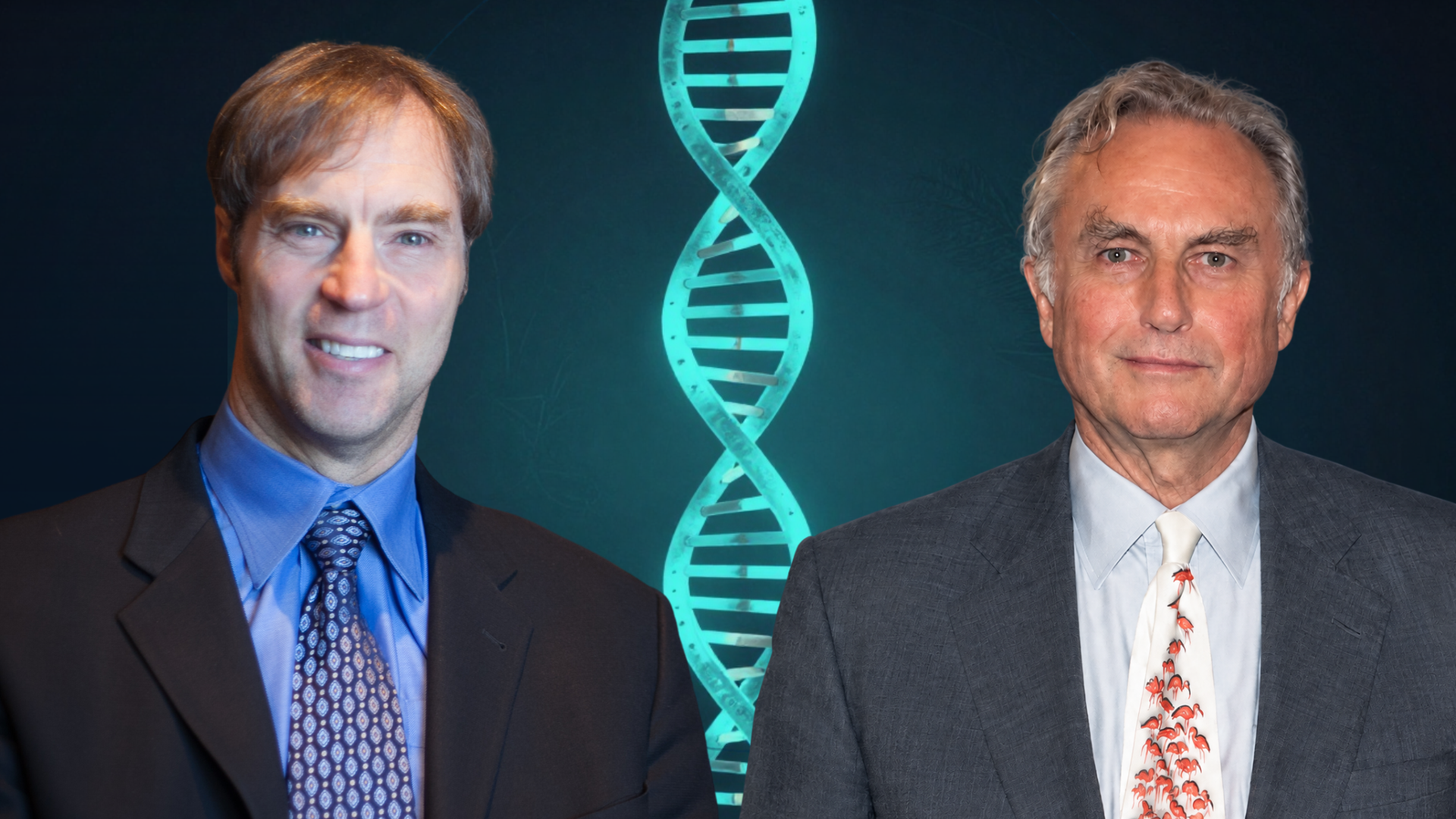
In September 2026, philosopher of science Dr. Stephen Meyer argued in Britain’s Daily Telegraph that discoveries in cosmology and biology are strengthening the case for intelligent design and the God hypothesis. Eminent biologist Richard Dawkins was given a chance to respond, and he did so with a vigorous defense of Darwinism and his 20 year old book The God Delusion. But did Dawkins really respond to Meyer’s arguments? And did Charles Darwin actually demolish the argument from design, as Dawkins insists? On this ID The Future, host Andrew McDiarmid welcomes British scholar and professor emeritus Neil Thomas to the podcast to discuss the Telegraph dust-up and respond to Dawkins's claim that Darwin demolished the design argument. In his two books Taking Leave of Darwin: A Longtime Agnostic Discovers the Case for Design and False Messiah: Darwinism As the God That Failed, Thomas has explained why he walked away from Darwinism and why the theory of natural selection that rose to prominenc
J6 PIPE BOMB BOMBSHELL! BRIAN COLE, SHAUNI KERKHOFF & THE FBI INVESTIGATION UNDER FIRE! MICHAEL JACO welcomes CINDY YOUNG and KEVIN HOYT for an explosive investigation into one of the most controversial unresolved questions surrounding January 6! ⚠️ WAS BRIAN COLE JR. WRONGFULLY ACCUSED? The January 5, 2021 pipe bomb investigation near the Democratic and Republican National Committee headquarters is back in the spotlight. Michael, Cindy, and Kevin examine the case against Brian Cole Jr., raising serious questions about the evidence, the investigative timeline, and the circumstances surrounding his FBI interrogation. THE FBI INTERROGATION — PRESSURE, PANIC & A SEARCH FOR ANSWERS! The discussion examines an interrogation transcript in which Cole describes his personal life, gaming interests, and introverted personality before facing increasingly intense questioning. The guests raise concerns about whether investigators appropriately accounted for his reported autism and emotional distres
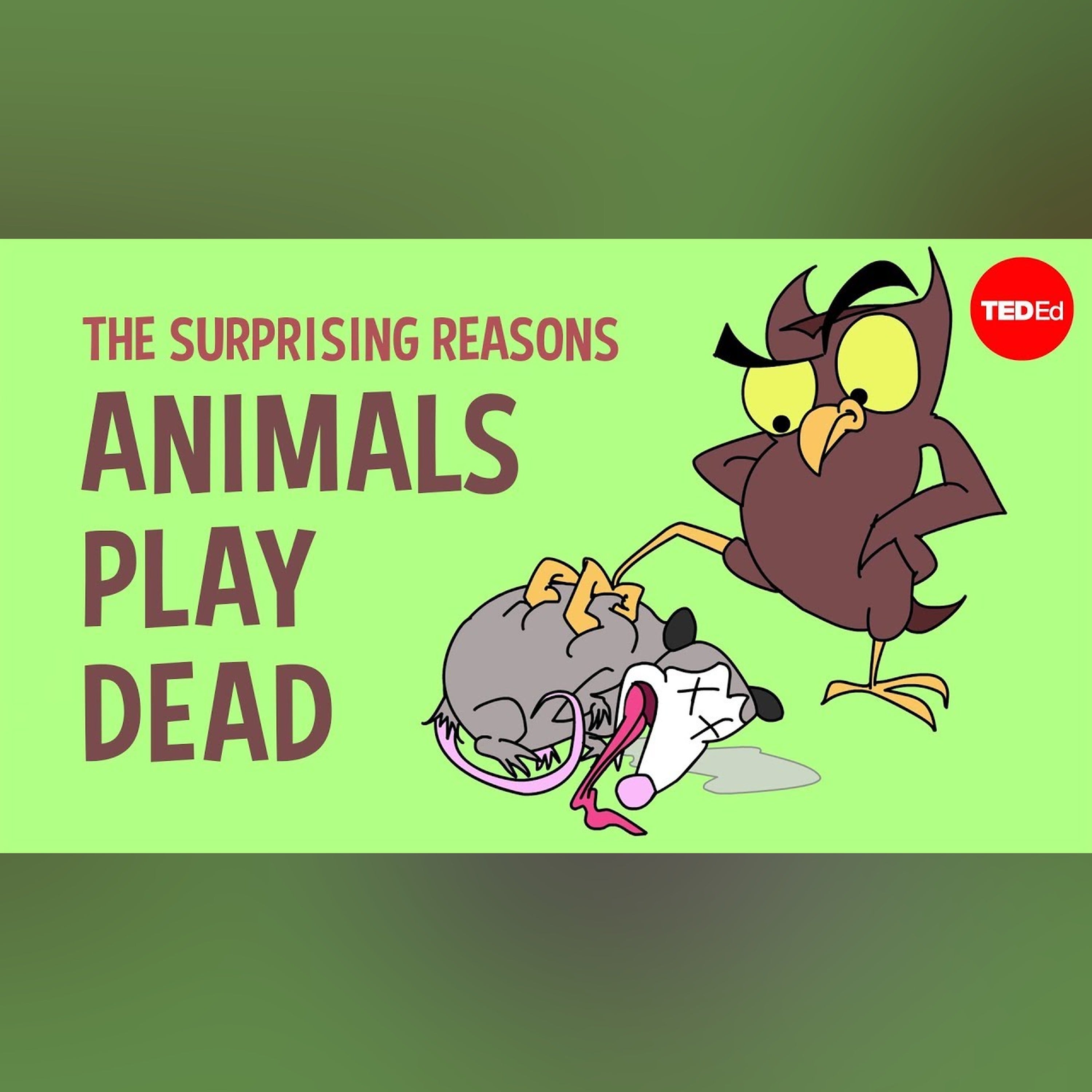
Uploaded 16-04-18 View full lesson: https://ed.ted.com/lessons/the-surprising-reasons-animals-play-dead-tierney-thys From lemurs to lizards, ants to amphibians, sharks to chickens, hundreds of animals "play dead" as a survival tactic. But how and why do animals do this? Tierney Thys explains how this curious behavior, known as tonic immobility or TI for short, can be used as a defense or offense. Lesson by Tierney Thys, animation by Stretch Films Inc. Thank you so much to our patrons for your support! Without you this video would not be possible! Robert Hargis, Mark wisdom, Mircea Sîrbu, Molly Gardner, Irindany Sandoval, William Bravante, Elizabeth Parker, Sai Krishna Koyoda, Therapist Gus, Samuel Barbas, Betsy Feathers, Maxwell Ingram, Ajinkya Deshmukh, Victoria Soler-Roig, Abdulmateen Aderinto, Pavel Maksimov, Cyrus Garay, Triết Thạch Minh, Yvette Mocete, Mike Azarkman, Valeria Sloan Vasquez, Patricia Alves Panagides, William Biersdorf, Michael Aquilina, Vinamr L. Sachdeva, Ryan Phil
In which John Green teaches you about World War 2, as it was lived on the home front. You'll learn about how the war changed the country as a whole, and changed how Americans thought about their country. John talks about the government's control of war production, and how the war probably helped to end the Great Depression. Broader implementation of the income tax, the growth of large corporations, and the development of the West Coast as a manufacturing center were also results of the war. The war positively changed the roles of women and African Americans, but it was pretty terrible for the Japanese Americans who were interred in camps. In short, World War II changed America's role in the world, changed American life at home, and eventually spawned the History Channel. Hey teachers and students - Check out CommonLit's free collection of reading passages and curriculum resources to learn more about the events of this episode. At home in America, everyone joined in the war effort, with
Despite the diverse appearance and characteristics of organisms on Earth, the chemicals that make up living things are remarkably similar, often identical. In this episode of Crash Course Biology, we’ll look at the building blocks of the four major classes of biomolecules, how those join up to form macromolecules, and how a team of six atoms forms the vast majority of living matter. Chapters: Introduction to Life’s Molecules 00:00 Chemical Bonds 2:38 The Major Biological Molecules 6:12 Polymerization 9:27 Hydrolysis 10:54 Review & Credits 12:32 This series was produced in collaboration with HHMI BioInteractive, committed to empowering educators and inspiring students with engaging, accessible, and quality classroom resources. Visit https://BioInteractive.org/CrashCourse (https://biointeractive.org/CrashCourse) for more information. Are you an educator looking for what NGSS Standards are covered in this episode? Check out our Educator Standards Database for Biology here: https://www.the
Doug Bowman, Professor of Computer Science at Virginia Tech, joins Kyle to explore how augmented reality, virtual reality, and AI are reshaping the future of human-computer interaction. From wearable virtual workspaces to intelligent interfaces that adapt to our surroundings, they discuss the opportunities, challenges, and privacy concerns of a world where computing extends beyond the screen.
In this calm and sleepy facts episode, we take a slow and graceful voyage to Saturn, the golden ringed jewel of our solar system. We begin with the astronomers who first tried to make sense of its strange shape, from Galileo, who saw what looked like ears on either side of the planet, to Christiaan Huygens, who realized they were a ring. From there we glide into the planet itself, a world so light for its size that it is less dense than water, with soft golden clouds, gentle bands of wind, and a giant six sided storm turning quietly over its north pole. Along the way, we drift through the rings, made from countless pieces of water ice stretching across hundreds of thousands of kilometers yet often only about ten meters thick. We also visit some of Saturn’s many moons, from hazy Titan with its rivers and seas of liquid methane to Enceladus, spraying fountains of ice from a hidden ocean, and we follow the Cassini spacecraft through its thirteen years circling Saturn and its final gracefu