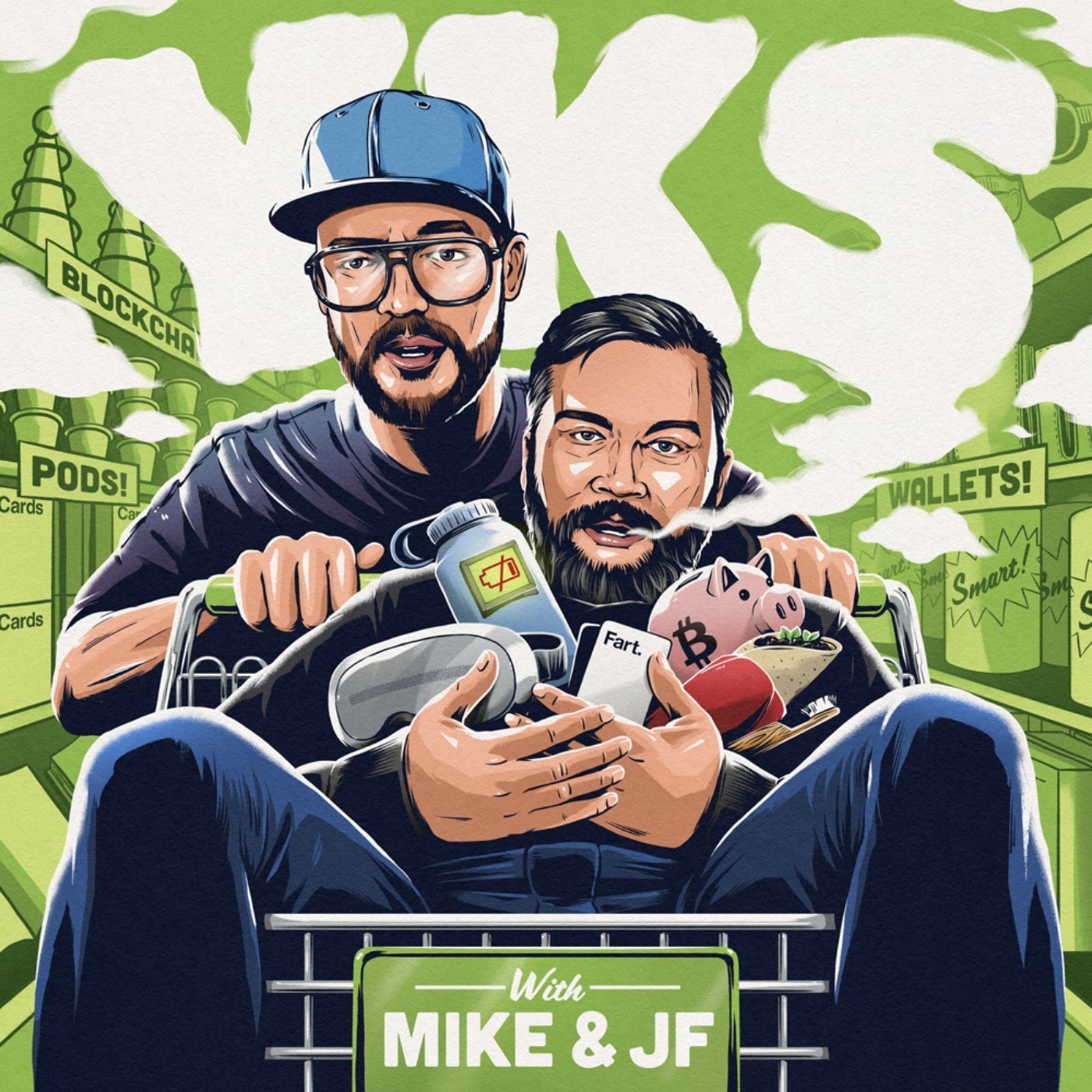
NVIDIA's CEO is caught in a honeypot scandal with global AI power plays hanging in the balance, just as data centers come under fire from both voters and lawmakers across the US. From the abrupt end of the Tesla Cybertruck to hackers weaponizing smart fridges, this week's episode dives into the messy, hilarious, and sometimes alarming ways future tech is colliding with real-world consequences. • Tesla Cybertruck canned after recalls, plunging sales, and controversy • Remembering Aaron Swartz and the ethics of open access • Academic journals, research paywalls, and access challenges • Voters across US reject data centers in local elections • Apple debuts pricey OLED touchscreen MacBook Pros • BYD, Chinese cars, and the end of US auto dominance • France's top literary prize rocked by AI-assisted novel controversy • NVIDIA CEO ensnared in alleged Chinese intelligence honeypot probe • Data center power demands spark silent vs noisy turbine debate • Global refrigerator hacks spoil food, exp
NVIDIA's CEO is caught in a honeypot scandal with global AI power plays hanging in the balance, just as data centers come under fire from both voters and lawmakers across the US. From the abrupt end of the Tesla Cybertruck to hackers weaponizing smart fridges, this week's episode dives into the messy, hilarious, and sometimes alarming ways future tech is colliding with real-world consequences. • Tesla Cybertruck canned after recalls, plunging sales, and controversy • Remembering Aaron Swartz and the ethics of open access • Academic journals, research paywalls, and access challenges • Voters across US reject data centers in local elections • Apple debuts pricey OLED touchscreen MacBook Pros • BYD, Chinese cars, and the end of US auto dominance • France's top literary prize rocked by AI-assisted novel controversy • NVIDIA CEO ensnared in alleged Chinese intelligence honeypot probe • Data center power demands spark silent vs noisy turbine debate • Global refrigerator hacks spoil food, exp
NVIDIA's CEO is caught in a honeypot scandal with global AI power plays hanging in the balance, just as data centers come under fire from both voters and lawmakers across the US. From the abrupt end of the Tesla Cybertruck to hackers weaponizing smart fridges, this week's episode dives into the messy, hilarious, and sometimes alarming ways future tech is colliding with real-world consequences. • Tesla Cybertruck canned after recalls, plunging sales, and controversy • Remembering Aaron Swartz and the ethics of open access • Academic journals, research paywalls, and access challenges • Voters across US reject data centers in local elections • Apple debuts pricey OLED touchscreen MacBook Pros • BYD, Chinese cars, and the end of US auto dominance • France's top literary prize rocked by AI-assisted novel controversy • NVIDIA CEO ensnared in alleged Chinese intelligence honeypot probe • Data center power demands spark silent vs noisy turbine debate • Global refrigerator hacks spoil food, exp
Oliver Yonchev knows a thing or two about building businesses. He co-founded Social Chain and Flight Story alongside Steven Bartlett, and now runs CoCreated, backing creative entrepreneurs and businesses embracing AI. He believes we're entering an unforgiving new era of work, where the mediocre will struggle but the most talented, creative and adaptable people could have more opportunities than ever. We explore why AI is changing the rules of business, whether traditional careers are in danger, why small teams could outperform huge companies, and why now might be the best time in a generation to start your own business. Is your job ready for the AI revolution? Contact us at aihaventaclue.com
Using newts, coyotes and mice, Jason Munshi-South shows how animals develop genetic differences in evolution, even within an urban city. "Evolution in a Big City" was animated by the TED-Ed Animation Team (Jeremiah Dickey, Biljana Labovic, Celeste Lai, Kari Mulholland and Franz Palomares) View the full lesson: http://ed.ted.com/lessons/evolution-in-a-big-city
Pro-Kremlin hacktivists dox EU politicians and law enforcement personnel a Deepfake gang arrested on US charges, SonicWall patches a zero-day, and SSHole is being exploited in the wild. Show notes Risky Bulletin: Pro-Kremlin hacktivists dox EU politicians, law enforcement (https://risky.biz/risky-bulletin-pro-kremlin-hacktivists-dox-eu-politicians-law-enforcement/)
Jeff and Christian welcome Aaron Potter from The Mirror back to the show this week to discuss the next Elder Scrolls game, the next Saudi Invesment Fund buyout, and the next big game to get delayed. The Playlist: Aaron: The Legend of Zelda: Ocarina of Time, Doom (Evercade Nexus), Marvel: Cosmic Invasion - Siege of Castle Doom DLC Christian: The Legend of Zelda: Ocarina of Time Jeff: Legend of Zelda: Ocarina of Time Remake, WOW Forever Parting Gifts!
GPUs are the engines powering every AI conversation you've ever had — but what's actually happening inside those chips when an LLM generates a response? Understanding GPU fundamentals turns out to be surprisingly useful for making sense of why inference works the way it does, from the prefill stage that processes your entire prompt at once to the serial decode step that produces tokens one by one. If you want to understand the real constraints shaping modern AI systems, this is where to start.
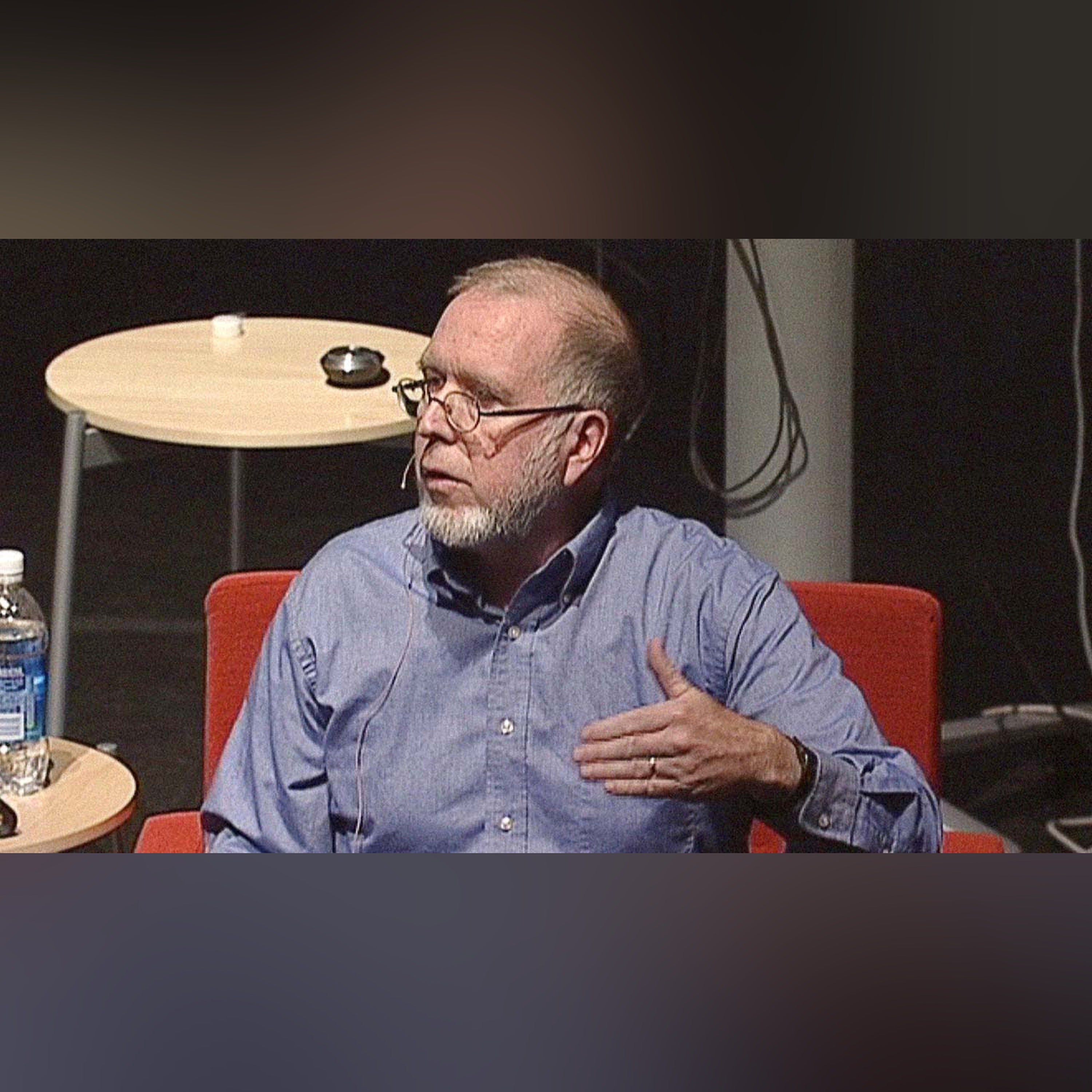
In this wide-ranging, thought-provoking talk, Kevin Kelly muses on what technology means in our lives -- from its impact at the personal level to its place in the cosmos. (Filmed at TEDxAmsterdam.) Uploaded 25-07-13 Talk by Kevin Kelly.
On a BREAKING Psicoactivo, we have the UFO Disclosure shit show for everyone after President Donald Trump DENIES having any knowledge of the alleged Secret UFO Program during a 60 Minutes interview. How can these statements from Trump be interpreted? Who's lying? Psicoactivo sponsor: To hire Greg Greenberg Law, visit https://gglawusa.com/ and let them know you are coming from Psicoactivo Podcast. Timestamps: 00:00 Start of the episode. 09:44 Sponsor ad. 13:03 End of Sponsor ad. Sources: Full 60 Minutes interview with Trump: https://www.youtube.com/watch?v=m2aC8lAOQbg David Dorr's tweet: https://x.com/daviddorr/status/2118455828458213676 Reality Transparency Act draft landing page: https://opensourcereality.org/ Ross Douthat interview with Diana Pasulka: https://youtu.be/D7n4nctI60c?si=_SMfc-FM9tV0WJ_H Latest Reality Check: https://youtu.be/7HrPAg2vTeI?si=lVjY1s40epXg5w-J Dylan Borland's reaction: https://x.com/TheDylanBorland/status/2119594934361882632 Missileman's reaction: https://x.
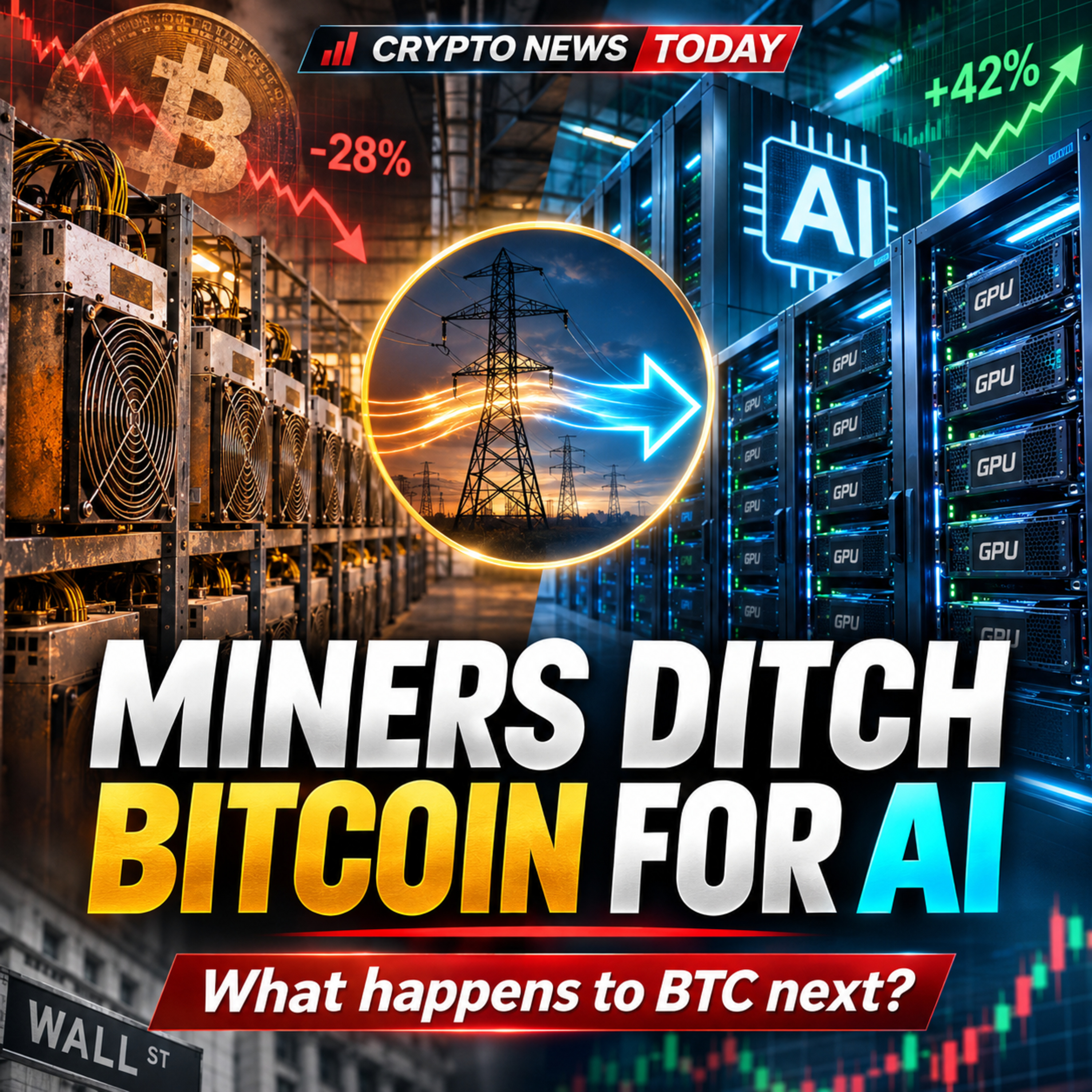
Get 20 XRP with Kraken (eligibility and terms apply): Protect your crypto with Ledger: Stay protected online with NordVPN: NordVPN Special Offer (https://go.nordvpn.net/aff_c?aff_id=143753&offer_id=612&url_id=14830) Follow Crypto News Today on Spotify: Listen and Follow Here (https://open.spotify.com/show/4gu4MrqbGVZeNNNbAuvSmR) Bitcoin Miners Are Abandoning BTC for AI. Why? Some of the biggest names in Bitcoin mining are making a dramatic shift towards artificial intelligence. The reason? Electricity, infrastructure and the possibility of making significantly more money from AI data centres than mining Bitcoin. In today's Daily Crypto Deep Dive, we investigate Core Scientific's transformation, the growing demand for AI computing power, and why Wall Street is increasingly valuing Bitcoin mining companies as AI infrastructure businesses. We examine the latest financial results, Bitcoin sales, and competing analyst views from VanEck and Bernstein. We also explore the enormous capital req
A.I. for Building Stronger Relationships: Small Habits That Keep You Connected, a practical, beginner-friendly look at how artificial intelligence can help you feel more connected to the people who matter. Building Stronger Relationships? Press play on Episode 415 of A.I. for Beginners and learn exactly how artificial intelligence, especially ChatGPT, alongside Paired, can help you feel more connected to the people who matter. WHAT YOU WILL LEARN IN THIS EPISODE - Why building stronger relationships is so hard to handle alone, and what is actually going on underneath it - A specific way to use Paired to work through it, step by step - An example prompt you can copy word for word: "Help me think of three small things I could do this week to feel closer to my partner" - A second practical technique, with another ready-to-use prompt: "Give me a few good questions to ask that go deeper than 'how was your day'" WHO THIS EPISODE IS FOR - Anyone currently working on building stronger relation
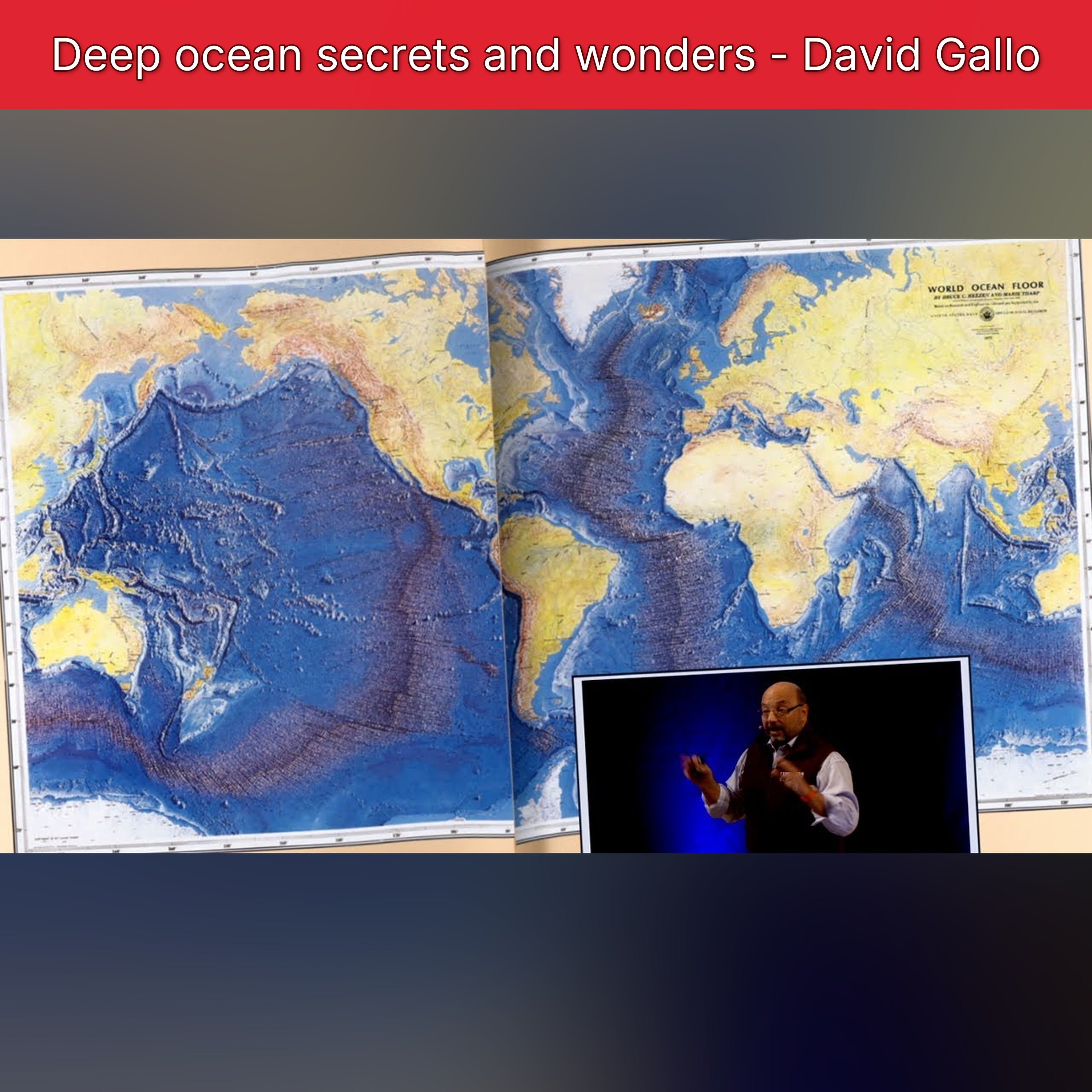
In the deepest, darkest parts of the oceans are ecosystems with more diversity than a tropical rainforest. Taking us on a voyage into the ocean -- from the deepest trenches to the remains of the Titanic -- marine biologist David Gallo explores the wonder and beauty of marine life.
AI is changing how software vulnerabilities are discovered, exploited and fixed. But can cybersecurity teams keep up? In this episode of Cyber Security Matters, hosts Harry Baldwin and Matt Rose speak with Igor Seletskiy, CEO of TuxCare and founder of CloudLinux, about the growing pressure on vulnerability management, the changing balance between attackers and defenders, and the skills that will matter as AI becomes more capable. Drawing on decades of experience in software development, Linux and web hosting, Igor explains why the industry can no longer rely on traditional vulnerability prioritisation alone. He also shares lessons from building technology businesses, leading remote engineering teams and adapting to a world where AI is changing how technical work gets done. In this episode ● The changing vulnerability landscape: Why AI is making it easier to discover and exploit vulnerabilities, including by chaining together several lower-severity flaws. ● The future of vulnerability m
John D'Agostino says the debate is over: tokenization is already here, and the biggest names in finance are moving onchain right now. Live from LINK NYC, John sits down with Andy and Rob to explain why small daily catalysts matter more than one big moment. He also covers how demand for 24/7 trading is pushing markets onchain and what an open dialogue with the SEC could look like. Then he explains why tokenized deposits are far bigger than stablecoins right now, and how blockchain can help community banks compete for customers. John D'Agostino works at Coinbase Institutional and was previously head of strategy at NYMEX. The markets are moving onchain faster than most people realize. Guest Socials John D'Agostino X: https://x.com/johnjdagostino Coinbase Institutional X: https://x.com/CoinbaseInsto Coinbase Institutional Website: https://www.coinbase.com/prime Partners: --- Learn more here: https://www.zama.org/ --- 𝗪𝗲 𝘁𝗿𝘆 𝗼𝘂𝗿 𝗯𝗲𝘀𝘁 𝘁𝗼 𝗽𝗿𝗼𝗱𝘂𝗰𝗲 𝗵𝗶𝗴𝗵-𝗾𝘂𝗮𝗹𝗶𝘁𝘆,
View full lesson: http://ed.ted.com/lessons/why-is-biodiversity-so-important-kim-preshoff Uploaded 20-04-15 Our planet’s diverse, thriving ecosystems may seem like permanent fixtures, but they’re actually vulnerable to collapse. Jungles can become deserts, and reefs can become lifeless rocks. What makes one ecosystem strong and another weak in the face of change? Kim Preshoff details why the answer, to a large extent, is biodiversity. Lesson by Kim Preshoff, animation by TED-Ed.
In this episode of The Carbon Removal Scoop, Eve Tamme and Sebastian Manhart sit down with Sara Vicca, Associate Professor at the University of Antwerp and a lead author on the IPCC's forthcoming methodology report on carbon dioxide removal technologies, carbon capture, utilisation and storage for national greenhouse gas inventories. For years, stakeholders have argued that governments cannot properly count novel removals without updated rules from the IPCC. Those rules are now being written, and the first draft has just opened for expert review. Sara explains why guidance inn the 2006 IPCC Guidelines needs an update for direct air capture, direct ocean capture and enhanced weathering, and walks through the road from first draft to approval in late 2027. Because the draft itself is confidential, the conversation stays on the principles rather than the text, and Sara is clear about who the authors most want to hear from before the review window closes. Eve and Sebastian then dig into en
Hey, did you hear about those elections in the US this past week? Honestly, how could you have not? The Democratic party has seized control of Congress and state governments around the country. It's easy to see this entirely as a rebuke of Trump and his policies, but blowback against AI, datacenters, and the tech industry played a role too, if the past week of chaos in markets and Silicon Valley is any indication. Join host Brandon Vigliarolo (https://www.theregister.com/author/brandon-vigliarolo), El Reg EIC Matt Rosoff (https://www.theregister.com/author/matt-rosoff), and special guest, senior reporter at The Verge, Elizabeth Lopatto (https://www.theverge.com/authors/elizabeth-lopatto), to talk about what the winds of political change mean for the tech industry.
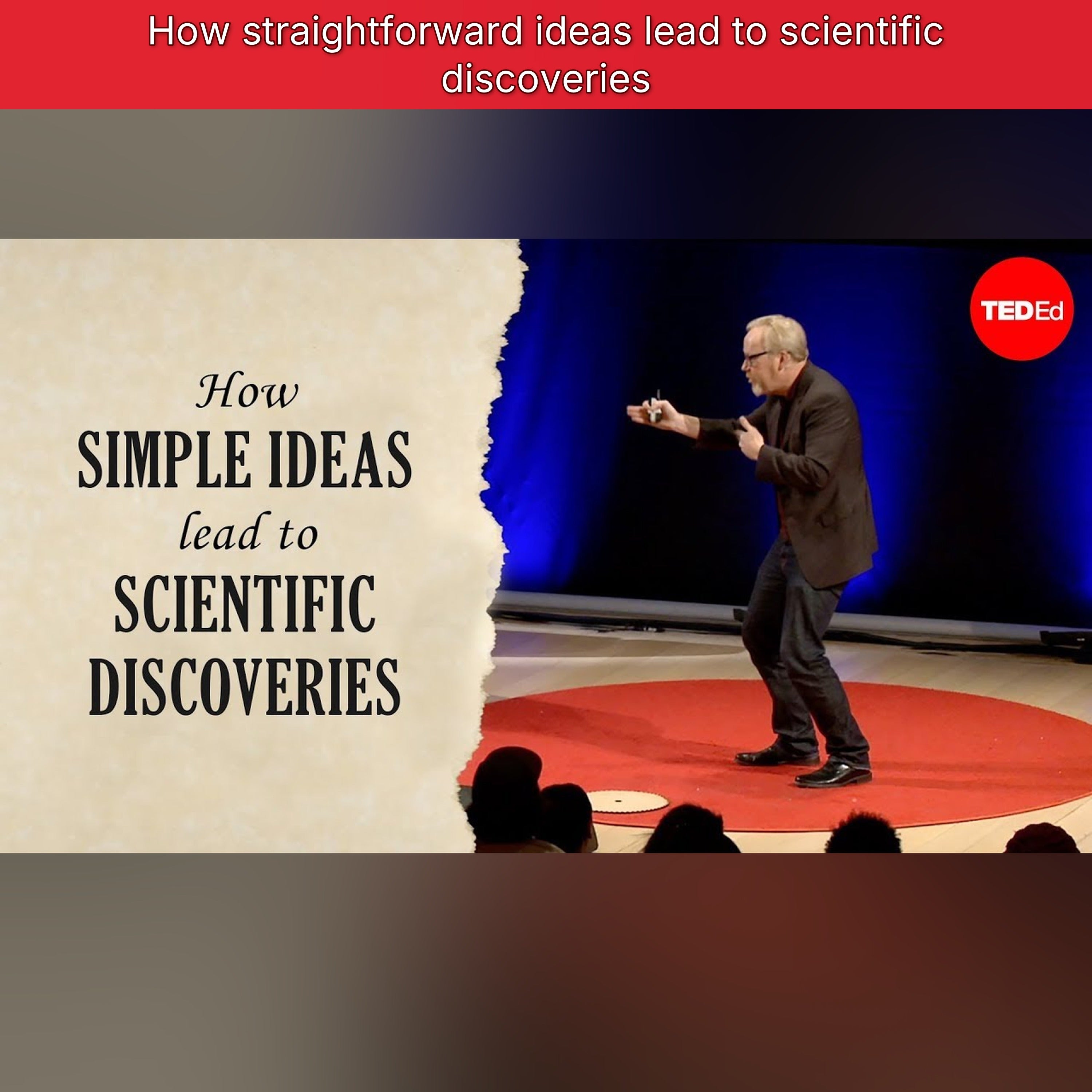
Adam Savage walks through two spectacular examples of profound scientific discoveries that came from simple, creative methods anyone could have followed -- Eratosthenes' calculation of the Earth's circumference around 200 BC and Hippolyte Fizeau's measurement of the speed of light in 1849.
Every night when we fall asleep, our brains and bodies switch into a mode of functioning that’s entirely different from that of our waking lives. During sleep, our bodies become essentially paralysed, and our brains conjure up bizarre scenarios through dreams or even nightmares. But what exactly is happening during this period of our daily lives, why do we do it in the first place, and what can we learn about ourselves from it? In this episode, we’re joined by Dr Baland Jalal to talk about his latest book, The Phantom Mind – Insights from the Borderlands of Sleep. He tells us how our brain functions alter when we fall asleep, why the emotional content of our dreams feels so real despite often being so bizarre, and why some of us remember our dreams more than others after waking.
View full lesson: http://ed.ted.com/lessons/the-fundamentals-of-space-time-part-3-andrew-pontzen-and-tom-whyntie Uploaded 22-05-14 View part 1: http://ed.ted.com/lessons/the-fundamentals-of-space-time-part-1-andrew-pontzen-and-tom-whyntie View part 2: http://ed.ted.com/lessons/the-fundamentals-of-space-time-part-2-andrew-pontzen-and-tom-whyntie In the first two lessons of this series on space-time, we've dealt with objects moving at constant speeds, with straight world lines, in space-time. But what happens when you throw gravity into the mix? In this third and final lesson, CERN scientists Andrew Pontzen and Tom Whyntie explore what gravity means for space-time -- or rather, what space-time means for gravity. Lesson by Andrew Pontzen and Tom Whyntie, animation by Giant Animation Studios.
In this episode of Hands-On Tech, Mikah answers a question from Bruce, who has just moved into a new home with an ASUS AX6600 XT8 AiMesh system on wired Ethernet backhaul plus two pre-installed Araknis access points, and wants to know how to combine them under a single Wi-Fi network name and manage device handoff between the two brands, or whether switching the ASUS nodes to access point mode would be the better approach. Host: Mikah Sargent (https://twit.tv/people/mikah-sargent) Download or subscribe to Hands-On Tech at https://twit.tv/shows/hands-on-tech Join Club TWiT for Ad-Free Podcasts! Support what you love and get ad-free audio and video feeds, a members-only Discord, and exclusive content. Join today: https://twit.tv/clubtwit Club TWiT members can discuss this episode and leave feedback in the Club TWiT Discord (https://twit.memberful.com/account/discord/authorize). NetSuite.AI/HOT (http://netsuite.ai/HOT)
You don't need to plan an exotic trip to find creative inspiration. Just look up, says Gavin Pretor-Pinney, founder of the Cloud Appreciation Society. As he shares charming photos of nature's finest aerial architecture, Pretor-Pinney calls for us all to take a step off the digital treadmill, lie back and admire the beauty in the sky above. Uploaded 16-08-13 Talk by Gavin Pretor-Pinney.
Google DeepMind Director of AGI Economics Alex Imas breaks down why hockey-stick AI model capabilities will not trigger explosive double-digit GDP growth. He explains how competitive markets drive automated output prices down, why firms operate as mosaic superintelligence, and how minimal AGI shifts labor into new high-wage markets. Follow MTS: Spotify |https://open.spotify.com/show/4HUNNmV1pjV7CW6Lphm1rM Apple |https://podcasts.apple.com/us/podcast/mts/id1891088763 Interested in sponsoring the show? [email protected] – Brought to you by: Mongo DB - Anyone can prototype an agent. Lovable - Turn ideas into software people love with Lovable. Start today at https://lovable.dev/ Larridin - Finally prove what your AI investment is worth. Neon (by Databricks) - Get up to $100K in credits for your startup at https://neon.com/mts (https://neon.com/mts%E2%81%A0) Kong - The AI connectivity platform. Head over to http://getvcx.com (http://getvcx.com/) to learn more Ship 5x faster. https://blitzy.c