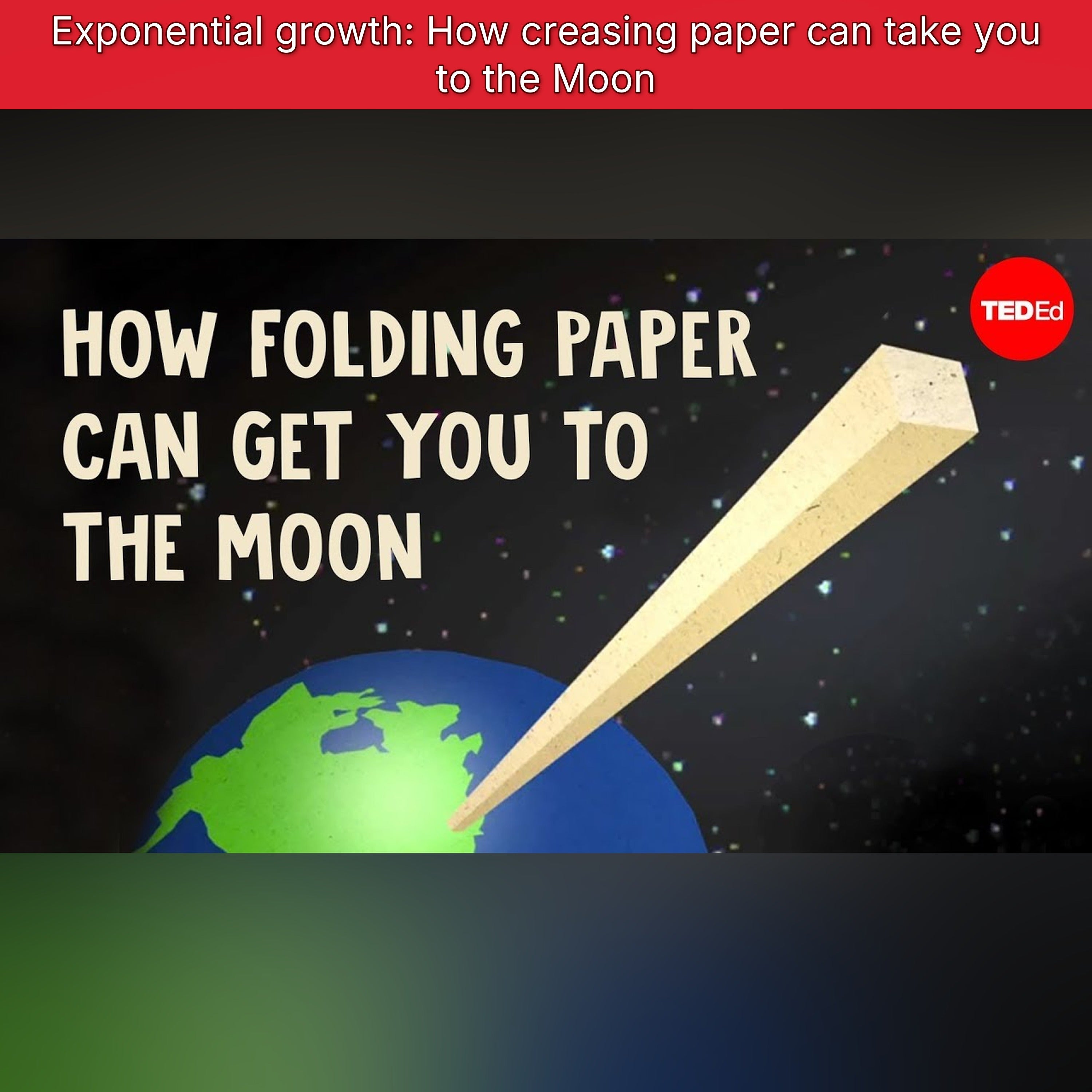
Can folding a piece of paper 45 times get you to the moon? By seeing what happens when folding just one piece of paper, we see the unbelievable potential of exponential growth. This lesson will leave you wanting to grab a piece of paper to see how many times you can fold it! Lesson by Adrian Paenza, animation by TED-Ed.
My guest today is Zach Reitano (https://x.com/ZReitano), the co-founder and CEO of Ro, the country’s leading provider of GLP-1s. In four years, Ro has grown from a $250 million run rate to over $3 billion, with fewer people than it had in 2021. The heart of our conversation is what he sees as the central flaw in American healthcare, which is that the patient is not the customer. He points to GLP-1s and LASIK as examples of what’s possible when patients pay directly, and he thinks AI could bring healthcare down to the price of a Netflix subscription. But to capture that opportunity, Zach first had to rebuild Ro's culture around high performance and a big heart. It shows in the stories Ro shares from people like Serena Williams, which help patients get past the stigma of seeking treatment. The inspiration behind it all is his father, a doctor whose care Zach wants to recreate in software. Please enjoy my conversation with Zach Reitano. For the full show notes, transcript, and links to me
AI News Flash for November 11, 2026 at 09:00 UTC. Topics: 1. Google makes its top model, Gemini 4 Carbon, broadly available 2. Railway's final report on the October attack: stolen AI keys, about $740,000 in unauthorized use 3. ElevenLabs releases Scribe v3 speech-to-text models
- Apple Sued for Not Building a Search Engine or Something - Three Perish at Indian iPhone Components Plant - Apple Announces Developer and Manufacturing Resources for Turkey - Apple Announces Dates for Swift Student Challenge 2027 - Apple Releases New Firmware for AirPods Pro 3 - Sign Language Interpretation Rolling Out on Apple TV - Veterans Day Apple Watch Activity Challenge Set for Today - Catch Ken on Mastodon - @[email protected] - Send Ken an email: [email protected] - Chat with us on Patreon for as little as $1 a month.
View full lesson: http://ed.ted.com/lessons/why-do-your-knuckles-pop-eleanor-nelsen Uploaded 05-05-15 Some people love the feeling of cracking their knuckles, while others cringe at the sound. But what causes that trademark pop? And is it dangerous? Eleanor Nelsen gives the facts behind joint popping. Lesson by Eleanor Nelsen, animation by Steve Belfer Creative.
Fair warning, in this episode we’re talking about suicide and abuse. A few weeks ago, Grant’s brother Drew died by suicide. He was a life coach. Today, Grant tells Drew’s story, and with Ryan, they take a look at the wellness industry and its ties to a variety of conspiracy theories and scams. If you or someone you know is struggling with suicidal thoughts, call the National Suicide Prevention Lifeline at 800-273-TALK (8255). You can also reach out to the Crisis Text Line, a free, 24/7 confidential text messaging service that provides support to people in crisis when they text 741741. Find other international suicide helplines at Befrienders Worldwide (befrienders.org (https://befrienders.org/)). Tickets: https://caveat.nyc/events/garbage-day-worst-things-on-the-internet-2026-2026-11-28 Get the extended conversation, as well as other ad-free episodes, bonuses & exclusives, and access to our members-only Discord, on our Patreon. Sign up for a membership for just $6.66 a month athttps://
A corporate scandal involving Jensen Huang, the CEO and co-founder of the artificial intelligence chipmaking giant Nvidia. Huang publicly admitted to a personal relationship with a businesswoman suspected by American authorities of operating as a Chinese spy, prompting the corporate board to launch an independent investigation. This controversy has sharply intensified financial vulnerabilities, triggering a noticeable decline in share prices and erasing massive amounts of market value. Observers and financial analysts note that the crisis highlights a severe key man risk, given Huang's immense individual influence over the company and the broader AI sector without a clear succession plan in place. Consequently, market experts and commentators are actively debating the urgent need for robust corporate governance, transparent leadership evaluation, and proper risk management to navigate potential fallout for national security and the wider technology economy.
OpenAI chief economist Ronnie Chatterji joins Reid Hoffman and Aria Finger to unpack when AI will show up in the productivity statistics and what it means for jobs. Ronnie explains why the shift to AI agents is still early for most companies, why legal and HR teams may adopt fastest, and why he doubts AI will triple unemployment soon. They also discuss AI and entrepreneurship, the care economy, GDPval, and trade policy. For more info on the podcast and transcripts of all the episodes, visithttps://www.possible.fm/podcast/
Scientists have demonstrated a promising new way to make quantum information more stable using specially engineered molecules. By combining extremely low temperatures with precise laser and microwave control, the team achieved unusually consistent quantum behavior. The results could bring molecular qubits closer to practical applications in quantum optics and next-generation communication networks. This episode includes AI-generated content.
Learn how to identify, develop, and share your best ideas with TED Masterclass: http://bit.ly/tedmasterclass Uploaded 23-07-20 -- The average 20-year-old knows between 27,000 and 52,000 different words. Spoken out loud, most of these words last less than a second. With every word, the brain has a quick decision to make: which of those thousands of options matches the signal? And about 98% of the time, the brain chooses the correct word. How is this possible? Gareth Gaskell digs into the complexities of speech comprehension. Lesson by Gareth Gaskell, directed by Art Shot. Sign up for our newsletter: http://bit.ly/TEDEdNewsletter Support us on Patreon: http://bit.ly/TEDEdPatreon Find us on Twitter: http://bit.ly/TEDEdTwitter Peep us on Instagram: http://bit.ly/TEDEdInstagram View full lesson: https://ed.ted.com/lessons/how-do-our-brains-process-speech-gareth-gaskell Thank you so much to our patrons for your support! Without you this video would not be possible! Sydney Evans, Latora Slyde
Former SignalFire investor Sahir Raoof raises $27.5M for new fund targeting AI in pharma Also, PSI used an unreleased Anthropic model to answer a fundamental question about quantum computing that scientists have pursued for nearly two decades.
SpaceX Daily SpaceX signed a turnkey heterojunction solar-cell line to scale Starmind satellite output past 100 GW. Top News NASA Administrator details SLS standardization with stretched Centaur V and ML-2 cancellation NASA Administrator Jared Isaacman said the changes aim to raise SLS flight rates and cut costs until commercial lunar options arrive in the 2030s. ... Sources: nasaspaceflight.com (https://www.nasaspaceflight.com/2026/11/isaacman-sls-2030s/) · teslarati.com (https://www.teslarati.com/spacex-fcc-verizon-att-approved/) · singulus.com (https://www.singulus.com/2026/11/10/spacex-heterojunction-solar-cells-singulus/) · cursor.com (https://cursor.com/blog/projects-multiplayer) · teslanorth.com (https://teslanorth.com/2026/11/10/spacex-fired-workers-arbitration-appeal/) · mlq.ai (https://mlq.ai/news/pentagon-offers-rocket-lab-a-150-million-loan-to-speed-up-neutron-as-spacex-winds-down-falcon-9/) · arstechnica.com (https://arstechnica.com/space/2026/11/the-us-military-seems-to-b
This week, a take you probably haven't heard. You know people are hating on meta smart glasses, or creep glasses right? But what about the use of them by people who are Blind or Low Vision? Didn't think of that did you! And HP has a new laptop which looks the goods for so many potential people, from schools, to uni and much more. Should you buy the iPhone Duo overseas? To Save money? Plus smart watch recommendations for the wife. Get in touch, be part of the show, text or WhatsApp 0477 657 657
About this episode: From hedge funds to building AI agents, Samantha McBride's journey into fintech has been anything but conventional. In this bonus episode of Fintech Insider Insights, David M. Brear is joined by Samantha McBride, founder and CEO of Ani Tech, to explore how AI agents are transforming financial services and why firms that fail to embrace the technology risk being left behind. Samantha shares how a New Year's resolution to learn coding with her mum led her to leave a career in hedge funds and launch her own AI company. They discuss how Ani Tech is helping firms like Octopus Money automate workflows, where AI is already delivering real value, and what's holding financial institutions back from adoption. Guests: Samantha McBride - CEO of Ani Tech Links to check out: We're on Substack! Join our WhatsApp community, where you can get the inside track on all all things 11:FS, as well as having your say on the things we should be paying attention to. About Fintech Insider: Go
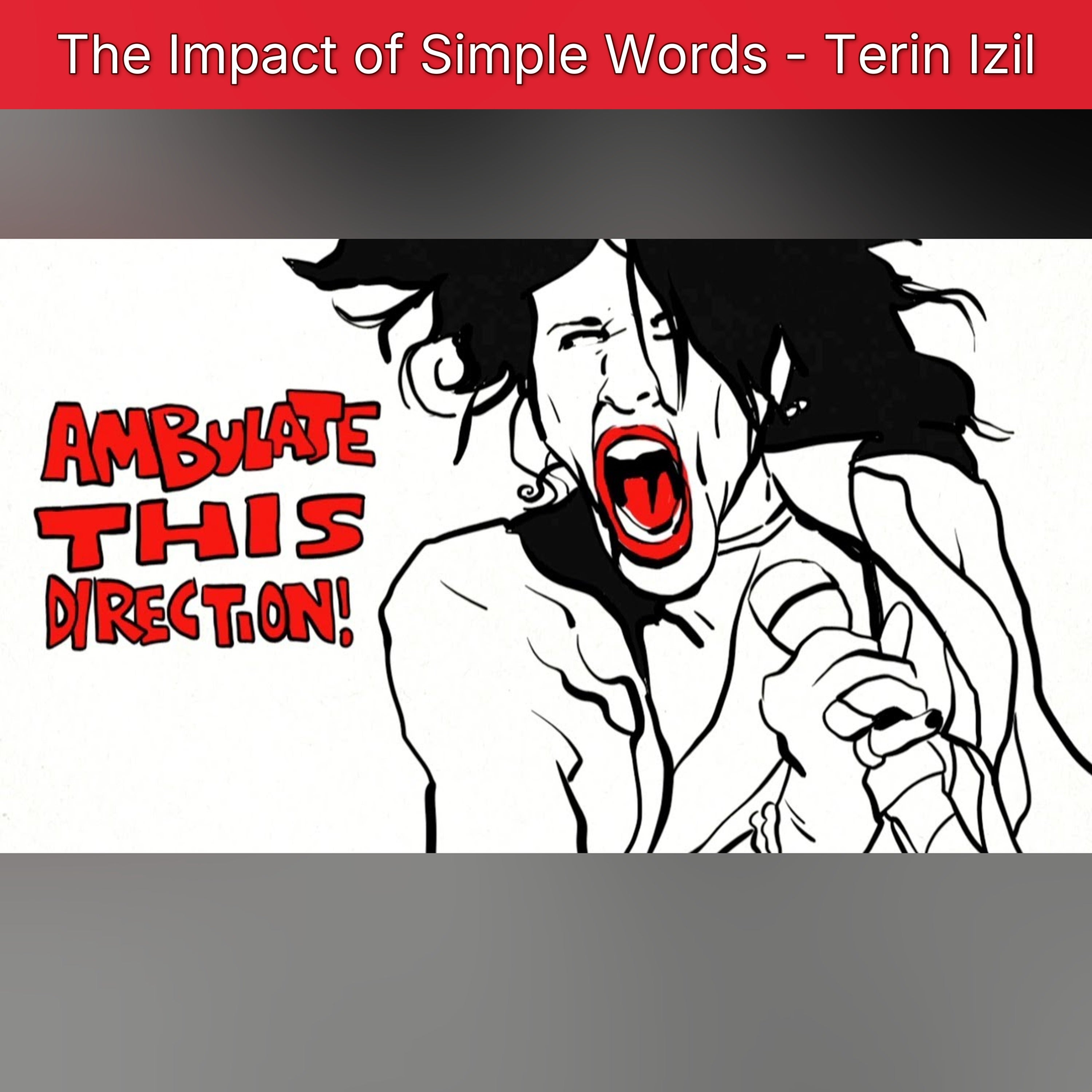
Long, fancy words designed to show off your intelligence and vocabulary are all very well, but they aren't always the best words. In this short, playful video Terin Izil explains why simple, punchy language is often the clearest way to convey a message.
Anthropic kicked off its IPO roadshow, with bankers already eyeing a higher price, and launched Claude Sheets, Meetings and Whiteboards to take on Microsoft and Google. Nvidia hired Wachtell to probe Jensen Huang; Ring unveiled security robots, and Reddit launched Reviews. Anthropic launches its IPO roadshow, saying the company and shareholders plan to sell 825M Class A shares at $70 to $78 each, listing on the Nasdaq under ANT (https://www.anthropic.com/news/roadshow-launch) (Anthropic) Anthropic plans to push ahead with its IPO later this month despite AI market volatility, aiming to start trading Thursday or Friday next week, with some investors now pushing for a lower valuation (https://www.wsj.com/finance/stocks/anthropic-prepares-to-push-ahead-with-ipo-despite-market-jitters-843dd16c?st=fG4ci1) (WSJ) Anthropic’s bankers are weighing raising the IPO price above the $70-$78 range after heavy investor demand, which could lift the valuation to $1.5tn or more and the raise past $100bn
Factory’s Varin Nair joins Sophia Dew to explain how open-weight models and agent harnesses like Artex and HexStrike have automated cyberattacks at nation-state scale. He outlines Factory’s pivot into offensive security with War Games and breaks down why defensive engineering must shift into a deterministic, automated triage loop. Follow MTS: Spotify |https://open.spotify.com/show/4HUNNmV1pjV7CW6Lphm1rM Apple |https://podcasts.apple.com/us/podcast/mts/id1891088763 Interested in sponsoring the show? [email protected] – Brought to you by: Mongo DB - Anyone can prototype an agent. Lovable - Turn ideas into software people love with Lovable. Start today at https://lovable.dev/ Larridin - Finally prove what your AI investment is worth. Neon (by Databricks) - Get up to $100K in credits for your startup at https://neon.com/mts (https://neon.com/mts%E2%81%A0) Kong - The AI connectivity platform. Head over to http://getvcx.com (http://getvcx.com/) to learn more Ship 5x faster. https://blitzy.com
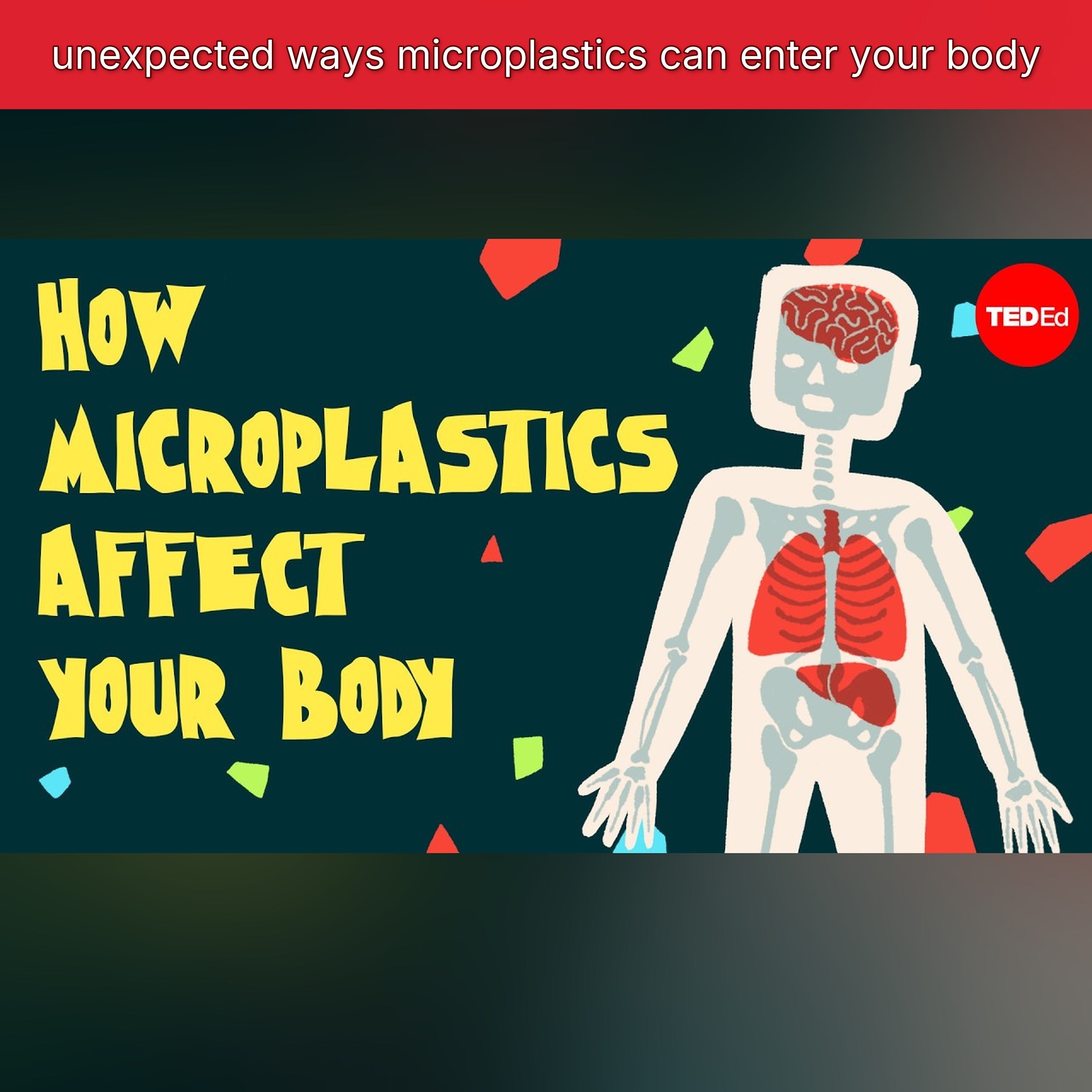
Explore how the microplastics in your body can affect your health, and how we can regulate the amount of plastic in our world. -- Plastic is everywhere. It’s in our clothes, our food, the air we breathe. And plastic is now also in our bodies. Micro and nanoplastics generally enter our bodies in one of three ways: the air, our skin, and what we eat and drink. But how exactly do these microscopic particles affect our health? Dig into how they can interrupt your body’s processes, and how we can begin to fix our plastic problem. Directed by Vicente Nirõ, AIM Creative Studios. This video made possible in collaboration with the Oceanic Preservation Society Learn more about how TED-Ed partnerships work: https://bit.ly/TEDEdPartner Support Our Non-Profit Mission ---------------------------------------------- Support us on Patreon: http://bit.ly/TEDEdPatreon Check out our merch: http://bit.ly/TEDEDShop ---------------------------------------------- Connect With Us ------------------------------
Brian and Brandon discuss what happens to enterprise AI if the market corrects and the era of "move fast and break things" gives way to hard questions about ROI. Brandon argues the biggest divide is between people who have only used a chatbot and those who have “touched the superpower” by using AI to finish a task that once took too long to attempt, and he says a CFO who only sees the token bills can’t see the value those tokens created. Brian traces enterprise adoption through several phases, from AI policies that mostly meant buying Microsoft Copilot, to employees pushing for Claude Code and Codex, to a token-maxing push with no clear goal. He compares the moment to early cloud, when Adrian Cockcroft’s Netflix talks split the industry into believers and companies that couldn’t imagine getting there, and predicts a bumpy year and a half in which some companies pull back, many search for balance, and a few race ahead. Brandon pushes back on the term vibe coding, arguing that nobody rea
AI News Flash for November 11, 2026 at 06:00 UTC. Topics: 1. U.S. and China set up a dialogue on "super intelligence," Bessent says 2. Tether's AI research unit releases an 0.8-billion-parameter on-device agent model 3. Nvidia follow-up: briefing of President Trump and a memo to the Commerce Secretary
When it comes to the powerhouse behind banking economics, global payments is the unchallenged King. It accounts for about 41 percent of total banking revenues, that’s a $2.6 trillion revenue pool. Every year, it processes 3.8 trillion transactions representing over two quadrillion dollars in value. Those numbers are worthy of the noble crown. And yet this is all based on a system where transactions wind their way through a complex web of correspondent banks, clearing across multiple time zones, taking days to settle, and locking up vast sums of capital. But we are stepping into an era of 24/7, real-time, borderless payments and market modernisation, where the map of global money, capital markets, and financial infrastructure is being redrawn. From tokenised deposits that could reach $4 trillion by 2030 to advanced digital wallets, programmable assets and the rise of AI. But to get there we need to overcome some challenges. Joining our host, Tom Parker, is Rob Hale, Co-Head of Global Ma
Nvidia shares have fallen roughly 9.5% in two trading sessions. Now a shareholder lawsuit and new reporting about alleged Chinese intelligence ties are adding to the pressure on Jensen Huang. Jim Love examines reports linking Alice Huang's business connections to billions in Nvidia chip shipments, and why shareholders could ultimately bear the costs of litigation. Also on Hashtag Trending for November 11, 2026: - Anthropic's proposed IPO pricing, Nvidia's investment and the founders' voting control. - Texas's governor-elect promises tougher data centre rules as US electricity demand heads toward new records. What should public shareholders be able to do when a company's leadership becomes a financial risk? Leave your thoughts below. Visit technewsday.com to contact us or support the show.
Nutritionist and functional medicine practitioner Rose Ferguson (https://www.roseferguson.com/) joins Adrienne to talk about her new book, Reset (https://www.waterstones.com/book/the-reset/rose-ferguson//9780008788452), a four-week plan built on the foundations most of us know but rarely do. Rose explains why feeling tired, foggy and achy isn’t “just getting older,” and what chronic inflammation actually is. They also discuss why the fundamentals matter far more than the latest wellness gadgets. They get into fasting: why “one meal a day” went too far, why a 12/12 eating window is harder than it sounds, and why fasting should never be about weight loss. Plus, they ask whether cravings are a signal from your body or just habit, why snacking is a modern invention, and how to make change last when the people around you aren’t on board. For more episodes, listener offers and our mailing list, head to modernwellnesspodcast.com. Want more? Hosted on Acast.
View full lesson: http://ed.ted.com/lessons/how-does-your-brain-respond-to-pain-karen-d-davis Uploaded 02-06-14 Ouch! Everyone experiences pain -- but why do some people react to the same painful stimulus in different ways? And what exactly is pain, anyway? Karen D. Davis walks you through your brain on pain, illuminating why the "pain experience" differs from person to person. Lesson by Karen D. Davis, animation by Brett Underhill.