In 1984, two first-time chip designers, Steve Furber and Sophie Wilson, created what would become the most popular processor in the world (ARM). I interviewed Steve about how they did it with such a small team that had no formal training. We also covered a bunch of questions about hardware design and his answers were so clear. I learned a lot and hope you enjoy the episode! Podcast links: • YouTube: https://www.youtube.com/watch?v=3K9L0dRRzOs • Transcript: https://www.developing.dev/p/e075-steve-furber Thank you to this episode's sponsors for supporting my work: • Chargebee: billing and monetization infrastructure for the AI economy, so your pricing can evolve alongside your product, check them out at https://www.chargebee.com/ Timestamps: (00:00) Intro (00:27) Building his first computer (05:28) BBC Micro (10:28) Designing the ARM processor (17:15) Why their design was better (23:38) Emulators and interpreters (25:58) Instruction sets and microarchitecture (31:08) How they learned chi
The theoretical capability of AI tools seems to be expanding rapidly. At the same time, however, their practical impact in the office has been uneven. Why? In this episode, Cal journeys through the history of the idea of “efficiency,” from the 1750s through today, exploring why this concept explains AI’s workplace struggles and what approach might solve them. Get your questions answered by Cal! Here’s the link: https://bit.ly/3U3sTvo Video from today’s episode: youtube.com/calnewportmedia (0:00) Beware of “efficiency” theater (48:18) The phenomenon of “AI Boomeranging” (52:03) Job numbers from the Bureau of Labor Statistics (55:24) Do school phone bans make a difference? (1:01:01) Early data on social media bans for kids (1:07:18) What Cal is up to Links: Thanks to our Sponsors: https://www.rayneo.com (https://www.rayneo.com/) https://www.mybodytutor.com (https://www.mybodytutor.com/) Thanks to Jesse Miller for production and mastering, Nate Mechler for research and newsletter, and Ben
Welcome to Destination Linux Episode 492! Jill hosts this week with Ryan and Zeb. We're now just 8 episodes away from Episode 500, so keep sending us your ideas for how we should celebrate. In this episode: Interview: William Kenny, better known as BeardedTek, joins us to talk about his journey into Linux and his open-source project, Nebula Commander. We cover what it does, why he built his own management solution, where the project is headed, and how you can contribute. Community Feedback: A listener asks about the frustrating state of remote desktop on Wayland. Ryan shares some options worth trying and asks for your suggestions. News with Zeb: Intel's stock plunged nearly 30%, its worst day since 1974, and Zeb asks whether this is a sign of the AI bubble. Microsoft has also released Defender for the Linux desktop. Software Pick: Ryan recommends Feeder for Android and Fluent Reader for the desktop, two open-source RSS readers that put you back in control of your feeds. Nebula Commande
This episode Cinco talked with Jarred Taylor, former Air Force JTAC and co-founder of Black Rifle Coffee Company, and this was a fun one. From his time on the ground working with F-16s, A-10s, and Apache helicopters to his military aviation book series Deep Scythe, Jarred has some incredible stories to share. There’s plenty in this conversation for anyone who loves aviation!
Hard Takeoff Inevitable? Causes, Constraints, Race Conditions - ALL GAS, NO BRAKES! (AI, AGI, ASI!) Episode release date: 8 Mar 2024 Core Ideas: Metamodernism: Narratives and emergence view of reality - Reduce suffering - Increase prosperity - Increase understanding mantra: Seek knowledge. DISCLAIMER: This is a community-driven show. ----------- Keywords: ai philosophy, ai research, machine learning, future technology, ai innovation, cognitive ai, ai consciousness
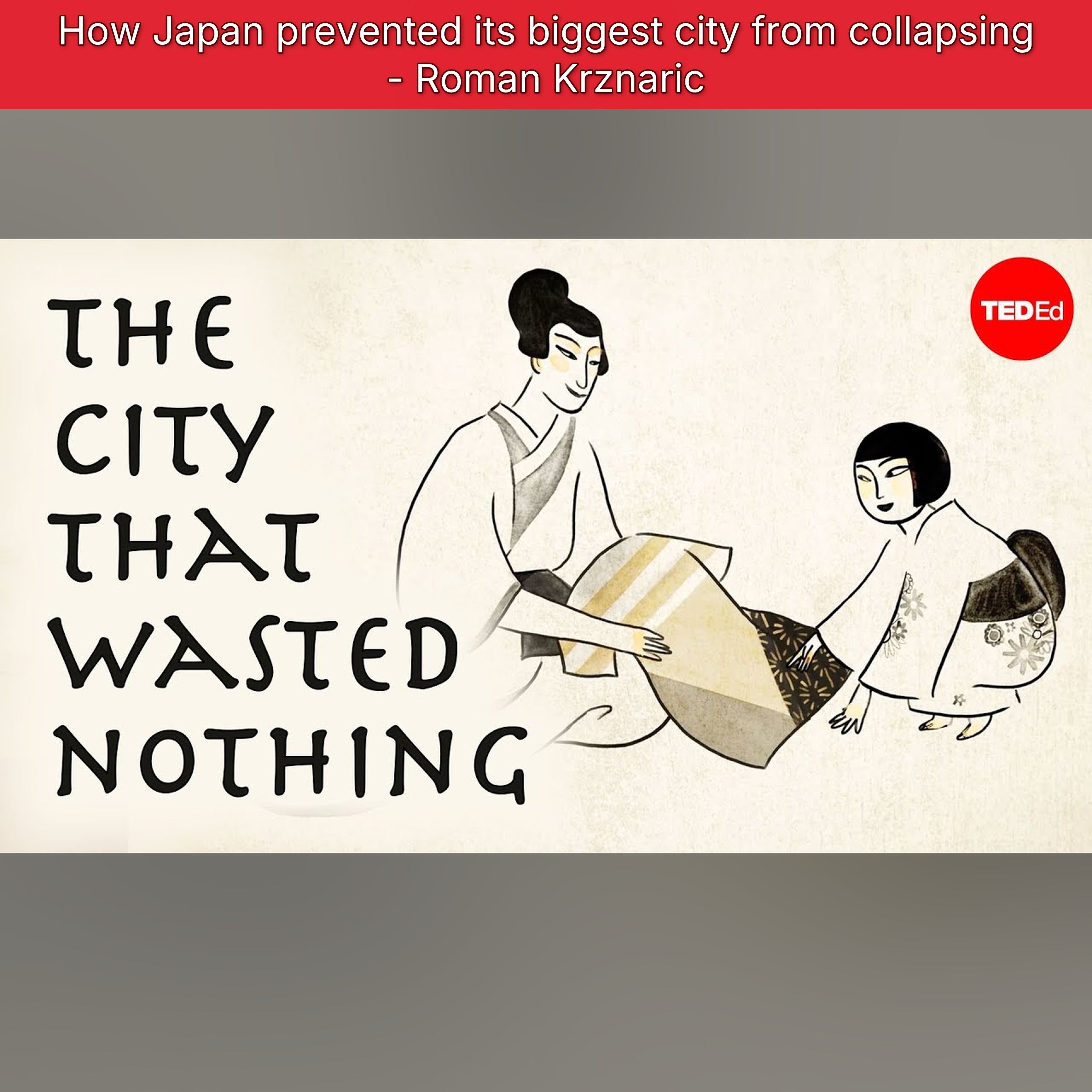
Dig into Edo, Japan’s circular economy, and how it helped transform the city into a thriving ecological and cultural center. -- 400 years ago, Edo was on the verge of ecological collapse. Years of intense logging had led to massive deforestation and the city faced timber shortages, severe erosion, and frequent flooding. But over just a few decades, Edo became one of the most sustainable and efficient cities in history. So, how did this come about? Roman Krznaric explores Edo's transformation into a circular economy. Lesson by Roman Krznaric, directed by Héloïse Dorsan-Rachet. Support Our Non-Profit Mission ---------------------------------------------- Support us on Patreon: http://bit.ly/TEDEdPatreon Check out our merch: http://bit.ly/TEDEDShop ---------------------------------------------- Connect With Us ---------------------------------------------- Sign up for our newsletter: http://bit.ly/TEDEdNewsletter Find us on Twitter: http://bit.ly/TEDEdTwitter Peep us on Instagram: http://
Roz shares the struggles of living through a kitchen renovation, including cooking in unexpected places and debating whether he can part with his favourite toilet. The gang dives into a bizarre dating strategy involving The Office, debates which side of a towel people actually use, and reacts to the shocking revelation that Michael Jackson’s Thriller never hit No. 1. Plus, Maurie chats with Morgan Rielly at the A Night With Blue & White gala, and catches up with Gretchen Mol about Season 4 of Tulsa King Hosted by Simplecast, an AdsWizz company.
Google/Meta LEAST trusted in AI! Anthropic/Musk MOST trusted? Claude weighs in on alignment! Episode release date: 20 Mar 2024 Core Ideas: Metamodernism: Narratives and emergence view of reality - Reduce suffering - Increase prosperity - Increase understanding mantra: Seek knowledge. DISCLAIMER: This is a community-driven show. --------------- Keywords: singularity, machine autonomy, tech singularity, ai research, ai innovation, artificial general intelligence, david shapiro, ai future
View full lesson: http://ed.ted.com/lessons/how-to-take-a-great-picture-carolina-molinari Uploaded 29-07-13 Have you ever looked at your camera and wondered what all of those buttons actually do? For manual photography, the aperture, shutter speed and ISO sensitivity can all be manipulated to get just the right amount of light. Carolina Molinari suggests the best exposure for an action photo, a stunning portrait or a nighttime landscape. Lesson by Carolina Molinari, animation by TED-Ed.
THE REUNION EPISODE: Chris Fisher Returns to Coder Radio! Wait... check your podcast feeds, check what year it is, and adjust your headphones—because Chris Fisher is BACK in the guest chair! We know how much the community has missed hearing Chris on the mic, so we cleared the schedule for an old-school, no-holds-barred Coder Radio reunion. Whether you've been listening since the early days or jumped on board more recently, this episode brings back the classic banter, hot takes on the state of software development, and plenty of catching up on what we’ve both been building. Grab a coffee (or something stronger) and settle in—this is one for the history books. Check Out Mike's Upcoming Games! We’ve been hard at work building some awesome new gaming experiences. Go wishlist, sign up, and check them out: ️♂️ Alibis & Ink (https://alibiandink.app/) – Put your detective skills to the test in our upcoming mystery and deduction game. ⚔️ HexVeil: Battle for the Grail (https://gethexveil.com/) –
What happens when employees hate an AI tool with an 87% approval rating? In this episode, Chris sits down with Matt Harvey, co-founder and CTO of Coastline Academy, to explore AI for business operations through the experiments that failed and the applications that worked. Matt explains why an internal AI support chatbot damaged employee trust, how customer interviews revealed overlooked business opportunities, and why individual AI productivity and company-wide AI adoption require different approaches. The conversation explores AI workflow automation through daily instructor schedule audits, task discovery, and human-in-the-loop validation. Matt shares how controlled pilots, ongoing monitoring, and direct employee feedback help teams assess whether automation actually improves their work. He also discusses Wispr Flow, Claude Artifacts, and proactive AI assistants. Listen to learn how to identify useful automation opportunities, protect employee trust, and give managers more time to sup
It's late. A recruiter message sits unanswered, and the question you keep circling is short: I'm bored. Is bored a good enough reason to leave? It almost never travels alone. Four questions about leaving keep coming up from Databricks data engineers, and only the wording changes. Is boredom enough? Is it too late to stay for the migration? What is a good stack worth against twenty thousand more? Am I running toward something, or just away? They sound like questions about salary, stack and timing. They're one question, and from the inside its two answers feel identical. In this episode: - Why boredom says more about the next six months than the last two years, and where to look before you act on it - How joining a Databricks migration late becomes either a strong senior interview story or an answer you can't give in a final round - What a good stack is actually worth against a bigger offer, and why the worse platform might have the higher ceiling - The question to ask in every interview
A Stanford study found young workers in AI-exposed jobs saw employment drop 13%, while workers 35 to 49 in those same jobs grew. Plus, the FBI said North Korean hackers posed as recruiters and stole $6.3 billion from Binance.
Ships without crews. Self-directed drone swarms. How a US Navy task force is using off-the-shelf robotics and artificial intelligence to prepare for the next age of conflict. Written by Will Knight. Originally published on July 25 2023.
THE REUNION EPISODE: Chris Fisher Returns to Coder Radio! Wait... check your podcast feeds, check what year it is, and adjust your headphones—because Chris Fisher is BACK in the guest chair! We know how much the community has missed hearing Chris on the mic, so we cleared the schedule for an old-school, no-holds-barred Coder Radio reunion. Whether you've been listening since the early days or jumped on board more recently, this episode brings back the classic banter, hot takes on the state of software development, and plenty of catching up on what we’ve both been building. Grab a coffee (or something stronger) and settle in—this is one for the history books. Check Out Mike's Upcoming Games! We’ve been hard at work building some awesome new gaming experiences. Go wishlist, sign up, and check them out: ️♂️ Alibis & Ink (https://alibiandink.app/) – Put your detective skills to the test in our upcoming mystery and deduction game. ⚔️ HexVeil: Battle for the Grail (https://gethexveil.com/) –
Landing an AI engineering job takes more than a good resume. Hiring teams see a lot of applications, and many portfolios never get opened because they're hard to run or hard to understand. Interviews range from recruiter screens to practical challenges, like building an API around a model, and some now allow AI tools as long as candidates can explain the results. What makes a portfolio project stand out? Do certifications help, and how many is too many? What does each interview round test? And how should you prepare for questions on RAG, fine-tuning, and caching? Tim Ruscica is the founder of Tech With Tim, a YouTube channel and brand teaching programming and AI skills, and of Kernel, a management company for tech and coding creators. He previously worked at Microsoft and ran DevLaunch, a program that helped developers land their first or next developer role. In the episode, Richie and Tim explore the different types of AI engineer roles, the software engineering skills employers still
Ships without crews. Self-directed drone swarms. How a US Navy task force is using off-the-shelf robotics and artificial intelligence to prepare for the next age of conflict. Written by Will Knight. Originally published on July 25 2023.
NJ Gov. Mikie Sherrill has been in office a little under a year, her election in 2025 something of a bellwether for the massive Democratic sweep in the 2026 midterms. So I wanted to ask her exactly how corruption became such an animating issue for voters, in an era of tech billionaires who own platforms like X and TikTok, and now control huge swaths of local media and even national broadcast media like CBS News. Read the full interview transcript on The Verge (https://www.theverge.com/podcast/1034141/nj-midterm-sherill-democrats-musk-x-ai). Links: Sherrill: NJ ‘laid the pathway’ for GOP ouster | NJ.com (https://www.nj.com/politics/2026/11/sherrill-says-nj-laid-out-the-pathway-as-democrats-oust-kean-and-van-drew.html) Sherrill warns NJ ports to turn away Russian fuel | New York Times (https://www.nytimes.com/2026/11/02/nyregion/new-jersey-russian-fuel-sherrill-ports.html) Not even $200M could help Elon Musk buy Texas | The Verge (https://www.theverge.com/policy/1026329/elon-musk-paxton-
Ships without crews. Self-directed drone swarms. How a US Navy task force is using off-the-shelf robotics and artificial intelligence to prepare for the next age of conflict. Written by Will Knight. Originally published on July 25 2023.
Interview with Douglas Day and Michiel Prins AI Is Not Killing Bug Bounty: It Is Raising the Bar AI is making it easier for more people to attempt vulnerability research, but Douglas’ experience shows that the biggest gains are going to researchers who already know how to find meaningful bugs. For elite security researchers, AI is not a replacement; it is a force multiplier. There is growing concern that AI will either replace security researchers or flood bug bounty programs with poor-quality reports. Douglas and Michiel can offer a more balanced view: AI can help experienced researchers scale their instincts, but it does not replace the judgment, context and impact assessment that make a report valuable. Topic Segment: Can an AI agent ever truly have an identity? (from Mike Privette's Security, Funded (https://www.returnonsecurity.com/t/newsletter) Newsletter) 60% - Yes, and it can be separate from humans 10% - Yes, but it only assumes the identity it runs under 10% - Yes, by use of
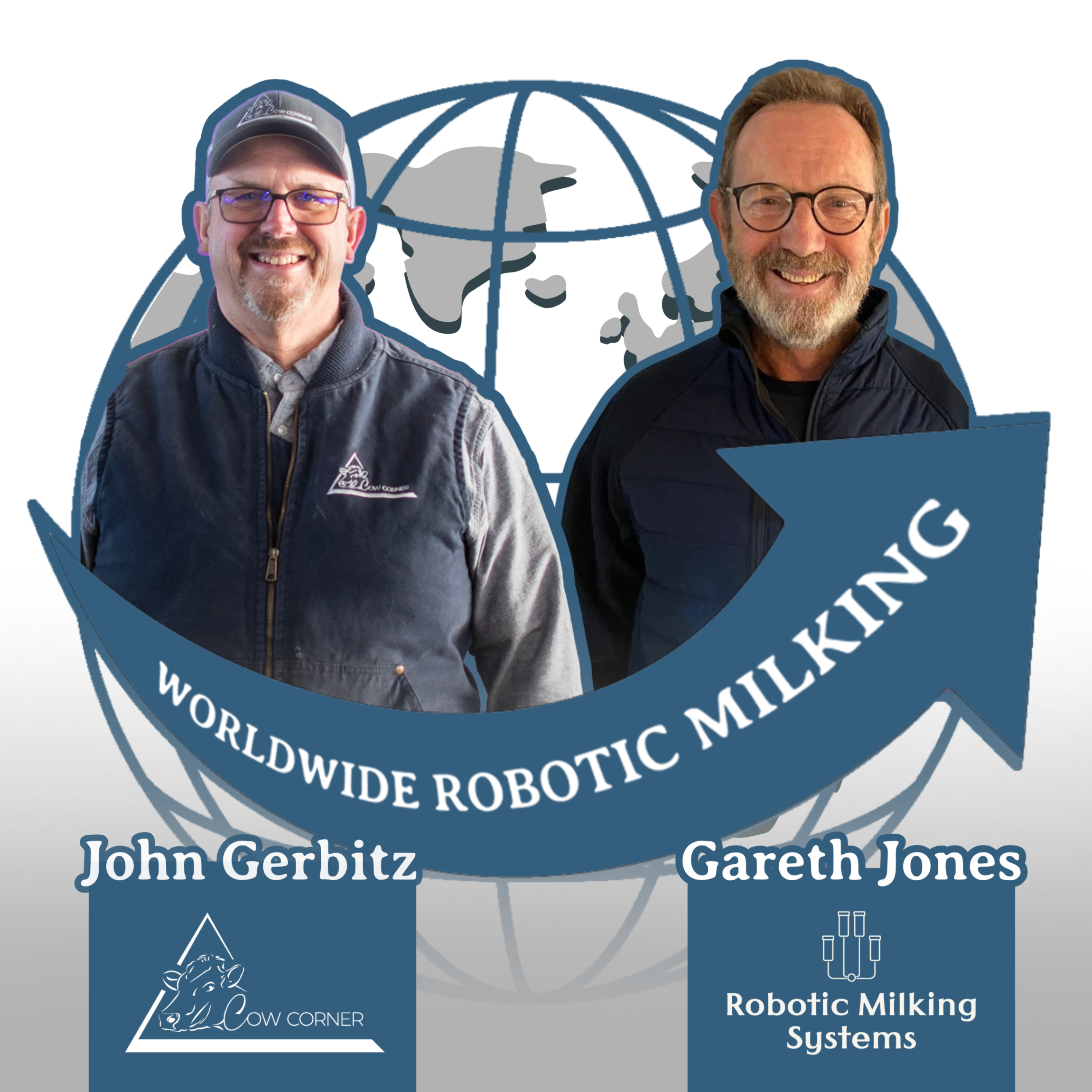
Gareth visited dairies and manufacturers in Holland - the birthplace of robotic milking. We talked about his trip, and all things related to robotic milking in Holland - the weather, dairy markets, forages, cattle, and their proud dairy heritage.
Answer complex questions from an arbitrarily large set of documents with vector search and GPT-3 Episode release date: 26 Jun 2022 Core Ideas: Metamodernism: Narratives and emergence view of reality - Reduce suffering - Increase prosperity - Increase understanding mantra: Seek knowledge. DISCLAIMER: This is a community-driven show. --------------- Keywords: david shapiro, chatbots, cognitive ai
Dig into the mystery of Nicolas Bourbaki— one of the most influential mathematicians of all time… who never actually existed. Uploaded 06-07-20 -- When Nicolas Bourbaki applied to the American Mathematical Society in the 1950s, he was already one of the most influential mathematicians of his time. He’d published articles in international journals and his textbooks were required reading. Yet his application was firmly rejected for one simple reason: Nicolas Bourbaki did not exist. How is that possible? Pratik Aghor digs into the mystery. Lesson by Pratik Aghor, directed by Província Studio. Animator's website: http://www.provincia.network (http://www.provincia.network/) Sign up for our newsletter: http://bit.ly/TEDEdNewsletter Support us on Patreon: http://bit.ly/TEDEdPatreon Find us on Twitter: http://bit.ly/TEDEdTwitter Peep us on Instagram: http://bit.ly/TEDEdInstagram View full lesson: https://ed.ted.com/lessons/the-greatest-mathematician-that-never-lived-pratik-aghor Thank you so m
AutoMuse: Scene Simulation is Working! GPT-3 Finetuned to write sequences of fiction Episode release date: 16 Sep 2022 Core Ideas: Metamodernism: Narratives and emergence view of reality - Reduce suffering - Increase prosperity - Increase understanding mantra: Seek knowledge. DISCLAIMER: This is a community-driven show. --- Keywords: prompt engineering, artificial general intelligence, heuristic imperatives, david shapiro, deep learning, ai research, openai, superintelligence