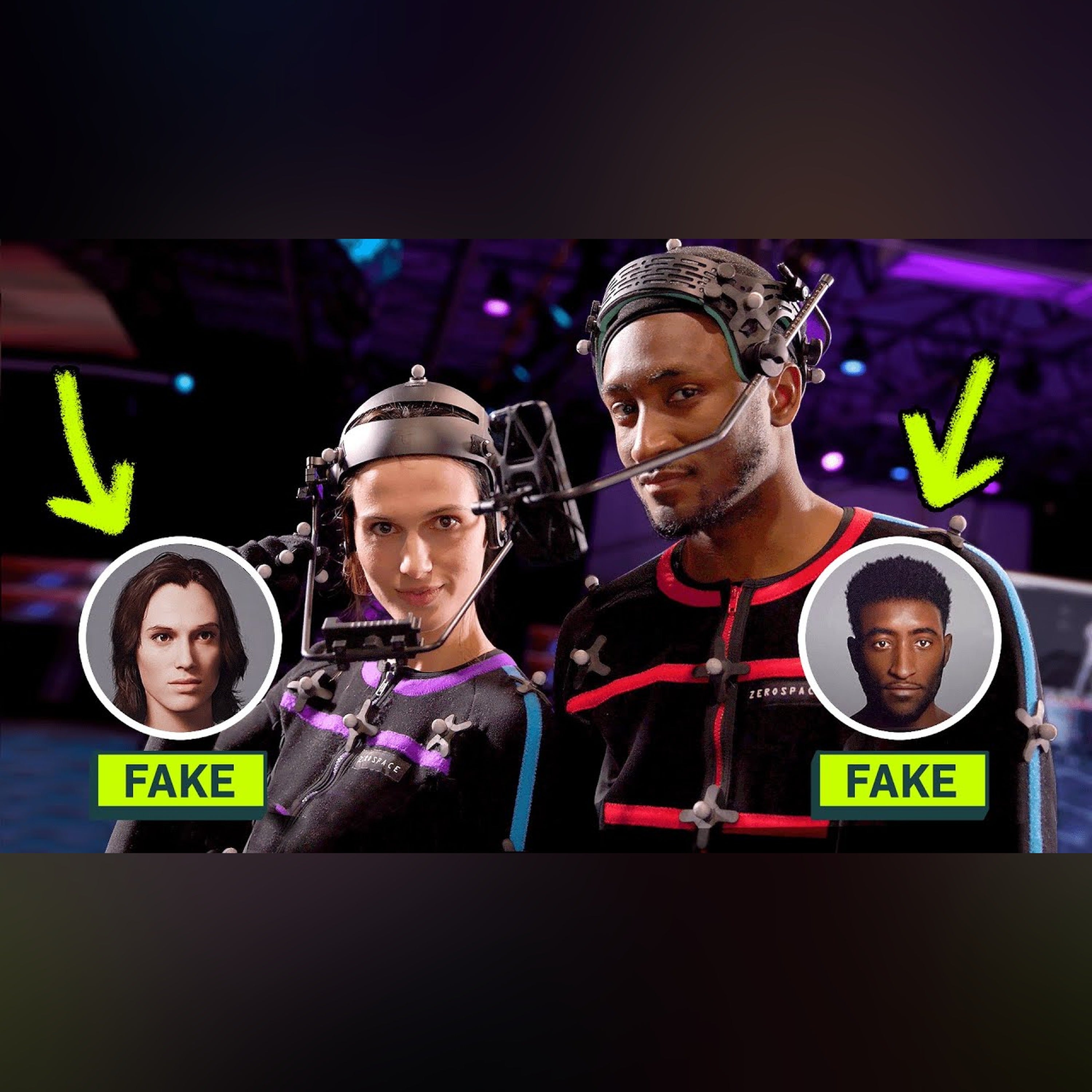
This new tech is changing how movies get made. So @mkbhd and I tested it out... Watch MKBHD's video: https://youtu.be/RM7SobH8ZO0 I’ve been obsessed with sci-fi movies since I was a kid. I love being transported to another world. But lately, I’ve been wondering: How do those worlds look so… REAL? The tech behind movies has exploded in complexity and realism, changing how stories come to life on screen. Luckily, at the same time, those tools are becoming more and more available to more people telling stories. It’s not just blockbusters like Avatar 2 or Avengers or Dune. It’s also smaller budget films like Everything Everywhere All at Once or even… YouTube creators? In this video, Marques Brownlee and I test out 3 movie-making tools that are changing how movies, shows, and maybe even YouTube videos (??) get made. We’re at ZeroSpace Studios in New York to show you how each of these crazy technologies work - and how you might be able to use them. Along the way, we hit big questions like: W
My guest today is Hayden Field, The Verge’s senior AI reporter, and we’re discussing the Anthropic IPO for our third and final episode in our series about AI in real life. The numbers are gigantic, but not really that important. The real story is what happens now — and whether Anthropic can continue to thread the needle of caring about and investing in AI safety while also being a public company beholden to shareholders. So you’ll hear Hayden and I dive into this tension, and what to make of Anthropic’s unique corporate governance structure in the wake of the Jensen Huang saga. Read the full interview transcript on The Verge. (https://www.theverge.com/e/1038701) Links: With biggest IPO of all time, Anthropic’s ‘good guy’ reputation is on the line | The Verge (https://www.theverge.com/ai-artificial-intelligence/1037459/anthropic-ipo-safe-ai-reputation-power-structure) Anthropic starts trading on Wall Street | The Verge (https://www.theverge.com/ai-artificial-intelligence/1035384/anthrop
Dig into the history of arsenic dating back to ancient civilizations, and find out why this element is known as the king of poisons. -- No substance has been as constant an ally to insidious scheming as arsenic, the so-called “king of poisons.” In its chemically pure form, it isn’t much of a threat because our bodies don’t absorb it well; it’s when arsenic combines with other elements that things get dangerous. So, how did this substance become such a popular poison? Neil Bradbury digs into the element's sordid and lethal history. Lesson by Neil Bradbury, directed by Luisa Holanda. Support Our Non-Profit Mission ---------------------------------------------- Support us on Patreon: http://bit.ly/TEDEdPatreon Check out our merch: http://bit.ly/TEDEDShop ---------------------------------------------- Connect With Us ---------------------------------------------- Sign up for our newsletter: http://bit.ly/TEDEdNewsletter Find us on Twitter: http://bit.ly/TEDEdTwitter Peep us on Instagram: h
How to kill your current self My private network for entrepreneurs ⚜ - http://newelite.pro/search-for-freedomJoin the Icon Blueprint personal brand academy waitlist - https://t.me/+AwtcD_v7V4xiNGE1My instagram - https://www.instagram.com/jackhopfitness?igsh=aGhqMm1iNHg2eXg5&utm_source=qre Episodes created by entrepreneur and masculinity ace Jack Hopkins for his youtube channel, this podcast is dedicated to helping men rediscover their inner strength and confidence in a society that often promotes feminine values over masculine ones.Follow the podcast for valuable insights, inspiring stories, and practical advice on how to embrace your masculinity, build your confidence, and achieve your goals. Whether you're looking to improve your relationships, advance your entrepreneurial career, or simply feel more confident and capable, Jack has valuable insights that can help you achieve your goals.So, if you're ready to reclaim your masculinity and awaken the beast that lives inside you, follow
At a concert, most listeners hear the melody. A trained singer hears the breath control that carries a difficult phrase. At a football match, the crowd follows the ball while a coach notices the defender who quietly closes off an attack. Knowing more changes who seems extraordinary. Audiences have traditionally borrowed that knowledge from commentators, critics, and friends, whose explanations help determine which achievements receive applause and which pass unnoticed. AI could make that guidance a routine part of watching almost anything. Tools already track players’ movements, analyze musical pitch and timing, and explain technical processes. As those abilities become integrated into broadcasts and personal assistants, viewers could ask what made a particular passage difficult or why a player chose one route over another. Instead of receiving occasional commentary, someone could explore an entire performance with detailed explanations tailored to their questions. The consequential sh
Project Synapse: Markets in Freefall, Fragile Infrastructure, and AI's Perfect Storm The hosts banter through the show's intro before focusing on a sense that "things are out of control," citing a WallStreetBets suicide-hotline post amid a market crash and discussing cascading system failures involving Microsoft, the FAA, and a reported NSA internal communications outage. They argue politicians and leadership lack technical competence and clear messaging, increasing panic, while emphasizing that many problems stem from aging, underfunded infrastructure and complex, brittle software (PHP, NGINX, Java), not proven AI attacks—more a "perfect storm" of crises. They debate whether AI should help fix complexity, stressing critical thinking, accountability, and using multiple AIs to verify each other. In a lightning round they cover Anthropic's IPO performance, mixed reactions and token limits with ChatGPT 6.2 (favoring "Sol" over "Astra"), Google's cheaper Neon model and confusing UX, Loblaw
Venki Ramakrishnan (Molecular biologist, Nobel Prize): "The experimental part [of drug discovery] is always going to be the bottleneck." Recent headlines about using AI to speed up drug discovery made me curious about what that looks like and where it is today. So I flew to the UK to interview Venki Ramakrishnan who is on the scientific advisory board of Demis Hassabis' Isomorphic Labs. He has described himself as a "failed physicist" starting originally with a physics PhD who changed fields because he felt his work was incremental. After pivoting into molecular biology without a degree he discovered the field of work that eventually led to his Nobel prize. So aside from drug discovery, I also asked him about how AI is impacting the field of biology, how biology compares to physics, and the politics behind the Nobel prize. Podcast links: • YouTube: https://www.youtube.com/watch?v=-1q0zA21AkY • Transcript: https://www.developing.dev/p/e074-venki-ramakrishnan Thank you to this episode's
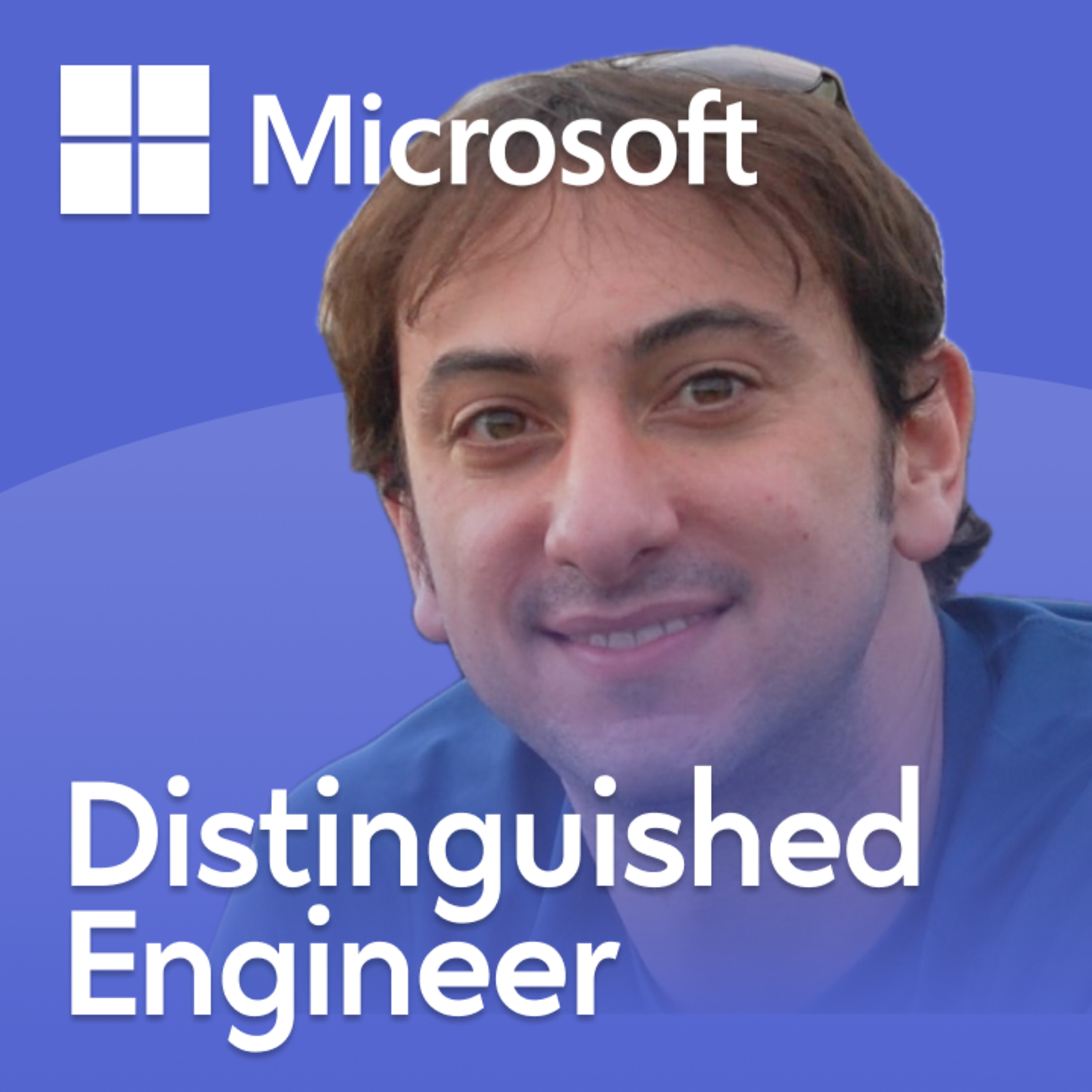
Stephen Toub is a Distinguished Engineer at Microsoft who single-handledly rewrote the GitHub Copilot runtime (400,000-line codebase) in Rust. We talked about why/how he did it, how Rust compared with other languages, and everything he learned in the process. Podcast links: • YouTube: https://www.youtube.com/watch?v=PLMOVlZC4eU • Transcript: https://www.developing.dev/p/e073-stephen-toub Thank you to this episode's sponsor for supporting my work: Timestamps: (00:00) Intro (01:06) Why the Copilot runtime needed a Rust port (05:38) Why he chose Rust (11:28) Discussing rollout strategies (21:57) How he caught regressions (32:08) Guiding the agents (42:11) Catching regressions before prod (45:16) Which models he used (50:03) The end benefit and costs (01:03:24) When to do a full rewrite (01:06:40) Career learnings on the way to Distinguished (01:16:00) Top technical book recommendation (01:17:49) Advice for young engineers (01:21:00) Outro Where to find Stephen: • GitHub: https://github.co
Users should have access to human review when a platform restricts their account.
Share your view, then see how readers voted. No sign-in required. This poll is shared across stories.
Do you agree or disagree?
Common Quandary
A Common Quandary to discuss
Another conversation to explore, separate from this news story.
Your friend asks for an honest review after every date. Do their dates deserve privacy?
A close friend sends detailed post-date reports and expects your advice about every message, kiss, and awkward silence. One recent date is someone you know professionally, who would be embarrassed to learn how much you have heard.
Where does friendship's need for advice become gossip about an unsuspecting person?