Nobel Prize Winner: AI’s Impact On Drug Discovery And Biology | Venki Ramakrishnan
Listen through the publisher, then discuss the episode here or arrange an in-person Roundtable. Your city determines where to meet.
Roundtables are designed for groups of four, with a shared subject and room for everyone to speak. Come for discussion, with no dating expectation.
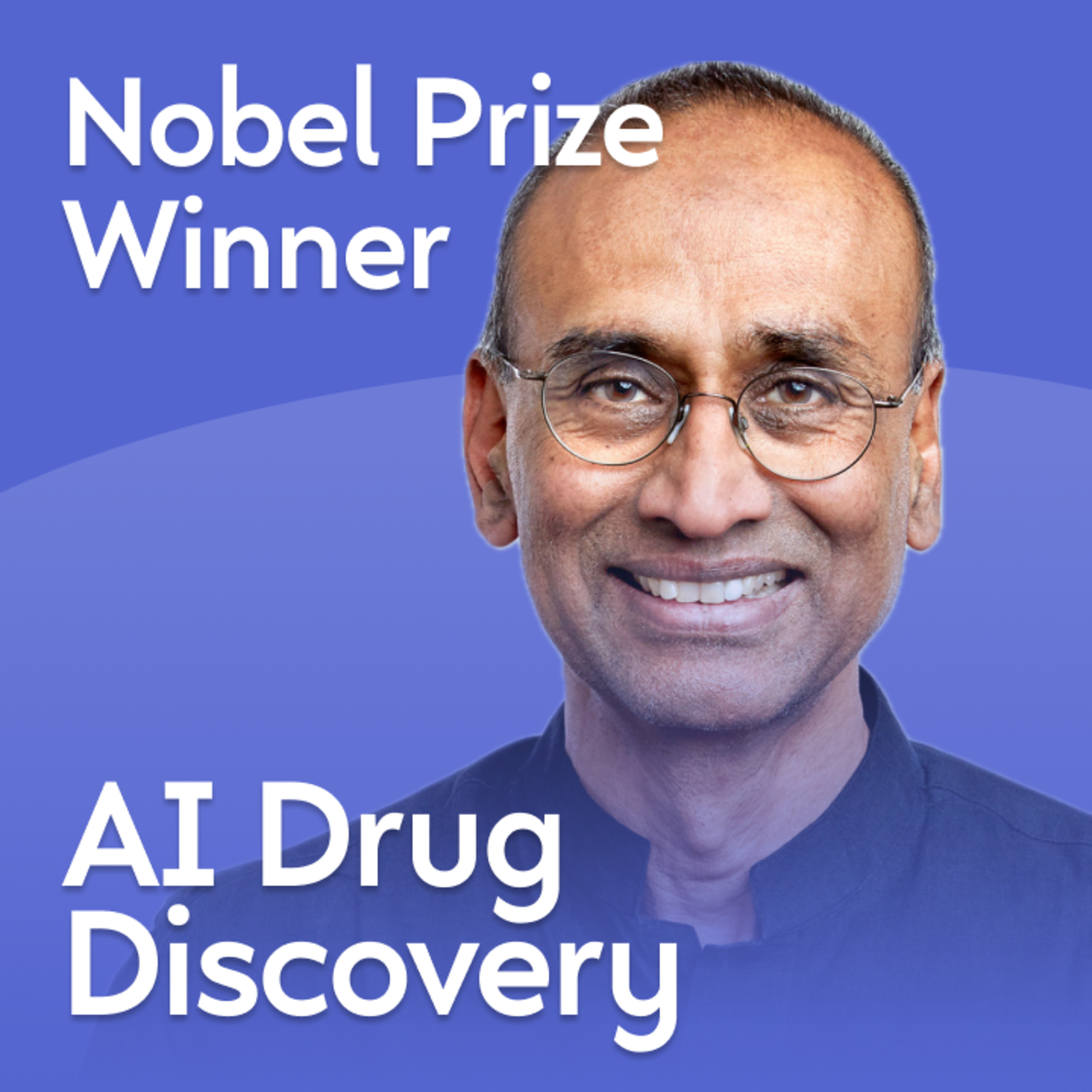
Venki Ramakrishnan (Molecular biologist, Nobel Prize): "The experimental part [of drug discovery] is always going to be the bottleneck." Recent headlines about using AI to speed up drug discovery made me curious about what that looks like and where it is today. So I flew to the UK to interview Venki Ramakrishnan who is on the scientific advisory board of Demis Hassabis' Isomorphic Labs. He has described himself as a "failed physicist" starting originally with a physics PhD who changed fields because he felt his work was incremental. After pivoting into molecular biology without a degree he discovered the field of work that eventually led to his Nobel prize. So aside from drug discovery, I also asked him about how AI is impacting the field of biology, how biology compares to physics, and the politics behind the Nobel prize. Podcast links: • YouTube: https://www.youtube.com/watch?v=-1q0zA21AkY • Transcript: https://www.developing.dev/p/e074-venki-ramakrishnan Thank you to this episode's sponsor for supporting my work: Timestamps: (00:00) Intro (00:43) How drugs are designed (04:54) Why drug testing remains difficult (07:02) How AI will impact the field of biology (10:35) Switching from physics to biology (15:00) How to choose research problems that matter (23:19) Did lacking a credential hurt his career (26:50) Physics vs biology (33:21) Why physicists succeed in other fields (35:10) The politics of the Nobel Prize (38:37) Top scientific book recommendations (40:05) Advice for young people (41:43) Outro Where to find Venki: • Personal website (MRC Laboratory of Molecular Biology): https://mrclmb.ac.uk/research-leaders/venki-ramakrishnan/ • Google Scholar: https://scholar.google.com/citations?hl=&user=oTI5BjIAAAAJ • Royal Society: https://royalsociety.org/people/venki-ramakrishnan-12139/?page=43 • Nobel Prize: https://www.nobelprize.org/prizes/chemistry/2009/ramakrishnan/biographical/ • Wikipedia: https://en.wikipedia.org/wiki/Venki_Ramakrishnan Where to find Ryan: • Newsletter: https://www.developing.dev/ • X/Twitter: https://x.com/ryanlpeterman • LinkedIn: https://www.linkedin.com/in/ryanlpeterman/ • Threads: https://www.threads.com/@ryanlpeterman • Instagram: https://www.instagram.com/ryanlpeterman • TikTok: https://www.tiktok.com/@ryanlpeterman Referenced in this episode: • Isomorphic Labs: https://www.isomorphiclabs.com/ • AlphaFold: https://deepmind.google/science/alphafold/ • AlphaGenome: https://deepmind.google/blog/alphagenome-ai-for-better-understanding-the-genome/ • Neutron-Scattering Studies of the Ribosome (Scientific American, 1976): https://www.scientificamerican.com/article/neutron-scattering-studies-of-the-r/ • Surely You're Joking, Mr. Feynman!: https://wwnorton.com/books/Surely-Youre-Joking-Mr-Feynman/ • The Double Helix: https://www.simonandschuster.com/books/The-Double-Helix/James-D-Watson/9780743216302
Episode information is provided by the publisher. Listening takes place on the publisher’s service.
Listen at the source ↗