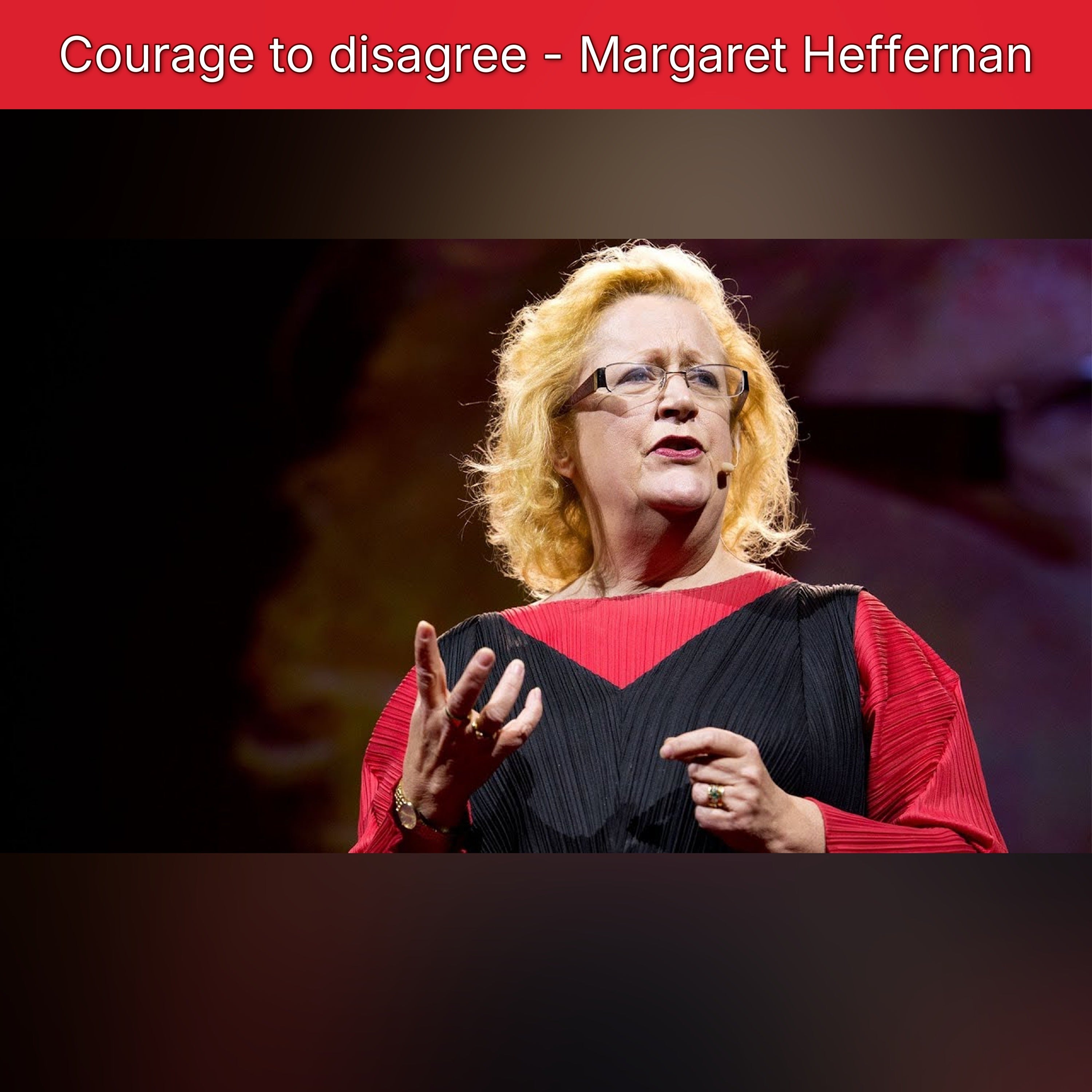
Most people instinctively avoid conflict, but as Margaret Heffernan shows us, good disagreement is central to progress. She illustrates (sometimes counterintuitively) how the best partners aren't echo chambers -- and how great research teams, relationships and businesses allow people to deeply disagree. Talk by Margaret Heffernan.
Milestones to AGI: We'll reach the tipping point when AI can do these three things... Episode release date: 10 Nov 2023 Core Ideas: Metamodernism: Narratives and emergence view of reality - Reduce suffering - Increase prosperity - Increase understanding mantra: Seek knowledge. DISCLAIMER: This is a community-driven show. --------- Keywords: david shapiro, superintelligence, singularity, future technology, ai development
Google just released three new Gemini 4 models (Argon, Carbon, and Hydrogen), and the bigger story is the thing managing them. In this episode of Generative AI 101, host Emily Laird breaks down Orchestrator, the new coordination layer inside Google Antigravity that hands hard reasoning to one model and fast execution to another within the same task. Google says it finished tasks 19 percent faster and used 24 percent less quota than its heaviest model working alone, though that is one benchmark, from one company, grading its own homework. The real stakes: the AI race may be shifting from who builds the smartest model to who can coordinate several capable ones into a system that actually gets things done. JOIN THE AI WEEKLY MEETUPS EMAIL REMINDERS FOR THE MEETUPS CONNECT WITH EMILY LAIRD ON LINKEDIN
All links and images can be found on CISO Series (https://cisoseries.com/our-ai-strategy-is-mostly-based-on-saying-its-not-fair/) This week's episode is hosted by David Spark (https://www.linkedin.com/in/davidspark/), producer of CISO Series and Andy Ellis (https://www.linkedin.com/in/csoandy/), principal of Duha (https://www.linkedin.com/newsletters/7038614510944833536/). Joining us is Blair Wright (https://www.linkedin.com/in/blairwright/), CISO, dentsu (https://www.dentsu.com/). In this episode: Everyone is holding a different part of the elephant Nobody is checking agent IDs Fear sells, evaluation lags Stolen today, readable tomorrow A huge thanks to our sponsor, Exaforce At Exaforce, we are on a mission to 10x improve the productivity and efficacy of security and operations teams using our transformative multi-model AI engine. Together, our Exabots and data exploration fabric deliver real-time insights, proactive detection and response, in-depth investigations, and automated workf
Kara and Scott unpack the push to bring Jensen Huang back to Nvidia, Scott Bessent and Howard Lutnick’s clash over chip exports, and what Nvidia pulling back on AI investments could mean for the economy. Then, the FAA meltdown exposes America’s crumbling infrastructure, and Joe Rogan weighs in on Trump losing the podcast bros. Plus, SNL takes aim at tech billionaires, its “Sister” sketch sparks a conversation about America’s caregiving crisis, and Kara has thoughts about the next James Bond.
I sat down with Dylan Patel, Founder & CEO of SemiAnalysis, to discuss AI markets, and how he's building a research and investment empire with the acquisition of Citrini Research and the launch of a $500 million venture fund. Dylan has built SemiAnalysis into one of the most influential independent research firms covering semiconductors, AI infrastructure, data centers, and global supply chains. Today, he oversees 115 people across SemiAnalysis and Citrini, with businesses spanning proprietary data, technical research, consulting, and now venture capital. We discuss the competition between OpenAI, Anthropic, Google, and Meta, the shift from foundation models toward applications, and how changing product adoption, margins, and valuations are shaping the AI market. Dylan also breaks down the economics of AI infrastructure, the risks facing data center development, credit markets, AI valuations, and where he sees opportunities emerging across the technology stack. We then get into the bus
Ian and Aaron discuss the all new aaronfrancis.com, why Ian wants Aaron to become photography guy, and yes, why Ian Laravel New'd once again - but this time, not for Outro. Interested in sponsoring Mostly Technical? Head to https://mostlytechnical.com/sponsor to learn more. (00:01) - Ian Wants A Sick Day (03:07) - Webhooks (06:59) - Weekend Update (17:28) - Follow Up (26:14) - Laravel New: LaraJobs Edition (44:39) - The All New aaronfrancis.com (57:59) - Aaron's Office (01:10:25) - Git-backed Writing Links:Canon RF 24-105mm F4 L IS USM (https://usa.canon.com/internet/portal/us/home/products/details/lenses/ef/standard-zoom/rf-24-105mm-f-4l-is-usm) Canon EOS R50 (https://www.usa.canon.com/shop/p/eos-r50) Canon RF 35mm F1.8 Macro IS STM (https://www.usa.canon.com/shop/p/rf35mm-f1-8-macro-is-stm) Canon RF 24mm F1.8 Macro IS STM (https://www.usa.canon.com/shop/p/rf24mm-f1-8-macro-is-stm) Canon RF 50mm F1.2 L USM (https://www.usa.canon.com/shop/p/rf50mm-f1-2-l-usm) Canon EOS R6 Mark II (http
Communities living in voluntary isolation have long faced threats of violence, disease, and resource extraction. Now advocates are sounding the alarmabout an emerging threat from influencers (https://www.pueblosaislados.org/post/declaracion-yakarta-proteccion-pueblos-indigenas-aislamiento-piaci) — even if confirmed cases are rare. Sarah Edwards is an assistant professor of media studies at North Central College. She sees parallels to other recent influencer trends. More on this ‘This is colonialism for clicks’: the influencers attempting to meet and film the world’s most isolated tribes (https://www.theguardian.com/world/2026/sep/05/colonialism-for-clicks-influencers-attempting-meet-film-worlds-most-isolated-tribes) — from The Guardian Uncontacted Indigenous Peoples: At the Edge of Survival (https://assets.survivalinternational.org/documents/2788/original-b24f435d70d2e27876b53452d615b1a4.pdf) — from Survival International, a global Indigenous rights nonprofit Peru’s move to reconsider
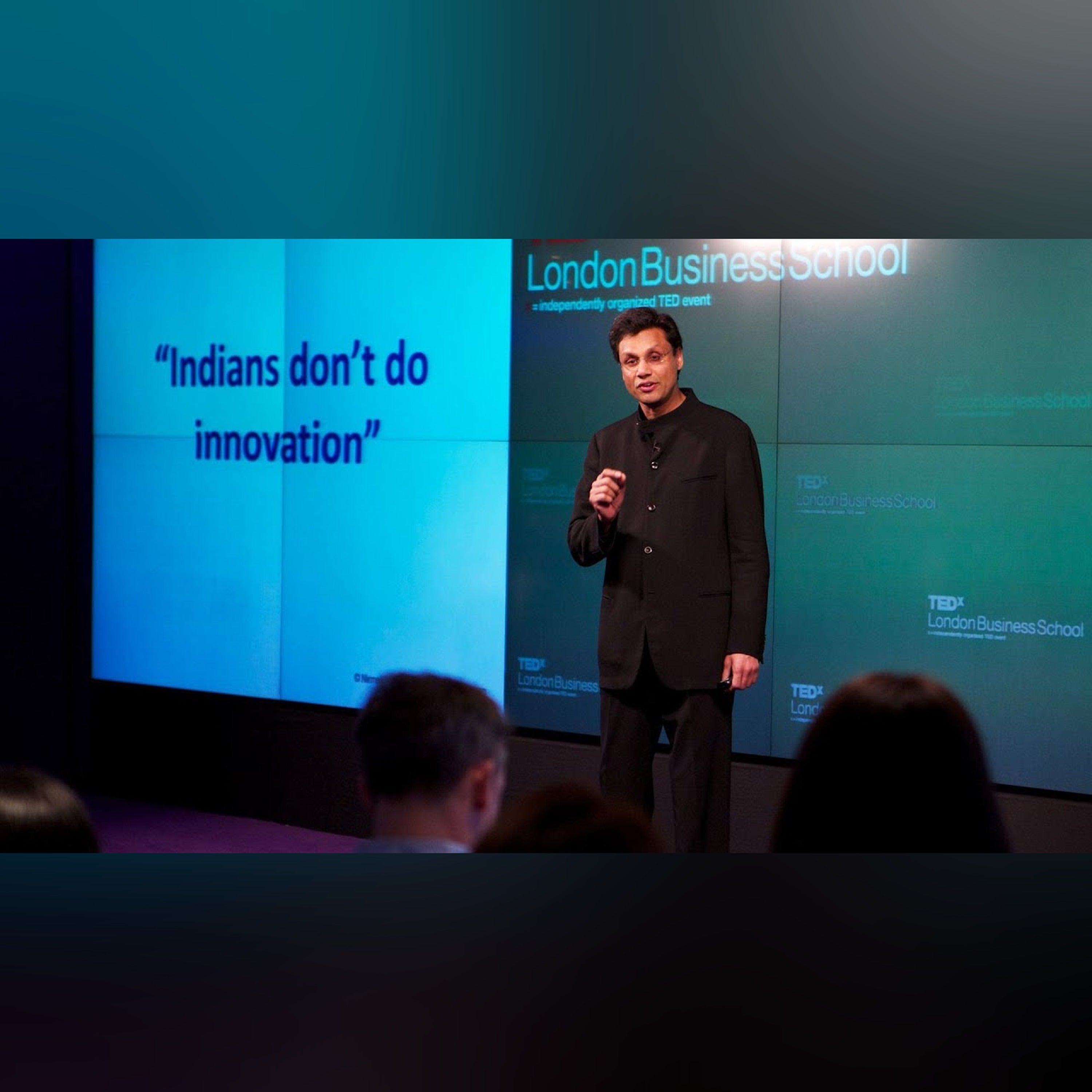
Can India become a global hub for innovation? Nirmalya Kumar thinks it already has. He details four types of "invisible innovation" currently coming out of India and explains why companies that used to just outsource manufacturing jobs are starting to move top management positions overseas, too. (Filmed at TEDxLondonBusinessSchool.) Uploaded 21-08-13 Talk by Nirmalya Kumar.
Sparse Priming Representations - the secret ingredient to scalable AGI memories Episode release date: 17 Mar 2023 Core Ideas: Metamodernism: Narratives and emergence view of reality - Reduce suffering - Increase prosperity - Increase understanding mantra: Seek knowledge. DISCLAIMER: This is a community-driven show. ------- Keywords: ai consciousness, artificial general intelligence, ai research, ai development, machine autonomy, heuristic imperatives, ai masterclass, ai safety
In a humorous talk with an urgent message, LZ Granderson points out the absurdity in the idea that there's a "gay lifestyle," much less a "gay agenda." (Filmed at TEDxGrandRapids.) Uploaded 21-08-13 Talk by LZ Granderson.
Health-LLM - 83.3% diagnostic accuracy with RAG, XGBoost, and more: New Cognitive Architectures! Episode release date: 2 Feb 2024 Core Ideas: Metamodernism: Narratives and emergence view of reality - Reduce suffering - Increase prosperity - Increase understanding mantra: Seek knowledge. DISCLAIMER: This is a community-driven show. -------- Keywords: machine autonomy, ai safety, cognitive ai
View full lesson: http://ed.ted.com/lessons/the-science-of-macaroni-salad-what-s-in-a-mixture-josh-kurz Uploaded 31-07-13 What's in macaroni salad? Break down the pasta, mayonnaise, vinegar, mustard, vegetables, etc., and you're left with a bunch of molecules. Josh Kurz uses a delicious recipe to exemplify three types of mixtures (solution, colloid and suspension), while reminding us that we're all made of the same stuff. Lesson and animation by Josh Kurz.
How a small business owner SAVED $20,000 with Gemini Flash + AI isn't coming for human jobs (yet) Episode release date: 17 Jul 2024 Core Ideas: Metamodernism: Narratives and emergence view of reality - Reduce suffering - Increase prosperity - Increase understanding mantra: Seek knowledge. DISCLAIMER: This is a community-driven show. --------------- Keywords: ai research, ai innovation, singularity, ai philosophy, ai ethics, deep learning
In 2017, eight researchers, most of them at Google, published a paper with a catchy title and a radical idea: throw out the old way of processing language and rely on "attention" instead. We explain in plain language how attention lets an AI weigh every word against every other word, why the design made giant models like GPT possible, and how the "T" in ChatGPT traces back to a paper about translation. Plus the irony of history: Google invented the transformer, but OpenAI turned it into a household name. This episode includes AI-generated content.
What if the first 15 minutes of your workday could save you hours of chasing emails, updating your CRM, and figuring out what deserves your attention? For business leaders, the biggest challenge isn't a lack of things to do. It's knowing which things actually matter. Imagine starting every morning with your most urgent priorities already identified, important follow-ups prepared, and business opportunities surfaced before they slip through the cracks. In this episode of the Leveraging AI Podcast, Isar Meitis reveals how he uses an AI-powered morning brief to get through his urgent follow-ups in just 15 minutes. By connecting AI to his emails, CRM, calendar, task management tools, and other business systems, he's turned a scattered morning routine into a streamlined decision-making process. And the best part? You don't need to build a complicated system to get started. In this session, you'll discover: How to tackle your most urgent priorities in 15 minutes: See how Isar uses AI to iden
Jensen Huang is out at Nvidia, and the export-law questions behind his exit could matter more than the affairs that started it. Paul Roetzer and Mike Kaput break down what's at stake for Nvidia and the AI economy. They also cover Anthropic's IPO roadshow, where the founders' letter warns investors to expect decisions that don't maximize profit. Plus: the AI 2027 authors move their superhuman AI researcher forecast up to 2027, and Paul revisits his Law of Uneven AI Distribution. In rapid fire: Fable 5.2 and Mythos 5.2, Gemini 4 Carbon and Hydrogen, Brian Halligan's return to HubSpot, SaaStr's revenue-per-employee benchmarks, and United Airlines blocking AI agents. Show Notes: Access the show notes and show links here (https://podcast.smarterx.ai/shownotes/252) Timestamps: 00:00:00 — Intro 00:05:48 — Jensen Huang Resigns from NVIDIA 00:24:06 — Anthropic Launches IPO 00:36:34 — AI 2027 Authors Accelerate Forecast for “Superhuman” AI 00:49:58 — Fable 5.2, Mythos 5.2, Gemini 4 Carbon, and G
Will Marshall is the co-founder and CEO of Planet (NYSE: PL), which flies the largest fleet of Earth-imaging satellites in history and photographs the entire surface of the Earth every day. Before Planet, Will was a scientist at NASA working on missions to the moon. This is his second time on Summation. In this episode of Summation, Will and Auren discuss: Why satellites got 1,000x better in a decade while launch costs only improved 5x Large earth models: pairing daily satellite imagery with LLMs so anyone can "chat with the Earth" Why it's getting very hard to hide anything at scale, from pontoon bridges to drone launch sites Why the world looks static on a map but changes every single day A self-sustaining base on the moon, and the hardest open question about living there You can find Auren Hoffman on X at @auren and Will Marshall on X at @will4planet (https://x.com/Will4Planet?lang=en) Interact with the earth on Planet's new app: https://ai.planet.com/
A router failure grounded flights across the country on Friday, the longest nationwide ground stop in 25 years. Thousands of travelers were stranded. Plus, Delta denies using AI and your personal data to set fares as the FTC asks airlines for records.
Orgs don't have to wait for the next zero-day, the next batch of 1,000 CVEs, or the next exploit in the wild to harden their defenses. Rob Allen talks about turning an expectation of "assume breach" into proactive defenses based on zero trust. We also discuss why "assume breach" doesn't have to be a pessimistic stance or even one that presumes malicious intent. After all, with so many agents being adopted throughout an org, restricting access and adding observability reduces the side-effects of agents taking actions you didn't expect regardless of what they were prompted to do. This segment is sponsored by ThreatLocker. Visit https://securityweekly.com/threatlocker to learn more about them! Visit https://www.securityweekly.com/asw for all the latest episodes! Show Notes: https://securityweekly.com/asw-409
The Psychology of AI Overlords and Transhumanism: Borg Queen, Cortana, and Tony Stark Episode release date: 5 Jul 2023 Core Ideas: Metamodernism: Narratives and emergence view of reality - Reduce suffering - Increase prosperity - Increase understanding mantra: Seek knowledge. DISCLAIMER: This is a community-driven show. ---------- Keywords: ai ethics, ai podcast, gpt, ai consciousness, prompt engineering
How could AGI break out of the lab? Experts weigh in! Episode release date: 10 Jul 2023 Core Ideas: Metamodernism: Narratives and emergence view of reality - Reduce suffering - Increase prosperity - Increase understanding mantra: Seek knowledge. DISCLAIMER: This is a community-driven show. ------ Keywords: heuristic imperatives, ai agents, david shapiro
View full lesson: http://ed.ted.com/lessons/mysteries-of-vernacular-zero-jessica-oreck-and-rachael-teel Uploaded 01-08-13 Though the first written number system can be dated back to 2500 years ago in Mesopotamia, a zero-like symbol did not appear until 7th century CE India. Jessica Oreck and Rachael Teel track the evolution of zero from a dot to the symbol we use today, as well as the Arabic, Italian and French roots of the word. Lesson by Jessica Oreck and Rachael Teel, animation by Jessica Oreck.
I walked through Energee's display of five batteries in Melbourne, covering cars, commercial vehicles and stationary storage. For listeners, the physical distinction matters: the long-blade car cell prioritises energy density, while the short-blade design prioritises ultra-fast charging. I ask how material changes and cooling plates above and below the cells manage heat, then explore storage longevity and the route to sodium-ion production.