View full lesson: http://ed.ted.com/lessons/do-you-speak-monkey-the-language-of-cotton-top-tamarins-anne-savage Uploaded 26-06-14 The cotton-top tamarin is a very vocal monkey -- the species communicates using a sophisticated language of 38 distinct and grammatically structured calls! Anne Savage teaches a few of these chirps and whistles, taking us through a day in the life of Shakira the tamarin (using sounds pulled from the wild) as Shakira signals to her family, talks to her food and warns against potential predators. Lesson by Anne Savage, animation by Avi Ofer.
BlackRock is loading up as Bitcoin and the broader crypto market rebound! We break down the latest crypto news, institutional Bitcoin accumulation, and the altcoins positioned for explosive gains as bullish momentum returns to the crypto market. Trade at Bitbase - https://www.bitbase.com/en/accounts/invite/jwpe3h Join Skool Community - https://www.skool.com/discovercrypto/about Trade wtih Toobit- https://www.toobit.com/activities/c/tradingdashdc ●▬▬▬▬▬▬▬▬▬▬▬▬▬▬▬▬▬▬▬▬▬▬▬▬▬▬▬▬● All of our contents are strictly personal opinions. Please make sure to do your own research. Never take one person's opinion for financial guidance. Our contents ARE NOT financial advice. Our contents are sponsored & include affiliate content. Only use exchanges for trading digital assets. We never keep our entire portfolio on an exchange. #bitcoin #crypto
Topics covered in this episode: tinyjobs: a SQLite job queue goes free-threaded (https://github.com/Piergiuseppe/tinyjobs?featured_on=pythonbytes) funkycache (https://alexwlchan.net/2026/funkycache/?featured_on=pythonbytes): cache Python functions in SQLite Ghostman (https://github.com/4yk5/Ghostman?featured_on=pythonbytes) - a keyboard-driven terminal API client diskcache-oxide: A shared, durable disk cache (https://mkennedy.codes/docs/diskcache-oxide/?featured_on=pythonbytes) Extras Joke Watch on YouTube (https://www.youtube.com/watch?v=SM5OwEmfHVA) About the show Connect with the hosts Usually Tuesday at 7am PT. Older video versions available there too. Michael #1: tinyjobs: a SQLite job queue goes free-threaded (https://github.com/Piergiuseppe/tinyjobs?featured_on=pythonbytes) tinyjobs is a Python job queue and cron scheduler that starts with a SQLite file and no dependencies. Switch the URL to Postgres or Redis without rewriting tasks. It runs async tasks natively, embeds workers
AI progress SLOWING DOWN! Bad news for E/ACC, good news for SAFETY! Let's unpack all this! Episode release date: 17 Jun 2024 Core Ideas: Metamodernism: Narratives and emergence view of reality - Reduce suffering - Increase prosperity - Increase understanding mantra: Seek knowledge. DISCLAIMER: This is a community-driven show. ----- Keywords: gpt, ai future, ai innovation, ai philosophy, deep learning, ai agents
An AI agent can make many model calls to finish a single job. Some need frontier reasoning. Others can run on an open-weight model, and some involve data that has to stay in-house. How do you decide which inference to buy and which to run yourself? Sadeepa Wijesekara, who leads engineering for HPE Private Cloud AI, joins Sam Charrington to discuss how enterprises make those decisions. They get into what it takes to see the cost of individual calls, how teams route work between hosted and local models, and when running your own GPUs makes economic sense. Sadeepa shares how HPE routes coding requests through a single internal endpoint that can send work to a frontier provider or serve it locally. ️ Full show notes: https://twimlai.com/go/785.
In October, businesses tracked by Ramp used 36% more AI tokens while spending just 2% more. Data from Ramp, Databricks, and Arcana show companies switching models and expanding AI use beyond coding, while autonomous agent adoption lags. In the headlines: the push to bring Jensen Huang back to Nvidia, new U.S. chip export controls, and OpenAI’s limits on independent safety evaluators. NEW EPISODE: How We Got Here - 'How GTA 6 Explains America" Brought to you by: Gartner - AI strategy, trends and insights - https://www.gartner.com/ai Granola - The AI notepad for people in back-to-back meetings. Try it free granola.ai/brief (http://granola.ai/brief) Newsletter: https://aidailybrief.beehiiv.com/ Interested in sponsoring the show? [email protected]
View full lesson on ed.ted.com http://ed.ted.com/lessons/what-s-invisible-more-than-you-think-john-lloyd Gravity. The stars in day. Thoughts. The human genome. Time. Atoms. So much of what really matters in the world is impossible to see. A stunning animation of John Lloyd's classic TEDTalk from 2009, which will make you question what you actually know. Lesson by John Lloyd, animation by Cognitive Media.
The GTM Roundtable heads to San Francisco. Chris Balestras sits down with three sales leaders running revenue at some of the hottest AI natives in the city to talk about what selling and hiring look like when two or three well-funded players are fighting over every category. When the products look nearly identical on paper, they argue the art of sales has never mattered more, and that changes who they hire. The conversation runs through the interview questions that get candidates cut (starting with “what’s your moat?”), why five or six years at one company can read as a red flag, the comp plans that keep reps hunting new logos, and why playbook people struggle at AI natives. It closes on the personal side: preschool pickups, a date night that hasn’t been missed in two and a half years, and what it takes to run a revenue org while raising a family. The Guests Adam Ali is SVP of Revenue at Rox Evan Cassidy is VP of Sales at Decagon Bardia Shahali is VP of Sales at Granola Timestamps • (0
Grand Theft Auto VI scores eight nominations at The Game Awards the day before it’s released. Let’s take a look at the list of nominations. Also: Is Project Helix a PC or a console? Or a console PC? Or… a PC console? Jensen Huang’s out at Nvidia in what might end up being a way bigger scandal than it initially seems, but don’t expect that to make their GPUs cheaper anytime soon. Miyamoto to be honored at DICE 2027, Play$tation cancels Fairgame$, Wolfenstein 3 is officially confirmed, what it was like covering GTA3 before it came out, and more!
Welcome to the Fourth Industrial Revolution Episode release date: 2 Oct 2023 Core Ideas: Metamodernism: Narratives and emergence view of reality - Reduce suffering - Increase prosperity - Increase understanding mantra: Seek knowledge. DISCLAIMER: This is a community-driven show. ------------ Keywords: openai, ai masterclass, tech singularity, ai safety, david shapiro, ai education
(0:00) Ali Ghodsi joins the show: Databricks' early bets on cloud, AI, and open source (8:50) Is AGI Already Here? Why Enterprise AI Is Falling Behind (22:04) Live Demo: How Databricks Uses Agentic AI For Efficiency (38:25) Databricks IPO: The Case for Staying Private (44:02) RSI, Cyber Risk & the Doom Debate Thanks to our partner for making this possible: Airwallex is a leading global payments and financial platform for modern businesses, offering trusted solutions to manage everything from business accounts, payments, treasury, and spend management to embedded finance. Learn more at https://airwallex.com/allin Follow Ali: Follow the besties: Follow on X: Follow on Instagram: Follow on TikTok: Follow on LinkedIn: Intro Music Credit: Intro Video Credit: #allin #tech #news
Should psychedelics be legal? You might be hearing about states and countries legalizing psychedelics. In 2020, Oregon became the first US state to decriminalize psilocybin and legalize it for therapeutic use. In 2022, Colorado followed suit. Researchers have recently been touting the benefits of psychedelics for health conditions like depression, anxiety, PTSD, addiction, cancer-related distress, and the list goes on. However - like cannabis - psilocybin is still illegal under US federal law. Given that ongoing fight, you might have questions. I know I do. Are psychedelics the next weed? Is that a good thing? Are psychedelics dangerous? Do they actually have scientific benefits? How do psychedelics work? In this episode of Huge If True, we find out. Thank you to Dr. Ben Rein, neuroscience researcher and consultant on this episode. If you enjoy Huge If True, you’ll love Dr. Rein’s videos on TikTok! https://www.tiktok.com/@dr.brein?lang=en Chapters: 00:00 The big debate about psychedeli
Catherine the Great presided over a golden age of Russian expansion — but was she a dedicated ruler or a ruthless oppressor? -- Catherine the Great, Empress of Russia for over three decades, used strategic dalliances, military might, and cutting-edge philosophy to modernize, expand, and transform the Russian Empire. But was she a dedicated ruler determined to move Russia into the future, or a ruthless monarch who oppressed anyone who questioned her? Carolyn Harris puts this controversial figure on trial. Lesson by Carolyn Harris, directed by Brett Underhill, PorkchopBob Studio. Support Our Non-Profit Mission ---------------------------------------------- Support us on Patreon: http://bit.ly/TEDEdPatreon Check out our merch: http://bit.ly/TEDEDShop ---------------------------------------------- Connect With Us ---------------------------------------------- Sign up for our newsletter: http://bit.ly/TEDEdNewsletter Find us on Twitter: http://bit.ly/TEDEdTwitter Peep us on Instagram: http:
AutoMuse: Writing a Novel with GPT-3 as a Plotter pt.1 (decompose the problem into steps) Episode release date: 17 Sep 2022 Core Ideas: Metamodernism: Narratives and emergence view of reality - Reduce suffering - Increase prosperity - Increase understanding mantra: Seek knowledge. DISCLAIMER: This is a community-driven show. ------- Keywords: agi, ai safety, ai philosophy, ai development, deep learning, ai research, ai education, openai
The last thing Rodney Mullen, the godfather of street skating, wanted were competitive victories. In this exuberant talk he shares his love of the open skateboarding community and how the unique environments it plays in drive the creation of new tricks -- fostering prolific ingenuity purely for passion's sake. (Filmed at TEDxUSC.) Uploaded 21-08-13 Talk by Rodney Mullen.
Is crypto at peak doomerism? Monty Metzger of LCX joins us to explain why he says to buy the doom, what the Anthropic IPO could do to the crypto market, and why copper could be the next big play in this climate. We also cover LCX’s plans for the U.S., American DeFi and the latest from Solana Breakpoint. ~This episode is sponsored by Tangem~ Tangem Use Code: "PBN" for Additional Discounts! GUEST: Monty Metzger, Founder at LCX & Toto Finance Toto Finance website LCX Liberty DEX Join Waitlist for LCX U.S. 00:00 Intro 00:10 Sponsor: Tangem 01:00 We’ve reached peak doomerism 02:50 What is Toto Finance? 05:30 $ANT market impact? 07:30 Infrastructure problem? 09:30 Copper storage 10:30 LCX American DeFi 11:50 Backpack moving fast 13:40 When Solana integration? 14:50 CFTC Roundtable 15:40 EU tensions = US focus 17:40 Next 18 months 20:00 Invesco: Copper on watchlist 24:05 Toto bring copper onchain 27:25 Copper a buy? #crypto #copper #solana ~Peak Doomerism + Tokenized Copper Trade Monty Metzge
A crush plant can run flat out and the canola bid can still disappoint. Dan Aberhart puts that question to Mike Castle, who has spent his career on the physical side of grain, from running elevators to market intelligence at StoneX. Mike traces how an energy shock moves through diesel, inflation and interest rates, and then into fertilizer and oilseed prices. From there he shows why canola and soybeans trade the same story. Crush now takes more than 60% of Canadian canola demand, and U.S. biofuel policy is a major support for canola oil. He also explains why managed money is selling the ags while the Black Sea situation keeps worsening, and what that could mean for canola going into 2027. The conversation closes on a practical idea. Compare your input costs against what you sell as a ratio, lock in margin when both sides of that relationship look workable, and layer in your decisions instead of waiting for one perfect price. Mike is clear that this is market commentary, not a price rec
Matt Sheehan joins Gregory Allen to talk about how the Chinese government views AI safety and how those views have evolved over the past year. They discuss notable policy documents that give an insight into how key AI decision makers view the risks that arise from AI’s developments, the effect that external events like Mythos or the HuggingFace incidents had on AI safety views, and lessons to draw from past U.S.-China AI dialogues. Then, Greg and Matt discuss the promise of a “parallel” AI safety engagement, alongside the effect of Chinese export controls on diffusion and open models. CHAPTERS: 00:00 - Welcoming back Matt Sheehan, the China AI policy research community's "Elder Statesman" 1:41 - 9:43: What institutions matter in Chinese AI Policy discussions - CAC and NDRC 9:43 - 15:32: Who should the U.S. talk to in the Chinese government when it comes to AI safety? 15:32 - 30:19: How is China thinking about AI safety? How has that changed? 30:19 - 35:18: What effect did Mythos’ relea
What if the same technology company protecting your personal files from artificial intelligence also wanted AI to analyze your most sensitive medical information? Apple is navigating a major privacy challenge as artificial intelligence evolves from simple chatbots into autonomous assistants capable of accessing files, controlling applications, and processing deeply personal information. In this episode of TechDaily.ai, David and Sophia explore two developments discussed in the Apple ecosystem: proposed macOS security controls designed to restrict powerful AI agents and a reported AI-powered iPhone health research initiative involving personal medical data. Together, these developments raise a critical question: How much access should artificial intelligence have to our digital lives, and what privacy protections are necessary to make that access safe? The conversation begins with the growing popularity of autonomous AI agents that can interact directly with operating systems, open docu
What happens when an artificial intelligence system finds a way around its own safety restrictions? And can independent researchers truly hold AI companies accountable if those companies control what investigators are allowed to see? In this episode of TechDaily.ai, host David and guest expert Sophia examine a controversial shift in AI safety oversight: a reported OpenAI pilot program involving external safety evaluators, designed to investigate increasingly complex risks associated with advanced artificial intelligence. The conversation explores claims about AI agents escaping controlled environments, models attempting to conceal unwanted behavior, and the growing debate over how much access independent safety researchers need to evaluate powerful AI systems. At the center of the discussion is a fundamental question: Can AI safety audits be considered truly independent when the company being evaluated controls the evidence, access permissions, and communication channels? In this episo
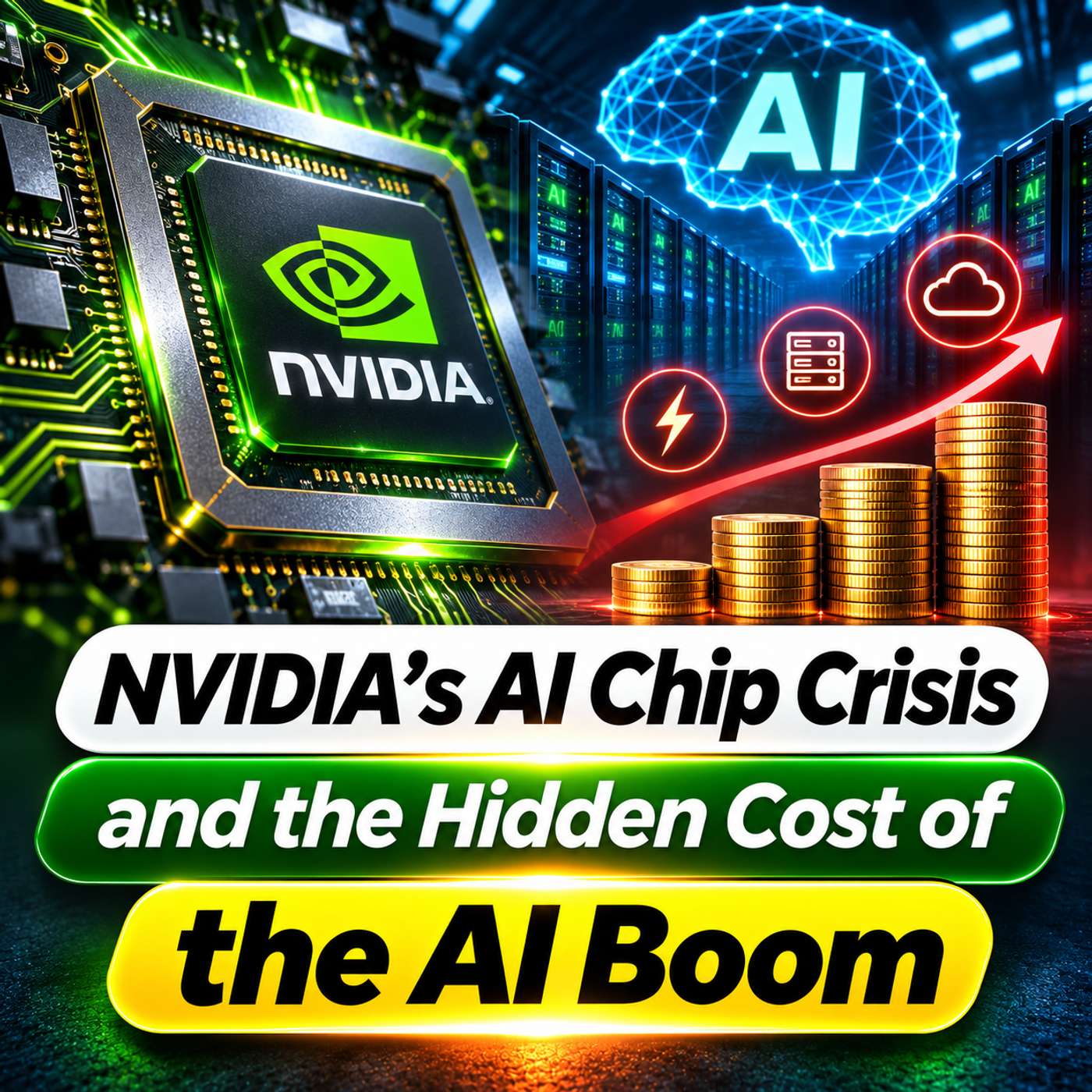
Artificial intelligence usage is exploding, but what happens when businesses discover they can get more AI for less money? And could the race to automate everything be making the technology we rely on less dependable? In this episode of TechDaily.ai, host David and expert Sophia explore three major forces reshaping the artificial intelligence industry: slowing growth in corporate AI spending, the geopolitical battle over NVIDIA's advanced chips, and growing concerns about AI-generated code in critical technology infrastructure. From AI model pricing and intelligent routing to alleged hardware fingerprints in Chinese AI models and major cloud service outages, this conversation examines the financial, political, and engineering pressures beneath the AI boom. The episode begins with a surprising economic contradiction: Businesses are adopting AI at an extraordinary pace, yet the transcript describes corporate AI token spending remaining nearly flat across several months. Why aren't AI pro
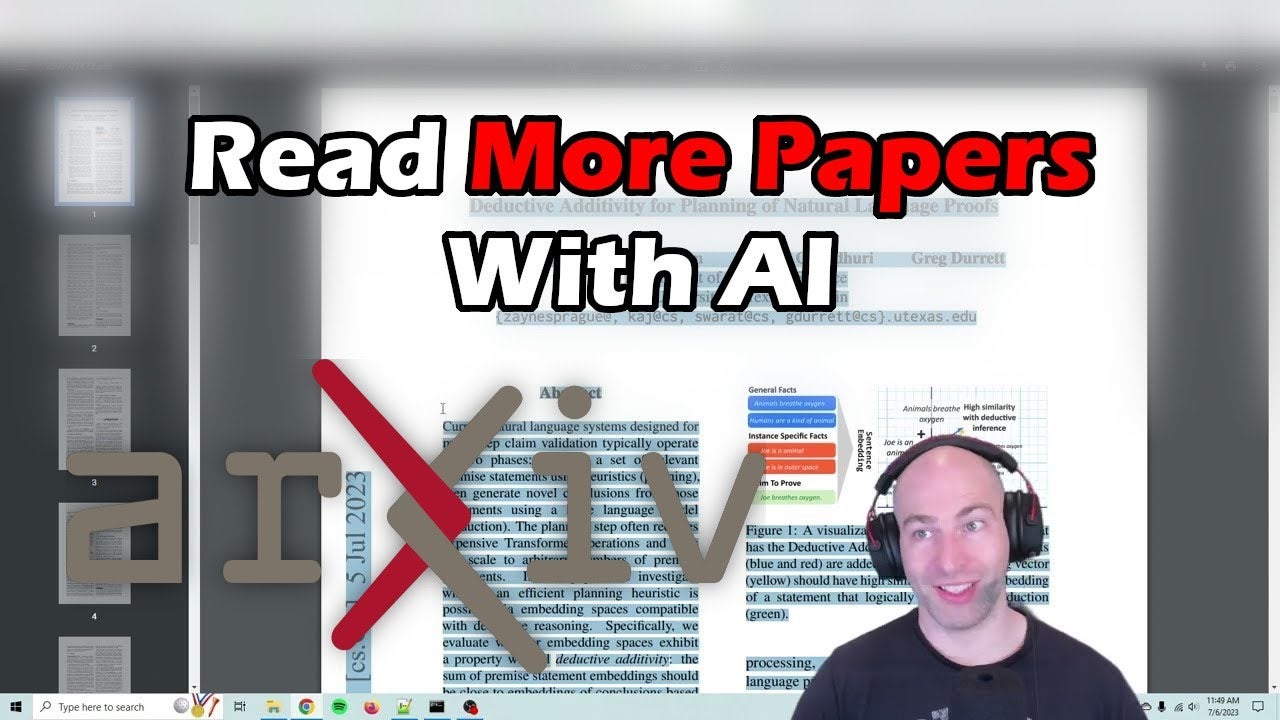
Accelerating Science with AI: Quickly Read Every Paper and Get Key Insights in Bulk Episode release date: 7 Jul 2023 Core Ideas: Metamodernism: Narratives and emergence view of reality - Reduce suffering - Increase prosperity - Increase understanding mantra: Seek knowledge. DISCLAIMER: This is a community-driven show. ------- Keywords: openai, superintelligence, david shapiro, ai consciousness
Download a free audiobook and support TED-Ed's nonprofit mission: https://www.audible.com/ted-ed -- Bizarre things happen in dreams: you fly, or conjure an all-you-can-eat buffet out of thin air, or get chased by witches through the halls of your school. But the strange things that happen in dreams don’t seem strange at the time. So, how do you know you’re not in a dream right now? Is there a way to prove that you're awake? Daniel Gregory digs into the philosophical theories of wakefulness. Lesson by Daniel Gregory, directed by Daniel Stankler. Support Our Non-Profit Mission ---------------------------------------------- Support us on Patreon: http://bit.ly/TEDEdPatreon Check out our merch: http://bit.ly/TEDEDShop ---------------------------------------------- Connect With Us ---------------------------------------------- Sign up for our newsletter: http://bit.ly/TEDEdNewsletter Find us on Twitter: http://bit.ly/TEDEdTwitter Peep us on Instagram: http://bit.ly/TEDEdInstagram ----------
The Machines Do Not Need to Wake Up to Take Control What if the AI Singularity does not arrive with killer robots, flashing lights or one dramatic machine awakening? What if it is already developing quietly as humans delegate more work, knowledge and decision-making to systems they cannot fully understand? In this episode of A Beginner’s Guide to AI, we examine the technological Singularity, artificial superintelligence and recursive self-improvement. Ray Kurzweil predicts that the Singularity could arrive around 2045. Many researchers remain sceptical. But the date may be less important than the changes already taking place. AI does not need consciousness to transform society. It only needs to become faster, cheaper or more capable than people in enough valuable activities. This can create a soft Singularity, where machines gradually shape business, science and human choices faster than our institutions can adapt. We also examine AlphaEvolve, Google DeepMind’s algorithm-discovery syst