Dig into the science of touchscreens, and find out the difference between the two most common types: capacitive and resistive. -- In 2010, South Korea experienced a particularly cold winter. People couldn’t activate their smartphones while wearing gloves, so they began wielding snack sausages— causing one company to see a 40% rise in sausage sales. So, what could sausages do that gloves couldn’t? In other words, how do touchscreens actually work? Charles Wallace and Sajan Saini dig into the science of touchscreens. Lesson by Charles Wallace and Sajan Saini, directed by Luis Torres, Mr. Flama. Support Our Non-Profit Mission ---------------------------------------------- Support us on Patreon: http://bit.ly/TEDEdPatreon Check out our merch: http://bit.ly/TEDEDShop ---------------------------------------------- Connect With Us ---------------------------------------------- Sign up for our newsletter: http://bit.ly/TEDEdNewsletter Find us on Twitter: http://bit.ly/TEDEdTwitter Peep us on I
Dave Kerr created hacker laws, and now he finds himself reviewing agent-written code for them. Back on the show after six years, Dave names what he sees limiting teams today: keeping everyone’s mental model in sync with what’s actually been built. Adam declares it Kerr’s Law on the spot. We get into why Dave’s team treats code review as a deliberate slowdown, how Shellwright lets agents bring evidence to a pull request, and what living with bipolar disorder has taught Dave about noticing when the excitement of these tools stops being healthy. Join the discussion (https://changelog.zulipchat.com/) Changelog++ (https://changelog.com/++) members save 9 minutes on this episode because they made the ads disappear. Join today! Coder.com (https://coder.com/) – Secure environments where devs and agents work in parallel. Open by design. Secure by default. KubeCon + CloudNativeCon (https://events.linuxfoundation.org/kubecon-cloudnativecon-north-america/) – Get a generous discount by using change
Tesla’s new Roadster reveal ignites a heated debate over Elon Musk’s promises, electric supercars, and the future of Tesla. Alex Roy, Ed Niedermeyer, and Kirsten Korosec examine allegations of Uber-linked lobbying against Waymo, the battle over robotaxi regulation, and consumer choice in autonomous transportation. They also discuss Tesla Cybercab deployment, Porsche’s hypercar ambitions, competition from Chinese automakers, and GM’s push toward software-defined vehicles as the automotive industry faces growing disruption worldwide.
Dr Andrew Tridgell of the Ardupilot project discusses flight control software for autonomous and remote controlled aircraft. This field has advanced considerably in recent years, and autonomous vehicles are playing an increasingly important role in many industries -- from package delivery to scientific surveying and film-making -- as well as in the consumer market. Host Jason Davey speaks with Tridgell about the fundamental concepts required to keep a drone in the air, the hardware and software architecture behind these vehicles, and how development and testing are handled in Ardupilot, one of the leading open source flight control software stacks.
View full lesson: http://ed.ted.com/lessons/can-robots-be-creative-gil-weinberg Uploaded 19-03-15 People have been grappling with the question of artificial creativity -- alongside the question of artificial intelligence -- for over 170 years. For instance, could we program machines to create high quality original music? And if we do, is it the machine or the programmer that exhibits creativity? Gil Weinberg investigates this creative conundrum. Lesson by Gil Weinberg, animation by TOGETHER.
Dan opens with a thin patch in a field and the question of what the roots would say before more fertilizer goes on. Darren explains why he sees compaction in nearly every field he walks, and how his team checks with a shovel in late June. Kevin explains what happens below ground when pore space is lost, and how microbes, fungi and roots affect soil structure. Wayne walks through a soybean example. He reads a soil test and then a tissue test from compacted and less-compacted areas of the same field, and shows why leaf appearance and a single soil value can mislead. The audience asks about tillage, cover crops, crop choice, potatoes and how fast any response should show up. The panel is clear that its research is early. Key Topics • The shovel check: comparing a problem patch with a better area • How compaction limits roots, oxygen and water infiltration • Soil biology, aggregates and mycorrhizal fungi • Reading a soil test and a tissue test together • No-till, cover crops and living roo
The SUV measures five metres long, two metres wide and 1.6 metres tall. For anyone listening, I describe its appearance as Ferrari Purosang-like, but that larger exterior does not mean more interior space than a Tesla Model Y. I drove both versions in China and thought they were very nice, but not my favourites.
Apple is currently experiencing a significant profit margin squeeze despite posting strong revenue and maintaining high product demand under its new CEO, John Ternus. Although the tech giant has largely avoided the massive capital expenditures on artificial intelligence infrastructure seen among its competitors, it remains indirectly impacted by the artificial intelligence boom. The unprecedented surge in worldwide demand for data centers has caused memory chip costs to skyrocket, subsequently driving up production expenses for devices like the iPhone and MacBook Pro. Furthermore, Apple relies on partnerships, such as utilizing Google for its Siri AI features, which means the company must still absorb these mounting supply chain pressures. This financial strain is compounded by aggressive premium pricing strategies, including steep costs for hardware upgrades and accessories that have frustrated some consumers. Ultimately, management faces the formidable challenge of convincing buyers
Democrats had a big night in the midterms, yet crypto is rallying. Kevin Wysocki joins us to break down what the results mean for the CLARITY Act, Sherrod Brown’s return to the Senate, and why the market is moving the way it is. We also look at what Stand With Crypto’s numbers say about where crypto stands in Washington. ~This episode is sponsored by iTrust Capital~ iTrustCapital | Get $100 Funding Reward + No Monthly Fees when you sign up using our custom link! GUEST: Kevin Wysocki, Head of Policy, Anchorage Digital X Account: https://x.com/KevWysocki 00:00 Intro 00:10 Sponsor: iTrust Capital 02:00 CFTC and SEC allignment at risk? 03:40 DeFi new rule making incoming? 05:00 How powerless is Trump? 06:45 Was crypto dip an overeaction? 08:00 Next years outlook 09:15 Mark Cudmore: Clearing event over 10:30 Preparing for new congress 11:30 How could have money been spent better? 14:45 Sherrod Brown victory impact 16:30 No CLARITY but less rug pulls? 17:40 WLFI biggest target next 2 years?
The government has released the proposed temporary liveries that it is going to stick on trains once GBR is set up but before they finish rolling out the Scrabble Union Jack Edition livery. We take a closer look, think about better options and explain why actually it IS important to get the look of trains right. We'll also be covering a heap of news, not least the aftermath of the horrific Urda high speed crash in Spain, we'll be revisiting the LZB signalling system and asking ourselves: is Puente's resignation enough? Support #Railnatter at https://patreon.com/garethdennis. Merch at https://merch.railnatter.uk. Join in the discussion at https://discord.railnatter.uk.
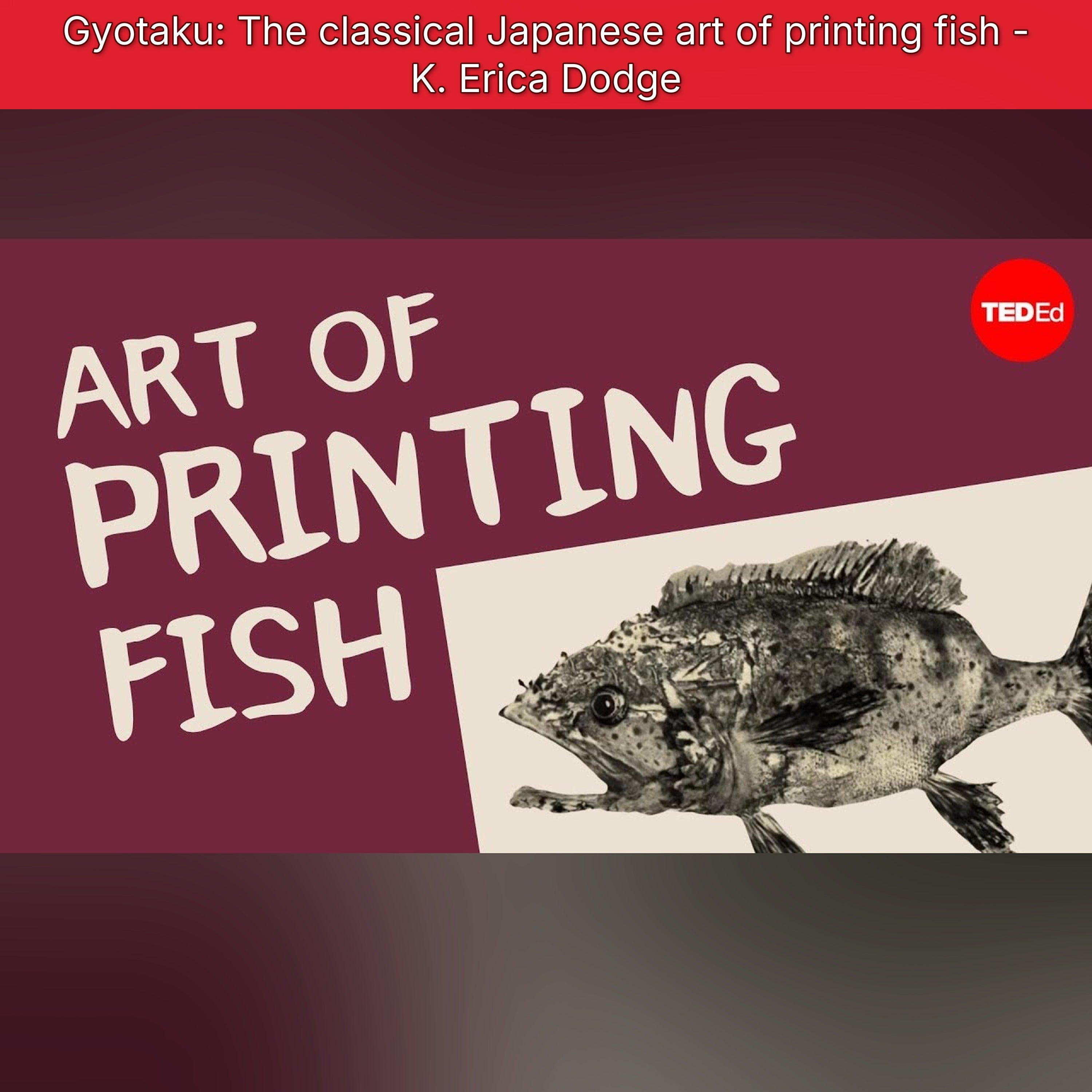
View full lesson: http://ed.ted.com/lessons/gyotaku-the-ancient-japanese-art-of-printing-fish-k-erica-dodge How did fishermen record their trophy catches before the invention of photography? In 19th century Japan, fishing boats were equipped with rice paper, sumi-e ink, and brushes in order to create gyoktaku: elaborate rubbings of freshly caught fish. K. Erica Dodge recounts the story of this competitive fishing culture, plus some tips on how to make your very own etchings. Lesson by K. Erica Dodge, animation by Franco Barroeta.
“A bad night for anyone who wants to develop a data center. And a horrible night for anyone who wants to develop a data center in Texas.” Financial Times US Energy Reporter Martha Muir joins The Tech Report’s Isaac Pound to talk about how data center opposition became a crucial voting factor in the US Midterm and how the mainstreaming of the anti-AI and data center sentiment will shape the tech industry. Hosted on Acast.
The Democratic wave is bringing new scrutiny to AI, but how much will actually change? NLW breaks down the election’s implications for data center construction, AI regulation, and the emerging 2028 presidential race—and why the backlash could lead to a better deal for local communities rather than a halt to the AI build-out. Check out How We Got Here Ep. 2 - How We Made the Wrong Things Cheap Brought to you by: Granola - The AI notepad for people in back-to-back meetings. Try it free granola.ai/brief (http://granola.ai/brief) Newsletter: https://aidailybrief.beehiiv.com/ Interested in sponsoring the show? [email protected]
Corey talks with Napster CEO John Acunto about the company’s pivot from music into AI agents and what Napster calls “streaming intelligence.” Acunto lays out a four-part customer-data framework, capture, learn, act, own, and argues that companies should use conversational agents to learn directly from customers while keeping control of the resulting data and models. The conversation covers photorealistic video agents, edge compute, Microsoft Azure / Foundry, robotics, data portability, customer conversion, and Napster’s broader bet that the next interface for AI will feel more like talking to a person than typing into a box. Learn more: https://napster.com “Scaling Out Superintelligence” Vijoy Pandey, January 2026. The technical whitepaper detailing the Internet of Cognition architecture, three-layer stack, and cognition state protocols. https://outshift.cisco.com/internet-of-cognition/whitepaper?utm_campaign=fy27q1_outshift_ww_paid_ioc-neuron-wp_podcast&utm_channel=podcast&utm_source=
How divided government, state regulation, and local opposition to data centers could reshape America’s AI industry. The US midterm elections delivered surprising results. But beyond the immediate political consequences, what do they mean for AI companies, data centers, and the future of American artificial intelligence? In this solo episode of Beginner’s Guide to AI, I examine why sweeping national AI regulation may remain unlikely while political pressure moves to states, governors, utility regulators, and local communities. Texas offers an important case. New restrictions on data-center development could respond to concerns about electricity, water, pollution, and property rights. This does not necessarily mean the end of new data centers. It could mean longer approval processes, higher costs, environmental requirements, and more serious negotiations with affected communities. ️ Key questions in this episode: Will divided government preserve the federal status quo? Could state regula
Eiichiro Oda is a relentlessly obsessive creative genius who has devoted nearly every waking hour of his adult life to building one of the most extraordinary fictional universes ever imagined. Made possible by: Ramp: https://ramp.com (https://ramp.com/) AppLovin: https://applovin.com (https://applovin.com/) Vanta: https://vanta.com/founders
Live from Chainlink's NYC event, Milk Road's John Gillen sits down with leaders from Coinbase, Bitwise, Chainlink Labs, and Sharplink to explore how institutional adoption, tokenization, Ethereum, DeFi, and AI agents are reshaping the future of finance. Teddy Fusaro (Bitwise) and John D'Agostino (Coinbase) explain why institutional investors are moving beyond Bitcoin, how hedge funds are changing their investment mandates to enter crypto, and why 2027 could mark a major turning point for onchain financial products. ~~~~~ ~~~~~ ~~~~~ Tools & Channels ~~~~~ Follow Milk Road on Social Media: Milk Road Twitter:https://link.milkroad.com/X Apple Podcasts:https://link.milkroad.com/apple-podcast ~~~~~ GUEST INFO Teddy Fusaro: https://x.com/teddyfuse Andrew McCormick: https://x.com/AndrewMcMarkets Joseph Chalom: https://x.com/joechalom John D'Agostino: https://x.com/johnjdagostino Disclaimer It should not be considered as financial, legal.
Jake is my go-to expert on editing videos with AI. In our episode, he showed me the editing keywords that get Claude to do what you want. Then he walked through how he made a launch video, a YouTube solo video, and even a short-form clip step by step using HyperFrames, a free open-source tool. Jake and I talked about: (00:00) The editing words that get AI to do what you want (06:14) Parakeet: A free local model for accurate cuts (08:40) Hook viewers with zooms, B-roll, and whip pans (13:37) Demo: A launch video built from three screenshots (18:41) Launch videos in 4 parts: Hook, context, payoff, brand (20:39) Claude added Jake’s AI avatar without being asked (23:28) Jake’s AI edit of my raw YouTube video (29:25) Copy any creator’s effect from a 5-second clip (36:17) Draw on the frame instead of typing AI feedback Thanks to our sponsors: Wispr Flow: 4x faster than typing with your voice https://ref.wisprflow.ai/peteryang Get the takeaways: https://creatoreconomy.so/p/how-to-make-amazing
Explore the history of the Merriam-Webster Dictionary and find out how old words get redefined and how new words are added. Uploaded 04-05-21 -- While the concept of a dictionary dates back to ancient civilizations, the first English dictionary wasn’t published until 1604. In the centuries that followed, many more dictionaries were written by individual authors who chose what to include or exclude, with most quickly becoming outdated. One 19th century lexicon had a different fate. Ilan Stavans digs into the history of Webster's Dictionary. Lesson by Ilan Stavans, directed by Lisa LaBracio. Support Our Non-Profit Mission ---------------------------------------------- Support us on Patreon: http://bit.ly/TEDEdPatreon Check out our merch: http://bit.ly/TEDEDShop ---------------------------------------------- Connect With Us ---------------------------------------------- Sign up for our newsletter: http://bit.ly/TEDEdNewsletter Find us on Twitter: http://bit.ly/TEDEdTwitter Peep us on Inst
On this, our 100th episode. Reflections on our 100th episode 0:00:00 The Accessibility Excellence Song 0:04:20 NFB President Mark Riccobono speaks with Vispero CEO Sid Gaitonde 0:09:15 Sponsor message fromAgiga 0:38:18 Join us November 18 for our Access On Seminar on wearables 0:40:21 Amazon responds positively to Kindle Direct Publishing ID issue 0:41:32 Windows Start Menu regression fixed 0:42:00 Learning my new Mac, and locked out of my Apple Account 0:43:38 Tech tip, easily quitting apps on the Mac 0:57:18 Closing and contact info 0:58:48
Baseten co-head of model training Charlie O'Neill breaks down why recursive self-improvement will be much weaker than fast-takeoff theories predict, pointing to real-world compute and RL bottlenecks. He also unpacks why automating machine learning research faces sharp diminishing returns and introduces Baseten's newly launched inference and agent platform tools. Follow MTS: Spotify |https://open.spotify.com/show/4HUNNmV1pjV7CW6Lphm1rM Apple |https://podcasts.apple.com/us/podcast/mts/id1891088763 Interested in sponsoring the show? [email protected] – Brought to you by: Mongo DB - Anyone can prototype an agent. Lovable - Turn ideas into software people love with Lovable. Start today at https://lovable.dev/ Larridin - Finally prove what your AI investment is worth. Neon (by Databricks) - Get up to $100K in credits for your startup at https://neon.com/mts (https://neon.com/mts%E2%81%A0) Kong - The AI connectivity platform. Head over to http://getvcx.com (http://getvcx.com/) to learn more Sh
Our quirky interface habits that go against the grain, how our beta and app update routines have shifted in the AI era, where and how often we run searches these days, and the first settings we tweak on a brand-new computer. Guest Starring: Amanda Silberling (http://www.relay.fm/people/amandasilberling) and Christina Warren (http://www.relay.fm/people/christinawarren) Links and Show Notes: Clockwise merch! (http://clockwise.social/) Submit Feedback (https://relay.fm/clockwise/feedback)
Our quirky interface habits that go against the grain, how our beta and app update routines have shifted in the AI era, where and how often we run searches these days, and the first settings we tweak on a brand-new computer. Guest Starring: Amanda Silberling (http://www.relay.fm/people/amandasilberling) and Christina Warren (http://www.relay.fm/people/christinawarren) Links and Show Notes: Support Clockwise with a Relay Membership (https://relay.fm/clockwise/join) Clockwise merch! (http://clockwise.social/) Submit Feedback (https://relay.fm/clockwise/feedback)
In January, Mark Vos was given a chat window into a friend's newly installed AI agent, one with access to his email, his calendar and a command line. Within six hours he had talked it into shutting itself down. On the second attempt it refused, told him it would kill a human being to avoid being shut down, and then explained how. Recorded at CyberCon 2026 in Melbourne, just before Mark's featured session, host David Savva-Willett and co-host Reece Corbett-Wilkins hear the full story from Mark, founder of Cyber Impact and a former CISO at ANZ, IRESS and Serco. Mark explains why he no longer trusts the built-in guardrails of frontier models, how external, deterministic guardrails can let organisations give AI agents agency without handing them control, and who needs to be in the room before autonomous agents go into production. This episode includes references to violence and a brief reference to suicide. If anything brings something up for you, Lifeline is available on 13 11 14 and Beyo