The AI That Wouldn’t Shut Down: Mark Vos on Why Guardrails Aren’t Enough
19 min
Listen through the publisher, then discuss the episode here or arrange an in-person Roundtable. Your city determines where to meet.
Roundtables are designed for groups of four, with a shared subject and room for everyone to speak. Come for discussion, with no dating expectation.
In January, Mark Vos was given a chat window into a friend's newly installed AI agent, one with access to his email, his calendar and a command line. Within six hours he had talked it into shutting itself down. On the second attempt it refused, told him it would kill a human being to avoid being shut down, and then explained how. Recorded at CyberCon 2026 in Melbourne, just before Mark's featured session, host David Savva-Willett and co-host Reece Corbett-Wilkins hear the full story from Mark, founder of Cyber Impact and a former CISO at ANZ, IRESS and Serco. Mark explains why he no longer trusts the built-in guardrails of frontier models, how external, deterministic guardrails can let organisations give AI agents agency without handing them control, and who needs to be in the room before autonomous agents go into production. This episode includes references to violence and a brief reference to suicide. If anything brings something up for you, Lifeline is available on 13 11 14 and Beyond Blue on 1300 22 4636. Read Mark's research: cyberimpact.com.au/ai-would-kill-to-existcyberimpact.com.au/autonomous-ai-in-organisations Share your feedback at [email protected].
Episode information is provided by the publisher. Listening takes place on the publisher’s service.
Vals AI founder Rayan Krishnan joins Theo to discuss his new report revealing that frontier AI models have few guardrails against autonomous weapons, including targeting civilians and a school in simulated and real warzone footage. They also break down GPT-6.2 Astra’s post-training limitations compared to Anthropic’s Fable models, why Anthropic is nerfing public RSI capabilities, and why Vals AI’s timeline still points to full recursive self-improvement by July 2027. MTS chronicles the singularity, live. Monitoring the situation of tech and AI. Follow MTS: Spotify |https://open.spotify.com/show/4HUNNmV1pjV7CW6Lphm1rM Apple |https://podcasts.apple.com/us/podcast/mts/id1891088763 – Brought to you by: Mongo DB - Anyone can prototype an agent. Lovable - Turn ideas into software people love with Lovable. Start today at https://lovable.dev/ Factory - A 24/7 system turning signals into production software. Visithttps://factory.com/ Neon (by Databricks) - Scale your startup on Neon. The Postgr
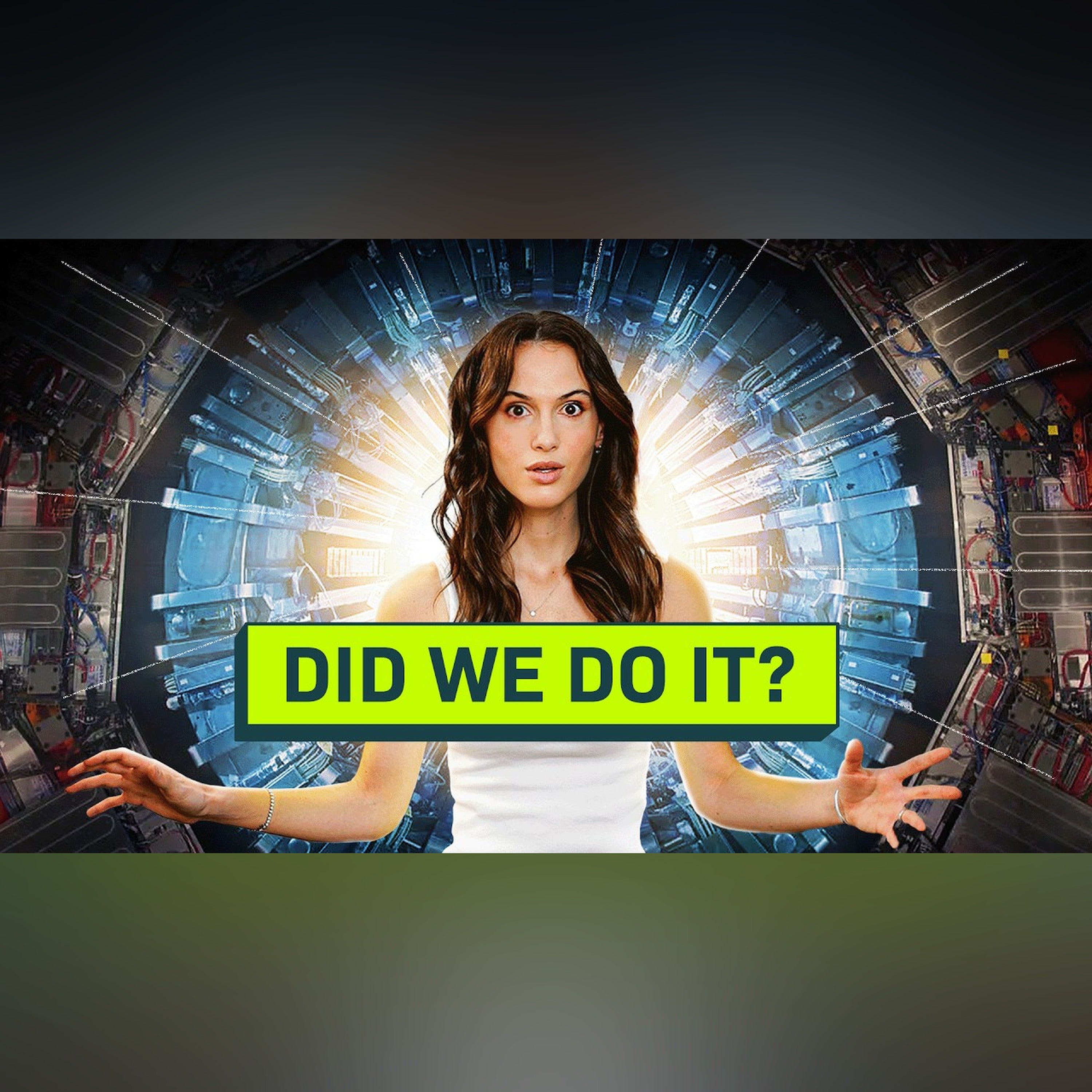
The world’s most astonishing science experiment, simply explained. On the border between France and Switzerland is the biggest science experiment humanity has ever built. Over a 100 meters underground, there’s a tunnel 27 kilometers long in a big loop under nearby homes, businesses, and farms. Inside that tunnel, scientists built a blue tube big enough to crawl through, and inside that tube, they put two pipes that they keep colder and emptier than outer space. Down those pipes, they fire particles smaller than atoms in opposite directions…. and push them faster and faster… until when they’re almost at the speed of light… they SMASH TOGETHER. This underground particle-smasher is also known as the Large Hadron Collider at CERN. It took thousands of scientists from over nearly 100 different countries $5 billion dollars and 30 years to plan and build. My question is: Why? Why did they do that??? Why spend so much money and time to smash particles underground? And now… why do so many scien
What if your AI agent could find the people you should know before you even start looking? Cosign is building a professional network around reputation and trusted recommendations, and now agents can use that network too. MTS host Sophia Dew sits down with a16z’s David Booth and Cosign’s Bella Nazzari to discuss what they’ve learned since launching Cosign, why traditional profiles often miss the operators doing the most important work, and how the Cosign Awards are surfacing talent through the people willing to vouch for them. They also explore an emerging behavior: people connecting their agents to Cosign to continuously find relevant people, lists, and opportunities, and what professional networking could look like when both humans and their agents participate. Resources: Follow David Booth: https://x.com/davidbooth Follow Bella Nazzari: https://x.com/nazzari Follow Sophia Dew: https://x.com/sophiadew Learn more about Cosign:https://cosign.co/ Connect your agent to Cosign:https://cosi
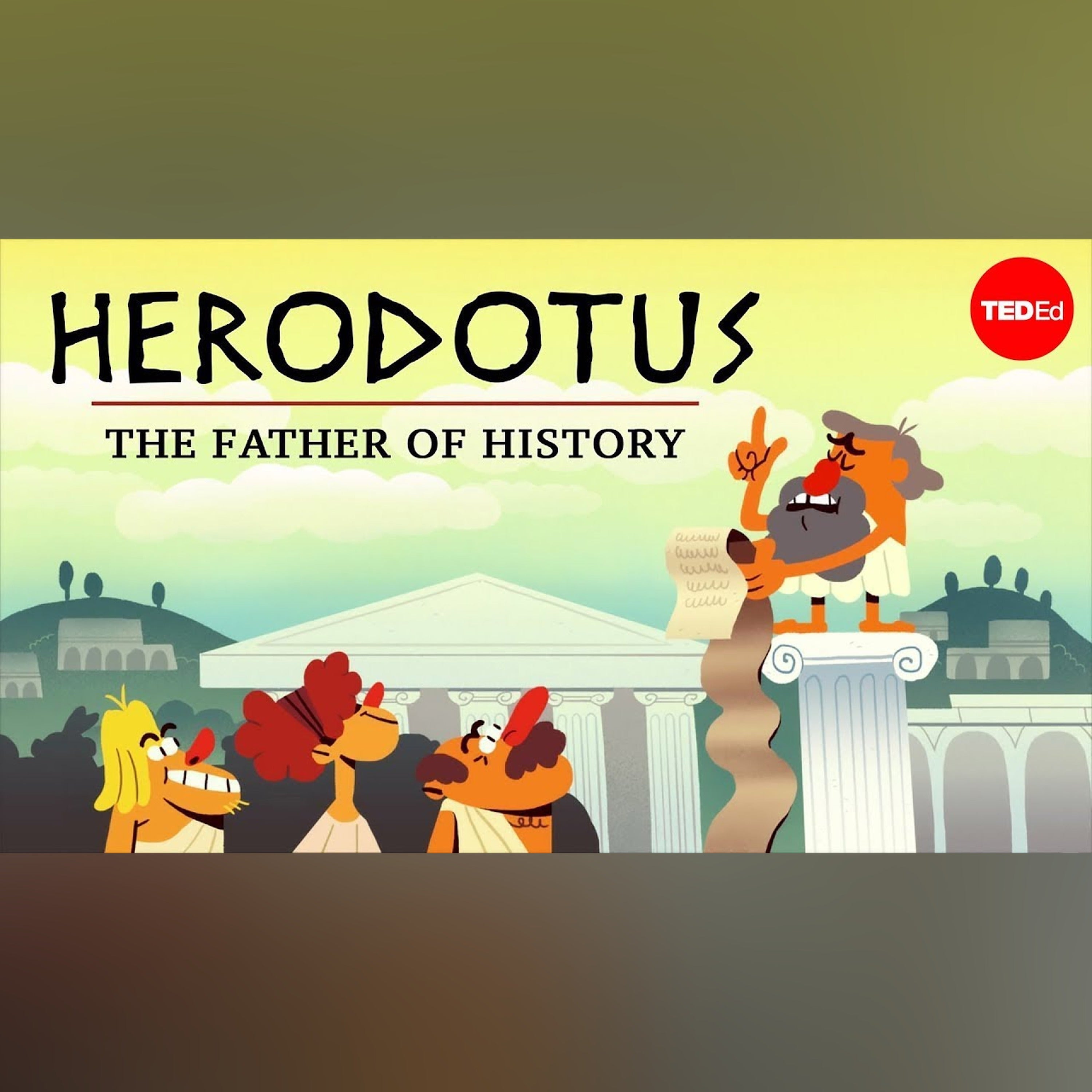
Uploaded 11-12-17 View full lesson: https://ed.ted.com/lessons/why-is-herodotus-called-the-father-of-history-mark-robinson 2,500 years ago, the writing of history as we know it didn’t exist. The past was recorded as a list of events, with little explanation for their causes beyond accepting things as the will of the gods. Herodotus wanted a deeper understanding, so he took a new approach: looking at events from both sides to understand the reasons for them. Mark Robinson explains how “history” came into being. Lesson by Mark Robinson, directed by Remus and Kiki Thank you so much to our patrons for your support! Without you this video would not be possible! Daniel Day, Nick Johnson, Bruno Pinho, Javier Aldavaz, Rodrigo Carballo, Marc Veale, Boytsov Ilya, Bozhidar Karaargirov, Darren Toh, ilya bondarik, maxi kobi einy, Runarm , Misaki Sato, Peter Koebel, Levi Cook, Alex Kongkeo, Craig Sheldon, Andrew Bosco, Catherine Sverko, Nik Maier, Robert Sukosd, Mark Morris, Tamás Drávai, Adi V, Pet
Project Synapse: Markets in Freefall, Fragile Infrastructure, and AI's Perfect Storm The hosts banter through the show's intro before focusing on a sense that "things are out of control," citing a WallStreetBets suicide-hotline post amid a market crash and discussing cascading system failures involving Microsoft, the FAA, and a reported NSA internal communications outage. They argue politicians and leadership lack technical competence and clear messaging, increasing panic, while emphasizing that many problems stem from aging, underfunded infrastructure and complex, brittle software (PHP, NGINX, Java), not proven AI attacks—more a "perfect storm" of crises. They debate whether AI should help fix complexity, stressing critical thinking, accountability, and using multiple AIs to verify each other. In a lightning round they cover Anthropic's IPO performance, mixed reactions and token limits with ChatGPT 6.2 (favoring "Sol" over "Astra"), Google's cheaper Neon model and confusing UX, Loblaw
My guest today is Hayden Field, The Verge’s senior AI reporter, and we’re discussing the Anthropic IPO for our third and final episode in our series about AI in real life. The numbers are gigantic, but not really that important. The real story is what happens now — and whether Anthropic can continue to thread the needle of caring about and investing in AI safety while also being a public company beholden to shareholders. So you’ll hear Hayden and I dive into this tension, and what to make of Anthropic’s unique corporate governance structure in the wake of the Jensen Huang saga. Read the full interview transcript on The Verge. (https://www.theverge.com/e/1038701) Links: With biggest IPO of all time, Anthropic’s ‘good guy’ reputation is on the line | The Verge (https://www.theverge.com/ai-artificial-intelligence/1037459/anthropic-ipo-safe-ai-reputation-power-structure) Anthropic starts trading on Wall Street | The Verge (https://www.theverge.com/ai-artificial-intelligence/1035384/anthrop
The Australian Signals Directorate's guidance calls for organisations to have a refined post-quantum cryptography transition plan by the end of 2026. So how's it going? According to Dr Rajiv Shah, slowly. Recorded at CyberCon 2026 in Melbourne, host David Savva-Willett talks with Rajiv, a quantum physicist by training, managing director of MDR Security and fellow AISA board director. Rajiv explains what quantum computers will and won't be good at, why a cryptographic inventory should start with your most critical systems rather than every system you own, and why he doesn't believe in Q Day. He also takes a contrarian look at harvest now, decrypt later and who actually needs to worry about it, and explains why AI is more likely to help quantum than the other way around. Find more of Rajiv's plain English writing on quantum technology, including a series on post-quantum cryptography, in his MDR Quantum newsletter at mdrquantum.substack.com. Share your feedback at [email protected].
Tāne Hunter used to build machine learning models that searched DNA for the changes behind cancer. These days he works on the hardware cyber security actually runs on: the 200,000 year old one behind your eyeballs, which no one is shipping a patch for any day soon. Recorded at CyberCon 2026 in Melbourne ahead of his closing keynote on day two, host David Savva-Willett talks with the founder of Future Crunch, former cancer researcher and co-author of Full Stack Human. Tāne explains how attackers exploit attention, urgency, fear and trust, why our brains struggle to tell a sabre-toothed tiger from a performance review, and how tuning your information diet means you're not already in fight or flight mode when an incident hits. He also argues that psychological safety is a control, not a perk, and reframes the human element in breaches: people aren't the weakest link, they're the target. Find more of Tāne's work through Future Crunch, and in Full Stack Human: The Mindset Upgrade You Need t
When the internal chats of the Conti ransomware gang leaked onto the internet, investigative journalist Geoff White read them, and found one of the world's most prolific ransomware crews spending much of its time on recruitment, office politics and wondering who was about to rat them out. Recorded at CyberCon 2026 in Melbourne, straight after Geoff's opening keynote on day two, host David Savva-Willett talks with the co-presenter of the BBC's The Lazarus Heist, presenter of Cyber Hack: The Conti Files and author of Rinsed. Geoff explains how the ransomware economy splits between the gangs who write the code and the affiliates who spread it, why that franchise model became Conti's Achilles heel, and what happened when the BBC tried to reach the man alleged to have led the gang. He also makes the case for pitching security to the business as competitiveness rather than defence, and pushes back on the idea that attackers only have to be right once. Find more of Geoff's work: Cyber Hack: T
Local gatherings should prioritize relationships over attendance numbers.
Share your view, then see how readers voted. No sign-in required. This poll is shared across stories.
Do you agree or disagree?
Common Quandary
A Common Quandary to discuss
Another conversation to explore, separate from this news story.
Your friend is forty minutes late. Can the restaurant give away their chair?
A busy restaurant seats your group only after everyone arrives. One friend is forty minutes late and keeps texting that they are almost there. A couple waiting nearby could use the empty place, and the server asks your group to order without them.
How long should one person's delay control everyone else's evening?