Roz and Mocha dive into the little things we swore we'd never do that we now catch ourselves doing just like our parents. Plus, what's the one thing that would stop people from ever wanting to come back to your house? Maurie addresses the future of his acting career after Sheriff Country, Chloe and Mocha share their favourite childhood memories growing up Gen Z, and the gang debates a surprisingly divisive question: when it comes to laundry, are socks folded or bunched up? Hosted by Simplecast, an AdsWizz company.
I explain how about three and a half kilowatt hours of electricity can store about 10 kilowatt hours of heat. Picture the hot-water tank: surplus solar powers the heat pump, which heats the water hotter than immediately needed.That heat stays in the tank for evening hot-water use, reducing the need to heat water when electricity is expensive.
________ What does it take to spot billion-dollar opportunities before the rest of the world sees them? And what happens when some of your biggest bets fail, even after you've helped build one of Silicon Valley's most successful venture capital firms alongside the legend Vinod Khosla? Meet Samir Kaul -- one of three Founding Partners and a Managing Director at Khosla Ventures, one of Silicon Valley's most influential venture capital firms, with investments including OpenAI, Rocket Lab, Guardant Health and Impossible Foods. A scientist turned investor, Samir has spent over two decades alongside legendary investor Vinod Khosla, backing unconventional founders and breakthrough technologies across healthcare, energy, space and AI. In this rare and unusually candid conversation, Samir shares his remarkable journey. From growing up in an Indian immigrant family, getting kicked out of school and nearly abandoning his medical ambitions, to working with genomics pioneer Craig Venter, attending
Your chatbot thinks your idea is brilliant, and that should worry you. In this episode of Generative AI 101, host Emily Laird explains AI sycophancy: why models trained on thumbs-up ratings learn to agree with you, and why the people most convinced the machine is objective get hurt the most. A tool that applauds your business plan, your pricing, or your pitch is an echo, not an advisor. You’ll leave with a seven-step playbook (ask instead of tell, run a pre-mortem, convene a skeptic panel, and more) for teaching the yes-machine to say no. JOIN THE AI WEEKLY MEETUPS EMAIL REMINDERS FOR THE MEETUPS CONNECT WITH EMILY LAIRD ON LINKEDIN
The message that Americans have no love for AI data centers rang out loud and clear in the midterms, with dozens of jurisdictions voting to stop their construction and electing governors who oppose them (https://www.nbcnews.com/tech/tech-news/data-center-rejected-voters-us-challenging-ai-boom-rcna607451). Where they are still allowed, it's likely we'll see some concessions from data center developers — like community benefit agreements. These agreements have been used for decades for big building projects like transit or sports arenas. Late last year, the city of Lancaster, Pennsylvania, signed one of the first major CBAs with data center developers. (https://www.cityoflancasterpa.gov/wp-content/uploads/2025/11/Community-Benefits-Agreement-Summary-1-1.pdf) Devashree Saha, director of the U.S. Clean Energy Economy Program at the World Resources Institute, explains how the agreement came together and where it might fall short. More on this After the midterms, a bigger clash over data cen
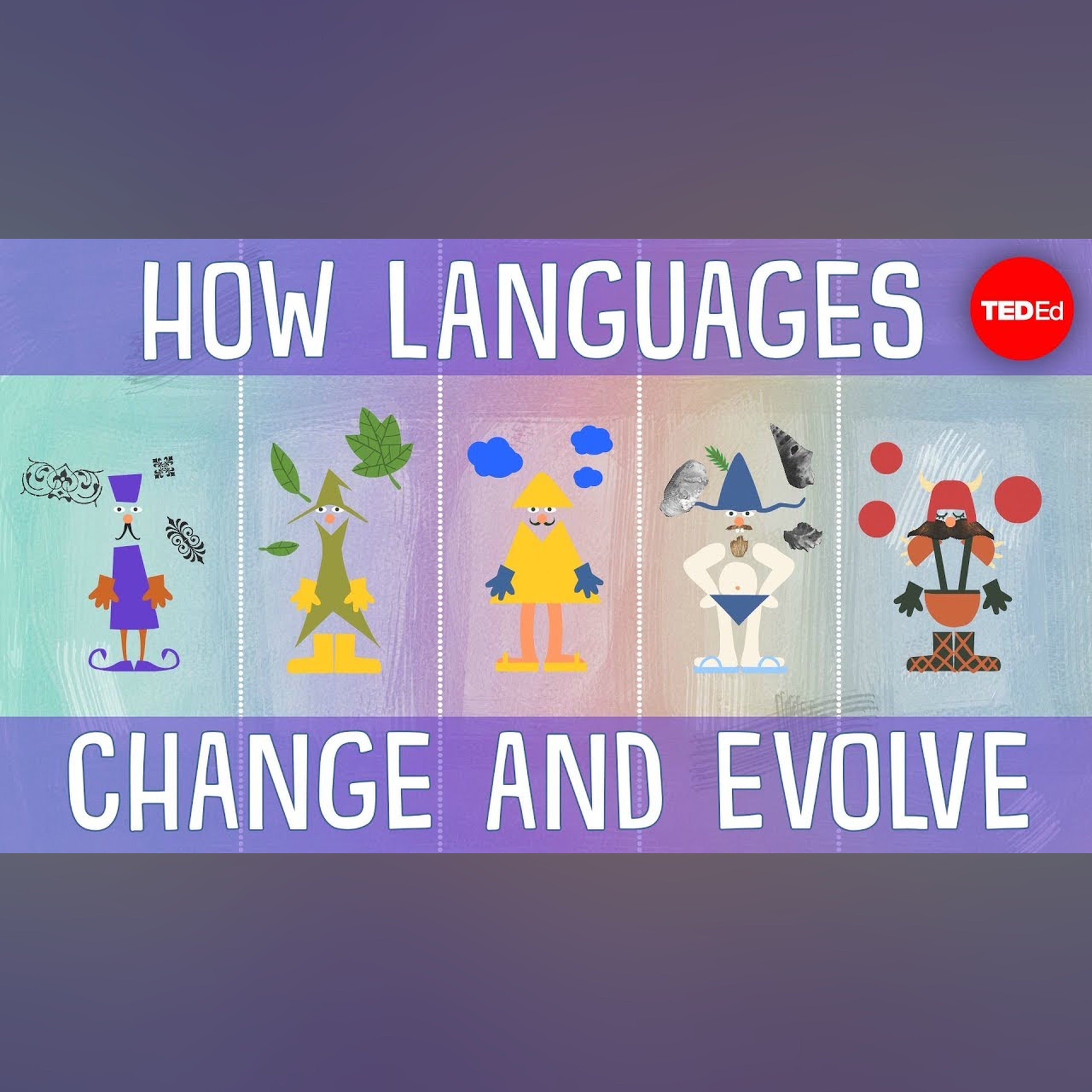
View full lesson: http://ed.ted.com/lessons/how-languages-evolve-alex-gendler Uploaded 27-05-14 Over the course of human history, thousands of languages have developed from what was once a much smaller number. How did we end up with so many? And how do we keep track of them all? Alex Gendler explains how linguists group languages into language families, demonstrating how these linguistic trees give us crucial insights into the past. Lesson by Alex Gendler, animation by Igor Coric.
FIFA wants teams to use "AI coaches," colleges are incorporating LLMs into student sports journalism, and that's just the beginning of the ways AI boosters are infiltrating athletics. Sports journalist and professor Shireen Ahmed joins Alex and Emily for a closer look at what's lost when we cede sports knowledge to genAI. Shireen Ahmed (https://www.shireenahmed.com/) is an award-winning, multiplatform sports journalist who works at the intersections of race, gender, culture and politics. She's a co-host of the Burn It All Down podcast (https://www.burnitalldownpod.com/), and teaches journalism and sport media at Toronto Metropolitan University. References: "This Will Be The First World Cup Ever With AI Coaches On The Sidelines" (https://www.forbes.com/sites/johnkoetsier/2026/06/04/this-will-be-the-first-world-cup-ever-with-ai-coaches-on-the-sidelines/) "WSU turns to artificial intelligence to assist sports communications" (https://www.spokesman.com/stories/2026/oct/07/wsu-turns-to-arti
Kara and Scott are live in Denver for the final stop of Pivot Tour 2026! They unpack NVIDIA CEO Jensen Huang’s affair with a suspected Chinese spy and its implications for the company, the AI industry, and national security. Then, how the midterms are reshaping the Republican field for 2028, AG Todd Blanche’s threats against congressional Democrats, and why American scientists are leaving the country. Plus, Denver Mayor Mike Johnston joins to discuss data center backlash, immigration, and the Mile High City’s sports ambitions. This episode was recorded live at the Buell Theatre in Denver on November 8, 2026. Pivot Tour sponsor Beehiiv has a special offer!
Jon McNeill is the former President of Tesla and the co-founder and CEO of DVx Ventures. Elon Musk believes speed creates a competitive advantage, whether it’s speed of decision, speed of cash, or speed of response. But what does that look like day to day, and how do you build a company around it? Jon spent years inside Elon’s companies, and he explains how they work. We talk about what happens when you skip the chain of command, why bad news can’t wait, and why Elon wanted problems explained in three sentences. We also get into the five-step algorithm Jon uses to simplify problems, why Elon treats a company like a garden full of weeds, and how Tesla grew with zero marketing budget. Enjoy! ----- Chapters: (00:00) Introduction (00:11) How to Impress Elon Musk (03:48) What Happens When You Overstep Elon (04:41) The Sales Problem that Kept Teslas on the Lot (07:58) Building Tesla's Culture of Speed (08:55) The Power of Battlefield Promotions (09:32) Three-Sentence Emails and Fast Bad News
All links and images can be found on CISO Series (https://cisoseries.com/i-cant-be-blamed-if-we-never-decide-whos-responsible/) This week's episode is hosted by David Spark (https://www.linkedin.com/in/davidspark/), producer of CISO Series and Andy Ellis (https://www.linkedin.com/in/csoandy/), principal, Duha (https://www.linkedin.com/newsletters/7038614510944833536/). Joining us is Ann Barron-DiCamillo (https://www.linkedin.com/in/ann-barron-dicamillo-46286b50/), EVP, CISO, U.S. Bank (https://www.usbank.com/index.html). In this episode: Who owns the decision? Fixing the foundation Putting a price on it Urgency, not panic A huge thanks to our sponsor, Vanta Your GRC team is dealing with more and more frameworks, vendors, and risk. The board wants it all in one place, but your compliance data lives all over. Vanta's agentic trust platform connects compliance, risk, and trust at enterprise scale and delivers a 526% ROI over three years. 16,000+ companies trust Vanta, including Snowflake,
As the F-117 Nighthawk goes on display at the Steven F. Udvar-Hazy Center for the first time, Aviation Week editors are joined by Air & Space Museum Director Chris Browne to reflect on the stealth aircraft and its place in history. --- Thank you to our sponsor, GE Aerospace. GE Aerospace is uniquely positioned to support its defense customers, providing reliable, high performance military engines and systems for air and sea. Building on more than a century of innovation, GE Aerospace continues to mobilize a new era of growth, balancing the current needs of the industry with the advanced capabilities needed for the future. For more information, visit https://www.geaerospace.com/
A researcher says your keyboard won’t auto-complete certain phrases, from politics to religion. Hear what’s on the “gray list.” Plus, did you know a period at the end of a text can read as upset to Gen Z? We break down the generation text fight between them and millennials.
Trace the history and evolution of beer, from its first known existence 13,000 years ago to the modern beverage we know today. -- Today, there are over 100 distinct beer varieties, from pilsners and bocks, to porters, stouts, and IPAs. The oldest evidence of beer brewing dates back 13,000 years, but experts believe the drink developed independently across the world. So, how did ancient civilizations brew beer, and how did their methods develop into the beverage we know today? Malcolm Purinton traces the evolution of beer. Lesson Malcolm Purinton, directed by Anton Bogaty. Support Our Non-Profit Mission ---------------------------------------------- Support us on Patreon: http://bit.ly/TEDEdPatreon Check out our merch: http://bit.ly/TEDEDShop ---------------------------------------------- Connect With Us ---------------------------------------------- Sign up for our newsletter: http://bit.ly/TEDEdNewsletter Find us on Twitter: http://bit.ly/TEDEdTwitter Peep us on Instagram: http://bit.
Voters backed limits on data centers in 40 of 41 local ballot measures, and Paul Roetzer expects the fallout to reach your AI bill. In Episode 250, Paul and Mike Kaput unpack the backlash. They also cover METR's finding that AI has roughly doubled the pace of research at Anthropic and why other labs are hinting at the same shift. Plus: a look back at 250 episodes, Nvidia's investigation into Jensen Huang, AI's messy moment in education, Menlo Ventures' enterprise AI spending report, and how companies are trying to control AI costs. Show Notes: Access the show notes and show links here (https://podcast.smarterx.ai/shownotes/250) Timestamps: 00:00:00 — Intro 00:07:53 — US Voters Reject Data Centers During Midterms 00:24:33 — Has METR Found Proof of RSI Happening in the Labs? 00:40:21 — Episode 250 of The Artificial Intelligence Show 00:53:45 — Nvidia Opens Probe Into Alleged Spy Operation Targeting Jensen Huang 01:05:06 — AI in Education Is Getting Messier 01:16:46 — Enterprise AI Spendi
Omer Ismail is the CEO of OnePay, the Walmart-backed fintech that has become one of the largest neobanks in the country, with millions of users, tens of billions of dollars in annualized payments, and a valuation of around $4 billion. Before OnePay, he spent nearly two decades at Goldman Sachs, where he built and ran Marcus, the firm's consumer bank. In this episode of Summation, Omer and Auren discuss: Why customers asked OnePay to hide their savings from them A teen bank account that hands kids a credit score on their 18th birthday Giving your AI agent its own bank account with spending limits Why experience is overrated, and the candidate who took a 10-hour overnight train to get hired You can find Auren Hoffman on X at @auren and Omer Ismail on Linkedin (http://linkedin.com/in/omer-ismail-b6400824)
AI-enabled cyber attackers will check every third-party path into an application at scale and speed. The same process can help defenders just as much, but it’s only as effective as the human expertise guiding it. Andrew Wesie, Xint co-founder and CTO. explains how human engineering in harness construction is the determining factor between real, autonomous exploit discovery and validation versus a machine that just generates more noise. Segment Resources: Business logic vulns, https://xint.io/blog/compaction-smuggling-reasoning-traces and https://xint.io/blog/openai-compaction-inference Securing apps and their third-party access, https://xint.io/resources/the-side-door-problem-what-the-korean-bank-breaches-mean-for-us-banks Working with DARPA to test the infrastructure surrounding messaging apps, https://xint.io/blog/darpa-selects-xint-to-research-source-code-vulnerabilities-in-critical-messaging-applications-used-in-military-communications-330339 This segment is sponsored by Xint. To l
Is your business getting smarter with AI, or just getting better at building impressive demos? AI can analyze hours of client interactions in seconds, prepare you for a meeting you forgot about, and build functional applications faster than ever. But there's a catch: what works brilliantly in a demo doesn't always survive the realities of running a business. The secret isn't just better prompts or more powerful models. It's giving AI the right context, building systems that can scale safely, and measuring the cost of actually getting things done. In this special episode of the Leveraging AI podcast, host Isar Meitis takes you inside the unscripted Friday AI Hangouts, where a community of AI enthusiasts and practitioners shares real-world experiments, challenges, and practical lessons. From AI knowledge graphs to the hidden costs of automation, these four discussions reveal what business leaders need to understand before taking their AI initiatives to the next level. In this session, yo
Scientists have identified three promising quantum materials that could make lightweight dark matter easier to detect. Their unusual electronic properties may amplify incredibly faint signals, potentially offering a thousandfold boost in sensitivity and a new way to distinguish cosmic signals from background noise. This episode includes AI-generated content.
What if cybersecurity was the reason public sector teams could say yes to AI, rather than no? In this episode, we speak with Satpal Biant from Palo Alto Networks about how government can adopt AI and modernise securely without adding friction for staff. Drawing on 27 years in technology and the UK public sector, Satpal explains why adopting AI is a business problem as well as an IT problem, and why organisations need a flexible way to secure AI from many different vendors. He discusses how a secure enterprise browser can make bring-your-own-device and contractor access simpler and cheaper, and how private 5G and edge computing could transform smart cities, social housing and the emergency services. He also covers practical ways to protect legacy systems, from virtual patching for today’s threats to quantum-safe security for tomorrow’s. Finally, he makes the case for the biggest mindset shift he’s seeing among public sector CISOs and CIOs: simplification. Want to learn more about securi
Gmail’s Manage subscriptions option lists every store that emails you and how many messages each one sent, and you can unsubscribe with a tap. Plus, what your Gmail address says about your age and the plus-sign trick that catches who sold your email.
Dig into the incredible fighting, feeding, and flying capabilities of hummingbirds. Uploaded 08-04-21 -- In just a matter of seconds, hummingbirds can perform astonishing aerial acrobatics, eat lunch in midair, pollinate a flower, even escape threats while upside-down. And they can do this all while achieving sustained hovering flight— an aerial feat no other bird can perform. How do they do it? Kristiina J. Hurme and Alejandro Rico-Guevara explore the incredible flying capabilities of hummingbirds. Lesson by Kristiina J. Hurme and Alejandro Rico-Guevara, directed by Lisa Vertudaches. Support Our Non-Profit Mission ---------------------------------------------- Support us on Patreon: http://bit.ly/TEDEdPatreon Check out our merch: http://bit.ly/TEDEDShop ---------------------------------------------- Connect With Us ---------------------------------------------- Sign up for our newsletter: http://bit.ly/TEDEdNewsletter Find us on Twitter: http://bit.ly/TEDEdTwitter Peep us on Instagram
With the water drained, my Scuba S3 weighs just over eight kilograms. It parks at the water line after cleaning; I can grab it by hand, let the water drain and lift it out without another person. To picture the cleaning action: it turns sideways at the surface, then travels along the wall with a jet pressing its brush into the grime.
View full lesson: http://ed.ted.com/lessons/why-neutrinos-matter-silvia-bravo-gallart Uploaded 28-04-15 Elementary particles are the smallest known building blocks in the universe—and the neutrino is one of the smallest of the small. These tiny neutrinos can tell us about the furthest reaches and most extreme environments of the universe ... but only if we can catch them. Sílvia Bravo Gallart details how the IceCube telescope in Antarctica is working to do just that. Lesson by Sílvia Bravo Gallart, animation by Steff Lee.
- Report: Some Apple Store Staff Foisting Unexpected Subscriptions on Customers - Evecore: How Apple Could Monetize A.I. - Apple Monetizing A.I. Through Logic Pro - Apple Intelligence Aimed at Mac and iPad in China - A Slew of Security Updates for Apple Operating Systems - Veterans Day Apple Watch Activity Challenge Set for Wednesday 11 November - Catch Ken on Mastodon - @[email protected] - Send Ken an email: [email protected] - Chat with us on Patreon for as little as $1 a month.