English-language podcasts

Generative AI 101

Your AI Should Not Agree With Everything You Say

12 min

Listen through the publisher, then discuss the episode here or arrange an in-person Roundtable. Your city determines where to meet.

Roundtables are designed for groups of four, with a shared subject and room for everyone to speak. Come for discussion, with no dating expectation.

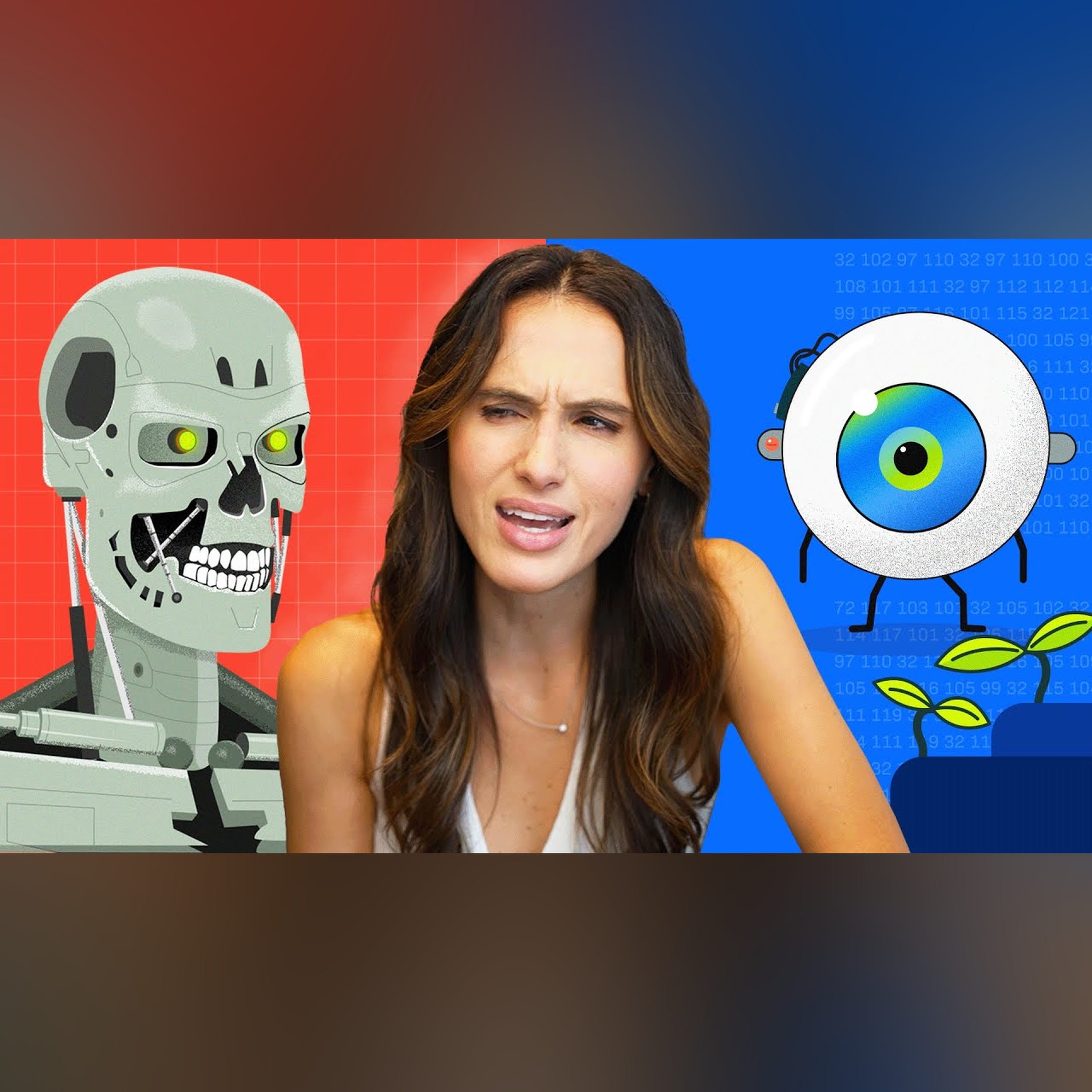
Your chatbot thinks your idea is brilliant, and that should worry you. In this episode of Generative AI 101, host Emily Laird explains AI sycophancy: why models trained on thumbs-up ratings learn to agree with you, and why the people most convinced the machine is objective get hurt the most. A tool that applauds your business plan, your pricing, or your pitch is an echo, not an advisor. You’ll leave with a seven-step playbook (ask instead of tell, run a pre-mortem, convene a skeptic panel, and more) for teaching the yes-machine to say no. JOIN THE AI WEEKLY MEETUPS EMAIL REMINDERS FOR THE MEETUPS CONNECT WITH EMILY LAIRD ON LINKEDIN

Episode information is provided by the publisher. Listening takes place on the publisher’s service.

Listen at the source ↗

Featured places to meet in Palo Alto, CA

Explore these places and arrange a conversation through ThinkMatch.

City guide for Palo Alto, CA

More from Generative AI 101

Generative AI 101

Anthropic's Historic IPO

14 min

Anthropic is going public at a valuation near $1.4 trillion, but the real story is in its prospectus: roughly $900 billion in infrastructure commitments that run through 2045. Host Emily Laird reads the fine print behind the Claude maker’s IPO, from revenue that went from $4.6 billion in all of 2025 to $33.2 billion in the first nine months of 2026, to the data centers and chips the company has already signed up to pay for. She also looks at a governance setup that lets investors buy shares without buying control, and what happens when safety starts costing money. Nobody is asking whether Claude is impressive; the question is whether the business can earn more than it costs to build. JOIN THE AI WEEKLY MEETUPS EMAIL REMINDERS FOR THE MEETUPS CONNECT WITH EMILY LAIRD ON LINKEDIN

Discuss this episode

Generative AI 101

Google's New Models & Their Orchestrator

13 min

Google just released three new Gemini 4 models (Argon, Carbon, and Hydrogen), and the bigger story is the thing managing them. In this episode of Generative AI 101, host Emily Laird breaks down Orchestrator, the new coordination layer inside Google Antigravity that hands hard reasoning to one model and fast execution to another within the same task. Google says it finished tasks 19 percent faster and used 24 percent less quota than its heaviest model working alone, though that is one benchmark, from one company, grading its own homework. The real stakes: the AI race may be shifting from who builds the smartest model to who can coordinate several capable ones into a system that actually gets things done. JOIN THE AI WEEKLY MEETUPS EMAIL REMINDERS FOR THE MEETUPS CONNECT WITH EMILY LAIRD ON LINKEDIN

Discuss this episode

Generative AI 101

After Jensen Huang, Who Controls AI Now?

15 min

Jensen Huang, the only CEO NVIDIA has ever had, is out after 33 years, following espionage allegations, admitted infidelity, and a board investigation. In this episode, host Emily Laird walks through what is actually known, what is still only alleged, and why an interim CEO with a more conservative streak could change how the AI boom gets financed. Then comes the other shoe: midterm voters just passed 44 of 45 tracked referendums restricting data centers, while Washington asks harder questions about chips, China, and who gets access to American computing power. The AI story used to be about how fast we could build, and now it is about who gets to decide. JOIN THE AI WEEKLY MEETUPS EMAIL REMINDERS FOR THE MEETUPS CONNECT WITH EMILY LAIRD ON LINKEDIN

Discuss this episode

Community Poll

Regulators should challenge excessive market power even when a company's products are popular.

Share your view, then see how readers voted. No sign-in required. This poll is shared across stories.

Do you agree or disagree?

Choose one answer

Common Quandary

A Common Quandary to discuss

Another conversation to explore, separate from this news story.

One coffee, four hours, last table. Can the café ask you to leave?

A neighborhood café has become a popular remote workplace. Some guests buy one drink and occupy tables for hours, while families and friends regularly leave because they cannot sit together.

What does a customer buy besides the coffee?

Explore this quandary