#14 Satpal Biant: Making Cybersecurity the Enabler of Yes
25 min
Listen through the publisher, then discuss the episode here or arrange an in-person Roundtable. Your city determines where to meet.
Roundtables are designed for groups of four, with a shared subject and room for everyone to speak. Come for discussion, with no dating expectation.
What if cybersecurity was the reason public sector teams could say yes to AI, rather than no? In this episode, we speak with Satpal Biant from Palo Alto Networks about how government can adopt AI and modernise securely without adding friction for staff. Drawing on 27 years in technology and the UK public sector, Satpal explains why adopting AI is a business problem as well as an IT problem, and why organisations need a flexible way to secure AI from many different vendors. He discusses how a secure enterprise browser can make bring-your-own-device and contractor access simpler and cheaper, and how private 5G and edge computing could transform smart cities, social housing and the emergency services. He also covers practical ways to protect legacy systems, from virtual patching for today’s threats to quantum-safe security for tomorrow’s. Finally, he makes the case for the biggest mindset shift he’s seeing among public sector CISOs and CIOs: simplification. Want to learn more about securing AI and modernising safely? Visit Palo Alto Networks (https://www.paloaltonetworks.com/) or connect with Satpal on LinkedIn.
Episode information is provided by the publisher. Listening takes place on the publisher’s service.
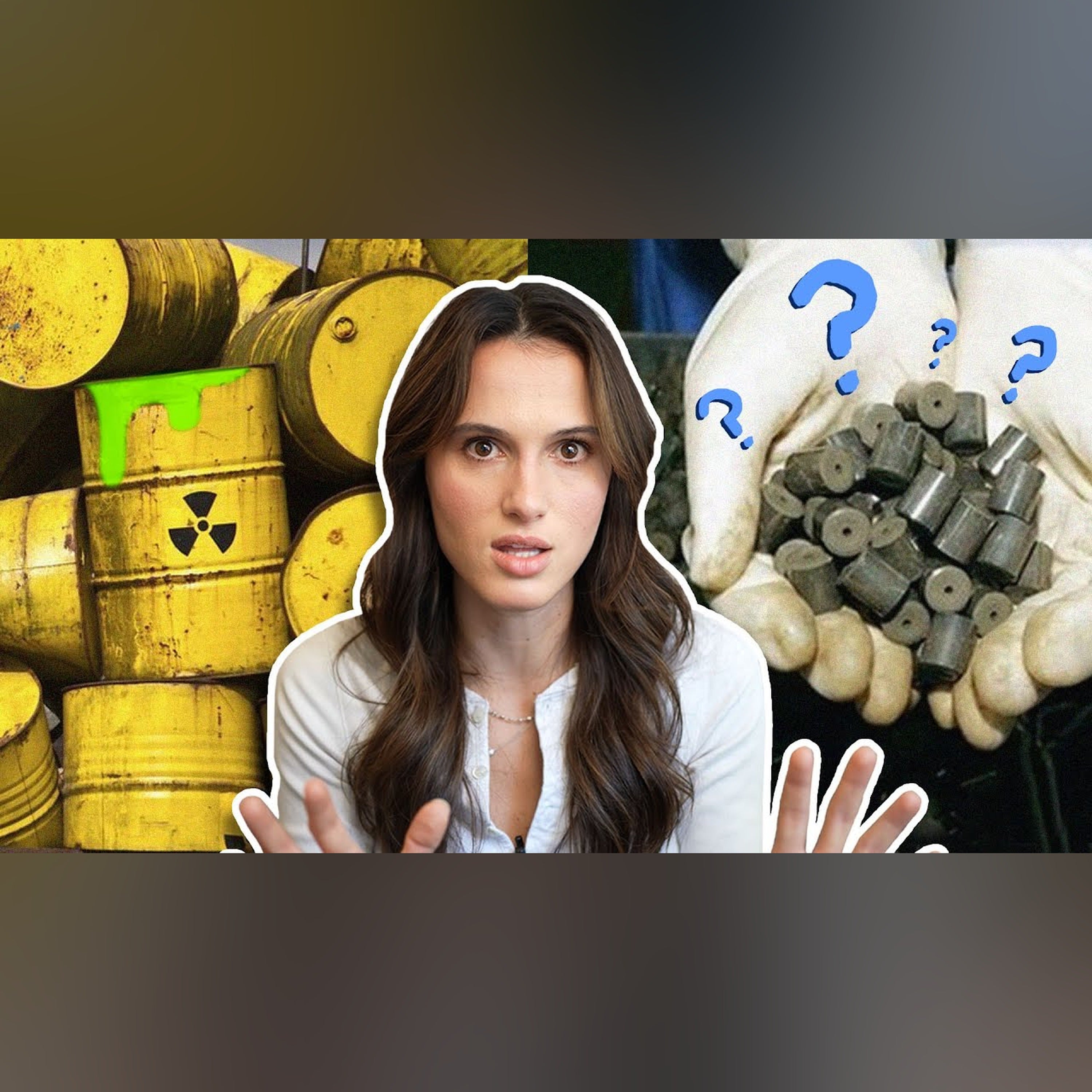
What if we could actually USE nuclear waste? Watch Johnny’s explainer on nuclear power here - and subscribe to his channel! https://youtu.be/QzTgZ6kOEM8 Nuclear waste is scary. Maybe you’ve seen it as glowing green goop in The Simpsons, or as a radioactive threat on the news. Either way, you likely know it has been a major block to the use and improvement of nuclear power. Over the last few decades, experts, politicians and the public have had heated debates over what to do with this radioactive material created by nuclear power plants. But what if there were a way to not just store nuclear waste, but actually USE it? This video is about the effort to make electricity out of nuclear waste. Really. It turns out, we developed the tools to do this decades ago. This story is about a technology we left behind and the people who want to bring it back. For this video, I had the privilege of visiting one of the largest and oldest research centers in the US, the Argonne National Laboratory. I’m
Project Synapse: Markets in Freefall, Fragile Infrastructure, and AI's Perfect Storm The hosts banter through the show's intro before focusing on a sense that "things are out of control," citing a WallStreetBets suicide-hotline post amid a market crash and discussing cascading system failures involving Microsoft, the FAA, and a reported NSA internal communications outage. They argue politicians and leadership lack technical competence and clear messaging, increasing panic, while emphasizing that many problems stem from aging, underfunded infrastructure and complex, brittle software (PHP, NGINX, Java), not proven AI attacks—more a "perfect storm" of crises. They debate whether AI should help fix complexity, stressing critical thinking, accountability, and using multiple AIs to verify each other. In a lightning round they cover Anthropic's IPO performance, mixed reactions and token limits with ChatGPT 6.2 (favoring "Sol" over "Astra"), Google's cheaper Neon model and confusing UX, Loblaw
Explore the fallout from the failed Biden-Elon deal and its implications. We delve into Frank Bisognano's surprising move to the Social Security Administration. Discover how his private sector experience could revolutionize SSA systems and improve public service. Stay informed on the latest political and economic developments! #BidenElonDeal #FrankBisognano #SocialSecurity #SSA #GovernmentTech #PoliticalAnalysis #EconomicNews #TechIndustry #PublicService #FinancialInnovation
Zvi does the reading on OpenAI’s system card for GPT-6.2 Astra and Sol: the first externally deployed model to meet OpenAI’s High threshold for AI self-improvement, already at Critical for cybersecurity. He works through the preparedness results, the safeguards against misuse, distillation and model escape, and the alignment and monitorability findings, including rising evaluation awareness, reasoning that happens without visible chain of thought, and UK AISI’s tour of misaligned behaviours, asking what the numbers do and don’t show. This has been an Askwho Casts audio conversion. Thanks for listening. * 00:00 - Introduction * 01:10 - Table of Contents * 02:45 - Safety Overview (1) * 05:19 - Internal Deployment (1.2) * 05:32 - Preparedness Assessment (2) * 06:40 - Biological Threats (2.1.1) * 09:55 - Cyber Threats (2.1.2) * 11:36 - AI Self-Improvement Threats (2.1.3) * 14:32 - OpenAI Epoch Capabilities Index (OECI) * 16:10 - Safeguards (2.2) * 17:34 - AI Self-Improvement Threat Modelin
Uploaded 14-12-17 View full lesson: https://ed.ted.com/lessons/how-your-digestive-system-works-emma-bryce Across the planet, humans eat on average between 1 and 2.7 kilograms of food a day, and every last scrap makes its way through the digestive system. Comprised of ten organs covering nine meters, this is one of the most complicated systems in the body. Emma Bryce explains how the different parts of the digestive system work to transform your food into the nutrients and energy that keep you alive. Lesson by Emma Bryce, animation by Augenblick Studios. Thank you so much to our patrons for your support! Without you this video would not be possible! Narat Suchartsunthorn, Joy Love Om, Gi Nam Lee, Shawn Quichocho, Simone Kidner, Anika Westburg, Dale Dualan, Barun Padhy, John Ess, Brandy Jones, Devin Harris, Tony Trapuzzano, Stephen Michael Alvarez, Tom Lee, Juliana , Jason Weinstein, Hoang Ton, Kris Siverhus, Alexander Walls, Annamaria Szilagyi, Morgan Williams, Abhijit Kiran Valluri, Ma
Scientists have demonstrated quantum teleportation across a 125-qubit superconducting processor, overcoming important challenges involving fragile quantum information. The experiment reveals surprising possibilities for transferring logical quantum states even under less-than-ideal conditions. This breakthrough could help shape the future of interconnected quantum processors and large-scale quantum networks. This episode includes AI-generated content.
Could your organisation recover from a cyber attack right now, and would your answer be honest? In this episode, we speak with Grant Dinning, Senior Manager of Sales Engineering at Rubrik, about the new rules of recovery and cyber resilience in government. Grant explains how ransomware has moved up from files and servers to the identity layer, and why attackers are no longer hacking in but simply logging in. He sets out why traditional disaster recovery plans fall apart under a real attack, what truly immutable backups look like, and why recovering identity systems is now the number one priority. He also covers the human toll on IT teams during an incident, the risks AI agents bring, and why regular recovery drills in “peacetime” are what separate a fast recovery from a slow one. Want to see how other organisations have recovered? Visit Rubrik (https://www.rubrik.com/) for case studies, or connect with Grant on LinkedIn.
Environmental monitoring data should be accessible to affected communities.
Share your view, then see how readers voted. No sign-in required. This poll is shared across stories.
Do you agree or disagree?
Common Quandary
A Common Quandary to discuss
Another conversation to explore, separate from this news story.
Your ex's streaming password still works. When does borrowing become stealing?
Months after a friendly breakup, your television remains logged into your ex's streaming account. They have never mentioned it, the service allows several screens, and your viewing does not increase their monthly bill.
Can silence count as permission when asking might end the benefit?