115 – Bleeding on HRT: why it happens and what it means
33 min
Listen through the publisher, then discuss the episode here or arrange an in-person Roundtable. Your city determines where to meet.
Roundtables are designed for groups of four, with a shared subject and room for everyone to speak. Come for discussion, with no dating expectation.
Is bleeding on HRT normal? It’s a common side effect that usually settles and there’s often a simple explanation. Consultant gynaecologist Tony Chalhoub worked for years in a rapid-access clinic for postmenopausal bleeding and helped establish Newcastle’s accredited endometriosis centre. He shares how a health scare ofhis own changed the way he listens to patients. In this episode, Dr Louise Newson and Tony Chalhoub talk about how a few missed days of progesterone, patch that didn’t stick or a urine infection can all lead to bleeding, why a careful history matters so much, and why stopping an evidence-based treatment can bring symptoms straight back. They also discuss why Louise kept her ovaries at hysterectomy, why estrogen alone may not be enough after surgical menopause, and why women with endometriosis deserve to be believed even when their scans are normal. If you have any bleeding on HRT, speak to your doctor so it can be properly assessed. Follow Tony: @drtonychalhoub Chapters 00:00 Why does listening to women matter so much? 00:22 Why aren't gynaecologists taught about HRT? 02:24 What did training across the UK teach Tony? 03:39 Can a hysteroscopy be done without going to sleep? 06:41 Why were women told fibroid surgery was too risky? 07:29 Does bleeding on HRT mean cancer? 10:25 Should you stop HRT if you have bleeding? 11:20 What did a cancer scare teach a gynaecologist? 12:40 Could bleeding after sex be vaginal dryness? 13:05 Why are doctors scared of vaginal oestrogen? 13:50 Can women have HRT after cancer? 15:17 Should you keep your ovaries with womb cancer? 16:39 Why would a breast cancer survivor try HRT? 17:22 Why did Louise keep her ovaries at hysterectomy? 19:18 Is oestrogen enough after surgical menopause? 21:26 Should HRT be part of gynaecology training? 22:31 Does oestradiol cause womb cancer? 24:06 Is it OK for doctors to say I don't know? 25:19 Why are women with endometriosis not believed? 27:13 Why doesn't endometriosis pain match the scan? 28:40 Can men get endometriosis? 30:36 What needs to change in endometriosis care? Bleeding on HRT? Trackyour symptoms and treatment in the balance app so your doctor gets the fullpicture: https://balance-app.com/?utm_source=DLN&utm_medium=biolink&utm_campaign=crosspromo (https://balance-app.com/) More from Dr Louise Newson: https://linkin.bio/drlouisenewson
Episode information is provided by the publisher. Listening takes place on the publisher’s service.
Today, I’m honored to connect with Dr. Troy Badger. He is a board-certified cardiologist and interventionalist and the founder of Cardiostrong, a concierge preventive cardiology clinic in Provo, Utah, focused on reducing cardiovascular risk, optimizing metabolic health, and improving strength and cardiorespiratory fitness for executives and athletes. In today’s conversation, we discuss Dr. Badger’s gender- and age-specific approach to heart health, including treatment differences for men and women, and diagnoses such as INOCA, SCAD, vasospastic disease, and Takotsubo. We examine emotions and their influence on heart health, coronary ischemia and cardiomyopathies, labs and diagnostics, how Dr. Badger assesses risk in his patients, and the differences between a CAC and a CCTA. Dr. Badger also shares the labs he finds essential for all patients and discusses the role of VO2 Max, cardiovascular training, and lifestyle—specifically nutrition, the use of GLP-1 drugs, and a multidisciplinary
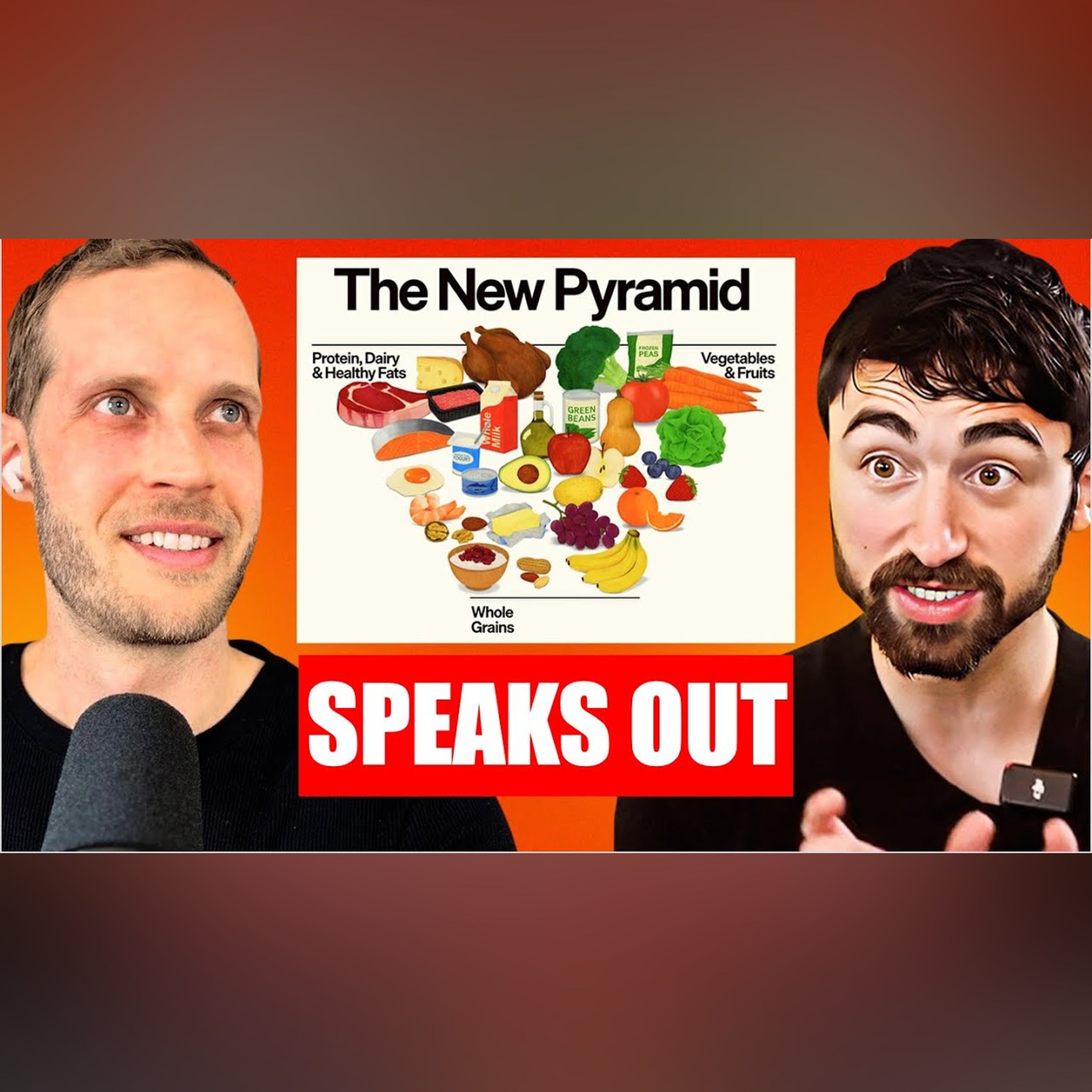
For a written digest on the guidelines, see the StayCurious Metabolism Letter: https://staycuriousmetabolism.substack.com/p/the-new-dietary-guidelines-actually?r=40ekz2 The 2025–2030 Dietary Guidelines are being marketed as a major reset with a simple message: put “real food” back at the center of the American diet. And in a lot of ways, they do represent progress. But when you actually read what’s written, some of the most important details raise real questions. For example, the document still states that saturated fat should not exceed 10% of total daily calories. To separate signal from spin, I’m joined by Dr. Ty Beal PhD, who worked on the evidence review side of the Guidelines process, to explain what the scientific background documents actually say, what happens after scientists submit reviews, and why the final public-facing document can end up with compromises, inconsistencies, or imprecise terminology. If you want a clear, good-faith breakdown—what’s genuinely better, what sti
Rob reveals his secrets to keeping things hot in the bedroom throughout his marriage and well after menopause and he called in to talk all about it. Tune in to hear all the details including how things changed in their bedroom once his wife finally spoke up about her not having orgasms, what he learned about pleasing her and how he went on a mission to figure her out, the books he read that completely changed the game, how their sex life changed when she went through menopause, all the things he tried to make sex more pleasurable again for her, how he came up with a unique way to apply lubricant that helped prevent pain and tearing, how his wife had a prolapsed cervix and the surgery she had to correct it, how and why she became way to tight afterwards, what he introduced in the bedroom that completely loosened her up and allowed her to start having sex again, why she refused to go on HRT and the over-the-counter products he found for her that helped with vaginal dryness and tearing, h
This one is not a new concept, we actually talked about it years ago, but it showed up in such a stark contrast across the roster recently that it was worth coming back to. The short version is that the more you move, the more you can eat, and the less miserable a fat loss phase tends to be. What brought it back up was seeing it at both ends with different clients. The first was the client Aaron flew to Italy to peak. She eats more food relative to her size than anyone he has coached, and after being in the same house with her for a couple of hours, the reason was pretty obvious. The other client is one Aaron has worked with for years and had a lot of success with, and this summer the diet went poorly. The thing that changed was movement. Even with food lower than past diets, it was slower and more of a grind than anything we had done together. That contrast is really the whole episode. When movement is low, calories may have to go so low to keep losing fat that it gets significantly h
Is your body weight stable, but you're still not eating enough to properly fuel your training, recovery, and overall health? Introducing Why Stable Weight Doesn't Always Mean You're Eating Enough from Jeff Hoehn of the Mind Muscle Connection Podcast (https://www.buzzsprout.com/1508401). Just because your weight isn't changing doesn't necessarily mean you're adequately fueled. In this episode, Jeff breaks down why maintaining a stable body weight doesn't always mean you're meeting your body's energy needs, especially if you're training hard, staying lean, or spending long periods dieting. You'll learn: Why stable body weight doesn't automatically mean adequate energy availability Who is most at risk of underfueling, even when their weight isn't changing How high training output, staying too lean, and chronic dieting can contribute to low energy availability The potential signs of underfueling, including changes in performance, recovery, hormones, and menstrual health Why spending too lo
Fear has a way of quietly taking control of your life. It convinces you to stay where you are, avoid difficult conversations, delay decisions, tolerate situations you know aren’t good for you, and settle for a life that is far smaller than the one you are capable of living. In this episode of The Strong Life Project, we explore how fear impacts your thinking, your relationships, your career, your leadership, and ultimately your ability to live a meaningful life. Fear doesn’t always look like panic. Sometimes it looks like procrastination, overthinking, making excuses, people pleasing, avoiding conflict, or constantly waiting for the perfect moment. The problem is that every time you allow fear to make a decision for you, you reinforce the belief that you are incapable of handling what comes next. Over time, this creates a pattern of avoidance that undermines confidence, resilience, emotional strength, and personal growth. Learning to manage fear doesn’t mean becoming fearless. It means
Postnatal depression follows a sudden drop in estradiol and progesterone after birth, yet hormone treatments are rarely offered during this time. Jennie Milnes knows this first-hand. She had postnatal depression after her first son, and in her early 40s, while switching her HRT for perimenopause symptoms, she found out she was pregnant again. After her daughter’s birth the hormone crash was even worse, and despite being on HRT before her pregnancy, she was told to wait for her hormones to settle. Dr Louise Newson explains why postnatal depression is more likely the second time, why antidepressants work better alongside estradiol, why hormones are safe while breastfeeding, and why so few psychiatrists prescribe them. She also shares the history of Dr Katharina Dalton, who used progesterone to support fertility and pregnancy. Chapters 00:00 Why is postnatal mental health so overlooked? 00:32 How did fertility treatment lead to her first son? 01:32 Was it postnatal depression the first ti
Why are so many doctors still scared of HRT? A medical student explains where that fear comes from and how it spreads. Toby first saw the problem as a teenager, when his mum, a biology teacher, went to her GP for HRT and was given an outdated FSH test instead. Now in his second year of medical school, he says hormone problems come up on GP placements more than anything else, and the risks of hormone treatment are raised in almost every consultation, often as defensive medicine. Louise explains why NICE guidance mentions risk far more often than benefit, why grouping synthetic and bioidentical hormones together confuses busy doctors, and why the WHI study still shapes prescribing. They also talk about how hard it is for junior doctors to question a senior, and why a 19-year old with endometriosis was told pregnancy would fix it. Toby closes with three take-home tips for changing how every doctor learns about hormones. Chapters 00:00 Why would Louise go back to medical school? 00:46 Why
Can your skincare products affect your hormones? This episode covers what endocrine disruptors are and how to read a skincare product label. Gina Lewis spent many years working in early years education, and when her daughter, now nearly 12, started wanting the products her friends used, Gina began looking closely at what goes into them. She now runs Nudum Skincare, a handmade natural skincare company. Dr Louise Newson explains why bioidentical estrogen and testosterone she prescribes can pass through the skin, and how endocrine disruptors can sit in a hormone receptor like the wrong key in a lock. She shares the history of DES, a synthetic estrogen banned from poultry before it was stopped for pregnant women, and why she worries when teenagers are given the contraceptive pill as a first treatment for acne. Gina closes with three take-home tips, starting with a simple audit of your bathroom cupboard. Follow Gina: @nudumskincare Chapters 00:00 Can skincare affect your hormones? 01:31 Why
Employers should measure outcomes instead of continuously monitoring workers' activity.
Share your view, then see how readers voted. No sign-in required. This poll is shared across stories.
Do you agree or disagree?
Common Quandary
A Common Quandary to discuss
Another conversation to explore, separate from this news story.
The restaurant forgot your expensive entrée. Do you point it out?
After a crowded dinner, you notice the restaurant omitted your most expensive entrée from the bill. Service was slow, the server seemed overwhelmed, and correcting it may create trouble for the person who made the mistake.
Does protecting someone from consequences ever justify benefiting from their error?