117 – Testosterone isn’t just for libido: what the data shows
32 min
Listen through the publisher, then discuss the episode here or arrange an in-person Roundtable. Your city determines where to meet.
Roundtables are designed for groups of four, with a shared subject and room for everyone to speak. Come for discussion, with no dating expectation.
Does testosterone help women with more than low libido?Real-world data from Dr Louise’s research team says yes. Content advisory: this episode includes themes of mental health and suicide. In this episode, Dr Louise Newson is joined by Aini Kamal, a neuroscience graduate and researcher with Newson Research, the small team Louise funds to study hormone health. Aini shares how her mum’s mental illness drew her to neuroscience, and how a gap year showed her just how under-researched women’s health still is. Together they discuss data showing testosterone improving joint pain, vaginal dryness, urinary symptoms and mood, research linking HRT with fewer suicidal thoughts, why FSH blood tests can mislead doctors diagnosing menopause, and why female athletes are being denied testosterone.Louise also explains why every cell in the brain responds to hormones. Aini closes with the three things she most wants her research to achieve, from easier access to care to closing cultural gaps in hormone education. Chapters 0:00 Why does women's hormone research matter so much? 1:05 Why did a neuroscientist move into women's health? 2:12 Why is women's health so under-researched? 3:13 Can a digital tool help explain HRT? 5:30 Does every brain cell respond to hormones? 7:00 Why does so much medical research never help patients? 8:38 Can a private clinic produce unbiased research? 13:11 How do clinic notes become research data? 15:22 Can HRT reduce suicidal thoughts in menopause? 17:47 Can an FSH blood test miss menopause? 21:34 What symptoms does testosterone improve in women? 23:44 Do women have more testosterone than oestrogen? 25:15 Why are female athletes denied testosterone? 27:56 What hormone research is coming next? 28:53 What does Aini want her research to change? Let’s connect Told your blood tests are "normal" but still struggling with symptoms? Book with a doctor who understands testosterone at Newson Health: DrLN.co.uk/clinic (http://drln.co.uk/clinic) Follow the podcast on Spotify: More from Dr Louise Newson: https://linkin.bio/drlouisenewson
Episode information is provided by the publisher. Listening takes place on the publisher’s service.
Today, I’m sitting down with Shalin Shah (https://mariuspharma.com/team/shalin-y-shah/), whose personal health journey led him to challenge some of the biggest myths around testosterone therapy and men’s health. After being diagnosed with borderline low testosterone at the age of 30, Shalin launched a 13-year mission that not only resulted in the creation of the first FDA-approved oral testosterone pill, Kyzatrex, but also sparked him to advocate for better hormone education and diagnostics for both men and women. Episode Timestamps: Introduction and FDA changes regarding testosterone ... 00:00:00 Testosterone Project: advocacy and public health ... 00:06:37 Regulatory hurdles and the history of restrictions ... 00:08:17 Dispelling cardiovascular and prostate cancer myths ... 00:12:06 Declining testosterone trends and contributing factors ... 00:14:42 Concerns about low testosterone in younger generations ... 00:18:13 Importance of early screening and baselines ... 00:20:36 Early, over
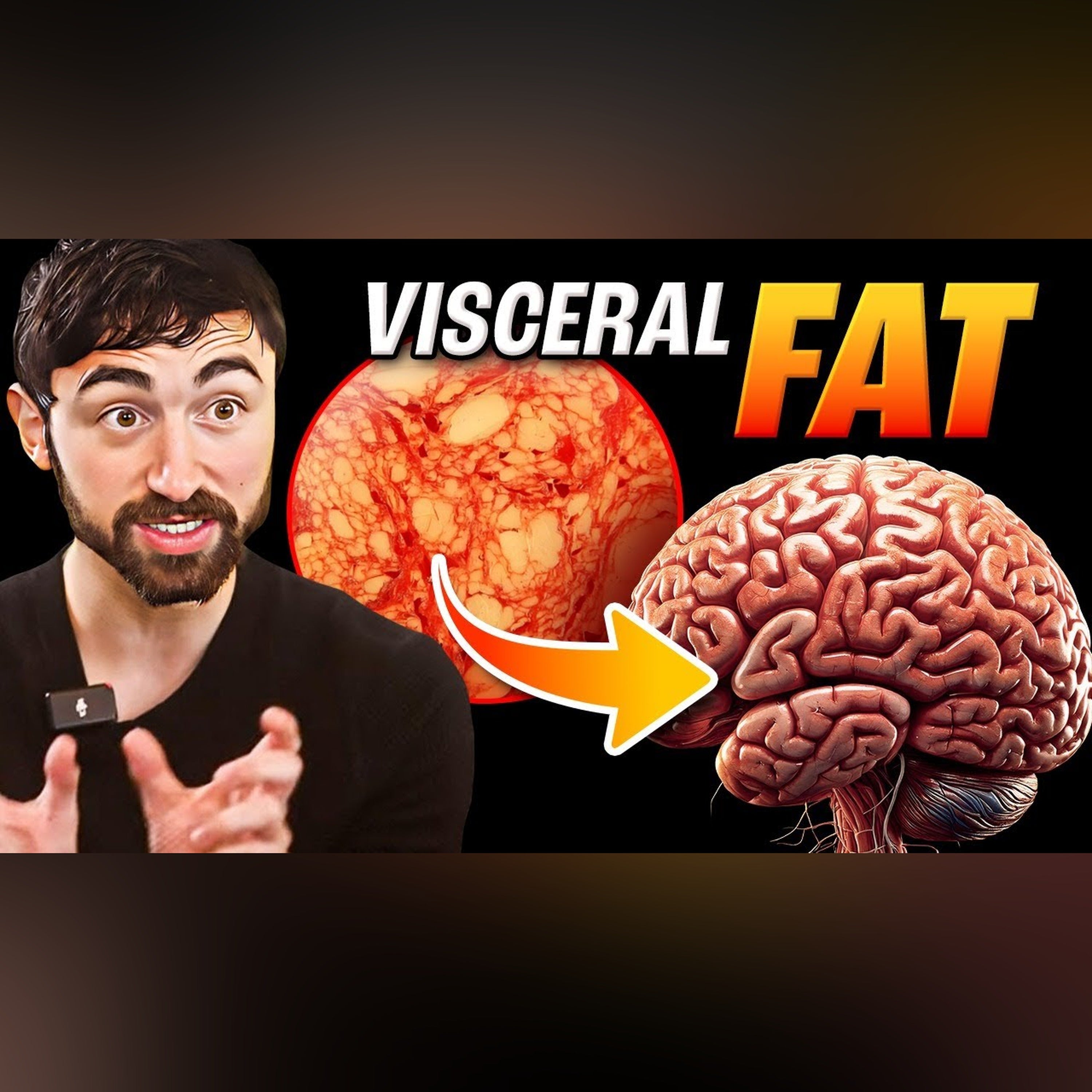
For all references and even deeper nuances, check out the StayCurious Metabolism letter: https://staycuriousmetabolism.substack.com/p/can-visceral-fat-cause-depression?r=40ekz2 Chapter *Call our service line at 815-STAY-CUR (815-782-9287) *Learn more about the data, here: https://staycuriousmetabolism.substack.com/p/life-or-death-in-the-fine-print-the?r=40ekz2 Visceral Fat Randomized Controlled Trial Video: https://youtu.be/lDeegZ1wtAI Description: Most people think of fat as extra weight—something cosmetic or something to “burn off.” But new science is showing something far more profound: visceral fat is an endocrine organ that sends biochemical messages across the entire body, including directly into the brain. And those messages can change mood, increase stress sensitivity, and even promote depression. In this video, we break down a brand-new study revealing how visceral fat releases tiny molecular packages called extracellular vesicles. Inside those vesicles is a specific microRNA—
Dr. Shannon Sirois (https://prism.miami/) was focused on being as healthy and strong as possible but was plagued by a myriad of health problems despite a rigorous workout routine and what at the time was thought to be a "healthy" diet. By mainstream standards, she should have been at the top of her game, but instead she was exhausted, losing hair and in constant pain. Even with access to team doctors, several diagnostic tests, etc., none of the professionals could figure out what was wrong with her, and she never felt optimal during her collegiate athletic career. Determined to figure out why she wasn't feeling healthy and to be able to prevent others from going through what she went through, Shannon went on to get her doctorate in physical therapy with the intention of becoming an expert in human performance. When she graduated and entered the medical system, it became clear to her early on that nothing the system was doing was meant to solve a problem, it was merely treating symptoms
Today, Mel is doing something she's never done before on The Mel Robbins Podcast. She's bringing members of her team into the studio for live coaching with world-renowned communications expert Vinh Giang. Vinh is known for teaching millions of people online how to stop sounding insecure, speak more clearly, and get people to listen when you talk. And when you hear him coaching today, it will be like he’s coaching you. One person freezes when they're put on the spot. Another can't stop interrupting people. Someone else has great ideas but stays quiet because they're afraid of being judged. Does any of that sound familiar? And Vinh isn't just giving advice. He's coaching real people through practical exercises, right there in the studio, so you can hear the difference and start making those same changes in your own life. As Mel says, put yourself in their shoes. As Vinh works with each person, you'll recognize things you struggle with, too. You'll learn: -What to do when your mind goes b
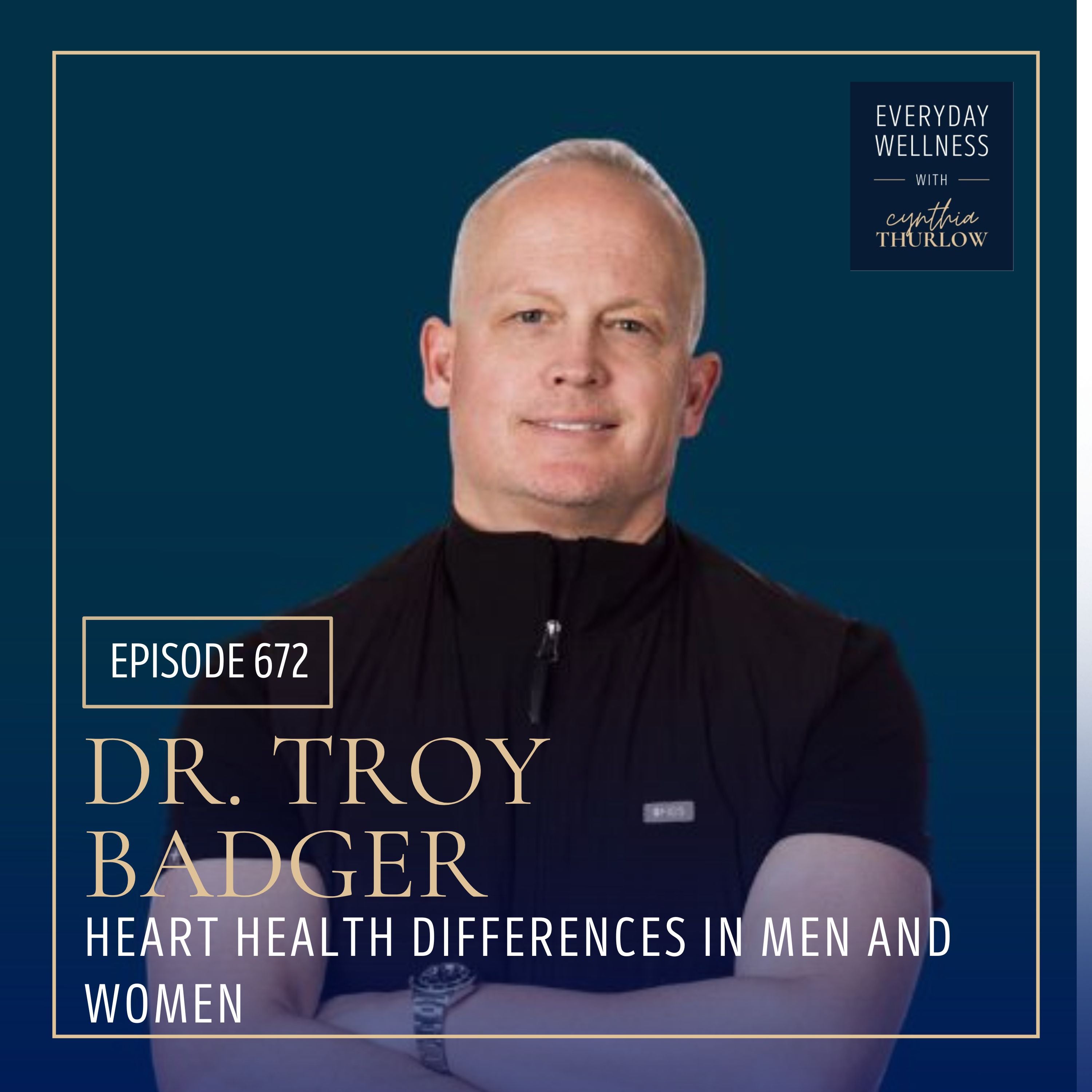
Today, I’m honored to connect with Dr. Troy Badger. He is a board-certified cardiologist and interventionalist and the founder of Cardiostrong, a concierge preventive cardiology clinic in Provo, Utah, focused on reducing cardiovascular risk, optimizing metabolic health, and improving strength and cardiorespiratory fitness for executives and athletes. In today’s conversation, we discuss Dr. Badger’s gender- and age-specific approach to heart health, including treatment differences for men and women, and diagnoses such as INOCA, SCAD, vasospastic disease, and Takotsubo. We examine emotions and their influence on heart health, coronary ischemia and cardiomyopathies, labs and diagnostics, how Dr. Badger assesses risk in his patients, and the differences between a CAC and a CCTA. Dr. Badger also shares the labs he finds essential for all patients and discusses the role of VO2 Max, cardiovascular training, and lifestyle—specifically nutrition, the use of GLP-1 drugs, and a multidisciplinary
Jennifer is feeling a lot better this week - find out what she did in this week's Keto Consult with Dr Boz and Jennifer Marie. Increasing ketone levels by fasting, an update on Jennifer Marie's menopause symptoms and 3 day sleep protocol results. She even shares some expert #FastingTips! You do not want to miss this week's Keto Consult with Dr. Boz and Jennifer Marie! Learn more about the mental benefits of Keto in my blog: https://bozmd.com/keto-diet-and-brain-health/ Jennifer Marie wrote an article about her role as her husband's caregiver during his sleep 3 day sleep reset protocol -- https://lowcarbinspirations.com/sleep/ Jennifer Marie's Book link: (affiliate link) https://amzn.to/2uuEqt2 Preorder gift: https://lowcarbinspirations.com/preor... JENNIFER MARIE's Recipes: https://lowcarbinspirations.com/ Weekly meal plans: www.mealplanbuddy.com Keto Friendly Recipes Facebook Page: www.facebook.com/ketofriendlyrecipes Low Carb Inspirations Facebook Group: https://www.facebook.com/grou
Postnatal depression follows a sudden drop in estradiol and progesterone after birth, yet hormone treatments are rarely offered during this time. Jennie Milnes knows this first-hand. She had postnatal depression after her first son, and in her early 40s, while switching her HRT for perimenopause symptoms, she found out she was pregnant again. After her daughter’s birth the hormone crash was even worse, and despite being on HRT before her pregnancy, she was told to wait for her hormones to settle. Dr Louise Newson explains why postnatal depression is more likely the second time, why antidepressants work better alongside estradiol, why hormones are safe while breastfeeding, and why so few psychiatrists prescribe them. She also shares the history of Dr Katharina Dalton, who used progesterone to support fertility and pregnancy. Chapters 00:00 Why is postnatal mental health so overlooked? 00:32 How did fertility treatment lead to her first son? 01:32 Was it postnatal depression the first ti
Why are so many doctors still scared of HRT? A medical student explains where that fear comes from and how it spreads. Toby first saw the problem as a teenager, when his mum, a biology teacher, went to her GP for HRT and was given an outdated FSH test instead. Now in his second year of medical school, he says hormone problems come up on GP placements more than anything else, and the risks of hormone treatment are raised in almost every consultation, often as defensive medicine. Louise explains why NICE guidance mentions risk far more often than benefit, why grouping synthetic and bioidentical hormones together confuses busy doctors, and why the WHI study still shapes prescribing. They also talk about how hard it is for junior doctors to question a senior, and why a 19-year old with endometriosis was told pregnancy would fix it. Toby closes with three take-home tips for changing how every doctor learns about hormones. Chapters 00:00 Why would Louise go back to medical school? 00:46 Why
Can your skincare products affect your hormones? This episode covers what endocrine disruptors are and how to read a skincare product label. Gina Lewis spent many years working in early years education, and when her daughter, now nearly 12, started wanting the products her friends used, Gina began looking closely at what goes into them. She now runs Nudum Skincare, a handmade natural skincare company. Dr Louise Newson explains why bioidentical estrogen and testosterone she prescribes can pass through the skin, and how endocrine disruptors can sit in a hormone receptor like the wrong key in a lock. She shares the history of DES, a synthetic estrogen banned from poultry before it was stopped for pregnant women, and why she worries when teenagers are given the contraceptive pill as a first treatment for acne. Gina closes with three take-home tips, starting with a simple audit of your bathroom cupboard. Follow Gina: @nudumskincare Chapters 00:00 Can skincare affect your hormones? 01:31 Why
Anonymous sources are justified when naming them would prevent important public-interest reporting.
Share your view, then see how readers voted. No sign-in required. This poll is shared across stories.
Do you agree or disagree?
Common Quandary
A Common Quandary to discuss
Another conversation to explore, separate from this news story.
A pricey AI tutor can turn B students into A students. Should schools let them use it?
An effective AI tutor adapts to each student and dramatically improves performance, but its subscription is expensive. A public school cannot provide it to everyone and worries that allowing its use will deepen existing inequality.
Should access be limited when a beneficial tool cannot yet be shared fairly?