1690 - Corndogs, Complicated Exes & Saying Goodbye to a Beloved Pet
25 min
Listen through the publisher, then discuss the episode here or arrange an in-person Roundtable. Your city determines where to meet.
Roundtables are designed for groups of four, with a shared subject and room for everyone to speak. Come for discussion, with no dating expectation.
A kid’s appearance on FML has created a parenting nightmare after he became convinced he has official approval for unlimited corndogs and a later bedtime, leaving his parent scrambling to regain control. Plus, another listener is struggling with an ex who still inserts herself into family events decades later, while someone else is looking for advice on coping with the heartbreak of losing a beloved dog after 12 years and dealing with the constant reminders left behind. Hosted by Simplecast, an AdsWizz company.
Episode information is provided by the publisher. Listening takes place on the publisher’s service.
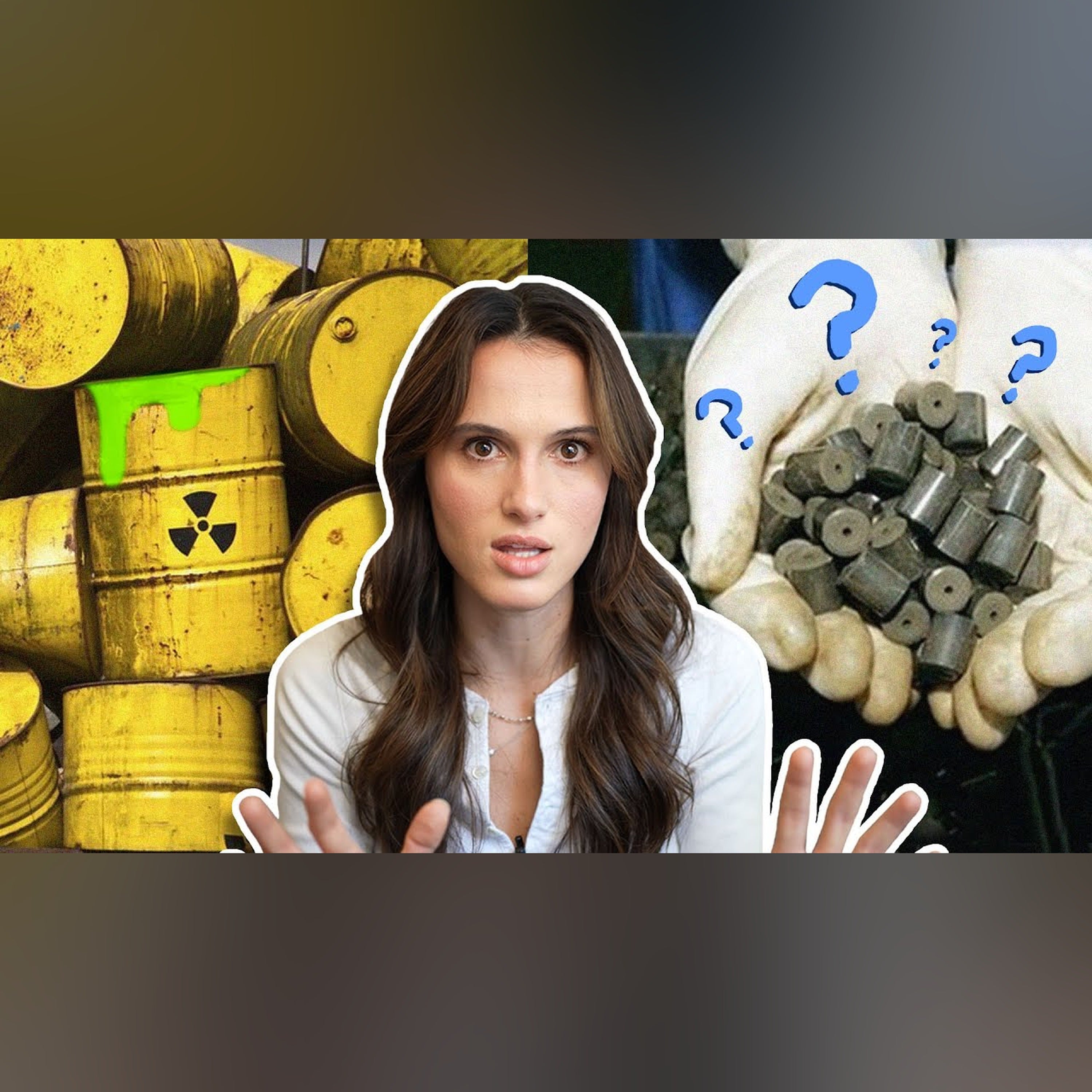
What if we could actually USE nuclear waste? Watch Johnny’s explainer on nuclear power here - and subscribe to his channel! https://youtu.be/QzTgZ6kOEM8 Nuclear waste is scary. Maybe you’ve seen it as glowing green goop in The Simpsons, or as a radioactive threat on the news. Either way, you likely know it has been a major block to the use and improvement of nuclear power. Over the last few decades, experts, politicians and the public have had heated debates over what to do with this radioactive material created by nuclear power plants. But what if there were a way to not just store nuclear waste, but actually USE it? This video is about the effort to make electricity out of nuclear waste. Really. It turns out, we developed the tools to do this decades ago. This story is about a technology we left behind and the people who want to bring it back. For this video, I had the privilege of visiting one of the largest and oldest research centers in the US, the Argonne National Laboratory. I’m
What if your AI agent could find the people you should know before you even start looking? Cosign is building a professional network around reputation and trusted recommendations, and now agents can use that network too. MTS host Sophia Dew sits down with a16z’s David Booth and Cosign’s Bella Nazzari to discuss what they’ve learned since launching Cosign, why traditional profiles often miss the operators doing the most important work, and how the Cosign Awards are surfacing talent through the people willing to vouch for them. They also explore an emerging behavior: people connecting their agents to Cosign to continuously find relevant people, lists, and opportunities, and what professional networking could look like when both humans and their agents participate. Resources: Follow David Booth: https://x.com/davidbooth Follow Bella Nazzari: https://x.com/nazzari Follow Sophia Dew: https://x.com/sophiadew Learn more about Cosign:https://cosign.co/ Connect your agent to Cosign:https://cosi
This is a Grave Talks CLASSIC EPISODE! PART TWO Preserving history is one thing. Preserving it while uncovering ghostly activity is something else entirely. Saving the Old Properties is a nonprofit dedicated to rescuing endangered historic buildings across Indiana. Founded by Richard Allen and Dann Allen, the organization restores architectural treasures that might otherwise be lost to time. But as walls are opened and floors are lifted, something else often emerges—stories, energy, and sometimes spirits that never left. Joining us are Richard Allen, General Manager Kate Thornberg, and Historian Ted Martin, who share what it’s like to breathe life back into centuries-old structures—while encountering unexplained phenomena within their walls. From shadow figures and strange sounds to the emotional weight that lingers in historic spaces, this conversation explores where preservation meets the paranormal—and how history and hauntings often occupy the same foundation. For more information
A tense family dynamic unfolds when a partner's son unexpectedly brings his pregnant girlfriend home. This situation challenges boundaries and tests relationships, igniting conversations about responsibility, acceptance, and the complexities of family life.An original fictional family story exploring love, loyalty, responsibility, and complicated relationships.Created with AI-tools.
Master the skills that change lives — enroll in your free human behavior course today: https://nci.university/learn Uploaded 14-03-26 During the first ninety seconds of any interaction, a window opens in the human brain that most people never notice. A specific sequence of neurological events unfolds — predictable, exploitable, and almost never taught outside of military and intelligence training. Very few people alive understand the full mechanics of what happens inside that window. Only operators, interrogators, and behavioral scientists with the right access have ever had this mapped out for them. Someone made sure it stayed that way. Every interaction you've ever had — every negotiation, every first impression, every moment you walked into a room — was governed by this sequence. You were either running it or it was being run on you. Most people spend their entire lives on the receiving end without ever knowing it. Language is the delivery system. But language isn't where it starts.
At a concert, most listeners hear the melody. A trained singer hears the breath control that carries a difficult phrase. At a football match, the crowd follows the ball while a coach notices the defender who quietly closes off an attack. Knowing more changes who seems extraordinary. Audiences have traditionally borrowed that knowledge from commentators, critics, and friends, whose explanations help determine which achievements receive applause and which pass unnoticed. AI could make that guidance a routine part of watching almost anything. Tools already track players’ movements, analyze musical pitch and timing, and explain technical processes. As those abilities become integrated into broadcasts and personal assistants, viewers could ask what made a particular passage difficult or why a player chose one route over another. Instead of receiving occasional commentary, someone could explore an entire performance with detailed explanations tailored to their questions. The consequential sh
This week on FML, one listener is looking for ways to help his wife manage the exhaustion of raising a 6.5-month-old "velcro baby" who won't sleep unless he's being held, another is searching for baby name ideas after family members criticized their daughter's name, and someone else is struggling to move on after the end of a relationship they just can't seem to get over. The R&M family weighs in with advice, perspective, and plenty of honest conversation. Hosted by Simplecast, an AdsWizz company.
We chat with an Alberta gamer who cleared his schedule and booked time off work for the launch of GTA 6. Plus, Roz is annoyed after his family completely ignores a video he shared in the group chat, the gang debates what they'd do if granted a genie wish, Mocha pitches bringing a Bowflex into the studio, and Dane Cook joins the show to talk about the family betrayal that became the subject of his new documentary. Hosted by Simplecast, an AdsWizz company.
Global Microsoft outages disrupted millions of users worldwide, the Maple Leafs dropped their fifth straight game at home, and GTA 6 fans are going to extreme lengths to get more playtime, including booking time off work and even hotel rooms. Plus, Robert Pattinson is officially the next James Bond, the Grammy nominations are out, and we cover the biggest entertainment and pop culture stories making headlines this week Hosted by Simplecast, an AdsWizz company.
Security claims about important digital products should face independent testing.
Share your view, then see how readers voted. No sign-in required. This poll is shared across stories.
Do you agree or disagree?
Common Quandary
A Common Quandary to discuss
Another conversation to explore, separate from this news story.
You are vegetarian, but the leftover steak is headed for the trash. Do you eat it?
A vegetarian avoids buying meat because of animal welfare concerns. At work events, untouched meat is routinely thrown away, and eating it would neither increase demand nor cause another animal to be harmed.
Should a moral practice be judged by its consequences or its consistency?