19/11/26 UK-EU alignment and precision breeding; growing walnuts
14 min
Listen through the publisher, then discuss the episode here or arrange an in-person Roundtable. Your city determines where to meet.
Roundtables are designed for groups of four, with a shared subject and room for everyone to speak. Come for discussion, with no dating expectation.
The government says tomorrow's UK-EU summit will result in a food and drink trade deal which will cut back on paperwork, ease pressure on prices and add 'up to £5billion a year to our economy'. Behind the headlines are complicated talks on complicated rules governing things like food safety, pesticides, and genetic modification and gene editing. Today we're going to look at the possible impact on England's biotechnology sector. As part of this week's focus on trees, we're talking walnuts: most of those we eat here in the UK are imported, but a couple of sheep farmers in Warwickshire hope to change that, and have diversified into both importing and growing walnut trees. Presented by Charlotte Smith and produced by Beatrice Fenton.
Episode information is provided by the publisher. Listening takes place on the publisher’s service.
A kiss can be wonderful. It can create an instant connection, spark romance, or make you feel closer to someone. But a kiss can also have the opposite effect — and sometimes ruin everything. So what makes kissing so powerful, and why can one kiss make such a difference? There's some fascinating science behind it. https://www.scientificamerican.com/article/why-we-kiss/ We spend an enormous amount of time worrying about what's going to change. What's next? What's coming? How do we prepare? But what if we're paying attention to the wrong things? Some of the most important forces shaping our lives never change, and understanding them may be far more valuable than trying to predict the future — something humans are notoriously bad at. Morgan Housel, partner at The Collaborative Fund and author of Same as Ever: A Guide to What Never Changes (https://amzn.to/3SwWn6u) (https://amzn.to/3SwWn6u)), joins me to explain why the things that stay the same may be the most important things to understan
Explore how to build healthy habits when it comes to making, growing, and maintaining friendships. -- Friendships can change how we see and move through the world. They can boost our academic performance, help us deal with setbacks, and even improve our health. And the relationships we form in adolescence can shape our beliefs, values, and emotional growth. But making and maintaining friends isn’t always easy. Iseult Gillespie shares how to build healthy friendship habits. Lesson by Iseult Gillespie, directed by Biljana Labović. This video made possible in collaboration with the Bezos Family Foundation Learn more about how TED-Ed partnerships work: https://bit.ly/TEDEdPartner A special thanks to Mitch Prinstein, Andrew Fuligni, Adriana Galván, and UCLA Center for the Developing Adolescent who provided information and insights for the development of this video. Support Our Non-Profit Mission ---------------------------------------------- Support us on Patreon: http://bit.ly/TEDEdPatreon
Check Out Rogue History On PBS Origins: https://youtu.be/xuT35ud41QQ PBS Member Stations rely on viewers like you. To support your local station, go to:http://to.pbs.org/DonateSPACE Sign Up on Patreon to get access to the Space Time Discord! The Standard Model of particle physics is arguably the most successful theory in the history of physics. It predicts the results of experiments with a numerical precision unmatched by any other branch of science, and it does so almost unfailingly. The theory is encapsulated in a single equation known as the Standard Model Lagrangian. Today we’re going to explain to you how it works! Want to Dive Deeper into the Standard Model Lagrangian? Check out: Check out the Space Time Merch Store Search the Entire Space Time Library Here: https://search.pbsspacetime.com/ Hosted by Matt O'Dowd Written by Fernando Franco Felix & Matt O'Dowd Post Production by Leonardo Scholzer, Yago Ballarini, Pedro Osinski, Caique Oliveira, Adriano Leal & Stephanie Faria Direct
Are we in an AI stock bubble, or are investors betting on a genuinely bigger economy? Justin Wolfers examines AI stock valuations with Stacey Vanek Smith, separating what the technology could do for the economy from what investors might actually earn. A deliberately hypothetical valuation exercise shows why a trillion-dollar company isn't automatically absurd—but a breakthrough for society doesn't guarantee profits for shareholders. Competition can give you powerful tools at low prices while squeezing the companies selling them. The Thanksgiving turkey problem illustrates why a long run of good news can hide rare, severe risks. Justin connects that analogy to fat tails and the peso problem, then explains why spotting a bubble and successfully betting against it are different challenges. He also unpacks what the CAPE ratio can—and can't—tell you about whether stocks are overpriced. The stakes are your savings, not just Wall Street's scoreboard: Justin discusses an S&P 500 decline of 7.5
View pictures and support us on Patreon(https://www.patreon.com/user?u=73787379) This episode examines documented black bear encounters involving hikers, hunters, campers, homeowners, and backcountry workers. These incidents range from surprise encounters and defensive attacks to prolonged confrontations where bears returned repeatedly, testing human endurance, decision-making, and survival instincts.Black bears are often described as shy or non-aggressive, but these cases reveal how quickly circumstances can change when food sources, cubs, human behavior, or environmental pressure collide. Each story is carefully researched and presented to highlight what went wrong, what saved lives, and what these encounters reveal about black bear behavior in the wild.
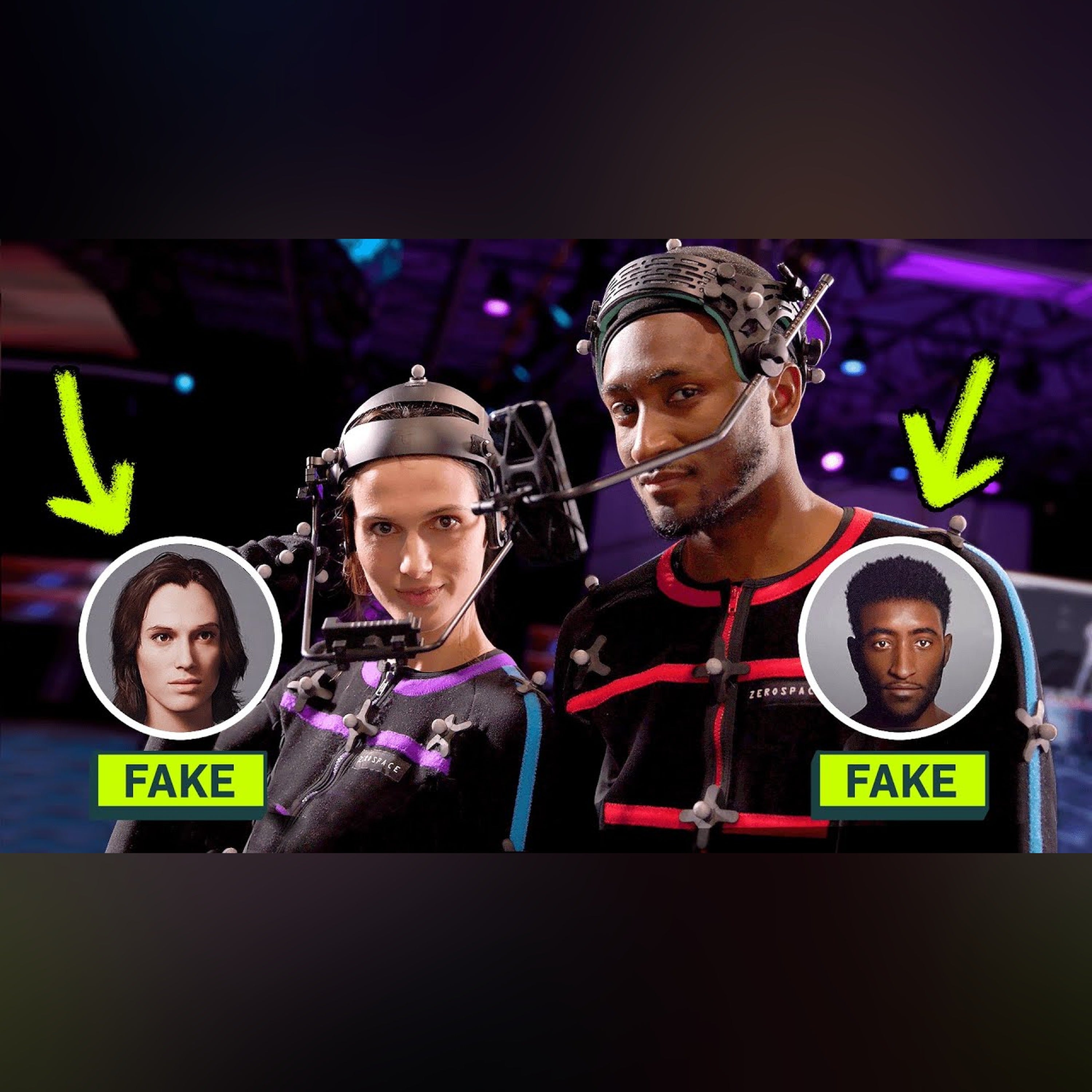
This new tech is changing how movies get made. So @mkbhd and I tested it out... Watch MKBHD's video: https://youtu.be/RM7SobH8ZO0 I’ve been obsessed with sci-fi movies since I was a kid. I love being transported to another world. But lately, I’ve been wondering: How do those worlds look so… REAL? The tech behind movies has exploded in complexity and realism, changing how stories come to life on screen. Luckily, at the same time, those tools are becoming more and more available to more people telling stories. It’s not just blockbusters like Avatar 2 or Avengers or Dune. It’s also smaller budget films like Everything Everywhere All at Once or even… YouTube creators? In this video, Marques Brownlee and I test out 3 movie-making tools that are changing how movies, shows, and maybe even YouTube videos (??) get made. We’re at ZeroSpace Studios in New York to show you how each of these crazy technologies work - and how you might be able to use them. Along the way, we hit big questions like: W
The EU and UK will hold a long-awaited summit in Brussels later. A new trade agreement could remove checks and paperwork faced by exporters since Brexit. It's anticipated that the new deal will mean realigning with EU rules on aspects of agricultural production here in the UK, including regulation of pesticides. Farming leaders have warned this could strip British farmers of several products used to protect their crops and raise costs and are calling for a phased transition but wildlife and environmental groups want the negotiations to be a starting point for what they describe as a "far more ambitious plan" to cut pesticide use and restore nature. Farmers in England will be able to apply to a £15 million fund to help them dig new reservoirs and install water storage tanks from the end of the month. It's part of a wider drought resilience package announced by the prime minister back in August. The government's now confirmed the application window for round three of the water management
The UK's significant talks towards re-alignment with the EU will take place this Friday, and food and farming will be central to the discussions. Food trade was one of the areas most impacted by Brexit, and now re-drawing the EU UK relationship could cause disruption too. But will it be beneficial for farmers and food producers? We ask the president of the National Farmers Union. Government figures have shown a dramatic drop in new woodland creation in Scotland in 2025, falling well short of the Scottish Government's own original target of 18,000 hectares. In fact less than half of that was planted - a drop of 44% compared to 2024. That roughly mirrors a big cut in the cash for the Scottish Government’s forestry grant scheme, of 41%. But foresters say it’s more complicated than just a direct effect of cuts. And we speak to Lantra - a charity which helps young people into rural careers, training and education - about how Alan Milburn's report into NEETs might improve prospects for young
A group of major food retailers have come together to support farmers who practice 'regenerative' farming - which tries to protect soils for long-term resilience and better food security. Companies including McDonalds, Waitrose, Nestle and Marks and Spencer have signed up to what they're calling 'The Regen Compact'. They are committing to help farmers build more resilience against the impact of climate change - which in turn would help guarantee supplies for their own food businesses long term. This month marks the 5th anniversary of Storm Arwen, which hit northeastern Scotland and northern England, with winds gusting over 100 miles an hour - causing devastation to forestry. It brought down an estimated one million trees in Northumberland alone, and among the woodlands hardest hit were those in the 15,000 acres of the Ford and Etal estate, in the far north of the county. We find out how they're recovered. As bird flu begins to spread across the UK, Scotland and Wales have brought in Pr
Communities should usually repair existing infrastructure before building replacements.
Share your view, then see how readers voted. No sign-in required. This poll is shared across stories.
Do you agree or disagree?
Common Quandary
A Common Quandary to discuss
Another conversation to explore, separate from this news story.
A patient records every doctor visit for their followers. Can the doctor refuse to be filmed?
A patient with a large social-media following livestreams their health journey and wants to record every appointment. They say the videos help others and keep doctors accountable. Their physician finds the camera distracting and worries that casual remarks will be edited out of context.
Whose comfort should control a conversation about one person's body and another person's work?