We spend so much energy organizing our external world, our homes, our schedules, our drawers. But what about the clutter we carry inside? In this deeply practical and heartfelt session, Sage Robbins guides you through the art of tidying up your inner home, clearing the mental clutter, the stacked stories, the beliefs that no longer serve you so you can reconnect to presence, clarity, and the miracle of this moment. Uploaded 29-03-26 Drawing on a beautiful parallel with Marie Kondo's The Life-Changing Magic of Tidying Up, Sage shares the simple but profound practice of asking: does this thought, this story, this belief spark joy? If not, bless it, and let it go. This session will help you: - Recognize the clutter of mind and what it actually sounds like - Use a simple breath and prayer practice to realign in real time - Learn how to "tidy it up" in your relationships — and within yourself - Create an inner sanctuary that no matter what life is offering, gives you a place to return to "I
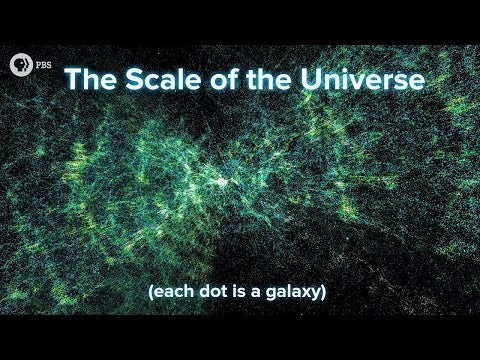
Thank you to Draper and its Hack the Moon initiative for supporting PBS Digital Studios | Learn more at https://wehackthemoon.com. (https://wehackthemoon.com./) Uploaded 25-07-19 PBS Member Stations rely on viewers like you. To support your local station, go to: http://to.pbs.org/DonateSPACE One of the fundamental questions humanity has always asked is how big is our Universe? For much of human history, people believed that Planet Earth was the very center of the entire universe. And Earth is pretty big. But compared the rest of the universe, we are infinitesimally small. The animation in this video the Digital Universe data collection curated by the American Museum of Natural History. The software is used to visualize these datasets is OpenSpace, which is developed through a collaboration between AMNH, Linköping University in Sweden, New York University, and the University of Utah. The software and datasets are open source and are free to download and explore. https://www.openspacepro
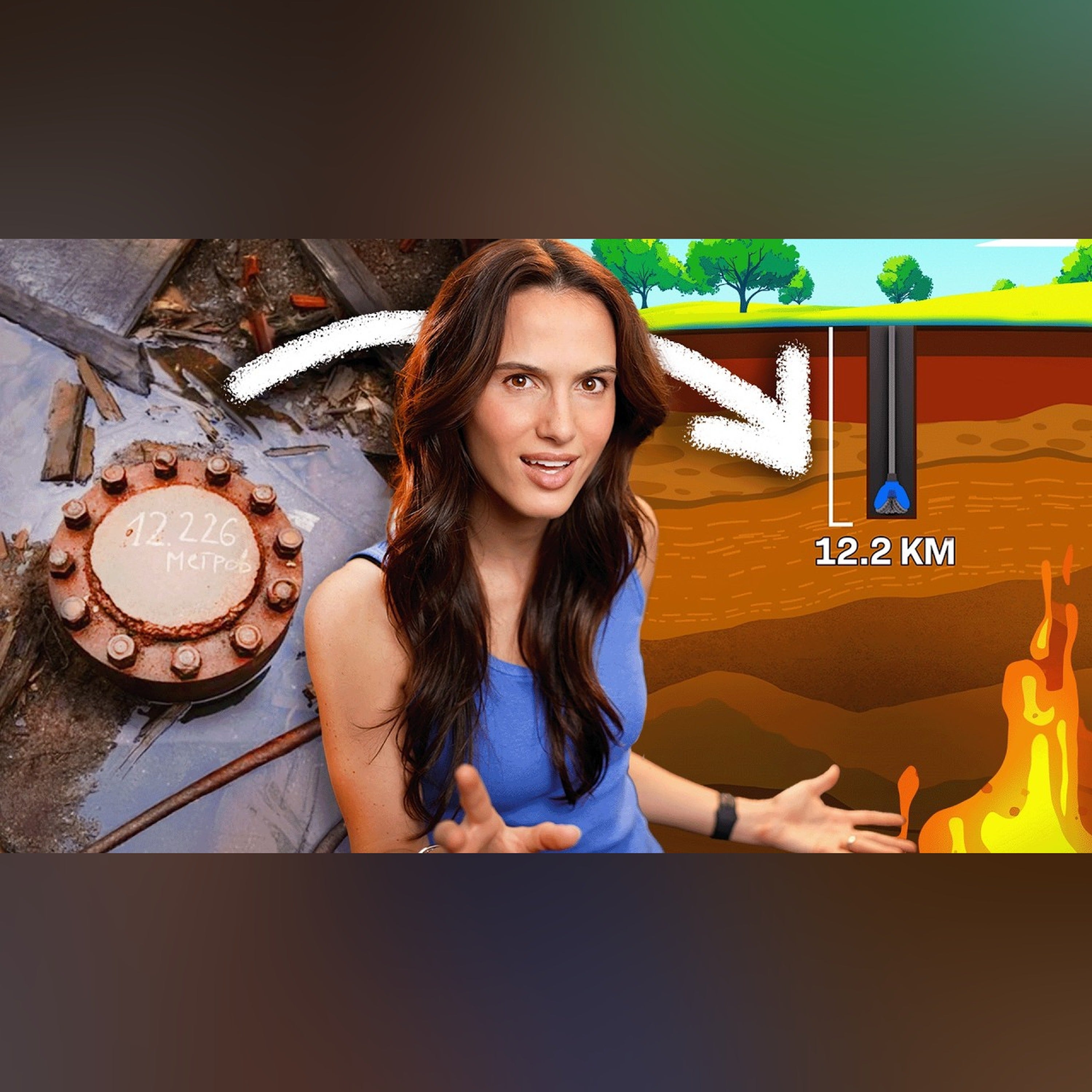
What's really down in the deep Earth? Have you ever thought, “what if I just dug a really really deep hole?” Well, the USSR actually did. The hole they dug is deeper than the deepest part of the ocean. It’s deeper than Mt. Everest is tall! They began digging it in the 1970s as part of a space race, but down. The United States only got to 600 ft before pulling funding. But the USSR kept going for 20 years. They made it about a third of the way through the Earth’s crust and then STOPPED. But what if… you just… kept... digging? If you dug a hole to the center of the Earth, what would you find? What would happen to you? And what does our newest tech tell us is REALLY down below your feet? In this video, we’re going on a journey to the center of the Earth… Chapters: 0:00 What if you dug a hole to Earth’s core? 1:05 What happens when I start digging? 1:36 What are the deepest made-made things? 2:25 What is the deepest hole humans ever dug? 3:03 What happens in the mantle? 3:45 Why is the Ear
Are you on track with the Baby Steps? Get a Free Personalized Plan. (https://ter.li/zqzs8w) Have a money question? Ask Ramsey is here to help. (https://ter.li/vpd8ego2) George Kamel and Jade Warshaw answer your questions and discuss: I cosigned two cars with my mom that were then repossessed We live in my father-in-law's house and I want out but husband wants to stay. How do I get my kids to understand that our lifestyle is different because we refuse to go into debt I was just laid off and I can no longer afford my apartment. Everyone is saying there will be a market correction, what should I do to prepare? I have $28,000 of credit card debt, the interest rate is killing my finances. Next Steps: Have a question for the show? Call 888-825-5225 weekdays from 2–5 p.m. ET New to the show and want to learn more? Check out our 7 Baby Steps! (https://ter.li/1sn8b18j) Start your free budget today. Download the EveryDollar app! (https://ramsey.solutions/8tj2bn) ⏰ Black Friday ends midnight—get
#JimRohnMotivation #JimRohn #JimRohnSpeech In this Jim Rohn Motivation video, Jim Rohn shares a powerful message about overcoming the limits we create through our own beliefs and stories. He reminds us that the boundaries in our lives are often self-imposed—and they can be broken with clarity, alignment, and daily commitment to personal growth. Key Topics From This Motivational Video: Why your limits are created by the stories you tell yourself How to break free from comfort zones and false ceilings The power of alignment between identity and action How discipline and self-trust shape your transformation Moving from internal belief to external embodiment This Jim Rohn motivational video challenges you to stop living at half your capacity. You’ll learn how to dismantle the invisible walls that hold you back and discover how consistency, reflection, and identity alignment unlock new levels of potential. This isn’t about hype—it’s about remembering who you are and deciding who you will be
This lecture was recorded by Professor Phillip Ayoub on 20th of October 2026 at Barnard’s Inn Hall, London. Phillip M. Ayoub is a professor of International Relations in the Department of Political Science at University College London. He is the author of four books and volumes, including When States Come Out: Europe’s Sexual Minorities and the Politics of Visibility (Cambridge University Press, 2016), and his articles have appeared in the American Political Science Review, Comparative Political Studies, Social Forces, the Journal of Ethnic and Migration Studies, the European Journal of International Relations, the European Journal of Political Research, the Review of International Studies, Mobilization, the European Political Science Review, the Journal of Human Rights, Social Politics, Political Research Quarterly, and Social Movement Studies, among others. Further information can be found viA www.phillipayoub.com. The transcript and downloadable versions of the lecture are available
In this lesson, you'll learn the first 50 of 100 everyday French sentences for real-life situations, like making plans, meeting up, visiting friends and shopping. Cheat Sheet & Transcript: Click here (https://www.mathildekien.com/podcast-episodes/100-everyday-french-sentences-part-1) to download all 50 sentences from Part 1, grouped into 5 everyday situations, with their English translations. It's free!
In this lesson, you'll learn how to talk about something that just happened in French, like "I just arrived" or "I just finished work", with le passé récent. ⏰ Cheat Sheet & Transcript: Click here (https://www.mathildekien.com/podcast-episodes/passe-recent-french) to download the passé récent formula, the full conjugation of venir de with English translations, and examples. It's free! ️ Lesson Exercise: Complete short messages and translate sentences using the passé récent, free inside the French Made Easy Exercise Library (https://www.mathildekien.com/subscribe-library).
In this lesson, you'll learn how to ask for a haircut in French and say how much you'd like taken off. ️ Cheat Sheet & Transcript: Click here (https://www.mathildekien.com/podcast-episodes/at-the-hairdressers-french-dialogue) to download the full dialogue with the English translation. It's free! ️ Lesson Exercise: Read a French salon price list and answer 5 questions, free inside the French Made Easy Exercise Library (https://www.mathildekien.com/subscribe-library).
Communities should invest in adapting to unavoidable hazards as well as preventing future damage.
Share your view, then see how readers voted. No sign-in required. This poll is shared across stories.
Do you agree or disagree?
Common Quandary
A Common Quandary to discuss
Another conversation to explore, separate from this news story.
A $300 package lands at your door by mistake. Do you keep it?
A package containing expensive headphones arrives with your address but another person's name. The retailer says it has already replaced the order and does not ask you to return it.
If no one appears to lose, what still makes keeping it right or wrong?