Listen through the publisher, then discuss the episode here or arrange an in-person Roundtable. Your city determines where to meet.
Roundtables are designed for groups of four, with a shared subject and room for everyone to speak. Come for discussion, with no dating expectation.
In this episode of the Guns Podcast US, hosts Brent T. Wheat and Roy Huntington tackle a critical, often overlooked reality in both hunting and self-defense: the absolute necessity of mastering the first shot. Moving beyond the debate of magazine capacity, the hosts discuss how relying on extra rounds can cultivate sloppy marksmanship, poor safety habits, and an overall lack of discipline in the field and in critical defensive situations. Drawing on their backgrounds as veteran law enforcement and lifelong marksmen, Brent and Roy explore why true proficiency is defined by the quality of your first shot rather than the number of rounds in your magazine. Whether you are a hunter looking to harvest game humanely or a concealed carrier aiming to be prepared for the unthinkable, this discussion on mindset, training, and equipment maintenance is essential listening for every gun owner. Key Takeaways · The first shot is the most important shot; all subsequent rounds are merely a backup plan. · Excessive reliance on high-capacity magazines can foster a lazy, sloppy mindset toward marksmanship. · Skills are perishable; consistent practice and retraining are required to maintain competency in both hunting and self-defense. · Ethical hunting requires taking pride in your ability to make a clean, one-shot kill rather than 'blasting away'. · Equipment maintenance is a hallmark of a serious shooter, regardless of whether you carry a modern pistol or a classic revolver. · Seeking professional instruction or guidance to sight in your rifle and master fundamentals is a sign of a responsible gun owner, not a weakness. -- Support by Ruger The Guns Podcast US is supported by Ruger Firearms. -- Let us know in the comments or email [email protected]. Also, make sure you visit GunsPodcast.US for Merch and More!
Episode information is provided by the publisher. Listening takes place on the publisher’s service.
Jamin Wannen is an American journalist, editor, and cultural entrepreneur who has spent much of his career making the case that video games deserve to be discussed with the same seriousness as film, literature, and art. After graduating from Harvard, he worked as a reporter for The Wall Street Journal and wrote for Pitchfork, before co-founding Kill Screen in 2009. Conceived as a magazine for thoughtful, literary writing about games, it became an influential meeting point between games and the wider worlds of art, music, design, and culture. He later hosted 193 episodes of PBS Digital Studios’ Game/Show, programmed gaming events for institutions including the Museum of Modern Art and the Tribeca Film Festival, and founded Gameplayarts, dedicated to game-based arts and culture. Today, he still runs the publication, now Killscreen: a subscriber-supported home for long-form conversations with artists working in and around games. LINKS Jamin Warren – Killscreen Killscreen – Jamin Warren’s
On Monday’s Mark Levin Show, government-run health care sounds appealing because it promises universal, affordable access to care, but this leads to fewer doctors and nurses, longer wait times, lower quality care, higher costs, and greater government control over life-and-death decisions. Universal coverage does not guarantee timely medical treatment and full government-controlled health care would result in rationing, limited access to care, reduced accountability, and diminished patient choice. Politicians, bureaucrats, and the media promote government-run health care despite the clear evidence of its failures, while overlooking the strengths of America’s largely private medical system. Also, the Woke Reich promotes socialist ideas which is contrary to the American ideals of hard work, individualism, merit, and self-reliance. They are encouraging young people to believe they cannot succeed without government assistance. Parents should teach responsibility, discipline, work ethic, and
Mizzou football bounces back against Kentucky behind Austin Simmons’ 314 passing yards and four touchdowns. Martin Kilcoyne and former Missouri Tigers receiver Will Franklin break down the win, preview the Oklahoma finale, and discuss the biggest question facing Eli Drinkwitz: Can Missouri keep its offensive core together for next season? Simmons showed what this offense can become, but building on that potential means keeping the quarterback and his playmakers in Columbia. Martin and Will discuss the value of another offseason together, the receivers’ development, and whether Jamal Roberts should return to Mizzou or pursue the NFL. With NIL and the transfer portal shaping every decision, retaining your own roster has become a recruiting battle of its own. Next up is Oklahoma, with an 8–4 finish and Senior Day on the line. The guys explain why beating the Sooners still matters beyond the College Football Playoff picture. Will also reflects on his own Senior Day. Plus, a debate over Col
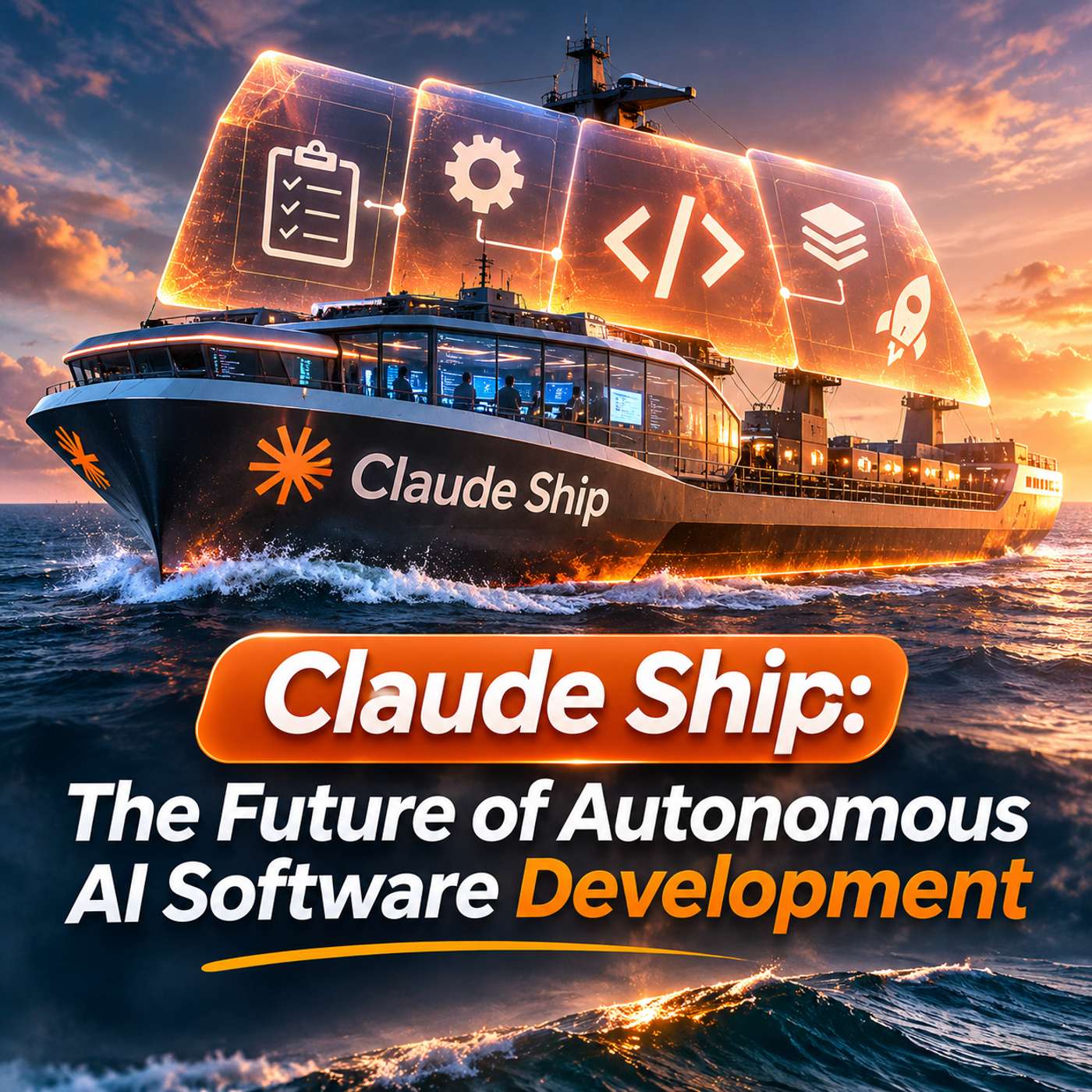
What happens when AI doesn't just write your code but also reviews it, fixes broken builds, resolves merge conflicts, and approves changes without waiting for a human developer? In this episode of TechDaily.ai, host David and AI expert Sophia explore Anthropic's Claude Ship, an AI-powered tool suite designed to automate critical stages of the software development lifecycle. From intelligent code reviews and automated pull request fixes to AI-driven approvals, this conversation examines how autonomous AI agents could transform software engineering, developer productivity, and enterprise code governance. AI coding assistants are already generating thousands of lines of code in minutes. But traditional development pipelines still depend on human reviewers to inspect pull requests, troubleshoot failed CI checks, resolve merge conflicts, and approve deployments. That creates a growing bottleneck between AI-powered code generation and production delivery. Claude Ship aims to address that cha
What does it take to become a fighter pilot, and how will Canada train its next generation of fighter pilots for the F-35? In the conclusion of our four-part series, The Road to Fighters, Lieutenant-Colonel Andrew “Hazno” Faith explores the past, present, and future of Fighter Lead-In Training (FLIT) in the Royal Canadian Air Force (RCAF). Andrew explains what separates a jet pilot from a fighter pilot, the habits of successful students, and the importance of teamwork, preparation, and decision-making under pressure. We discuss the retirement of the CT-155 Hawk, the challenges of rebuilding Canada's domestic fighter training program, and how training in the United States and Italy is helping bridge the gap. We also explore the potential of the M-346, the International Tactical Training Centre in North Bay, and the role of simulation in preparing pilots for the F-35. Finally, Andrew reflects on nearly 25 years of military service and what serving Canada has meant to him. (00:00:00) Intr
1990 YEMEN BORN Global Diplomatic Efforts Face Severe Challenges (Part One) Edmund Fitton-Brown: Ambassador Edmund Fitton-Brown notes that diplomatic engagement remains essential for resolving international conflicts. However, unresolvable territorial disputes cannot be settled by diplomatic efforts alone. Russian strategic objectives threaten Ukrainian independence, while Houthi insurgents continue destabilizing Yemendespite ongoing regional diplomatic negotiations. (1)Middle Powers Shape Emerging Global Dynamics (Part Two) Edmund Fitton-Brown: Fitton-Brown describes Russia as a middle power relying primarily on nuclear weapons rather than economic strength. UN Security Council reform faces major veto hurdles. Meanwhile, European nations support Ukraine, with Germany emerging as a credible power despite broader diplomatic challenges. (2)Saudi Security Concerns Escalate in Yemen (Part Three) Edmund Fitton-Brown: Fitton-Brown highlights ongoing Houthi aggression against Saudi Arabia and
Are you the shooter that everyone talks about AFTER you leave? In this episode of the Guns Podcast, host Brent Wheat and co-host Roy Huntington break down the unwritten rules of range etiquette that every shooter, from beginner to veteran, needs to follow to stay safe, respectful, and welcome. From the cardinal sin of breaking muzzle discipline to the frustration of unsolicited coaching and messy range habits, we cover it all. Learn how to be a positive ambassador for the shooting community, why arrogance is the quickest way to ruin your reputation, and why treating others with respect is more than just good manners—it's tactical. If you want to be the person everyone enjoys shooting next to, this is the episode for you. Key Takeaways · Muzzle discipline is the non-negotiable foundation of range safety and etiquette. · Unsolicited coaching is often seen as arrogant and is generally considered poor form. · Always clean up after yourself—leave the range better than you found it. · Don't
In this episode of the Guns Podcast U.S., hosts Brent T. Wheat and Roy Huntington take a deep dive into the evolution of gun journalism. From the legendary era of print icons like Jack O'Connor and Elmer Keith to the fast-paced, algorithm-driven world of modern YouTube gun influencers, we explore what the "old school" writers got right and where their perspectives were limited by the technology and information of their time. Join us as we discuss the shift from deep-dive, personal experimentation in gun writing to today's click-driven content landscape. We break down the myths of "brush-busting" cartridges, the evolution of optics, and why, despite the technological advancements we enjoy today, there is a fundamental loss of storytelling and expertise in the digital age. Whether you are a long-time enthusiast or new to the world of shooting, this conversation offers a nostalgic yet critical look at how we learn about the gear we carry. Key Takeaways · Old school gun writers paved the w
The Gunsight Service Pistol has a history spanning nearly five decades, rooted in the firearms philosophy of legendary instructor Jeff Cooper. In this special episode of Guns Podcast US, Brent Wheat sits down with Gunsight CEO Ken Campbell to explore the origins and evolution of the GSP, from its early development in the Gunsight gunsmith shop to its various manufacturers and modern iterations. Their conversation covers: Jeff Cooper's original vision for the Gunsight Service Pistol The design characteristics that defined the original GSP The history of its manufacture by Auto-Ordnance, Springfield Armory and Colt The return of GSP production to Gunsight's in-house gunsmithing operation The evolution of the 1911 platform and the emergence of modern 2011-style pistols How changing technology, including pistol-mounted optics, has influenced handgun design Ken's personal experiences with the GSP over several decades It's a conversation about firearms history, design philosophy, and the con
New health services should prioritize communities with the poorest existing access.
Share your view, then see how readers voted. No sign-in required. This poll is shared across stories.
Do you agree or disagree?
Common Quandary
A Common Quandary to discuss
Another conversation to explore, separate from this news story.
Your carry-on fits only if you sit on it. Do you try the airport sizer?
Your suitcase is slightly larger than the airline allows, although it has fit overhead on previous flights. Checking it costs extra and risks missing a connection. Other passengers have equally questionable bags and staff are checking inconsistently.
Does uneven enforcement weaken a traveler's duty to follow the rule?