#54 | Why R-Values Fail in Summer: Decrement Delay and True Thermal Performance with James Cornell
64 min
Listen through the publisher, then discuss the episode here or arrange an in-person Roundtable. Your city determines where to meet.
Roundtables are designed for groups of four, with a shared subject and room for everyone to speak. Come for discussion, with no dating expectation.
Why do Australian homes still overheat in summer even when they meet minimum R-value requirements? Host Jess Kismet sits down with master carpenter, Certified Passive House Designer, and LifePanels founder James Cornell to dissect decrement delay, material specification, and real-world moisture management. Whether you are detailing high-performance wall assemblies, comparing plywood and OSB, or mitigating condensation in steel frames, this conversation provides straightforward, practical answers for the job site and drawing board. Key Discussion Points: Decrement Delay vs R-Value: Why specific heat storage capacity and phase shift matter far more than R-value alone for stopping summer heat gain. Plywood vs OSB: How to look past generic material labels to evaluate vapour permeability, formaldehyde emission classes, and fumigation treatments. Steel Frame Envelopes: Why steel framing requires continuous external wood fibre insulation to prevent thermal bridging and interstitial condensation. The Four-Lane Highway: A simple framework for designing vapour-open wall assemblies that allow trapped moisture to dry out safely. Circular Construction: How MDF Recovery is transforming unrecyclable MDF offcuts back into carbon-negative wood fibre insulation. Useful Links & Resources: James Cornell's Ply vs OSB Comparison Matrix (https://assets.cdn.filesafe.space/3hlqdD0nOb9Xtp57XaTO/media/6a90f0c84fe7419354207176.pdf) Bonus Episode Dropping Next Monday:Keep an eye on your feed for a special bonus episode coming out next Monday. After we wrapped up our building science discussion, James and I kept recording for an honest chat about mental health, burnout, and what he went through after closing LifePanels. It's not building science related—just a real human story and something a bit different about someone we have known for a long time in the industry. Hit follow on your podcast app so it drops straight into your feed. Find the show notes on the website (https://www.podpage.com/the-building-sciology-poddie/)Thank you to our sponsors Enduro Builders (https://www.endurobuilders.com.au/) and Climasure (https://www.climasure.com.au/) Join the mailing list here! (https://dashboard.mailerlite.com/forms/1175293/137147665837196912/share)
Episode information is provided by the publisher. Listening takes place on the publisher’s service.
Whole-Body Vibration, Longevity, Nitric Oxide, Bone Density & Cellular Health Host Dave Asprey sits down with Dr. Tommy Rhee, sports chiropractor, regenerative medicine expert, and former practitioner with the Tampa Bay Buccaneers and UCLA Athletics, to explore whole-body vibration, longevity, nitric oxide production, blood circulation, bone density, muscle activation, and the science of mechanical stimulation. Drawing on more than 20 years of clinical experience working with professional and Olympic athletes, Dr. Rhee explains how specific vibration frequencies may influence cellular signaling, cardiovascular function, and physical performance. Dave and Tommy examine why whole-body vibration has become a popular biohacking technology and how just a few minutes of mechanical stimulation may support multiple systems throughout the body. Dr. Rhee explains how standing on a vibration platform creates rapid muscle contractions and mechanical forces that stimulate circulation and may activa
What happens when a book about truth gets caught with fake quotes? Steven Rosenbaum explains how AI fooled him and how to keep it from fooling you. Full show notes and resources can be found here: jordanharbinger.com/1418 (https://jordanharbinger.com/1418) What We Discuss with Steven Rosenbaum: How a former stage illusionist turned media maker sees AI blurring the line between performances we agree to be fooled by and content so convincing we assume it's true — and why "How did it make you feel?" is a better first question than "Is this real?" Why algorithmic feeds distort reality even when every individual post is authentic, amplifying whatever provokes us until we believe the whole world shares our outrage, and how this widens divides between people who likely agree on more than they realize. What changes when AI agents stop suggesting and start choosing for us: paid placement quietly shapes recommendations, options below the fold become invisible, and data-driven decisions about hir
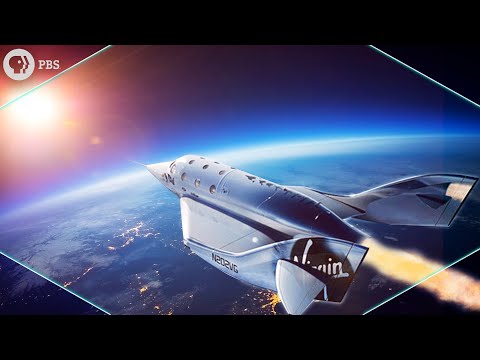
PBS Member Stations rely on viewers like you. To support your local station, go to: http://to.pbs.org/DonateSPACE ↓ More info below ↓ Uploaded 13-03-19 Check out Sound Field: http://youtube.com/soundfieldpbs Check out the new Space Time Merch Store! Support Space Time on Patreon Thanks to Matthias Rüby for on-site camera work. The private space-race has been on for a while now. The attention has been on Space-X and Blue Origin with their reusable rockets. But there’s one private space program that’s been doing things a little differently. Richard Branson’s Virgin Galactic isn’t building rockets at all – it’s building spaceships. And I got to sit down and talk to him about it. Tweet at us! @pbsspacetime Facebook: facebook.com/pbsspacetime Email us! pbsspacetime [at] gmail [dot] com Comment on Reddit: http://www.reddit.com/r/pbsspacetime Help translate our videos! Sound Waves from the Beginning of Time Hosted by Matt O'Dowd Written by Matt O'Dowd On-site filming by Matthias Rüby Graphics
In this joint lecture, Gresham Professor of Physic Robin May and world-renowned puppet creator Steve Allen (Labyrinth, The Muppets, Fraggle Rock) discuss the science that goes in to bringing puppets to life, what our interactions with puppets mean for our understanding of human emotions, and how we may be able to use puppets to help tackle some of society’s most pressing challenges. This lecture was recorded by Professor Robin May and Steve Allen on 13th of October 2026 at Barnard’s Inn Hall, London. Professor of Infectious Disease at the University of Birmingham, and (interim) Chief Scientist at the UK Health Security Agency, Robin May was appointed Gresham Professor of Physic in May 2022. Between July 2020 and September 2025 he served as Chief Scientific Adviser at the Food Standards Agency (FSA). Professor May’s early training was in Plant Sciences at the University of Oxford, followed by a PhD on mammalian cell biology at University College London and the University of Birmingham.
When Apple Pay launched in the U.S., only about 3% of merchants accepted contactless payments. A decade later, Jennifer Bailey has helped expand it to 75 markets and more than 11,000 bank and network partners. Jennifer joins a16z General Partner Alex Rampell to tell the story of building Apple Pay, from solving the chicken-and-egg problem of banks, merchants, and consumers to designing payments around security and privacy without Apple seeing individual transactions. They also discuss the expansion from payments into transit, tickets, car and hotel keys, and digital IDs, plus why customer experience, patience, and timing have shaped Jennifer’s approach to building new products inside Apple. Resources: Follow Jennifer Bailey on LinkedIn:https://www.linkedin.com/in/jbaileyz Bailey: Follow Alex Rampell on X:https://x.com/arampell Stay Updated: Find a16z on YouTube: YouTube (https://www.youtube.com/@a16z) Find a16z on X (https://x.com/a16z) Find a16z onLinkedIn (https://www.linkedin.com/co
In today's brief: Drones over Sigonella: the US Navy says three drones were detected over its base in Sicily; Italian sources say one small quadcopter, probably a prank. The vampire camel: researchers at the American Museum of Natural History name a 10 to 13 million year old camel with fangs. Carbon from the core: a Columbia-led study says heavy carbon in Kilauea's rocks may be leaking from Earth's core, and may first have come from space. Cautious inquiry: Tom Rogan argues in UnHerd that the Bigfoot and UFO files deserve a proper look. Cryptid stamps: Mothman, Sasquatch, the Jackalope, the Squonk and Champ get a USPS stamp set in 2027. SIGNAL: an AI assistant for ghost hunters that checks for ordinary explanations first. Quick hits: the Juarez "pterodactyl" looks like a heron; drones over Canadian bases; a fourth Galileo Project observatory. Every story and source: https://believepod.com/ufo-paranormal-news-25-november-2026/ New episodes every morning. Keep your eyes on the sky. Sourc
Join our community and sign up to theBuilding Sciology Mailing List (https://dashboard.mailerlite.com/forms/1175293/137147665837196912/share) today. A high-performance envelope is only as reliable as its weakest junction. In this episode, host Jess Kismet catches up with Luke Davies—award-winning Tasmanian builder, carpenter by trade, author of The Dream Home, and co-founder of Davies Construction, Align Architecture & Interiors, Future Builder Co., and the Alfie AI platform. Luke walks through the practical evolution from standard residential building to executing award-winning certified Passive House projects (including a standout build hitting 0.18 ACH50). We unpack the legal and building physics traps of changing architectural details on site, how to correctly drain and vent wall cavities, how to select non-toxic finishes, and what it really takes to detail a 57% glazing-to-floor-area ratio in northern Tasmania. Key Discussion Points: Pre-Construction Education & The 6 Elements: Wh
People directly affected by a local change should have more influence than other residents.
Share your view, then see how readers voted. No sign-in required. This poll is shared across stories.
Do you agree or disagree?
Common Quandary
A Common Quandary to discuss
Another conversation to explore, separate from this news story.
You ignore a friend's message all day while posting online. Do you owe them an explanation?
A friend sends a message that deserves a thoughtful answer. You lack the energy to respond, but spend the day posting jokes and photos. They can see that you are active and eventually ask whether something is wrong.
Does being visibly online create an obligation to be available?