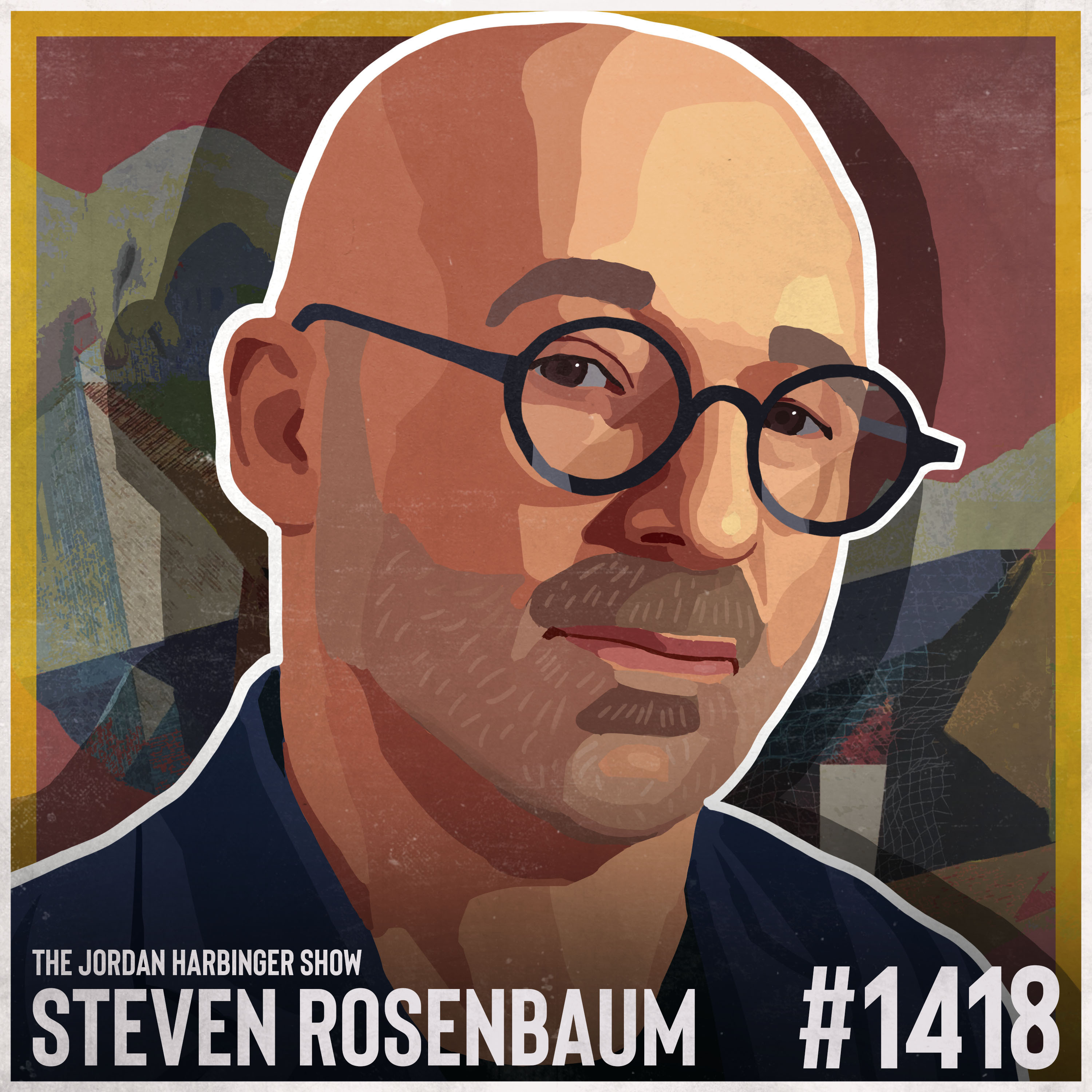
1418: Steven Rosenbaum | How AI Reshapes Reality (and Our Trust in It)
91 min
Listen through the publisher, then discuss the episode here or arrange an in-person Roundtable. Your city determines where to meet.
Roundtables are designed for groups of four, with a shared subject and room for everyone to speak. Come for discussion, with no dating expectation.
What happens when a book about truth gets caught with fake quotes? Steven Rosenbaum explains how AI fooled him and how to keep it from fooling you. Full show notes and resources can be found here: jordanharbinger.com/1418 (https://jordanharbinger.com/1418) What We Discuss with Steven Rosenbaum: How a former stage illusionist turned media maker sees AI blurring the line between performances we agree to be fooled by and content so convincing we assume it's true — and why "How did it make you feel?" is a better first question than "Is this real?" Why algorithmic feeds distort reality even when every individual post is authentic, amplifying whatever provokes us until we believe the whole world shares our outrage, and how this widens divides between people who likely agree on more than they realize. What changes when AI agents stop suggesting and start choosing for us: paid placement quietly shapes recommendations, options below the fold become invisible, and data-driven decisions about hiring or firing wear the costume of objectivity without earning it. How about 20 AI-fabricated quotes slipped past some 30 people who worked on Steven's book about truth and landed him on the front page of The New York Times — and why he chose to own the mistake, pay for a page-by-page fix, and republish rather than walk away. Why a citation is a place to start a fact check, not a substitute for one: be wary when AI turns especially charming, click every URL it hands you, and confirm the exact quoted words actually appear on the linked page before trusting or publishing them. And much more... Do you even Reddit, bro? Aura Frames: $35 off: auraframes.com, code JORDAN (https://auraframes.com/) Paka: Paka hoodie & crew socks: go.pakaapparel.com/jordan (https://go.pakaapparel.com/jordan)
Episode information is provided by the publisher. Listening takes place on the publisher’s service.
What if the life you've been dreaming about isn't a thousand changes away? What if it's separated by just one — one habit, one practice, one consistent action repeated every day until it becomes who you are? Uploaded 23-04-26 This seminar is about the foundational habit — the single, often invisible behavior that holds the entire pattern of your life in place. We break down why the habit that would actually change everything is almost never the one you'd guess, why the real leverage point is usually the thing you've been quietly avoiding, and how one kept promise to yourself can set off a chain reaction that reaches places you never expected it to touch. What You'll Learn: ️Why most people never begin — not because the project is too hard, but because they believe it requires changing everything at once. ️The foundational habit — the hidden architecture of your days, and why a small push in the right place produces more change than a decade of effort in the wrong places. ️Why the obvio
The Petal's New Zealand edition for Tuesday 24 November 2026 carries nine decisions newly reported, one from the Court of Appeal and eight from the High Court, all on air. The thread is saying it up front: a consumer forum clause that hid local rights, fees revealed late, and a supply price nobody fixed. Commercial Law Desk Viagogo GmbH v Commerce Commission [2026] NZCA 576 - an exclusive Geneva forum and Swiss choice of law clause in standard form consumer terms created a significant imbalance under s 46L(1)(a) of the Fair Trading Act 1986 without evidence of the cost of suing abroad, because deterrence was obvious relative to ticket prices; detriment was established by the likely deterrent effect, even with remote small claims procedures abroad; the clause was not reasonably necessary where a transparent clause subject to mandatory local laws would protect the trader's interests; the whole clause, including the choice of law term (reversing the High Court), was unfair for failing to
William Mougayar is the author of "TRUSTSHIFT" and "The Business Blockchain," and a longtime ethereum investor. In this conversation, we break down how trust is moving from institutions into public infrastructure, why banks are adding blockchain under their existing products, and what JPMorgan's settlement research means for ethereum. We also discuss AI agents, tokenization, zero knowledge proofs, and why William believes ethereum is the backbone of the trust shift. ====================== ====================== This episode is sponsored by GraniteShares. GraniteShares is launching AIL and ANS, two ETFs built to trade Anthropic's daily move. AIL seeks two times Anthropic's daily performance and ANS seeks two times the opposite, with no margin or borrowing needed. Both reset daily, are built for short-term traders, and carry significant risk. Learn more at https://www.graniteshares.com/anthropic-leveraged-etfs This video includes a paid sponsorship with GraniteShares. AIL and ANS are pro
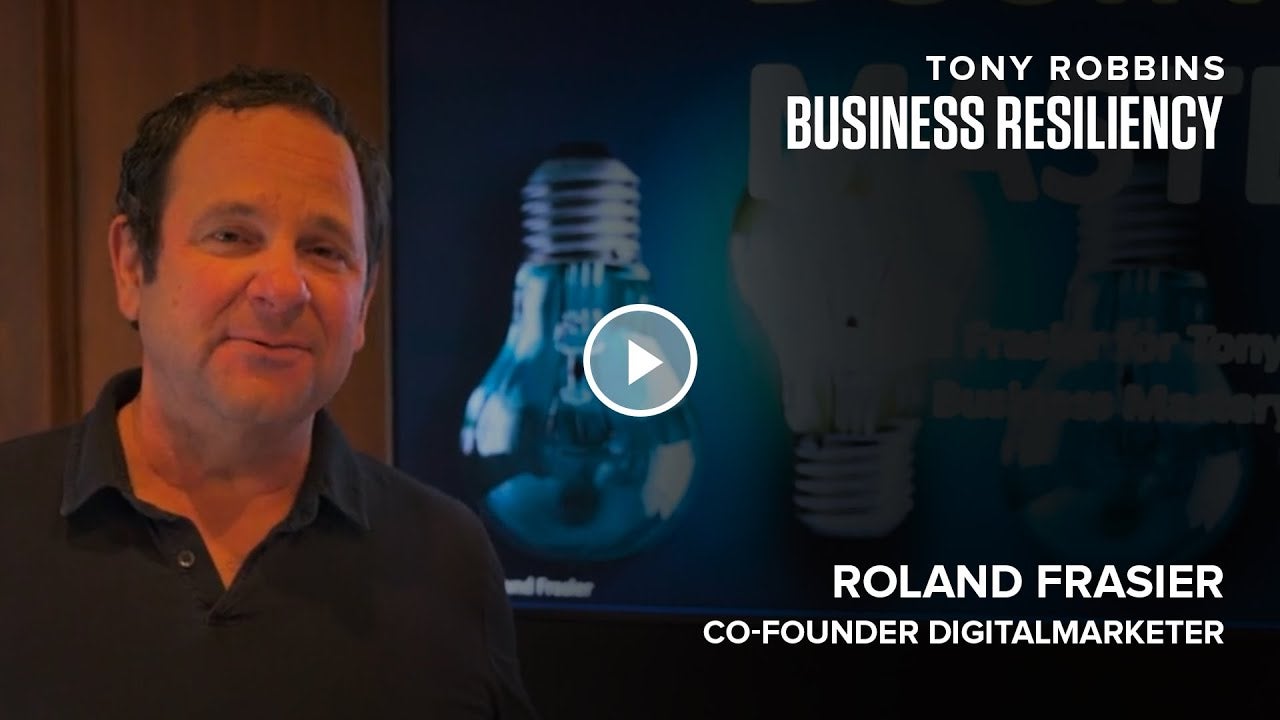
Roland Frasier is a strategic investor, entrepreneur and renowned deal-maker – and he wants to share his powerful strategies to help you grow your business in any economic climate. Uploaded 27-04-20 In an economic winter, your business has three options: freeze and fail, fumble and maybe survive or fight and grow. You want to fight and grow. You want to make it through and not just survive, but thrive. You want to join the ranks of Apple, Starbucks and other famous companies who used downturns to regroup, reassess and come out even stronger on the other side. As Tony Robbins often says, business is 80% psychology and only 20% skill. You can listen to Tony talk about the psychology of success on his podcast at https://www.tonyrobbins.com/podcasts/episode-11 and start putting those tips into action today. Surround yourself with success. Feed your mind the right fuel. And most of all, shift your mindset and defeat your fear of failure. In this video, Roland’s tips combine both psychology
What happens when two booking sites sell the same hotel room? In this solo episode of the Australian Investors Podcast, Owen Rask uses SiteMinder (ASX: SDR) to explore the unglamorous software that keeps hotel availability and prices in sync. It is the finale of the Business Stack of the Future series brought to you by Stripe. The series closes with a practical challenge for builders and investors: follow a customer request from discovery to a completed transaction, then ask who supplies the essential data, who gets paid and who bears the risk when something goes wrong. This is a business case study, not a recommendation to buy SiteMinder shares. Episode resources – Speak with the Rask Advice team (https://rask.com.au/advice) Show partner resources – ETF investor? Rask resources – All services (https://bit.ly/R-services) – Financial Planning (https://bit.ly/R-plan) – Invest with us (https://bit.ly/R-invest) – Access Show Notes (https://bit.ly/R-notes) – Ask a question (https://bit.ly/R
PBS Member Stations rely on viewers like you. To support your local station, go to: http://to.pbs.org/DonateSPACE ↓ More info below ↓ Uploaded 27-01-20 Sign Up on Patreon to get access to the Space Time Discord! Sign up for the mailing list to get episode notifications and hear special announcements! Check out the Space Time Merch Store In particle physics we try to understand reality by looking for smaller and smaller building blocks. But what if that has been the wrong philosophy all along? Hosted by Matt O'Dowd Written by Matt O'Dowd and Graeme Gossel Graphics by Leonardo Scholzer and Adriano Leal Post Production: Yago Ballarini, Max Willians, Pedro Osinski Directed by: Andrew Kornhaber Executive Producers: Eric Brown and Andrew Kornhaber End Credits Music by J.R.S. Schattenberg: https://www.youtube.com/channel/UCRl6-nb4iOnsij-vnpAjp0Q In standard use, the S-matrix can be calculated if you understand the forces in the interaction region - for example, in the nucleus of an atom. But
You’re worried your sister-in-law’s weight loss has gone too far. Is it your place to say something, and if so, how? Welcome to Feedback Friday! And in case you didn't already know it, Jordan Harbinger (@JordanHarbinger (https://twitter.com/JordanHarbinger)) and Gabriel Mizrahi (@GabeMizrahi (https://twitter.com/GabeMizrahi)) banter and take your comments and questions for Feedback Friday right here every week! If you want us to answer your question, register your feedback, or tell your story on one of our upcoming weekly Feedback Friday episodes, drop us a line at [email protected]. Now let's dive in! Full show notes and resources can be found here: jordanharbinger.com/1417 (https://jordanharbinger.com/1417) On This Week's Feedback Friday: Your sister-in-law started a weight loss journey with strength training, macros, and a brief stint on a GLP-1. A year later, she’s still shrinking — and looking frail rather than fit. Knowing her past struggles with food, you want to help w
Think “like” and “um” make you sound dumb? Linguist Valerie Fridland reveals why so-called bad English is older — and smarter — than you think. Full show notes and resources can be found here: jordanharbinger.com/1416 (https://jordanharbinger.com/1416) What We Discuss with Valerie Fridland: Why many speech habits we call lazy or uneducated — like saying “ax” for “ask” or “walkin’” for “walking” — actually have centuries of history behind them, from Beowulf and Chaucer to the Salem witch trial transcripts. How language innovation tends to come from people with the least social power — the young, the working class, and women — and how words like “dude,” “y’all,” and even “you” were shaped by speakers outside polite society. What the “never end a sentence with a preposition” rule reveals about the elitist roots of English grammar, and why our irritation with accents or a figurative “literally” says more about how we view the speakers than the speech. Why lower-pitched voices are heard as
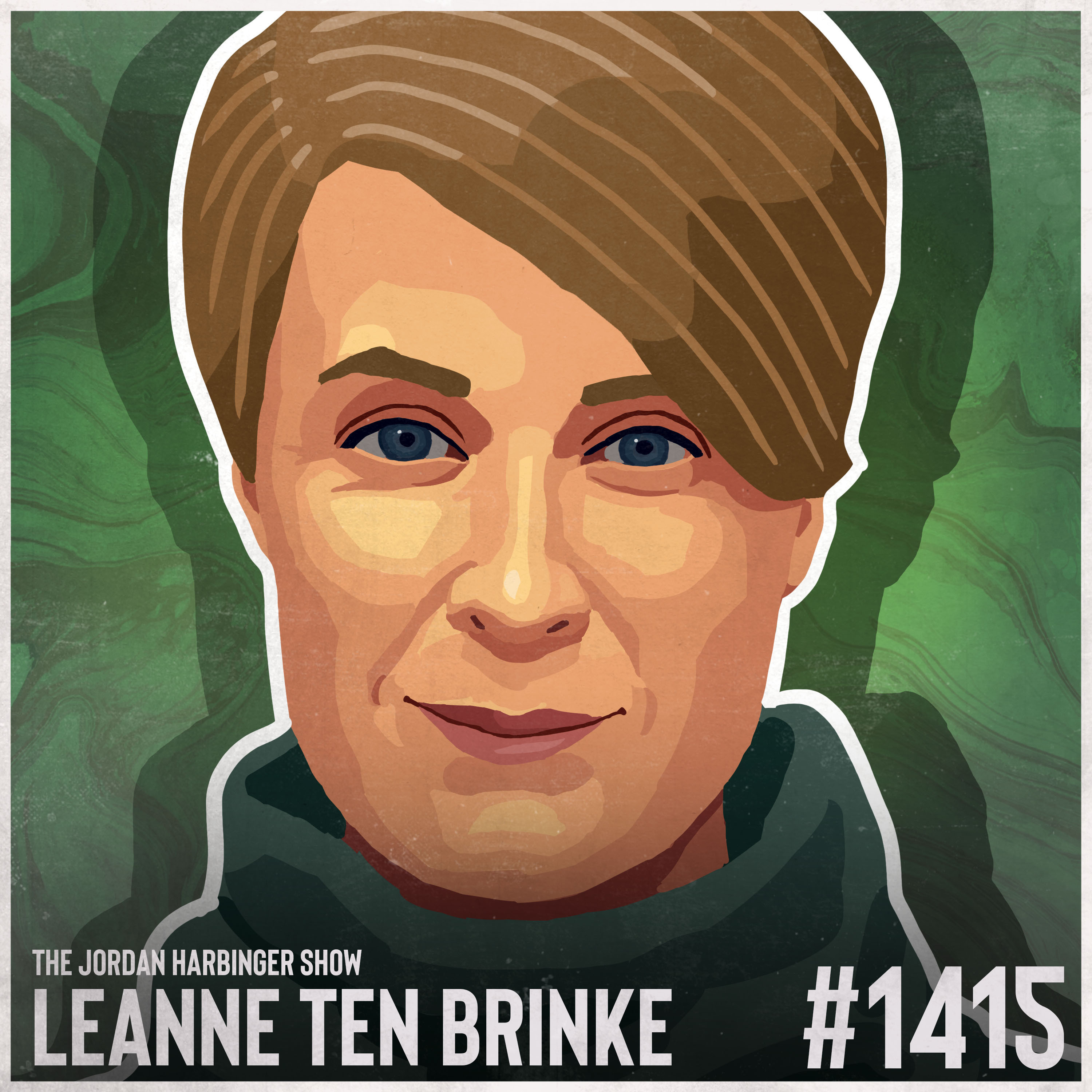
Is ruthlessness the secret to success? Researcher Leanne ten Brinke shares why the science says no — and how to handle the poisonous people around you. Full show notes and resources can be found here: jordanharbinger.com/1415 (https://jordanharbinger.com/1415) What We Discuss with Leanne ten Brinke: Why psychopathy isn’t just for serial killers. callous, manipulative traits exist on a continuum, more like cholesterol than a virus, and depending on the cutoff used, roughly 10 to 20 percent of people show elevated levels without meeting any clinical diagnosis. How poisonous people reveal their priorities. In a point allocation game, those highest in psychopathy chose $500 for themselves and $100 for a stranger over $550 and $300 — sacrificing their own gain just to beat someone else by a wider margin. Why ruthlessness isn’t the secret to success. Leanne’s study of hedge fund managers linked higher psychopathy to making less money year over year, and senators high in dark traits proved le
Patients should be able to compare expected treatment costs before choosing care.
Share your view, then see how readers voted. No sign-in required. This poll is shared across stories.
Do you agree or disagree?
Common Quandary
A Common Quandary to discuss
Another conversation to explore, separate from this news story.
Your grandfather brought home an ancient artifact. A museum wants it back. Do you surrender it?
In your grandfather's attic you discover a beautiful ancient object he brought home while working overseas decades ago. Your family treasures it and his papers suggest the rules were murky. A museum from that country says it belongs to their collection and asks for its return.
Can a family inherit clear ownership of something acquired through unclear power?