A 13.4-Billion-Year-Old Star Cluster Could Challenge Cosmic History
50 min
Listen through the publisher, then discuss the episode here or arrange an in-person Roundtable. Your city determines where to meet.
Roundtables are designed for groups of four, with a shared subject and room for everyone to speak. Come for discussion, with no dating expectation.
Astronomers have measured the age of VVV CL001, a faint globular cluster hidden behind dense clouds of dust near the center of the Milky Way. Infrared observations and the Hubble Space Telescope helped identify 155 cluster stars, revealing an estimated age of 13.4 billion years. That places this ancient stellar group remarkably close to the age of the universe itself. If future observations confirm the result, VVV CL001 could raise important questions about how early the Milky Way—and its oldest stars—actually formed. This episode includes AI-generated content.
Episode information is provided by the publisher. Listening takes place on the publisher’s service.
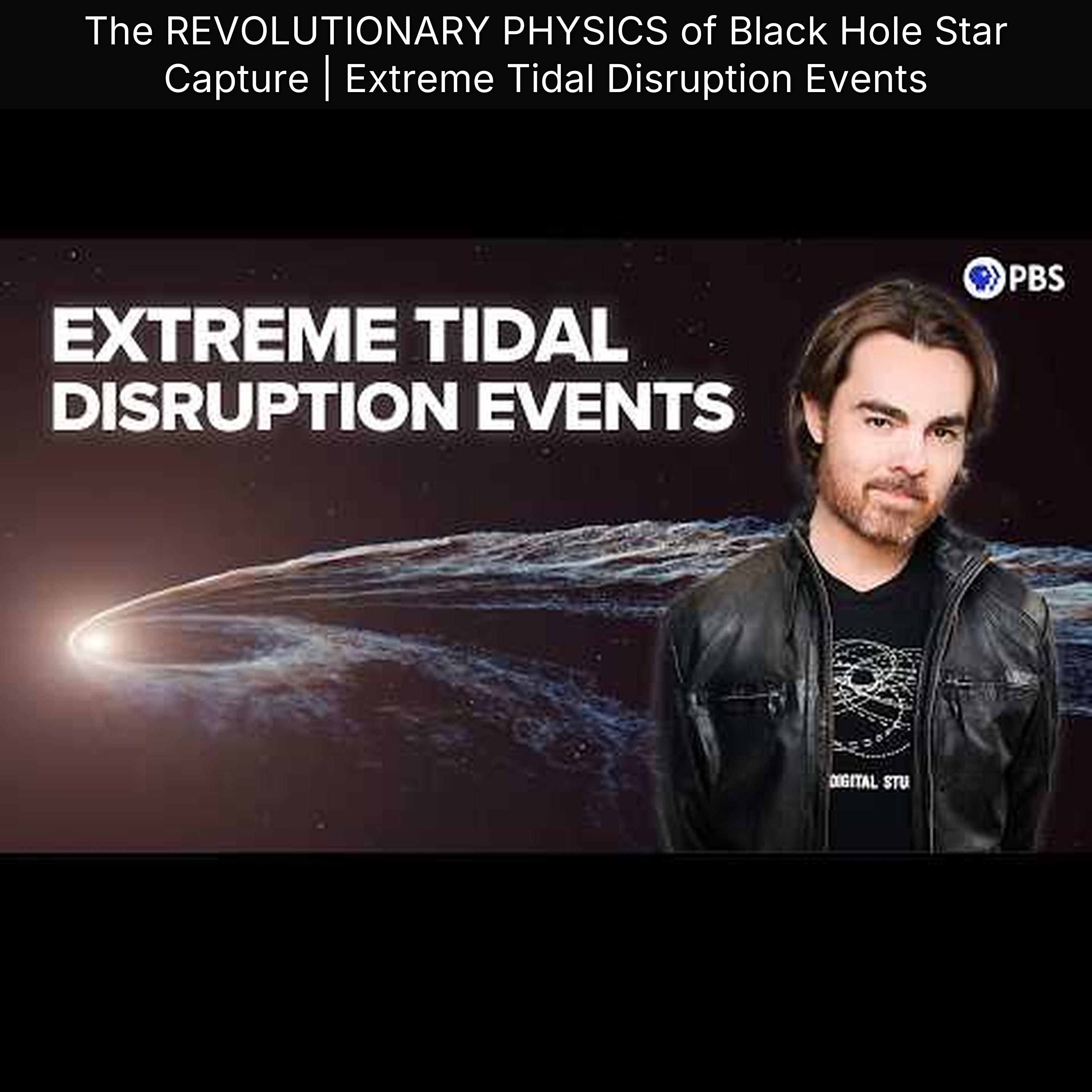
PBS Member Stations rely on viewers like you. To support your local station, go to:http://to.pbs.org/DonateSPACE Sign Up on Patreon to get access to the Space Time Discord! If you track the motion of individual stars in the ultra-dense star cluster at the very center of the Milky Way you’ll see that they swing in sharp orbits around some vast but invisible mass—that’s the Sagittarius A* supermassive black hole. These are perilous orbits, and sometimes a star wanders just a little too close to that lurking monster, leading to its utter destruction in the spectacular phenomenon known as a tidal disruption event. We’ve never seen a TDE in the Milky Way, but we’ve seen them in distant galaxies—and we now know how to spot stellar destructions so extreme that they reveal properties of the black hole itself. Check out the Space Time Merch Store Search the Entire Space Time Library Here: https://search.pbsspacetime.com/ Hosted by Matt O'Dowd Written by Matt Caplan, Andy Santarelli & Matt O'Dow
Scientists are rethinking how particles behave when moving at extreme speeds through matter. New research into quark-gluon plasma, the exotic fluid that existed moments after the Big Bang, reveals unexpected patterns in particle motion that challenge traditional physical models. The findings could offer a powerful new way to investigate the properties of the universe’s earliest matter. This episode includes AI-generated content.
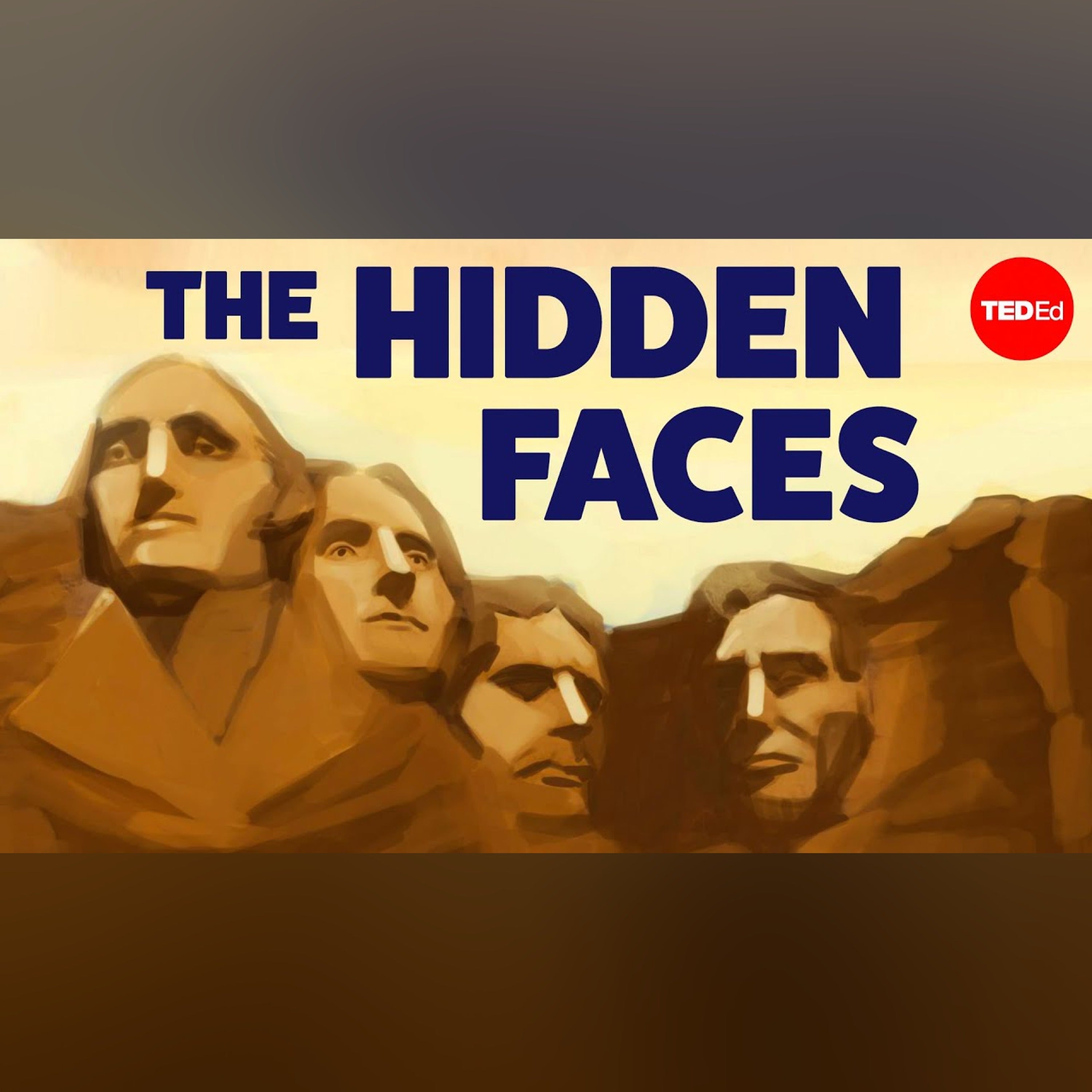
Uncover the hidden history of the building of Mount Rushmore, and how its creation destroyed sacred Native American land. Uploaded 16-12-21 -- Between 1927 and 1941, workers blasted 450,000 tons of rock from a mountainside using chisels, jackhammers, and dynamite. Gradually, they carved out Mount Rushmore. Today, the monument draws nearly 3 million people to South Dakota’s Black Hills every year. But its façade belies a dark history. Ned Blackhawk and Jeffrey D. Means explore the destruction of the sacred Six Grandfathers Mountain. Lesson by Ned Blackhawk and Jeffrey D. Means, directed by Anton Bogaty. Support Our Non-Profit Mission ---------------------------------------------- Support us on Patreon: http://bit.ly/TEDEdPatreon Check out our merch: http://bit.ly/TEDEDShop ---------------------------------------------- Connect With Us ---------------------------------------------- Sign up for our newsletter: http://bit.ly/TEDEdNewsletter Find us on Twitter: http://bit.ly/TEDEdTwitter Pe
Explore how the Hubble Space Telescope reveals the Universe, from iconic images to major discoveries, and how it complements the James Webb Space Telescope. "ASTROMAN: the Dark Sky Guardian" is a podcast channel that aims to explore popular science in multiple disciplines and research on interdisciplinary approaches, such as sustainability, dark-sky protection, astrophotography, space exploration, astronomy innovation, inclusive science communication, and STEAM Education by integrating science and arts. Exodus Chun-Long Sit, also known as the ASTROMAN, is a transmedia astronomy educator, popular science author, STEAM educator, and science communicator in Hong Kong. He is recently the National Astronomy Education Coordinator (Chair of Hong Kong, China) of the International Astronomical Union and President of Starrix. He was also an International Committee Member of the Dark Sky International, regularly organizing public lectures at the Hong Kong Space Museum and the Hong Kong Science Mu
In this calm and sleepy facts episode, we spend eight peaceful hours exploring some of the quietest wonders of the natural world. We begin beneath a gathering thunderstorm, following warm air as it rises into towering clouds and learning how a single flash of lightning can briefly heat the air to several times the temperature of the surface of the Sun. From there we settle into the hidden world of hibernation, where animals slow their breathing and their heartbeats to just a few beats a minute and wait out the long winter in stillness. Next, we wander among the trees, discovering how they lift water hundreds of feet into the air without a single moving part and quietly record each passing year in rings of wood. Finally, we cross the deserts, where the heat of the day gives way to cold, clear nights and some dunes hum softly as the sand slides down their slopes. Each story unfolds slowly and gently, with no sudden sounds, so the whole night can pass in calm and quiet wonder. Let these c
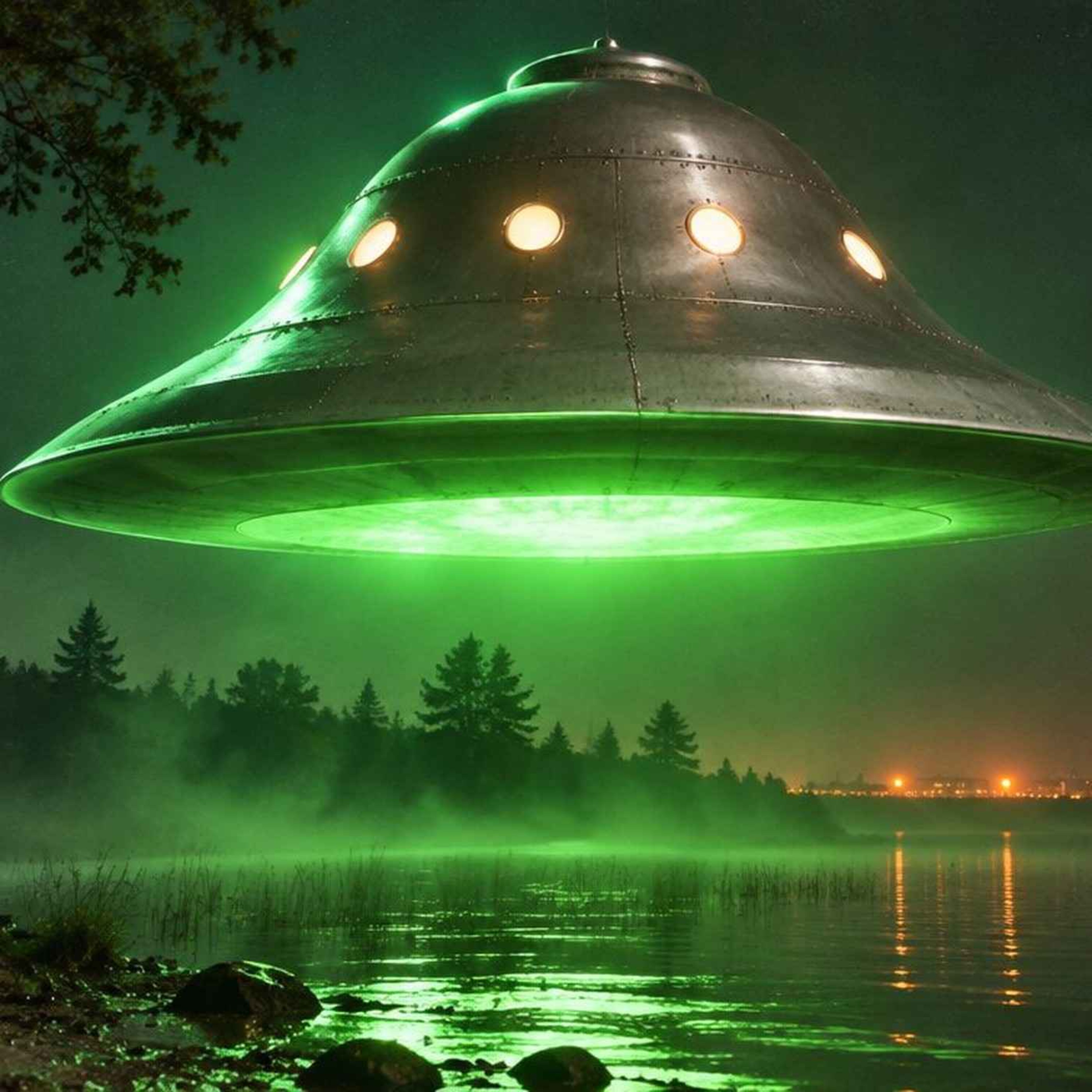
In today's brief: Lake Erie, 1957: a newly released Air Force report says two boys saw a humming, bell-shaped craft near the Enrico Fermi Atomic Plant. Skinwalker Ranch: owner Brandon Fugal calls the new files landmark and recalls a daylight saucer over the mesa. Warship footage: a 20-second 2020 infrared clip shows a light crossing a US Navy ship in the Middle East, with no Pentagon assessment. Martha's Vineyard, 1957: a spiked, nickel-coloured object that the Air Force put down to a radar-reflector balloon. Loch Ness: reported sightings jump to 15 this year, up from six in 2025. The Book of Miracles: a 16th-century manuscript of comets, blood rain and multiple suns heads to auction at Christie's. Quick hits: a 1952 file blames the saucer wave on temperature inversions; more Pentagon UFO files are on the way. Every story and source: https://believepod.com/ufo-paranormal-news-22-november-2026/ New episodes every morning. Keep your eyes on the sky. Sources: FOX 2 Detroit: https://www.fo
The Euclid space telescope has uncovered a remarkable collection of cosmic gravitational lenses, offering new opportunities to investigate some of the universe’s greatest mysteries. These natural magnifying glasses reveal distant galaxies through the distortion of light, providing astronomers with valuable clues about dark matter, cosmic structure, and the hidden architecture of the universe. This episode includes AI-generated content.
A mysterious radio signal is drawing astronomers attention with its remarkably regular flashes every eight minutes. Its source challenges expectations about which stellar remnants can produce such signals, while offering a promising new way to uncover hidden objects across our galaxy. This episode includes AI-generated content.
A massive new simulation is offering an unprecedented look at the universe's earliest stages, exploring how the first structures emerged from cosmic darkness. The research provides fresh insights into the mysterious era that shaped the cosmos and how the universe evolved into the vast structure we see today. This episode includes AI-generated content.
Tax increases should include clear measures for judging whether the promised benefits occur.
Share your view, then see how readers voted. No sign-in required. This poll is shared across stories.
Do you agree or disagree?
Common Quandary
A Common Quandary to discuss
Another conversation to explore, separate from this news story.
If a good deed is filmed for likes, is it still a good deed?
A local creator films themselves buying groceries for strangers. The videos generate substantial income, but they also inspire donations and allow the creator to help more people.
Do mixed motives diminish a genuinely helpful act?