Listen through the publisher, then discuss the episode here or arrange an in-person Roundtable. Your city determines where to meet.
Roundtables are designed for groups of four, with a shared subject and room for everyone to speak. Come for discussion, with no dating expectation.
View full lesson: http://ed.ted.com/lessons/why-do-some-people-go-bald-sarthak-sinha Uploaded 02-10-14 If you are a living, breathing human being, chances are you have felt sad at least a few times in your life. But what exactly is melancholy, and what (if anything) should we do about it? Courtney Stephens details our still-evolving understanding of sadness -- and even makes a case for its usefulness. Lesson by Courtney Stephens, animation by Sharon Colman Graham.
Episode information is provided by the publisher. Listening takes place on the publisher’s service.
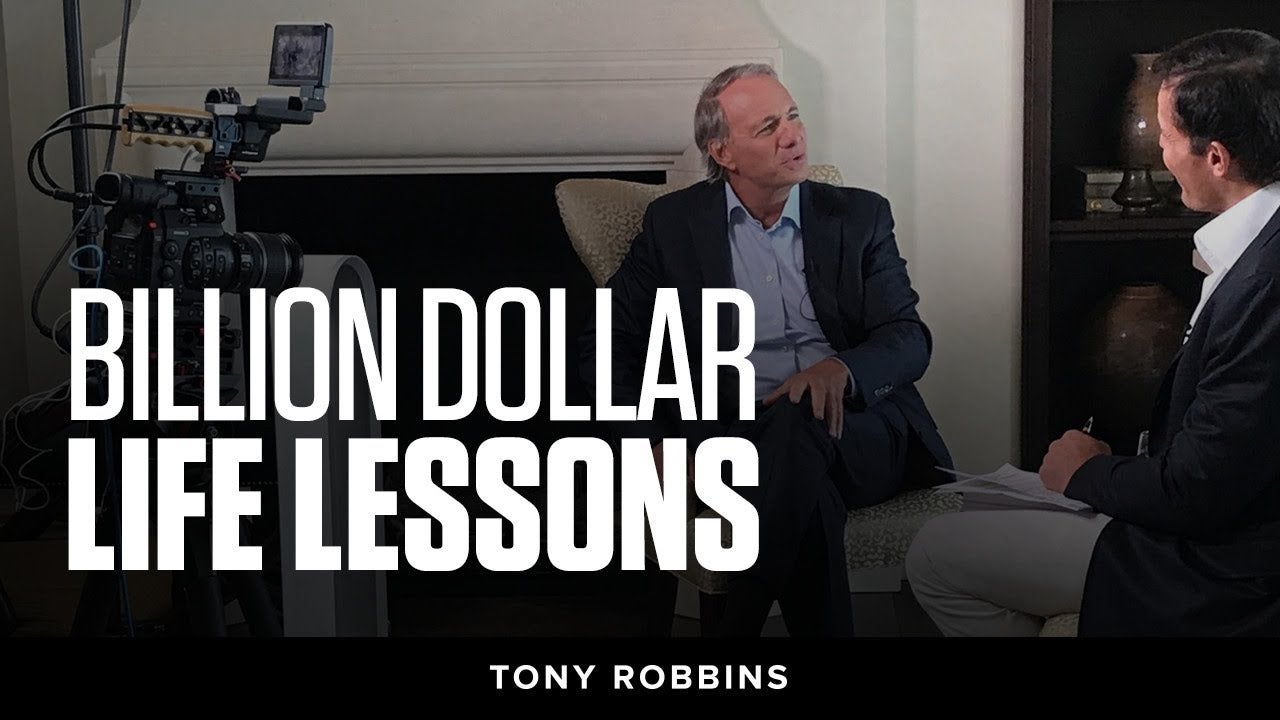
Where is the economy is today – is it growing? Flat? Declining? Uploaded 15-10-19 What about YOUR economy – your personal investments, your nest egg? How safe is it, and how likely it is to grow at the rate you want it to? When you think about your current investments, how do you feel? Secure, or are you half-panicked? For many, the recession of 2008 still lingers. Those who suffered are waiting, white-knuckled, holding on to their portfolios and still wondering what to do next. We have, after all, been in one of the longest bull markets in history and bull markets always come to an end at some point. So how do you protect yourself from the possibility of another 2008? And how can you start to take a more proactive, confident approach to your portfolio? When Tony wrote Money Master the Game, he had the unique privilege of sitting down with some of the most successful, masterful investors and financial gurus of all time – including the legendary Ray Dalio. Ray founded the investment man
Join NCI University today to master human behavior and influence: Uploaded 20-10-22 What if we were made to believe something so strange that it would change the fabric of society? These two lies are the two most powerful forces that marketing and medicine....and even politics seem to sell us. 1️⃣ LIE ONE: Focus on symptoms and not causes. 2️⃣ LIE TWO: Pleasure is the same as happiness. In this video, I'll explore with you, the causes of some of these deceptions, and I hope you'll come to see that our culture is almost rooted in these two deceptions. From marketing and sales to medicine and politics, these LIES seem to be interwoven in the fabric of our culture as a whole. Knowing them and being aware of them will make you start seeing these EVERYWHERE you look. DOWNLOAD THE APP: https://team.chasehughes.com/share/Sxaxa8CW58Q_4sKk?utm_source=manual (https://team.chasehughes.com/share/Sxaxa8CW58Q_4sKk) THE FATE MODEL: https://www.youtube.com/watch?v=PbEJ_y7tscY&feature=share&utm_source=
Eight decisions from four appellate courts in the Court of Appeal edition of Wednesday 25 November 2026, with the New South Wales, Queensland, Western Australia and ACT editions folded in. Sexual offences against children and a domestic violence assault are reported as legal doctrine only. Cassaniti v Krejci (liquidator) [2026] FCAFC 151 is covered in the Federal Courts brief. Criminal Law Desk (opening story). Kutti v R [2026] NSWCCA 195 - De Simoni breached only where the offender is actually punished for an uncharged more serious offence, judged by substance; where moral culpability is reduced, the judge must then consider whether and how far that moderates the purposes of sentencing, even for a qualified ('to a small degree') reduction and despite counsel's silence; no form of words; on re-sentence no lesser sentence warranted. Leave granted; appeal dismissed (Stern JA, Hamill and Yehia JJ; also NSW edition, Signal Doctrine). JADE (https://jade.io/article/1307520) Practice and Proc
#JimRohn, #Motivation, #MotivationalSpeech, #SuccessMindset, What if your entire life could start changing with just a few powerful daily habits? What if success, confidence, discipline, and peace were hiding inside the small things you do every single day? Uploaded 20-05-26 In this powerful 35-minute motivational speech inspired by Jim Rohn’s timeless wisdom, you will discover the 10 life-changing habits that can completely transform your mindset, future, discipline, confidence, success, and personal growth. If you feel stuck, lost, unmotivated, lazy, confused, or tired of watching life pass you by… this speech is for you. This isn’t just motivation. This is a wake-up call. A deep lesson about discipline, consistency, regret, self-belief, mindset, personal responsibility, daily habits, success psychology, emotional growth, and becoming the person you were born to become. You’ll learn why: Small daily habits change everything Discipline matters more than motivation Your future depends
What is being built and how do I join it? In this Afternoon Vibe from The Positive Mindset Podcast, Henry Lawrence talks about the bigger picture behind the season you're in. The life we live is an experience, and what we're experiencing is the creation of something more. Henry pictures a construction site where one worker pours concrete in his own corner while another goes to the one who drew the plan and asks where she's needed. He shares why a hard season isn't a punishment but soil, how one question can change the way you walk into every single day, and what starts to happen when your only goal is to get closer to the Creator: you learn to read the river, sense the wind and see that even volcanoes build. Surrender isn't needing to see it all. It's staying close to the One who does. In this episode: • "Show me what you're building. Where do you need me?" • "It's not a punishment, not failure, it's just soil." • "An interruption becomes an invitation. A delay becomes the design." • "
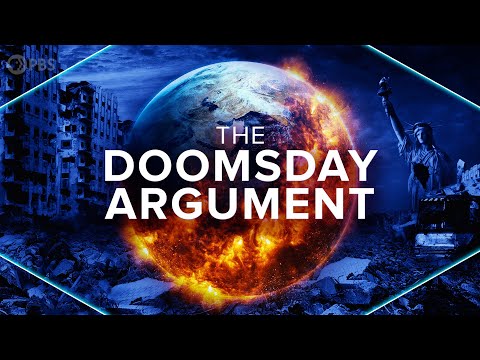
PBS Member Stations rely on viewers like you. To support your local station, go to: http://to.pbs.org/DonateSPACE ↓ More info below ↓ Uploaded 09-12-19 Sign Up on Patreon to get access to the Space Time Discord! Sign up for the mailing list to get episode notifications and hear special announcements! Check out the Space Time Merch Store Since the dawn of humanity around 100 billion people have lived. How many will live in the future of our species? We might hope for a trillion times that if we colonize the galaxy. But a simple statistical argument tells us that the doom of our species is much, much closer. Hosted by Matt O'Dowd Written by Matt O'Dowd Graphics by Leonardo Scholzer and Adriano Leal Directed by: Andrew Kornhaber Executive Producers: Eric Brown and Andrew Kornhaber End Credits Music by J.R.S. Schattenberg: https://www.youtube.com/channel/UCRl6-nb4iOnsij-vnpAjp0Q In some recent episodes we’ve explored the anthropic principle and seen how it can be used to explain the fact t
Dig into the slippery slope fallacy, which assumes that one step will lead to a series of events that lead to an extreme— often bad— scenario. Uploaded 19-08-21 -- It’s 1954. Vietnamese nationalists are on the verge of securing an independent Vietnam under communist leader Ho Chi Minh. U.S. President Eisenhower claims that by virtue of the "falling domino principle," communist control of Vietnam would lead to the global spread of authoritarian communist regimes. Can you spot the problem with this argument? Elizabeth Cox explores the slippery slope fallacy. Lesson by Elizabeth Cox, directed by TOGETHER. Support Our Non-Profit Mission ---------------------------------------------- Support us on Patreon: http://bit.ly/TEDEdPatreon Check out our merch: http://bit.ly/TEDEDShop ---------------------------------------------- Connect With Us ---------------------------------------------- Sign up for our newsletter: http://bit.ly/TEDEdNewsletter Find us on Twitter: http://bit.ly/TEDEdTwitter Pe
View full lesson: http://ed.ted.com/lessons/how-do-we-measure-distances-in-space-yuan-sen-ting Uploaded 09-10-14 When we look at the sky, we have a flat, two-dimensional view. So how do astronomers figure the distances of stars and galaxies from Earth? Yuan-Sen Ting shows us how trigonometric parallaxes, standard candles and more help us determine the distance of objects several billion light years away from Earth. Lesson by Yuan-Sen Ting, animation by TED-Ed.
As machines take on more jobs, many find themselves out of work or with raises indefinitely postponed. Is this the end of growth? No, says Erik Brynjolfsson -- it's simply the growing pains of a radically reorganized economy. A riveting case for why big innovations are ahead of us ... if we think of computers as our teammates. Be sure to watch the opposing viewpoint from Robert Gordon. Uploaded 30-08-13 Talk by Erik Brynjolfsson.
Residents' need for quiet should usually outweigh the benefits of late-night entertainment.
Share your view, then see how readers voted. No sign-in required. This poll is shared across stories.
Do you agree or disagree?
Common Quandary
A Common Quandary to discuss
Another conversation to explore, separate from this news story.
The company allows an $80 dinner. Is ordering the lobster fair game?
During work travel, company policy permits an expensive dinner. A modest option is nearby, but colleagues choose the nicest restaurant because the company can easily afford it and everyone is within the stated limit.
Is following a rule enough when you are spending someone else's money?