Listen through the publisher, then discuss the episode here or arrange an in-person Roundtable. Your city determines where to meet.
Roundtables are designed for groups of four, with a shared subject and room for everyone to speak. Come for discussion, with no dating expectation.
MG, founder and CEO of WorkOS, is back to talk about leading a company through what DHH called a seminal moment in computing. He explains Atlas, the AI coworker WorkOS built for itself and then launched, why agents will soon choose and sign up for your tech stack, and why this moment feels closer to fire than to the iPhone. Then he gets practical: starting a company is easier than ever, but product-market fit is harder, so be a heat-seeking missile for pain, pick customers you like, and stop calling yourself non-technical. Join the discussion (https://changelog.zulipchat.com/) Changelog++ (https://changelog.com/++) members save 11 minutes on this episode because they made the ads disappear. Join today! ClickHouse Observability (https://clickhouse.com/observability) – Fully managed observability for SREs and their agents. Send OpenTelemetry to a managed OTLP endpoint; ClickHouse runs ingestion, schema, scaling. Full-fidelity logs, metrics and traces (no sampling), no separate cardinality charge. Public beta: $0.10/GB logs and traces, $0.05 per million metric points (half of standard), 30-day retention. Fingerprint (https://fingerprint.com/) – Detect threats, AI agents, and bots with device intelligence. Coder.com (https://coder.com/) – Secure environments where devs and agents work in parallel. Open by design. Secure by default. Give your agent its own hardware-isolated Linux computer. Deploy what it builds without changing platforms. Featuring: Michael Grinich – Website (https://workos.com/), GitHub (https://github.com/grinich), LinkedIn (https://www.linkedin.com/in/grinich), X (https://x.com/grinich) Show Notes: WorkOS (https://workos.com/) WorkOS Atlas (https://workos.com/atlas) Airlock (https://workos.com/airlock) auth.md (https://workos.com/auth-md) WorkOS customers (https://workos.com/customers) Omarchy (https://omarchy.org/) Selling to Enterprise (Founders Talk #96) (https://changelog.com/founderstalk/96) Something missing or broken? PRs welcome! (https://github.com/thechangelog/show-notes/blob/master/podcast/the-changelog-692.md)
Episode information is provided by the publisher. Listening takes place on the publisher’s service.
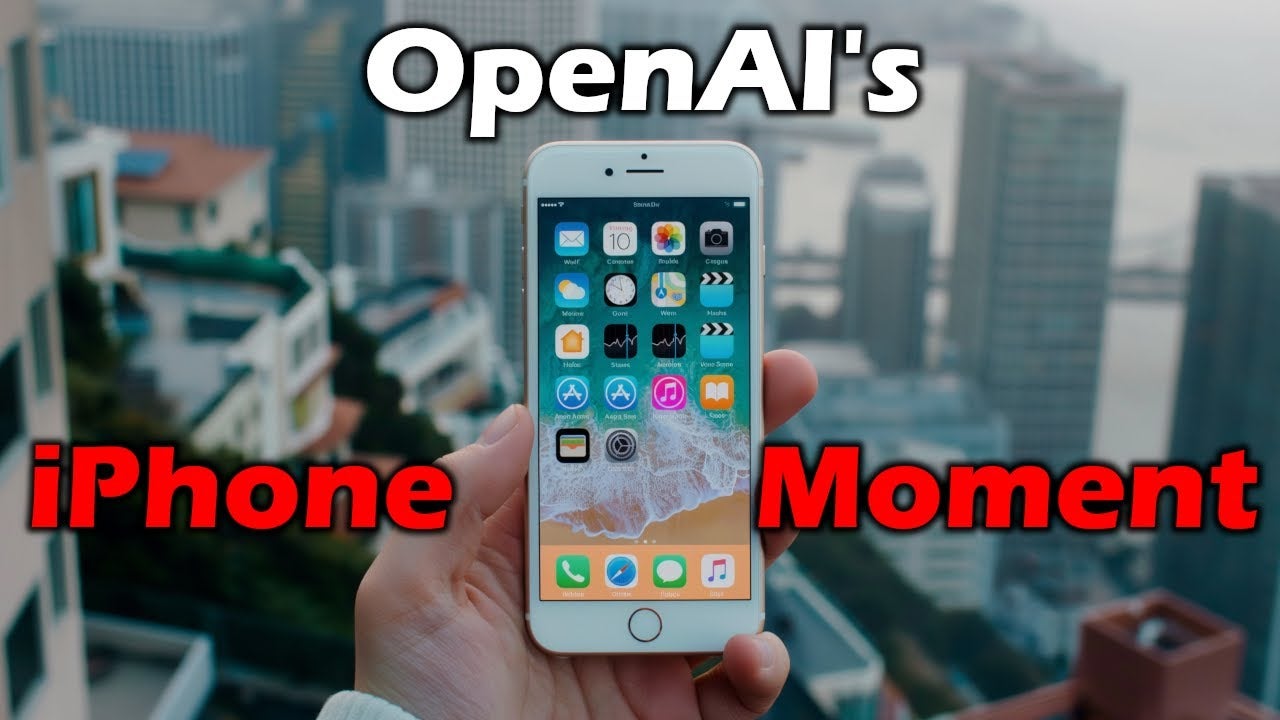
OpenAI just had a BLACK SWAN "iPhone Moment" with GPT-4o - Here's what that means for Google... Episode release date: 15 May 2024 Core Ideas: Metamodernism: Narratives and emergence view of reality - Reduce suffering - Increase prosperity - Increase understanding mantra: Seek knowledge. DISCLAIMER: This is a community-driven show. ---------- Keywords: ai innovation, david shapiro, singularity, deep learning, machine learning, agi
Before diving into today’s interview, Michael shares show updates for the new year—including Chris’s return and a regular Tuesday/Wednesday release cadence—followed by breaking news on Jensen Huang returning to NVIDIA after a $2 trillion stock drop. Michael also unpacks why Frontier Labs are lobbying to conflate "open" models with national security risks following Anthropic's $81B+ IPO, why local communities are pushing back on tax-subsidized data centers, and how enterprise AI token spend is starting to eclipse monthly payroll. Then, Ryan Sipes of Thunderbird joins the show to discuss Thunderbolt, Mozilla’s open-source, self-hostable AI client. Ryan explains how organizations are using Thunderbolt as an on-premise, air-gapped, or confidential-compute replacement for ChatGPT and Claude, how interactive "mini apps" are moving AI workflows beyond basic chat, and why businesses need to own their AI stack rather than rent it. Key Topics Covered Show Updates: Chris returns in the new year w
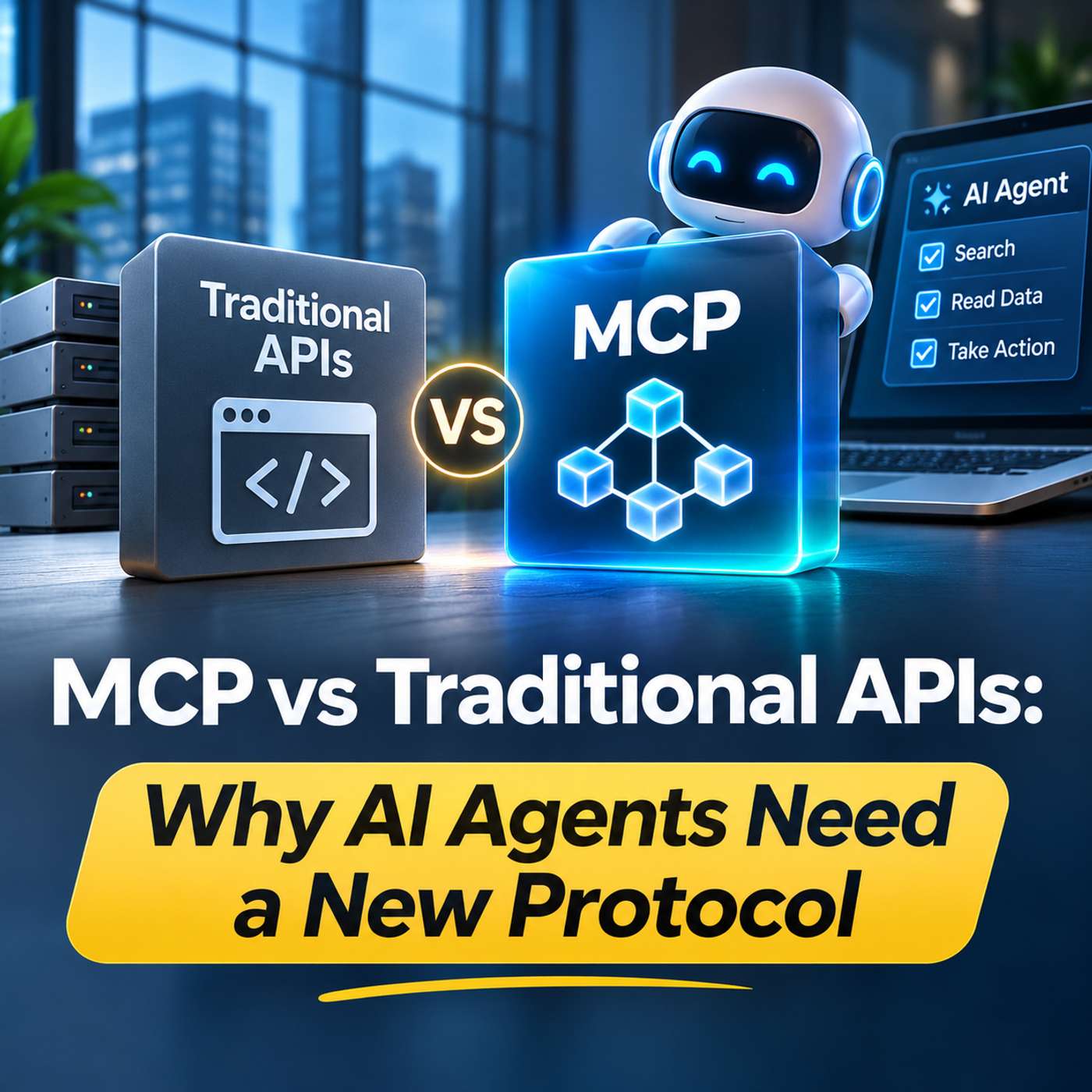
What if your AI application could connect to databases, process refunds, manage Kubernetes clusters, and communicate with enterprise tools without requiring weeks of custom integration code? In this episode of TechDaily.ai, host David and AI expert Sophia explore Model Context Protocol (MCP), a new approach to connecting AI models with external tools, APIs, and enterprise systems. Discover why traditional API integrations create major challenges for AI developers and how MCP is changing the way intelligent applications access data, discover tools, and execute complex workflows. Imagine building an AI-powered customer support assistant that needs to retrieve orders from PostgreSQL, search thousands of products through Elasticsearch, process Stripe refunds, and send Slack notifications. Traditionally, each integration requires custom authentication, error handling, and API-specific code. Switching between AI models like Claude, GPT-4, and Gemini only adds to the complexity. MCP offers a
AI news today: Jensen Huang is back as NVIDIA CEO, new loop transformer models arrive, and a live T3 Code demo runs AI coding agents across machines and models. The conversation opens with Jensen Huang's reinstatement at NVIDIA after government pressure on the board, the open investigations, the stock rebound, and the board's new national security and export control oversight committee. From there it moves to loop transformer architectures in Thinking Machines Lab's Inkling 2 and Z.ai's GLM 5.4, running Inkling 2 Mini locally on a MacBook, NVIDIA's Nemotron Labs Sigma diffusion text model, and Claude Ship, an enterprise tool that reviews and approves routine pull requests. The second half covers using Tailscale to link several machines into one private network, and how T3 Code sits above harnesses like Claude Code, Codex and Antigravity. A live demo picks a model and a machine for each thread. The episode closes on cross-model reviews and a report that Gemini subscriptions may open to
A fake job interview helped open the door to a reported $6.3 billion theft from Binance. The FBI attributed the heist to North Korea, which has used cryptocurrency theft to raise revenue and evade sanctions. This week, former federal prosecutor Maya Song joins Frank Cilluffo to explain why tracing stolen cryptocurrency is easier than getting it back, what prosecutors need to turn an attribution into a criminal case, and how companies and law enforcement can work together to limit the damage after a breach. Main Topics The fake recruiting scheme the led to $6.3B loss The theft and fraudulent IT work funding North Korea Tracing, freezing, and recovering stolen cryptocurrency Public attribution and the evidence needed for an indictment When companies should contact law enforcement How indictments and asset seizures can disrupt future operations Key Quotes "Law enforcement generally, when it comes to the cybercrime threat, they have at the federal level taken an attitude of deter, disrupt,
We return to "Smashing the Stack for Fun and Profit" to discuss ways to finally eradicate this pernicious flaw. Bob Lord shares his experience influencing engineering teams, searching for incentives, and talking with Aleph One himself about this problem. The conversation also talks about how cybersecurity can do better than just raise awareness of an issue like this and make a meaningful impact on software quality. Resources https://hacklore.org (https://hacklore.org/) https://podcast.softwaresafety.org (https://podcast.softwaresafety.org/) Visit https://www.securityweekly.com/asw for all the latest episodes! Show Notes: https://securityweekly.com/asw-410
Quinn Slack is back and we’re talking about the next level for Amp. Agents write the code, they review the code, and they can push it to main (like our friends at Amp). But where should your agents live? Who remembers what you actually asked them to do? Amp is now its own company, and Quinn has a lot to say about orbs, threads that last forever, and why code review as we know it is fading. He explains why the model matters less than it used to, and why he worries we could lose the open source commons. Quinn even built a feature request live on the show to solve my tailnet problem. Join the discussion (https://changelog.zulipchat.com/) Changelog++ (https://changelog.com/++) members save 6 minutes on this episode because they made the ads disappear. Join today! Parallel (https://parallel.ai/) – Web infrastructure for AI to search, extract, monitor, and reason over the world’s information. Give your agent its own hardware-isolated Linux computer. Deploy what it builds without changing pla
AI agents can write the code, choose the packages, and run the install. Who’s checking what they just invited onto your machine? This week I’m joined by Ahmad Nassri, CTO of Socket and former CTO of npm. We get into the trust built into a package install, the new ways attackers are using agents, and what it takes to keep building without handing over the keys or your wallet. Join the discussion (https://changelog.zulipchat.com/) Changelog++ (https://changelog.com/++) members get a bonus 6 minutes at the end of this episode and zero ads. Join today! Parallel (https://parallel.ai/) – Web infrastructure for AI to search, extract, monitor, and reason over the world’s information. Give your agent its own hardware-isolated Linux computer. Deploy what it builds without changing platforms. Featuring: Ahmad Nassri – Website (https://www.ahmadnassri.com/), GitHub (https://github.com/AhmadNassri), LinkedIn (https://www.linkedin.com/in/AhmadNassri), X (https://x.com/AhmadNassri) Show Notes: The Hi
Dave Kerr created hacker laws, and now he finds himself reviewing agent-written code for them. Back on the show after six years, Dave names what he sees limiting teams today: keeping everyone’s mental model in sync with what’s actually been built. Adam declares it Kerr’s Law on the spot. We get into why Dave’s team treats code review as a deliberate slowdown, how Shellwright lets agents bring evidence to a pull request, and what living with bipolar disorder has taught Dave about noticing when the excitement of these tools stops being healthy. Join the discussion (https://changelog.zulipchat.com/) Changelog++ (https://changelog.com/++) members save 9 minutes on this episode because they made the ads disappear. Join today! Coder.com (https://coder.com/) – Secure environments where devs and agents work in parallel. Open by design. Secure by default. KubeCon + CloudNativeCon (https://events.linuxfoundation.org/kubecon-cloudnativecon-north-america/) – Get a generous discount by using change
Major sporting rule changes should be tested before permanent adoption.
Share your view, then see how readers voted. No sign-in required. This poll is shared across stories.
Do you agree or disagree?
Common Quandary
A Common Quandary to discuss
Another conversation to explore, separate from this news story.
An AI wrote the perfect condolence message for you. Is it still from the heart?
Your friend is grieving. You want to reach out, but words fail you, so you ask an AI to draft a condolence message. It expresses exactly what you feel. You revise it and send it without mentioning the help.