What if your AI agent could find the people you should know before you even start looking? Cosign is building a professional network around reputation and trusted recommendations, and now agents can use that network too. MTS host Sophia Dew sits down with a16z’s David Booth and Cosign’s Bella Nazzari to discuss what they’ve learned since launching Cosign, why traditional profiles often miss the operators doing the most important work, and how the Cosign Awards are surfacing talent through the people willing to vouch for them. They also explore an emerging behavior: people connecting their agents to Cosign to continuously find relevant people, lists, and opportunities, and what professional networking could look like when both humans and their agents participate. Resources: Follow David Booth: https://x.com/davidbooth Follow Bella Nazzari: https://x.com/nazzari Follow Sophia Dew: https://x.com/sophiadew Learn more about Cosign:https://cosign.co/ Connect your agent to Cosign:https://cosi
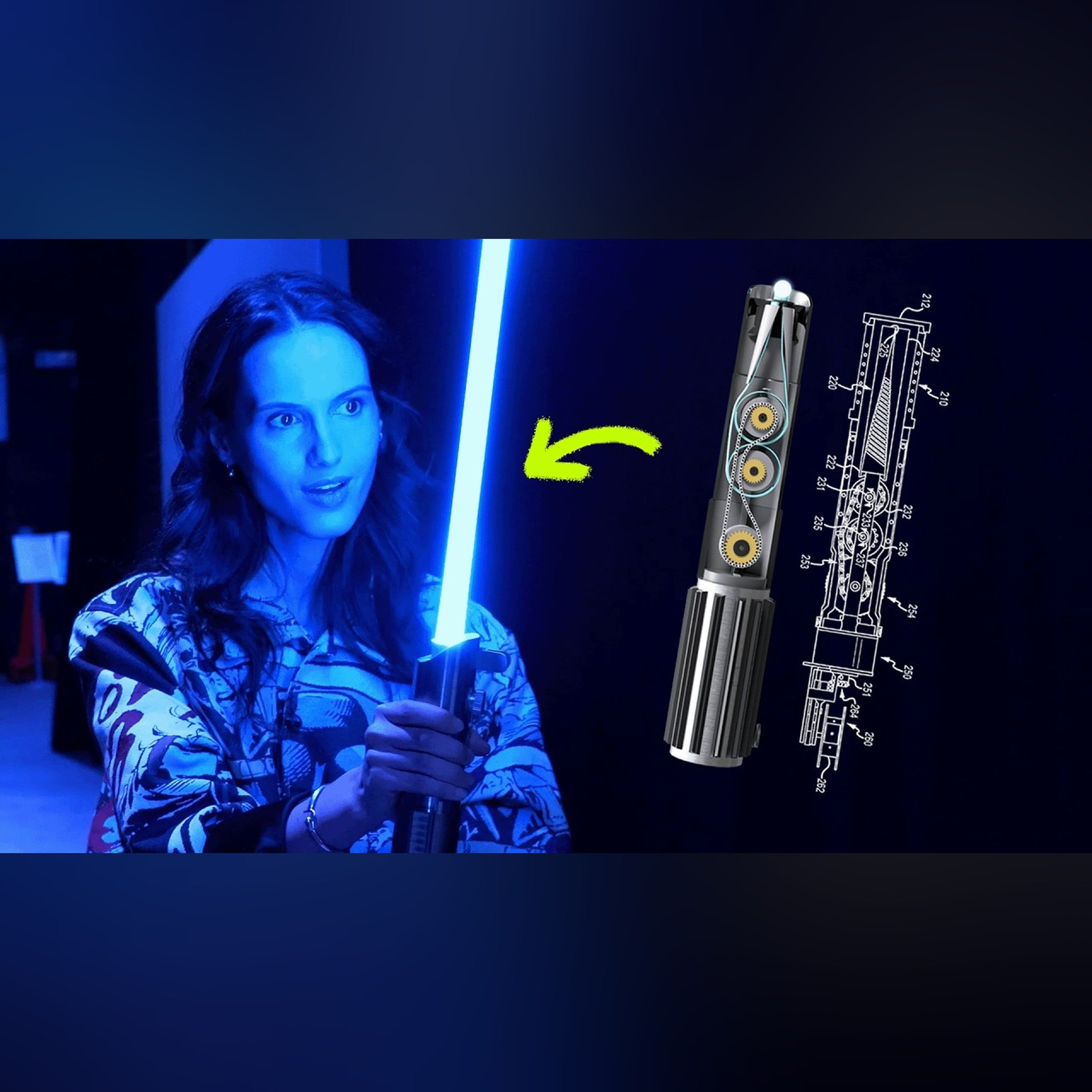
I tested Disney’s coolest new tech… Go to https://surfshark.com/cleo for 4 extra months of Surfshark Today I’ve been invited behind the scenes at Walt Disney Imagineering, the place where Disney brings their craziest ideas to life - from STUNT ROBOTS to a real life version of The Force, to adorable little droids! On this show Huge If True, we explore how tech can improve people’s lives - by living longer, going farther, doing more. But the reason I’ve loved Disney since I was a kid is they use tech to improve lives another way… by making people happy. And that means they end up pushing forward tech in some crazy, unexpected ways. So let me take you inside the magic, to show you the cutting edge tech they’re building… how it works… and what happens when we put it to the test! Chapters: 0:00 What is Disney building next? 1:11 What does Walt Disney Imagineering do? 1:52 What are Disney’s new droids really like? 2:47 How do Disney’s new droids work? 5:08 What’s the world’s most realistic l
How can you make your voice heard in a noisy world? The key is public speaking and presentation literacy, and we can help: http://bit.ly/TMCPSApp Uploaded 14-01-21 -- Storytelling is an ancient art; as humans developed language and culture, we learned to share our stories, thoughts, and dreams. And that storytelling evolved into public speaking, and our audience— thanks to the internet— is the whole world, not just a campfire. So how can we make our voices heard in such a busy space? Chris Anderson digs into why presentation literacy is the skill of the future. Lesson by Chris Anderson, directed by Avi Ofer. Support Our Non-Profit Mission ---------------------------------------------- Support us on Patreon: http://bit.ly/TEDEdPatreon Check out our merch: http://bit.ly/TEDEDShop ---------------------------------------------- Connect With Us ---------------------------------------------- Sign up for our newsletter: http://bit.ly/TEDEdNewsletter Find us on Twitter: http://bit.ly/TEDEdTwit
Superhuman CEO Shishir Mehrotra joins MTS to discuss the company’s new agent platform, Superhuman Go, and how embedding AI directly into existing workspaces solves the “last mile” problem of enterprise adoption. He also breaks down Grammarly’s custom model infrastructure, the challenge of measuring human-agent productivity, and his prediction for a massive surge in AI inference over the next year. -- MTS chronicles the singularity, live. Monitoring the situation of tech and AI. Follow MTS: Spotify |https://open.spotify.com/show/4HUNNmV1pjV7CW6Lphm1rM Apple |https://podcasts.apple.com/us/podcast/mts/id1891088763 – Brought to you by: Mongo DB - Anyone can prototype an agent. Lovable - Turn ideas into software people love with Lovable. Start today at https://lovable.dev/ Factory - A 24/7 system turning signals into production software. Visithttps://factory.com/ Neon (by Databricks) - Scale your startup on Neon. The Postgres backend for apps and agents. Built by Databricks.https://neon.com
Project Synapse: Markets in Freefall, Fragile Infrastructure, and AI's Perfect Storm The hosts banter through the show's intro before focusing on a sense that "things are out of control," citing a WallStreetBets suicide-hotline post amid a market crash and discussing cascading system failures involving Microsoft, the FAA, and a reported NSA internal communications outage. They argue politicians and leadership lack technical competence and clear messaging, increasing panic, while emphasizing that many problems stem from aging, underfunded infrastructure and complex, brittle software (PHP, NGINX, Java), not proven AI attacks—more a "perfect storm" of crises. They debate whether AI should help fix complexity, stressing critical thinking, accountability, and using multiple AIs to verify each other. In a lightning round they cover Anthropic's IPO performance, mixed reactions and token limits with ChatGPT 6.2 (favoring "Sol" over "Astra"), Google's cheaper Neon model and confusing UX, Loblaw
Alex and Sam cover Claude Code 2.1.329 and a review workflow that names the pull request, pins the changes, separates findings from tests and checks that the right code was examined. All worked scenarios are hypothetical. Includes a Railway affiliate advertisement. Sources: https://github.com/anthropics/claude-code/releases/tag/v2.1.329 Includes a Railway affiliate advertisement. Find our links at https://aishows.cc; we may earn a commission.
Quinn Slack is back and we’re talking about the next level for Amp. Agents write the code, they review the code, and they can push it to main (like our friends at Amp). But where should your agents live? Who remembers what you actually asked them to do? Amp is now its own company, and Quinn has a lot to say about orbs, threads that last forever, and why code review as we know it is fading. He explains why the model matters less than it used to, and why he worries we could lose the open source commons. Quinn even built a feature request live on the show to solve my tailnet problem. Join the discussion (https://changelog.zulipchat.com/) Changelog++ (https://changelog.com/++) members save 6 minutes on this episode because they made the ads disappear. Join today! Parallel (https://parallel.ai/) – Web infrastructure for AI to search, extract, monitor, and reason over the world’s information. Deepgram (https://deepgram.com/) – Speech-to-text, text-to-speech, and voice agent APIs for develope
Dave Kerr created hacker laws, and now he finds himself reviewing agent-written code for them. Back on the show after six years, Dave names what he sees limiting teams today: keeping everyone’s mental model in sync with what’s actually been built. Adam declares it Kerr’s Law on the spot. We get into why Dave’s team treats code review as a deliberate slowdown, how Shellwright lets agents bring evidence to a pull request, and what living with bipolar disorder has taught Dave about noticing when the excitement of these tools stops being healthy. Join the discussion (https://changelog.zulipchat.com/) Changelog++ (https://changelog.com/++) members save 9 minutes on this episode because they made the ads disappear. Join today! Coder.com (https://coder.com/) – Secure environments where devs and agents work in parallel. Open by design. Secure by default. KubeCon + CloudNativeCon (https://events.linuxfoundation.org/kubecon-cloudnativecon-north-america/) – Get a generous discount by using change
Access to effective legal representation should not depend mainly on personal wealth.
Share your view, then see how readers voted. No sign-in required. This poll is shared across stories.
Do you agree or disagree?
Common Quandary
A Common Quandary to discuss
Another conversation to explore, separate from this news story.
Your dinner guest arrives with their dog. Do you let both of them in?
A friend appears at your carefully planned dinner with a large dog they never mentioned. They say the dog becomes anxious when left alone and will sit quietly. Another guest is uneasy around animals, and your lease forbids pets.
Whose needs should an unexpected accommodation displace?