Listen through the publisher, then discuss the episode here or arrange an in-person Roundtable. Your city determines where to meet.
Roundtables are designed for groups of four, with a shared subject and room for everyone to speak. Come for discussion, with no dating expectation.
Welcome to the November 2026 Ask Me Anything episode of Mindscape! These monthly excursions are funded by Patreon supporters (https://www.patreon.com/seanmcarroll) (who are also the ones asking the questions). We take questions asked by Patreons, whittle them down to a more manageable number -- based primarily on whether I have anything interesting to say about them, not whether the questions themselves are good -- and sometimes group them together if they are about a similar topic. Enjoy! Blog post with AMA questions and transcript: https://preposterousuniverse.com/podcast/2026/11/09/ama-november-2026/ Got to https://scribe.how/mindscape and mention Mindscape for you first month of Scribe Capture free on select plans. #ad Use code MINDSCAPE at https://monarch.com/ to get your first year of Monarch Core half off at just $50. #ad Look your best and support men's health at https://www.amazon.com/b?node=223476965011&ref_=MOV26_pod #ad
Episode information is provided by the publisher. Listening takes place on the publisher’s service.
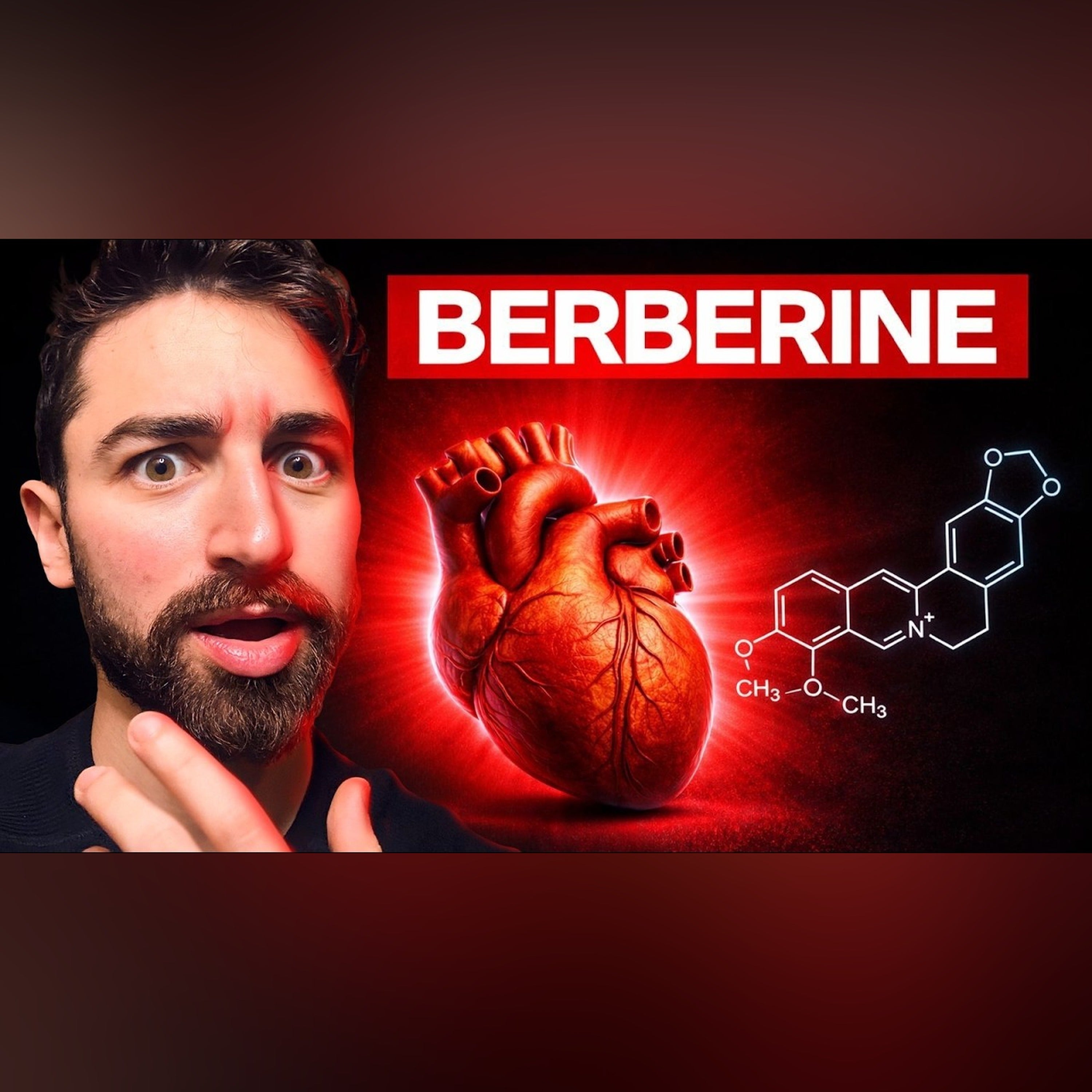
For extra nuances, all the references and early access to data like these, see the best-selling science letter: https://staycuriousmetabolism.substack.com/p/how-berberine-lowers-cholesterol?r=40ekz2 In this video, we unpack the stunning mechanism behind berberine, the yellow plant alkaloid that increases LDL receptors not by starving the liver of cholesterol, but by stabilizing the blueprint that cells use to builds them. It’s a twist in human biochemistry that reshaped how I think about cholesterol manipulation — and it might reshape how you do too. Then I’ll take you inside my own high-stakes N=1 experiment Hundred Health Link: https://www.hundred.com/STAYCURIOUS Discount Code: STAYCURIOUS50 knocks $50 off membership As a scientific advisor at Hundred Health, I candidly hold a small equity stake in the company. I’ve chosen to partner with Hundred Health because I genuinely believe it has the potential to be a disruptive force for good in personalized healthcare. It’s a tool unlike an
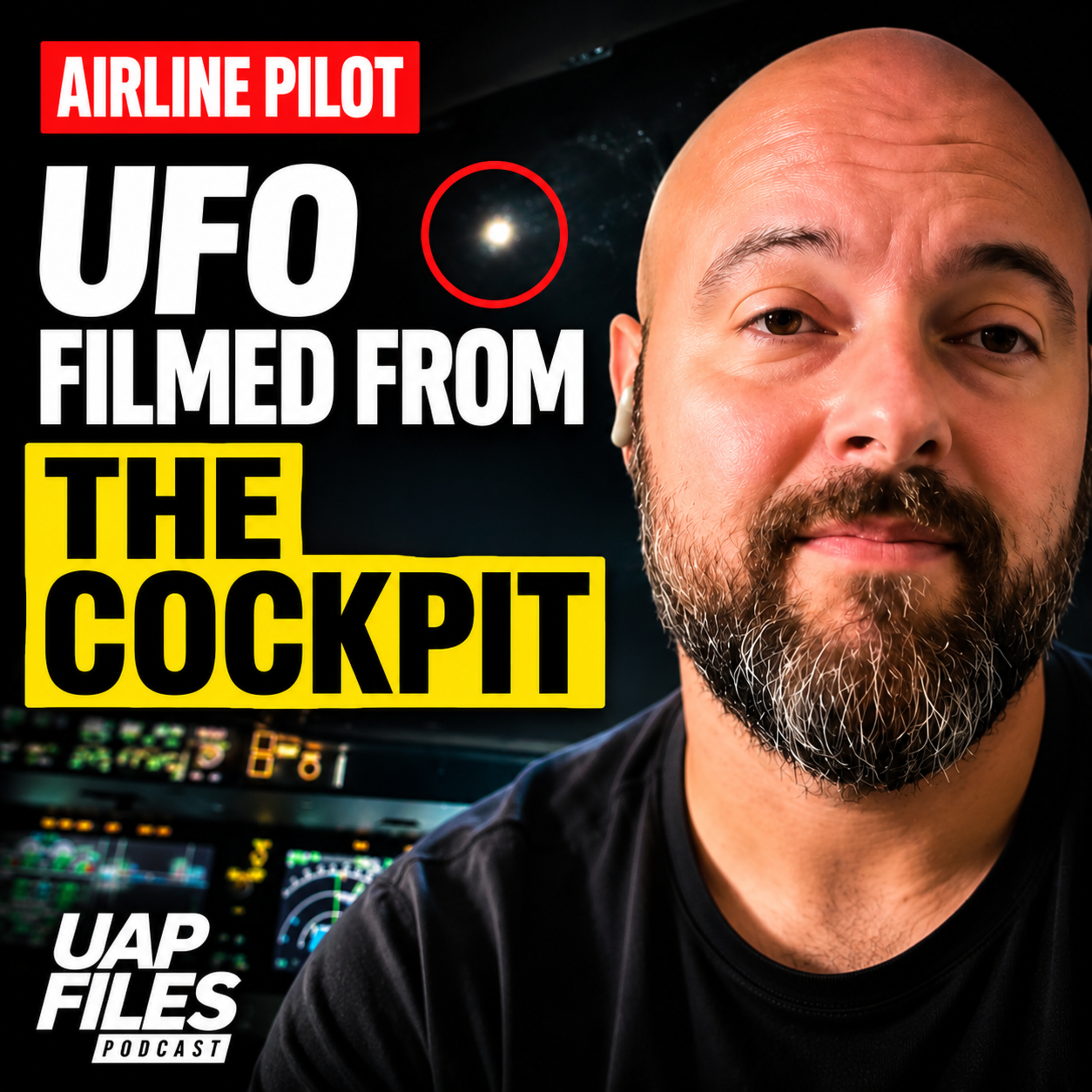
Alessandro “Boni” Bonifacio Rodrigues is an airline pilot who flies the Airbus A350 and has more than 9,000 hours in the air. Over the years he has started filming the things he sees out of the cockpit window that don’t behave like stars, satellites or planes. In this clip from UAP Files Podcast S2E29, Boni explains what he looks for and talks me through his footage, which is on screen as we talk. In this clip: • How a pilot tells Starlink, the ISS, shooting stars and twinkling stars apart • Three super-bright lights, filmed on his iPhone through the cockpit window, “easily 10,000 ft above me” • A friend’s footage over India of a fast object with a strange, magnetic-field-like shape • A hollow, doughnut-shaped object in the clouds filmed by a pilot friend who pulled over while driving in Brazil • Why sceptics who say pilots just misidentify things don’t convince him • How openly pilots now talk about it with each other • A “constellation” of seven or eight objects going through the clo
FDA again declines to approve Capricor’s Duchenne drug deramiocel, and Capricor disputes the agency’s reading of HOPE-3. Merck reports better overall survival with Kelun’s sacituzumab tirumotecan in advanced gastroesophageal cancer, while progression-free survival missed and the survival gain remains undisclosed. The roundup covers AstraZeneca’s sonesitatug vedotin priority review, PMV’s rezatapopt ovarian cancer data, Erasca’s ERAS-0015 pancreatic cancer plans and Germany’s ruling on Merck’s Keytruda SC. Also covered are Savara’s molgramostim review delay, J&J’s Tremfya (guselkumab) findings in axial psoriatic arthritis, CMS’s Medicare Advantage Part B proposal and FDA’s new biologics safety council. Delayed edition for Friday, November 20, 2026. Alex Mercer and Maya Patel host. Get the daily rundown in your inbox — subscribe at thepharmacloseout.com (https://thepharmacloseout.com/).
PBS Member Stations rely on viewers like you. To support your local station, go to:http://to.pbs.org/DonateSPACE Sign Up on Patreon to get access to the Space Time Discord! I’m going to tell you about the craziest proposal for an astrophysics mission that has a good chance of actually happening. A train of spacecraft sailing the sun’s light to a magical point out there in space where the Sun’s own gravity turns it into a gigantic lens. What could such a solar-system-sized telescope do? Pretty much anything. But definitely map the surfaces of alien worlds. Check out the Space Time Merch Store Search the Entire Space Time Library Here: https://search.pbsspacetime.com/ Hosted by Matt O'Dowd Written by Matt Caplan & Matt O'Dowd Post Production by Leonardo Scholzer, Yago Ballarini, Pedro Osinski, Caique Oliveira, Adriano Leal & Stephanie Faria GFX Visualizations: Ajay Manuel Directed by Andrew Kornhaber Associate Producer: Bahar Gholipour Executive Producers: Eric Brown & Andrew Kornhaber E
In today's brief: Lake Erie, 1957: a newly released Air Force report says two boys saw a humming, bell-shaped craft near the Enrico Fermi Atomic Plant. Skinwalker Ranch: owner Brandon Fugal calls the new files landmark and recalls a daylight saucer over the mesa. Warship footage: a 20-second 2020 infrared clip shows a light crossing a US Navy ship in the Middle East, with no Pentagon assessment. Martha's Vineyard, 1957: a spiked, nickel-coloured object that the Air Force put down to a radar-reflector balloon. Loch Ness: reported sightings jump to 15 this year, up from six in 2025. The Book of Miracles: a 16th-century manuscript of comets, blood rain and multiple suns heads to auction at Christie's. Quick hits: a 1952 file blames the saucer wave on temperature inversions; more Pentagon UFO files are on the way. Every story and source: https://believepod.com/ufo-paranormal-news-22-november-2026/ New episodes every morning. Keep your eyes on the sky. Sources: FOX 2 Detroit: https://www.fo
For nearly a year, a group of friends regularly explored the abandoned buildings of Taunton State Hospital in Massachusetts. They'd been through nearly every part of the property, but one basement remained a mystery, sealed behind a chained and padlocked door. Eventually, curiosity got the better of them. Armed with bolt cutters and flashlights, six friends made their way into the dark basement. At the far end, they discovered disturbing markings and what appeared to be bloodstains. Then one of them claimed something had touched her—and things quickly became terrifying. A piercing screech, flashlights suddenly going dark, and a frightening encounter with shadowy figures sent the group scrambling for the exit. They had spent months exploring the hospital without experiencing anything like it. Had they finally encountered something paranormal, or was there a reason that basement had been locked away? #RealGhostStoriesOnline #TauntonStateHospital #HauntedAsylum #AbandonedHospital #ShadowF
The history of science is always fascinating, and the history of medicine surely has some of the best stories. In this episode we talk to writer Lindsey Fitzharris about two of them. First, the story of Scottish surgeon Joseph Bell, who was both a pioneer of forensic pathology and the inspiration for Sherlock Holmes (whose author, Arthur Conan Doyle, took classes with Bell as a medical student). Second, the story of Harold Gillies, the World War II doctor who pioneered reconstructive surgery. Bell is the subject of Fitzharris's new book Sleuth-Hound (https://drlindseyfitzharris.com/sleuth-hound/), while Gillies is the subject of her previous book The Facemaker (https://drlindseyfitzharris.com/facemaker/). Blog post with transcript: https://preposterousuniverse.com/podcast/2026/11/16/374-lindsey-fitzharris-on-forensic-pathology-reconstructive-surgery-and-sherlock-holmes/ Stop piecing your software together. Go to https://odoo.com/mindscape to learn more. #ad Upgrade your everyday with Q
Economics often starts with an assumption that people are rational maximizers of their own self-interest; but it doesn't stop there. Economists do understand that sometimes people are irrational, altruistic, or just random. So how can we understand how people actually do behave in economic circumstances? Colin Camerer is a pioneer of "neuroeconomics" -- not only understanding how people make economic choices, but relating it to processes in the brain. Blog post with transcript: https://preposterousuniverse.com/podcast/2026/11/02/373-colin-camerer-on-the-neuroscience-of-economic-thinking/ Look your best and support men's health at https://amazon.com/movember. #ad Colin Camerer received a Ph.D. in behavioral decision theory from the University of Chicago. He is currently the Robert Kirby Professor of Behavioral Economics, T&C Chen Center for Social and Decision Neuroscience Leadership Chair, and Director, T&C Chen Center for Social and Decision Neuroscience at Caltech. He has been awarde
Developers should cover the infrastructure costs created by their projects.
Share your view, then see how readers voted. No sign-in required. This poll is shared across stories.
Do you agree or disagree?
Common Quandary
A Common Quandary to discuss
Another conversation to explore, separate from this news story.
An outsider becomes famous cooking another culture's food. Appreciation or taking over?
A chef becomes known for food from a culture outside their own after years of study with respected cooks. The restaurant is successful, while small businesses run by people from that culture struggle for attention.
When does appreciation become taking opportunity from the people who created a tradition?