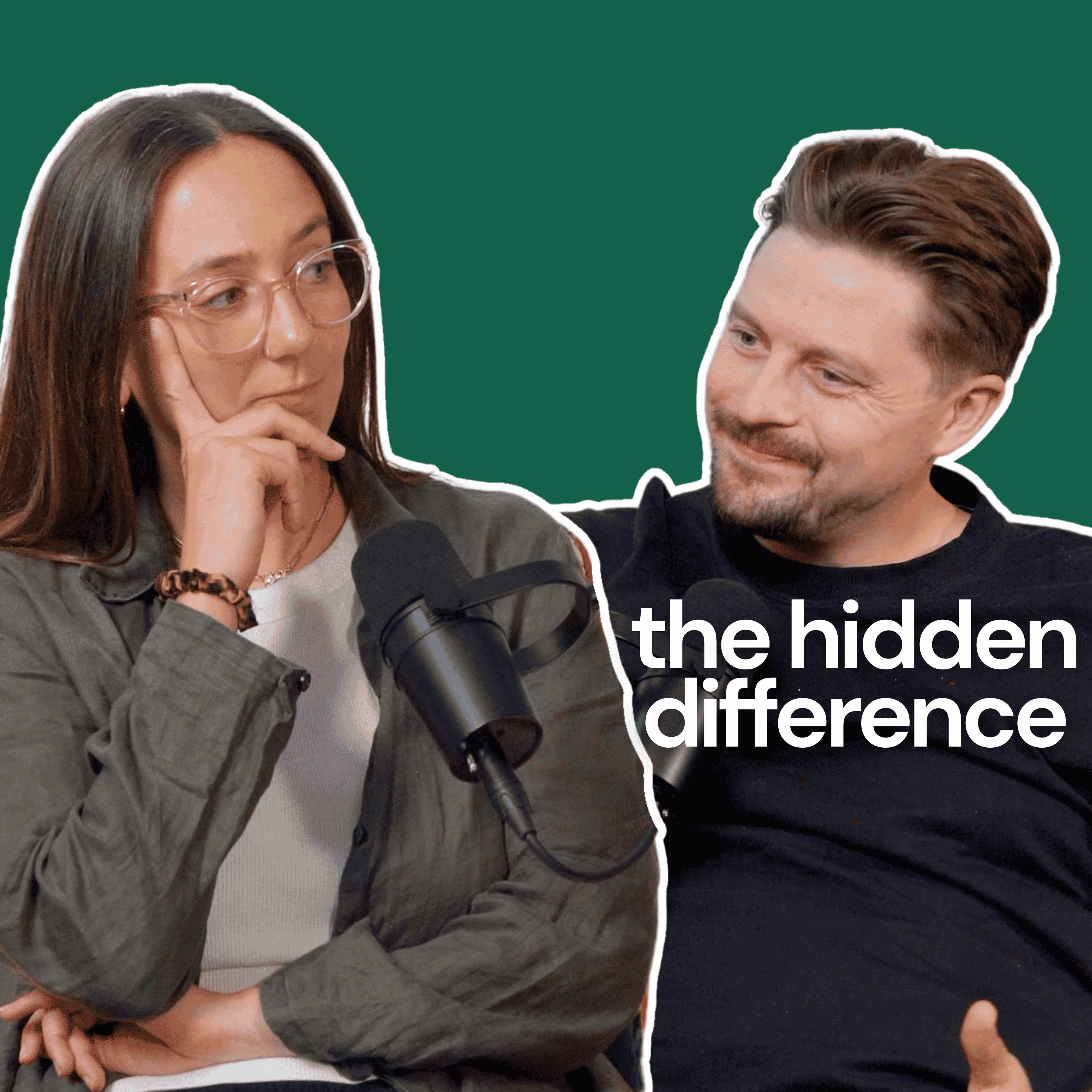
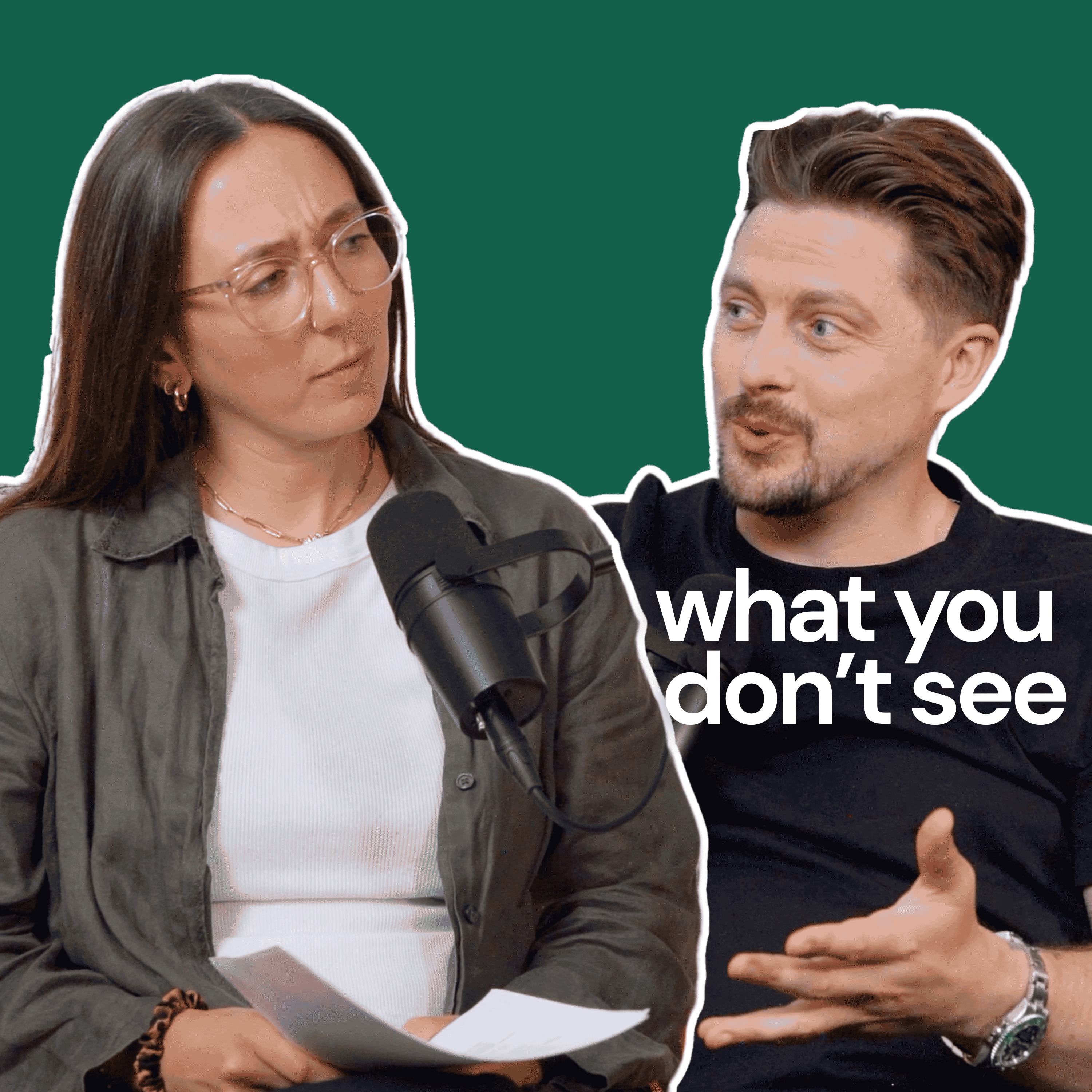
ADHD: Can You Trust What You See on Social Media? | Pt 3
26 min
Listen through the publisher, then discuss the episode here or arrange an in-person Roundtable. Your city determines where to meet.
Roundtables are designed for groups of four, with a shared subject and room for everyone to speak. Come for discussion, with no dating expectation.
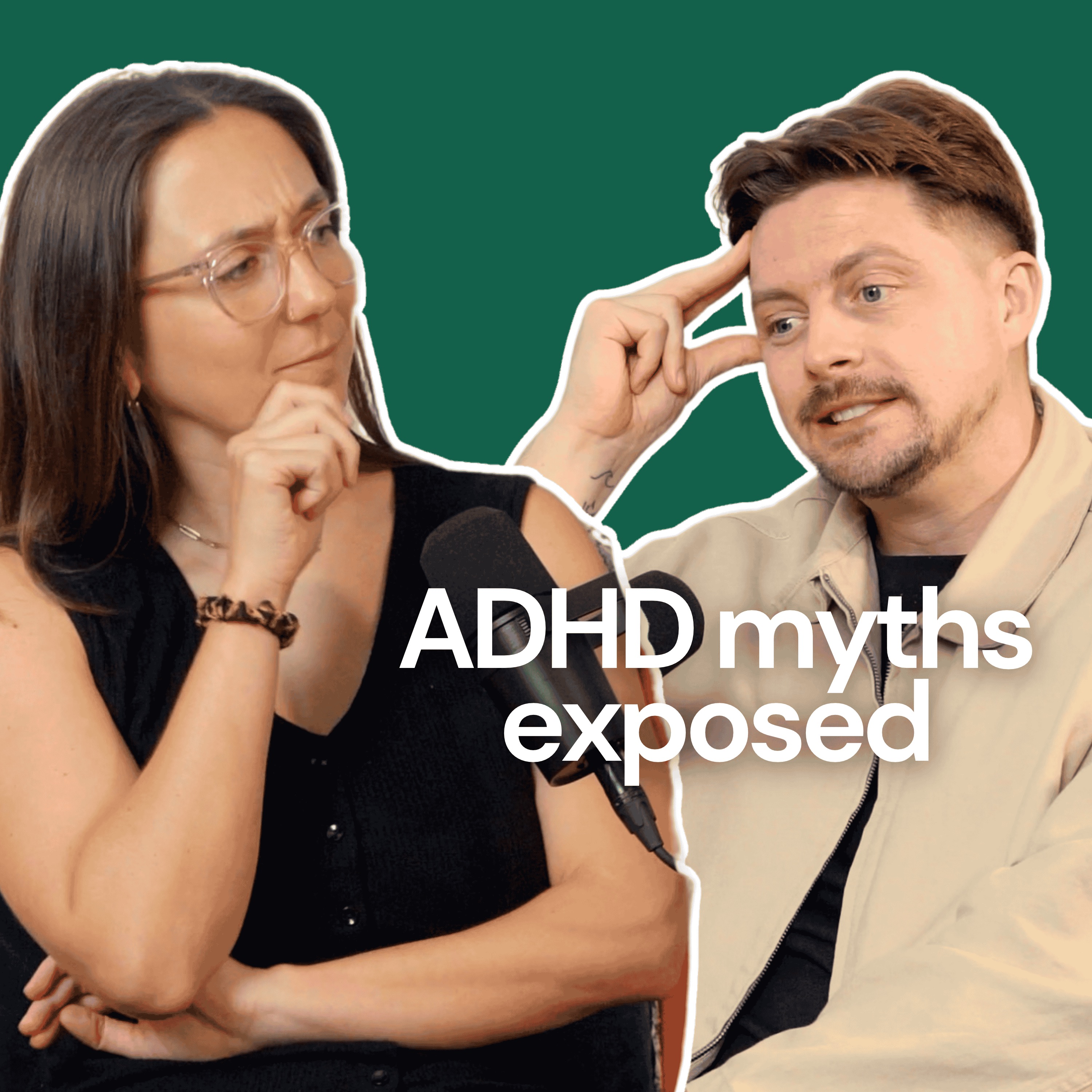
How much of what we see about ADHD on social media is actually true? And are some of the most common beliefs about ADHD backed by science? In Part 3 of Figuring It Out, Dr Alex George and research scientist Dr Kathryn Bates put some of the biggest claims about ADHD to the test in Myth, Fact and It's Complicated. From misleading ADHD advice on TikTok to the links between ADHD and smartphone use, they explore what the evidence really tells us. They also look at how menopause may affect ADHD symptoms, whether people with ADHD can thrive in creative environments, and whether children really grow out of ADHD. Plus, is ADHD genuinely becoming more common, or have we simply got better at recognising it? No lectures. No easy answers. Just two people trying their best to figure it out. Part One tackles the Big Question. Part Two answers a real dilemma sent in by a listener. Produced by Kathryn Bates We'd love to hear from you. Email us at [email protected]. Hosted on Acast.
Episode information is provided by the publisher. Listening takes place on the publisher’s service.
"Are You Being Assertive… or Just Pushy?" - Listen to my Morning Monologue: I’m sharing my take on pressing issues, enlightening research on human behavior, answering questions I get by email, and my favorite, most instructive interactions with callers. It’s the free therapy you need! Got a dilemma? Follow on social media: Facebook.com/DrLaura (http://facebook.com/DrLaura) YouTube.com/DrLaura (http://youtube.com/DrLaura) Join the Dr. Laura Family!! >> Receive my weekly newsletter, perks, and more! Sign up now, it's FREE > DrLaura.com (https://www.drlaura.com/) Hosted by Simplecast, an AdsWizz company.
Text me what you thought of the show (https://www.buzzsprout.com/1959372/fan_mail/new) Can working night shifts affect your fertility, ovulation or IVF success? After speaking with numerous women trying to fall pregnant while working shifts, including those undergoing expensive IVF treatment, I wanted to explore what the research actually tells us. In this episode of A Healthy Shift, we discuss how night shifts, disrupted sleep and circadian misalignment may affect reproductive health. We cover: Why the fertile window is so short. Shift work, reproductive hormones and menstrual irregularities. What research says about night shifts, fertility and IVF outcomes. The roles of sleep, stress, nutrition, weight and exercise. Practical steps for women trying to conceive while working shifts. Research links shift work with menstrual irregularities, but evidence that night shifts directly cause infertility or reduce IVF success remains uncertain. If you're trying to get pregnant while working ni
Charlie Kirk’s assassination will dominate the headlines—but before the truth is even clear, the disinformation machine is already spinning. This video exposes how suppression, radicalization, and division are weaponized—not by ideology, but by systems designed to keep you outraged, divided, and distracted. Uploaded 11-09-25 We’ll reveal: • Why suppression is the biggest red flag in history—and why it always signals weakness, not strength. • How highly suggestible people are radicalized—not by one side or the other, but through media outrage loops, algorithmic echo chambers, and deliberate manipulation. • The illusion of “left vs. right”—a distraction designed to pit neighbors against each other while corruption, corporate power, and elites escape untouched. • The common ground we all share: freedom, safety, stability, fairness—and what none of us want: corruption, endless wars for profit, elites with different rules, surveillance states, and justice systems that bend for the powerful
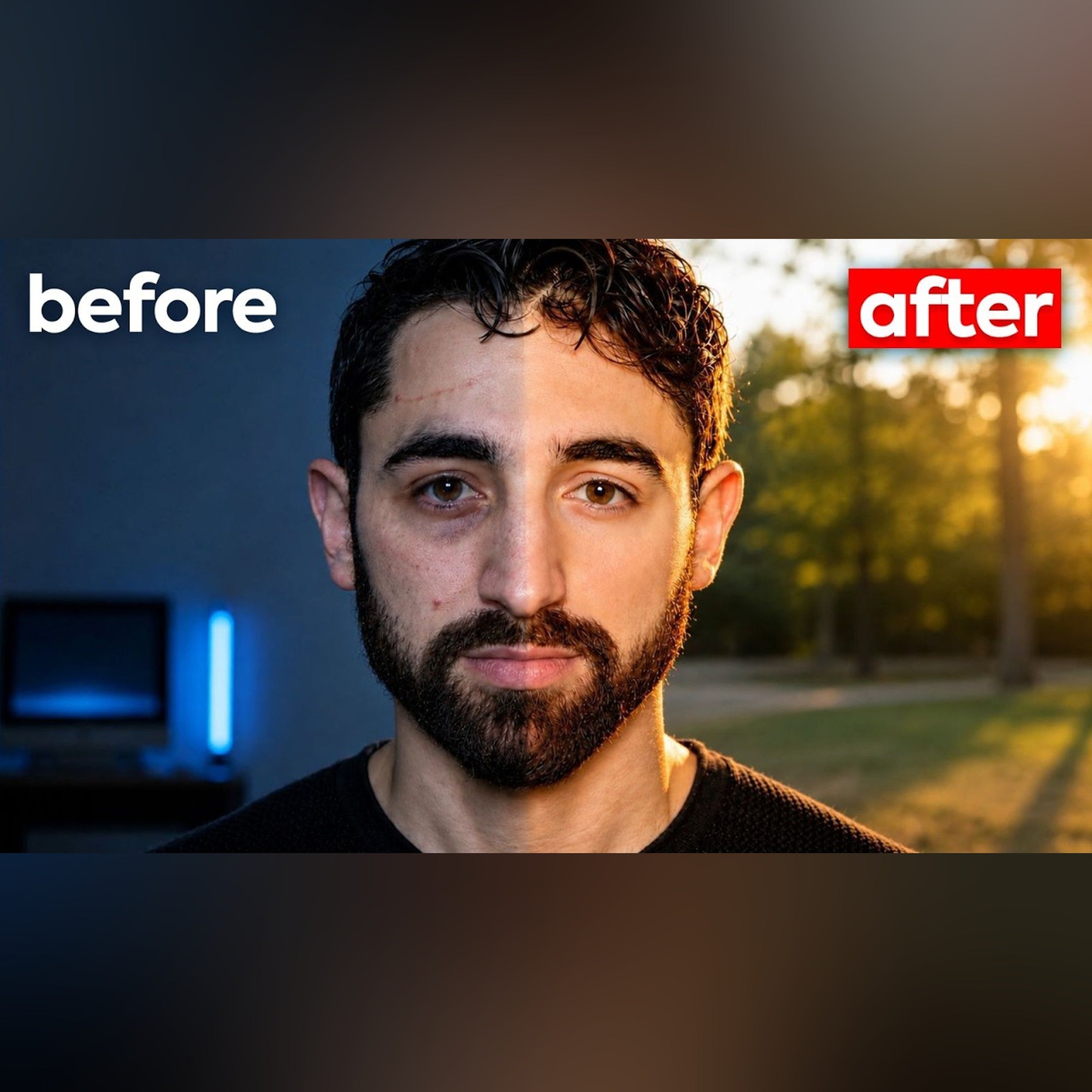
For extra nuances and all the references, please see the newsletter: https://staycuriousmetabolism.substack.com/p/how-i-hacked-my-girlfriends-brainwith?r=40ekz2&utm_campaign=post&utm_medium=web&triedRedirect=true (https://staycuriousmetabolism.substack.com/p/how-i-hacked-my-girlfriends-brainwith?r=40ekz2&triedRedirect=true) Can light influence attraction, hormones, and even reproductive biology? In this video, we explore surprising research on light exposure, testosterone, estrogen, fertility signals, and behavioral changes observed in both animal models and human studies. From hormone cascades triggered through the skin to seasonal changes in reproductive biology, this is a fascinating look at how deeply light may shape human physiology. Along the way, I also test whether increasing my own sunlight exposure changes my testosterone levels and reveal how my girlfriend hacked my brain! For more nuance, mechanisms, protocols, and limitations behind these findings, check out the full deep
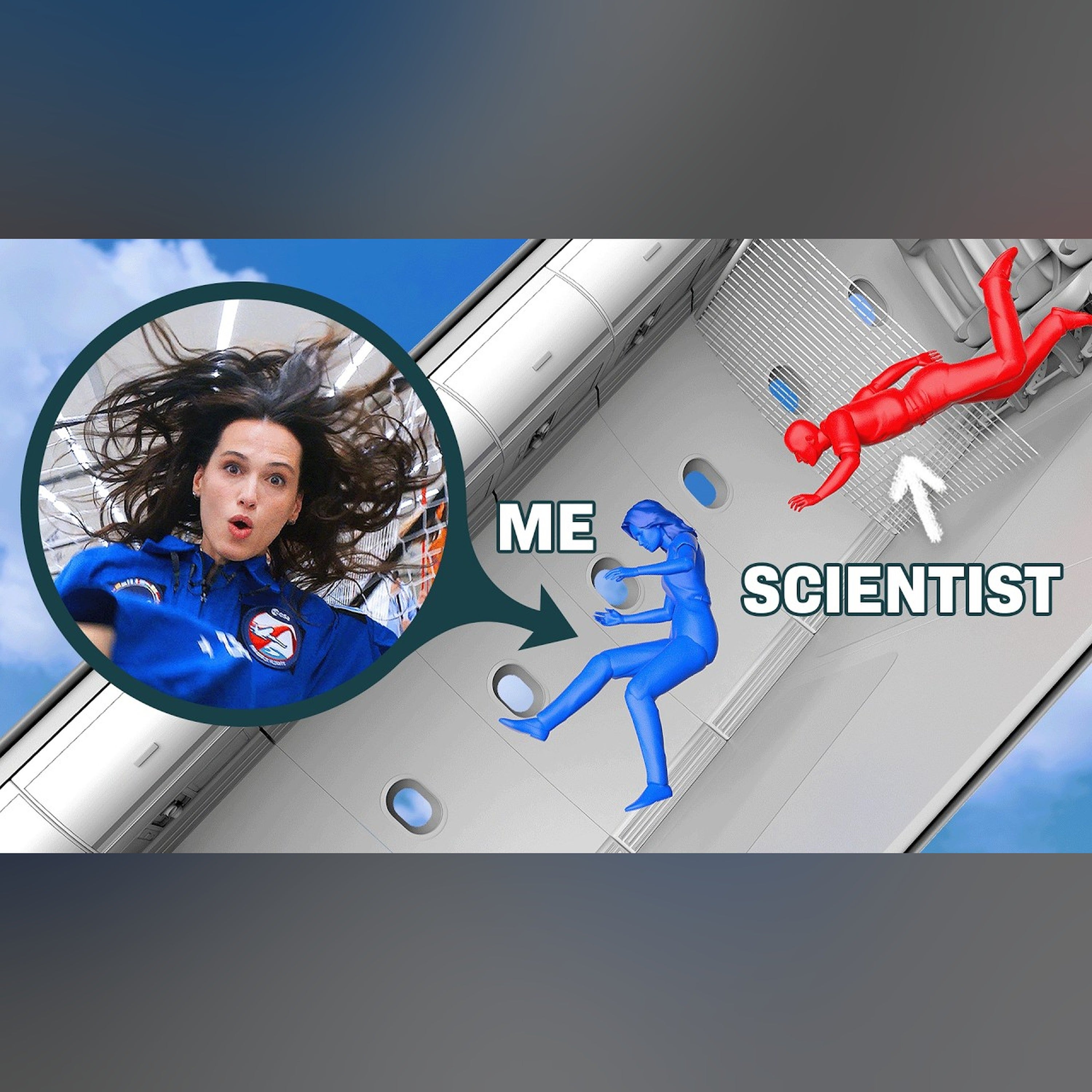
I tested 5 wild experiments in a zero gravity plane... Listen with me on Audible at https://www.audible.com/cleo I'm scanning my brain inside a plane that’s about to DIVE toward the ground… to test how weightlessness helps or hurts your brain. And it’s just one of the 5 crazy science experiments I got to test inside a Zero G plane. I recently went on this Zero G plane to explain a big debate about gravity, and while I was there, I also got exclusive access to experiments that can ONLY happen in zero gravity. I just knew you’d love to see it. So, in this extended cut, I’m going to give you a rare glimpse inside this falling laboratory and show you how the experiments they’re doing could be huge if true… Chapters: 0:00 What happens to your brain in space? 0:32 Why scientists want to fall from the sky 1:10 How do zero gravity planes work? 1:56 Experiment 1 3:58 Experiment 2 5:28 Experiment 3 7:23 Experiment 4 8:50 Experiment 5 10:27 Why these experiments are huge if true You can find me o
Sam McClure is an award-winning Journalist, TV personality, Radio figure & podcaster. This one is fascinating! Whatever you thought life was like as a journalist or your pre-conceived opinion of Sam is about to change after this one. Sam is about to open up like you haven't heard him before. Sam shares his Quill Award winning investigation into the Adelaide training camp and the backlash it copped. Including winning the award, having it stripped and then it being reinstated. Plus, the legal issues that followed. What came after that was a dark period in Sam's life...which he opens up about. We talk about the passion of journalism and if it is really there, why he isn't on social media and what it on and off the record actually means! Plus, the tension between clubs, journalists, players and administrators when stories are broken. Sam talks about the obsession with trade week and the broader media landscape. Which ones he loves...and which ones not so much. And possibly the craziest sto
Is OCD really an anxiety disorder? Are everyday rituals the same as compulsions? And what happens when treatment doesn't work? In Part 3 of Figuring It Out, Dr Alex George and research scientist Dr Kathryn Bates put some of the biggest misconceptions about obsessive-compulsive disorder (OCD) to the test in Myth, Fact and It's Complicated. They explore how OCD is classified, why it's different from anxiety, and what treatment options exist for people who don't respond to the first approach. They also look at how OCD treatment may need to be adapted for autistic people, what the research tells us about OCD and menopause, and why everyday routines and rituals aren't necessarily the same as compulsions. No lectures. No easy answers. Just two people trying their best to figure it out. Part One tackles the Big Question. Part Two answers a real dilemma sent in by a listener. Produced by Kathryn Bates We'd love to hear from you. Email us at [email protected]. Hosted on Acast.
How are autism and OCD connected? And why can it be so difficult to tell the difference between the two? In Part 2 of Figuring It Out, Dr Alex George and research scientist Dr Kathryn Bates answer two listener questions about the overlap between autism and obsessive-compulsive disorder (OCD), and how to accept yourself when the people around you don't always understand you. They explore why autism and OCD often occur together, how certain behaviours can look similar but have very different motivations, and why OCD can sometimes be harder to recognise in autistic people. They also tackle a deeply personal question about self-acceptance, exploring how stigma can affect the way we see ourselves, the importance of self-compassion, and why finding people who understand your experiences can make such a difference. No lectures. No easy answers. Just two people trying their best to figure it out. Part One tackles the Big Question. Part Two answers a real dilemma sent in by a listener. Produced
Are we all really 'a bit OCD'? Or is obsessive-compulsive disorder something far more complex than the way we often talk about it? In Part 1 of Figuring It Out, Dr Alex George and research scientist Dr Kathryn Bates explore what OCD really is, why it's so much more than being tidy or organised, and what living with intrusive thoughts and compulsions can actually feel like. They unpack the cycle of obsessive thoughts, anxiety and compulsive behaviours, why it can be so difficult to break, and what the science tells us about the causes of OCD, from genetics and brain circuits to life experiences. They also explore why using the term 'OCD' casually can be harmful, the different ways the condition can show up, and what support and treatments are available. No lectures. No easy answers. Just two people trying their best to figure it out. Part One tackles the Big Question. Part Two answers a real dilemma sent in by a listener. Produced by Kathryn Bates We'd love to hear from you. Email us at
Local gatherings should prioritize relationships over attendance numbers.
Share your view, then see how readers voted. No sign-in required. This poll is shared across stories.
Do you agree or disagree?
Common Quandary
A Common Quandary to discuss
Another conversation to explore, separate from this news story.
A $300 package lands at your door by mistake. Do you keep it?
A package containing expensive headphones arrives with your address but another person's name. The retailer says it has already replaced the order and does not ask you to return it.
If no one appears to lose, what still makes keeping it right or wrong?