Autism & OCD: Why Are They So Closely Linked? | Pt 2
25 min
Listen through the publisher, then discuss the episode here or arrange an in-person Roundtable. Your city determines where to meet.
Roundtables are designed for groups of four, with a shared subject and room for everyone to speak. Come for discussion, with no dating expectation.
How are autism and OCD connected? And why can it be so difficult to tell the difference between the two? In Part 2 of Figuring It Out, Dr Alex George and research scientist Dr Kathryn Bates answer two listener questions about the overlap between autism and obsessive-compulsive disorder (OCD), and how to accept yourself when the people around you don't always understand you. They explore why autism and OCD often occur together, how certain behaviours can look similar but have very different motivations, and why OCD can sometimes be harder to recognise in autistic people. They also tackle a deeply personal question about self-acceptance, exploring how stigma can affect the way we see ourselves, the importance of self-compassion, and why finding people who understand your experiences can make such a difference. No lectures. No easy answers. Just two people trying their best to figure it out. Part One tackles the Big Question. Part Two answers a real dilemma sent in by a listener. Produced by Kathryn Bates We'd love to hear from you. Email us at [email protected]. Hosted on Acast.
Episode information is provided by the publisher. Listening takes place on the publisher’s service.
In this meditation, I invite you to reflect on the changing light of autumn as we move towards the darker days of winter. As the daylight hours grow shorter, we can sometimes feel that we are losing something. Yet the contemplative life invites us to receive each season as it is, discovering beauty and sacredness in the present moment. Beginning with the breath, we explore the difference between the changing light around us and the unchanging light of divine presence within. From the gentle light of morning to the lamps that illuminate our evenings, every expression of light becomes an invitation to awareness. As we breathe, we allow ourselves to be filled with divine light, offering compassion, peace and prayer to those in need. Chapters: 00:00 – Introduction: Autumn light 01:10 – Entering meditation with intention 01:58 – Relaxing the body and following the breath 02:48 – Returning to the present moment 03:12 – Becoming aware of the light within 03:40 – The gift of divine light 04:10
To check the transcript: https://www.buzzsprout.com/2379282 Imagine someone who has lived abroad for many years. One evening, they're talking to a friend about their hometown. They mention the streets they used to walk down, the familiar voices, and the little things they never thought they'd miss. Their friend asks: “Why do you get so emotional whenever you talk about your hometown? Do you want to move back?” They reply: “It's not that simple. It goes deeper than that. I miss a version of my life that doesn't exist there anymore.” Hello everyone, and welcome to Daily English. Today's expression is “It goes deeper than that.” We use this expression when something is more complicated, meaningful, or emotionally significant than it first appears. In other words, there's something beneath the surface that people might not immediately recognize. In our opening example, the person isn't necessarily longing to return to their hometown. What they miss might be their childhood, the people they
They assume it's income. A big salary, a good job, a lucky break. So they spend their whole lives chasing a bigger paycheck, certain that's the answer, and they never understand why the money keeps slipping through their hands anyway. Uploaded 08-09-26 Let me tell you something. Running out of money has very little to do with how much you make. I have watched people earning enormous sums run out every single month. And I have watched people of modest means build a fortress around themselves that no hard time could ever break through. The difference was never the income. It was the habits. Here is the truth: money is not primarily an income problem. It is a behavior problem. You cannot out-earn a leak. Make the stream bigger and you only make the leak bigger. The size of the stream was never the problem. This seminar walks through 10 things you must understand about the quiet daily practices that keep money in your hands for a lifetime. CHAPTERS 0:00 Intro — why the money slips through
StayCurious Newsletter on Snyder’s Fiber Randomized Controlled Trial: https://staycuriousmetabolism.substack.com/p/fiber-is-good-for-you-is-lazy-science?r=40ekz2 StayCurious Newsletter on Inulin and Fructose Resistance: https://staycuriousmetabolism.substack.com/p/the-fiber-that-fights-fat-how-inulin?r=40ekz2 Snyder Interview 1, Four Types of Diabetes: https://youtu.be/mCrc4gfbK2o Snyder Interview 2, Most Viral Aging Study: https://youtu.be/kMpGkg4zMOU Snyder Interview 3, Most Beautiful Exercise Study: https://youtu.be/_9ywulQF2Ho Why does the same food spike one person’s blood sugar while barely affecting another? In this fourth conversation with Stanford’s Professor Michael Snyder, we explore new research on individualized glycemic responses, insulin resistance subtypes, and why one-size-fits-all nutrition advice keeps failing. From rice spiking glucose more than ice cream, to the power of the grape-to-potato ratio, and beyond, this discussion reveals how metabolism, microbiome, immu
Read: Matthew 28:19-20; Hebrews 4:12 (https://www.biblegateway.com/passage/?search=Matthew+28%3A19-20%3B+Hebrews+4%3A12) Sheri clutched her new book to her chest as she held the phone to her ear. “Yes, you totally need to read it! The last few chapters are great!” “You always find such fun books! I’ll look for it at the library the next time I go,” her friend Megan said. “Oh, my dad is calling. I’ve got to go.” Sheri hung up, then went into the family room and plopped on the couch beside Mom. “You really enjoyed that book, didn’t you?” Mom said as she folded some towels. “Yes!” Sheri flipped through it. “It’s the best I’ve read in ages! There’s romance, heroes and villains, battles of good versus evil, and so much more!” “That does sound exciting.” Mom smiled. “I know of another book like that, filled with good versus evil, heroes battling villains, and even romance. It’s my favorite.” Sheri furrowed her brow. “What book is that?” Mom held up the book beside her. “The Bible. Have you t
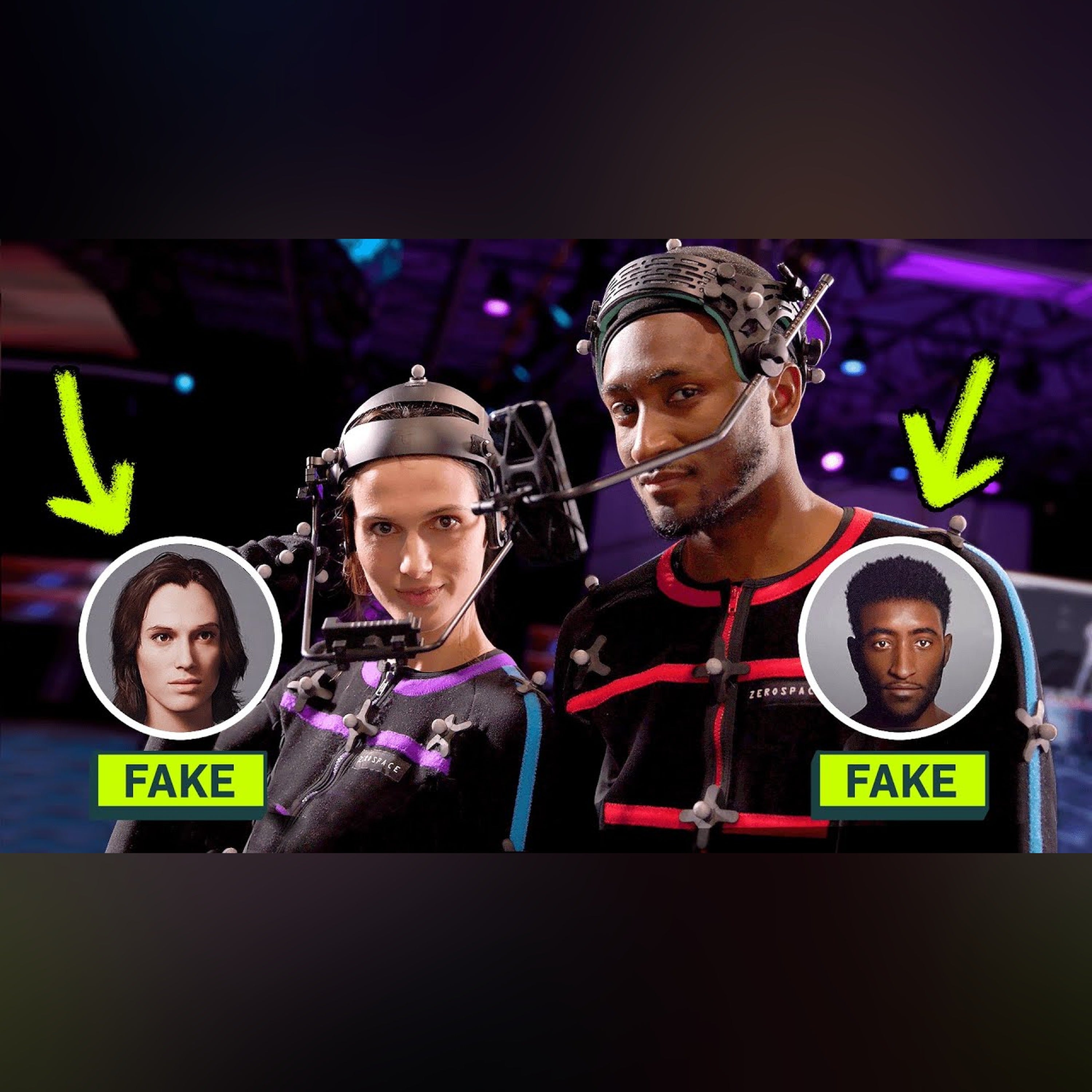
This new tech is changing how movies get made. So @mkbhd and I tested it out... Watch MKBHD's video: https://youtu.be/RM7SobH8ZO0 I’ve been obsessed with sci-fi movies since I was a kid. I love being transported to another world. But lately, I’ve been wondering: How do those worlds look so… REAL? The tech behind movies has exploded in complexity and realism, changing how stories come to life on screen. Luckily, at the same time, those tools are becoming more and more available to more people telling stories. It’s not just blockbusters like Avatar 2 or Avengers or Dune. It’s also smaller budget films like Everything Everywhere All at Once or even… YouTube creators? In this video, Marques Brownlee and I test out 3 movie-making tools that are changing how movies, shows, and maybe even YouTube videos (??) get made. We’re at ZeroSpace Studios in New York to show you how each of these crazy technologies work - and how you might be able to use them. Along the way, we hit big questions like: W
Is OCD really an anxiety disorder? Are everyday rituals the same as compulsions? And what happens when treatment doesn't work? In Part 3 of Figuring It Out, Dr Alex George and research scientist Dr Kathryn Bates put some of the biggest misconceptions about obsessive-compulsive disorder (OCD) to the test in Myth, Fact and It's Complicated. They explore how OCD is classified, why it's different from anxiety, and what treatment options exist for people who don't respond to the first approach. They also look at how OCD treatment may need to be adapted for autistic people, what the research tells us about OCD and menopause, and why everyday routines and rituals aren't necessarily the same as compulsions. No lectures. No easy answers. Just two people trying their best to figure it out. Part One tackles the Big Question. Part Two answers a real dilemma sent in by a listener. Produced by Kathryn Bates We'd love to hear from you. Email us at [email protected]. Hosted on Acast.
Are we all really 'a bit OCD'? Or is obsessive-compulsive disorder something far more complex than the way we often talk about it? In Part 1 of Figuring It Out, Dr Alex George and research scientist Dr Kathryn Bates explore what OCD really is, why it's so much more than being tidy or organised, and what living with intrusive thoughts and compulsions can actually feel like. They unpack the cycle of obsessive thoughts, anxiety and compulsive behaviours, why it can be so difficult to break, and what the science tells us about the causes of OCD, from genetics and brain circuits to life experiences. They also explore why using the term 'OCD' casually can be harmful, the different ways the condition can show up, and what support and treatments are available. No lectures. No easy answers. Just two people trying their best to figure it out. Part One tackles the Big Question. Part Two answers a real dilemma sent in by a listener. Produced by Kathryn Bates We'd love to hear from you. Email us at
How much of what we see about ADHD on social media is actually true? And are some of the most common beliefs about ADHD backed by science? In Part 3 of Figuring It Out, Dr Alex George and research scientist Dr Kathryn Bates put some of the biggest claims about ADHD to the test in Myth, Fact and It's Complicated. From misleading ADHD advice on TikTok to the links between ADHD and smartphone use, they explore what the evidence really tells us. They also look at how menopause may affect ADHD symptoms, whether people with ADHD can thrive in creative environments, and whether children really grow out of ADHD. Plus, is ADHD genuinely becoming more common, or have we simply got better at recognising it? No lectures. No easy answers. Just two people trying their best to figure it out. Part One tackles the Big Question. Part Two answers a real dilemma sent in by a listener. Produced by Kathryn Bates We'd love to hear from you. Email us at [email protected]. Hosted on Acast.
Equipment rules should preserve fair competition even when they limit innovation.
Share your view, then see how readers voted. No sign-in required. This poll is shared across stories.
Do you agree or disagree?
Common Quandary
A Common Quandary to discuss
Another conversation to explore, separate from this news story.
Your coworker bends a dumb rule to help people. Do you report it?
An underpaid coworker quietly bends a company rule to help colleagues receive benefits they were technically denied. No customer is harmed, but the records are inaccurate and you are asked to certify them.
Where should loyalty end when a rule seems unjust?