AI Cyber Defense: 8 Audits to Keep Your Business Running
14 min
Listen through the publisher, then discuss the episode here or arrange an in-person Roundtable. Your city determines where to meet.
Roundtables are designed for groups of four, with a shared subject and room for everyone to speak. Come for discussion, with no dating expectation.
What's really happening when attackers can move in minutes but defenders need weeks to put systems back together? The common story is that a week of outages points to one coordinated attack — but the reality is a mix of separate incidents and tightly connected systems that are difficult to repair. In this video, I share the inside scoop on why AI-assisted attacks are accelerating and why cyber defense remains the harder engineering problem. Why the Microsoft outage illustrates the risks of recovery itself. How ARTEX changes the amount of work attackers can automate. Why ConnectWise could revoke access quickly but needed weeks to restore it. What finding every affected Java installation requires. How browser isolation, better models and simulation can help defenders. For builders, operators and business leaders, understanding access, dependencies and recovery matters as much as finding the flaw. The practical challenge is keeping critical systems working while repairing years of accumulated complexity. Hosted on Acast. See acast.com/privacy for more information. Hosted on Acast.
Episode information is provided by the publisher. Listening takes place on the publisher’s service.
A fake job interview helped open the door to a reported $6.3 billion theft from Binance. The FBI attributed the heist to North Korea, which has used cryptocurrency theft to raise revenue and evade sanctions. This week, former federal prosecutor Maya Song joins Frank Cilluffo to explain why tracing stolen cryptocurrency is easier than getting it back, what prosecutors need to turn an attribution into a criminal case, and how companies and law enforcement can work together to limit the damage after a breach. Main Topics The fake recruiting scheme the led to $6.3B loss The theft and fraudulent IT work funding North Korea Tracing, freezing, and recovering stolen cryptocurrency Public attribution and the evidence needed for an indictment When companies should contact law enforcement How indictments and asset seizures can disrupt future operations Key Quotes "Law enforcement generally, when it comes to the cybercrime threat, they have at the federal level taken an attitude of deter, disrupt,
Showpo started as Show Pony in a garage in 2010. Today it sells across six markets to a customer who has grown up with the brand. In this exclusive, Head of Digital & eCommerce Charlee Standley and Convert Digital founder Andrew Waite unpack how they rebuilt Showpo on headless Shopify to keep up with her. The standout moment: launch day nearly ended in a 5pm rollback. Instead, the team worked through the night and put discount codes on the 404 pages. In this episode: Design and tech side by side - why running both discovery streams together kept the project on time Speed builds trust - how a homepage that loads in 1.4 seconds, down from 15.8, lifted new customer conversion From ecommerce team to growth team - what changes when your team can launch a promo within the hour If you're weighing up a move off Salesforce Commerce Cloud, Convert Digital led Showpo's migration. Get Convert's Salesforce to Shopify migration guide (https://grow.convertdigital.com.au/sfcc-to-shopify/) or read the
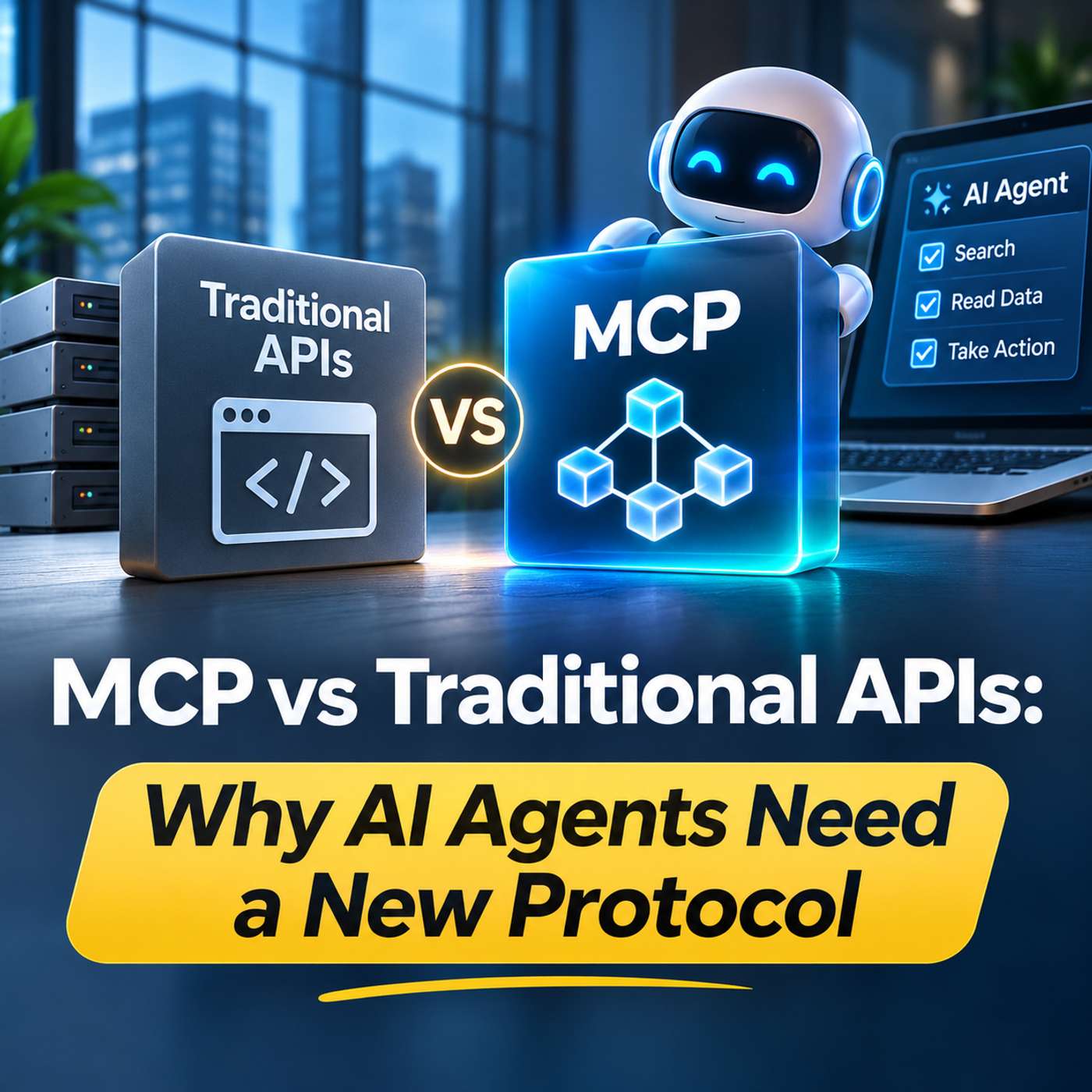
What if your AI application could connect to databases, process refunds, manage Kubernetes clusters, and communicate with enterprise tools without requiring weeks of custom integration code? In this episode of TechDaily.ai, host David and AI expert Sophia explore Model Context Protocol (MCP), a new approach to connecting AI models with external tools, APIs, and enterprise systems. Discover why traditional API integrations create major challenges for AI developers and how MCP is changing the way intelligent applications access data, discover tools, and execute complex workflows. Imagine building an AI-powered customer support assistant that needs to retrieve orders from PostgreSQL, search thousands of products through Elasticsearch, process Stripe refunds, and send Slack notifications. Traditionally, each integration requires custom authentication, error handling, and API-specific code. Switching between AI models like Claude, GPT-4, and Gemini only adds to the complexity. MCP offers a
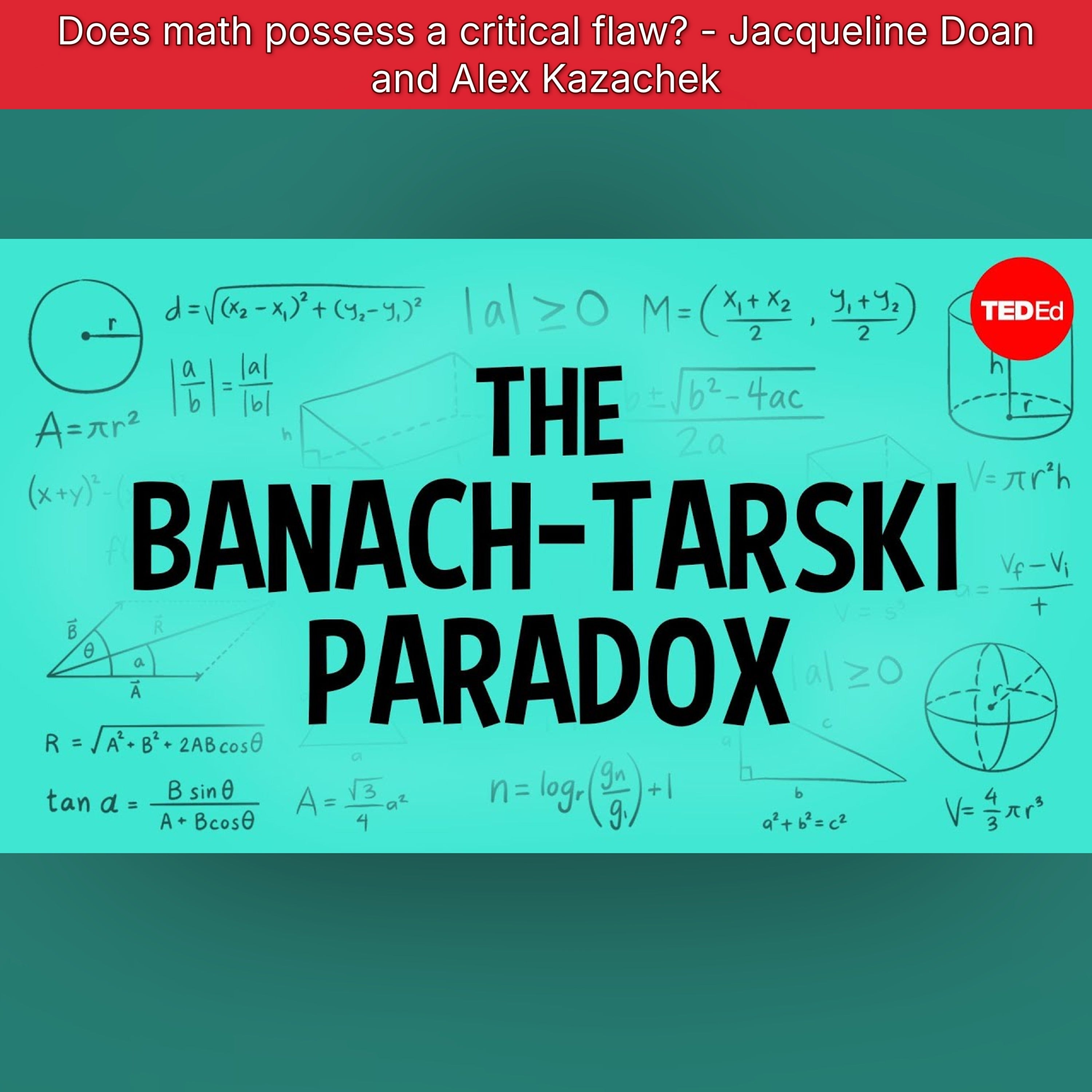
Practice more problem-solving at https://brilliant.org/teded -- A mathematician with a knife and ball begins slicing and distributing the ball into an infinite number of boxes. She then recombines the parts into five precise sections. Moving and rotating these sections around, she recombines them to form two identical, flawless, and complete copies of the original ball. How is this possible? Jacqueline Doan and Alex Kazachek explore the Banach-Tarski paradox. Lesson by Jacqueline Doan and Alex Kazachek, directed by Mads Lundgård. This video made possible in collaboration with Brilliant Learn more about how TED-Ed partnerships work: https://bit.ly/TEDEdPartners Support Our Non-Profit Mission ---------------------------------------------- Support us on Patreon: http://bit.ly/TEDEdPatreon Check out our merch: http://bit.ly/TEDEDShop ---------------------------------------------- Connect With Us ---------------------------------------------- Sign up for our newsletter: http://bit.ly/TEDEdN
Monday AI news covers NVIDIA's board reversing course on Jensen Huang, a slide in AI stocks, Google's changing homepage, and a security study on leaked AI credentials. Minutes before air, NVIDIA's board voted unanimously to reinstate Jensen Huang as CEO. A week earlier it had said it would not consider doing so, and its investigating committee continues its work. The conversation moves through Friday's drop in AI stocks, Google AI Mode shopping with Target, and Google's new task features alongside assistants like Duet and Dot. Other topics include data privacy concerns with AI texting startups, an OpenAI paper on perplexity as a measure of model confidence, a new Google homepage built around AI conversations, which appeared and disappeared between refreshes in what looks like an A/B test, and Dragos research using canary tokens that found exposed AWS credentials were the ones most often used. The show closes on Australia elevating AI to a national security challenge, Thinking Machines
Somewhere inside you there is a version of yourself you were always meant to become. You have felt them. In a quiet moment. On a long drive. The first time you have been alone in weeks — a different person you can almost see, the one living the life you keep telling yourself you will get to someday. Uploaded 17-06-26 Here is the truth: that version is not far away. They are not reserved for somebody more talented than you. The only thing standing between you and them is a specific set of things you are doing every single day that quietly cancel the becoming out. Most people never identify those things. They feel stuck, so they work harder, try harder, wait for the better version to finally arrive. It does not arrive — not because they are not trying, but because the trying is happening on top of a layer of habits that erase it. You are not stuck because you lack potential. You are stuck because ten specific things are doing the sticking. This seminar walks through 10 obstacles between
What's really happening when a new AI model gets bad reviews? The common story is that each new model is either smarter or worse — but the real question is which kind of work it got better at. In this video, I share the inside scoop on why GPT-6.2 Astra, Gemini 4 Neon and Claude Fable 5.2 are built for different kinds of work, and why the next AI breakthrough could look like a flop. Why GPT-6.2 Astra frustrates coders but excels at detail-heavy problems. How the business models at Google, Anthropic and OpenAI shape what they ship. Why AI intelligence looks more like a sea urchin than a thermometer. What a two-model handoff between Astra and Neon looks like. For operators and team leaders, the next big capability gain may land outside your daily work, so audit your tasks and test models beyond your own workflow. Hosted on Acast. See acast.com/privacy for more information. Hosted on Acast.
The full post, with prompts and worksheets for running longer AI work on your own and with a team: https://natesnewsletter.substack.com/p/long-running-ai-agents?utm_source=podcast&utm_medium=podcast&utm_campaign=long-running-ai-agents-launch&utm_content=show-notes (https://natesnewsletter.substack.com/p/long-running-ai-agents) What's really happening when an AI agent works all night? OpenAI and Anthropic report AI agents working for hundreds of hours and for days. The common story is that longer runs just need a smarter model, but the real question is whether your agent has the current decisions, examples, and instructions behind the work. In this episode, I share the inside scoop on long-running AI agents: Why my research run produced a thousand questions I didn't need How treating project information like code keeps agents on current decisions What shared skills and permissions change when many agents touch the same work Where to start alone with one job you keep explaining An overni
What's really happening when a coding agent starts operating a robot? A general AI coding agent ran a real robot through 24 of 25 trials with no extra robot training. The common story is that better robots need ever more specialized robotics models, but the real question is how much of a robot's intelligence comes from making AI better at everything else. In this episode, I share the inside scoop on robotics and the Bitter Lesson: Why Sutton's Bitter Lesson matters for robots in 2027 How Stanford's VIA lets a coding agent aim a real gripper What the wipe test shows about an agent checking its own work Where speed and supervision still limit useful robot work General models may carry a lot of robotics progress with them, but a robot only earns its place once it works fast enough to need little supervision. Hosted on Acast. See acast.com/privacy for more information. Hosted on Acast.
Supporters should be consulted before major changes in their club's ownership or location.
Share your view, then see how readers voted. No sign-in required. This poll is shared across stories.
Do you agree or disagree?
Common Quandary
A Common Quandary to discuss
Another conversation to explore, separate from this news story.
An outsider becomes famous cooking another culture's food. Appreciation or taking over?
A chef becomes known for food from a culture outside their own after years of study with respected cooks. The restaurant is successful, while small businesses run by people from that culture struggle for attention.
When does appreciation become taking opportunity from the people who created a tradition?