Listen through the publisher, then discuss the episode here or arrange an in-person Roundtable. Your city determines where to meet.
Roundtables are designed for groups of four, with a shared subject and room for everyone to speak. Come for discussion, with no dating expectation.
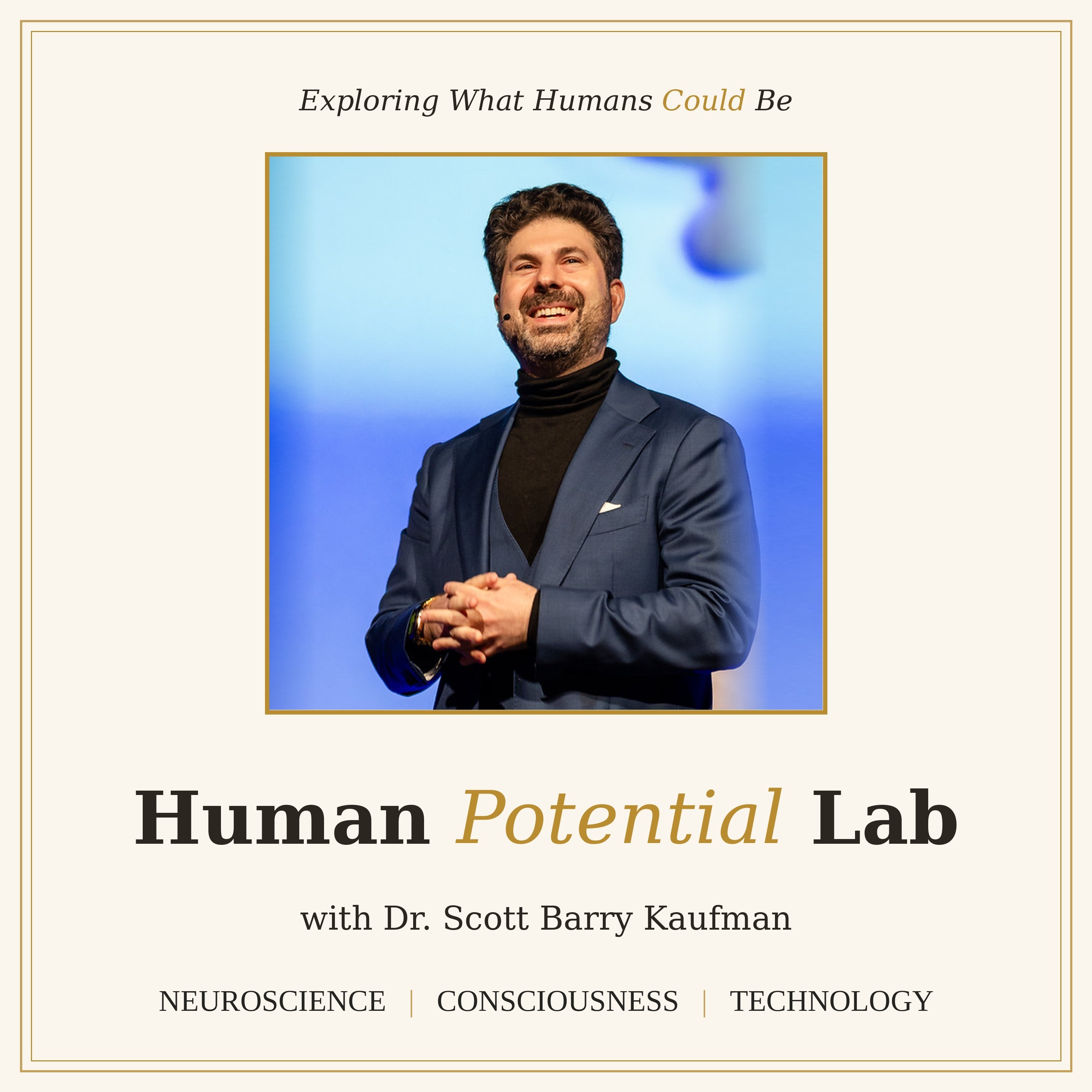
Dr. Roman Yampolskiy joins Dr. Scott Barry Kaufman to explore one of the most urgent questions surrounding artificial intelligence: can we make increasingly intelligent AI systems safe? Yampolskiy explains why he believes controlling superintelligence may be an impossible challenge, why he sees current AI safety efforts as inadequate, and what could happen if advanced systems escape human control. He also discusses the possibility of AI consciousness, how researchers might test for it, and whether machine intelligence could eventually surpass our ability to understand it. The conversation also examines AI-driven automation, the difference between useful AI tools and systems that could become replacements for humanity, and the possibility of living in a simulated reality. Yampolskiy shares what evidence would change his concerns, how he prioritizes the risks of AI, and what kind of future he hopes humanity can build: one with technology that improves our lives without putting our survival at risk.
Episode information is provided by the publisher. Listening takes place on the publisher’s service.
New podcast episode between Ege Erdil and Daniel Kokotajlo. I thought this was going to be a debate, but they ended up agreeing on a lot more than I expected. Their main point of disagreement is how likely it is that we get some intelligence explosion that gives us AIs more competent than any human expert before 2029. Ege puts this possibility at around 20%, whereas Daniel thinks it’s higher than 50%. They agree that there is not a huge difference in probability, and that, in either case, the situation is crazy enough that our civilization really needs to grapple with how the world might be transformed, and we need a plan that actually makes sense. In particular, we should stop antagonizing China if we think some kind of global treaty will be needed to make superintelligence go well. There was another important crux about how well we should expect future AIs (that swamp humans in population size and cognitive power) to treat us, and how relevant it is that current AIs, by and large, se
Can artificial intelligence recreate the magic of a video game that takes thousands of human developers more than a decade to build? Or is the painstaking, inefficient process of human creativity precisely what makes great entertainment so valuable? In this episode of techdaily.ai, host David and his guest expert explore the philosophical clash between Rockstar Games' Grand Theft Auto VI (GTA 6) and Anthropic's vision of AI-powered efficiency. Using GTA 6 and Anthropic's reported IPO as contrasting examples, the conversation examines two competing visions for the future of technology and entertainment. One celebrates human craftsmanship, artistic intention, and meticulous world-building, while the other promises instant content generation, automation, and hyperpersonalized digital experiences. The discussion explores whether generative AI can genuinely replicate human creativity and what the entertainment industry risks losing as it prioritizes production speed, cost reduction, and alg
On this week’s edition of “Happy Hour,” Emily Jashinsky examines America’s affordability crisis, the growing divide between generations, and whether the constant barrage of bad news is discouraging young Americans from having children. She weighs in on the Wes Huff plagiarism controversy, the media’s responsibility when reporting damaging allegations, and where people can turn to reclaim their reputations. Emily also addresses a listener’s question about her own potential conflicts of interest, President Trump’s investments in Nvidia, the debate over American sovereignty and Israel, and Hakeem Jeffries’ leadership. Plus, why Hugh Hewitt’s proposal for partial amnesty alarms her, concerns surrounding the lead detonation in Iowa, and her response to criticism of her “Grand Theft Auto VI” commentary. Emily discusses Breaking Points’ skepticism of artificial intelligence insiders, the challenges facing workers in the tech age, the possibility of journalists being debanked, and whose electi
Watch Space: The Longest Goodbye on Independent Lens: https://pbs.org/longestgoodbye In the far future we may have advanced propulsion technologies like matter-antimatter engines and compact fusion drives that allow humans to travel to other stars on timescales shorter than their own lives. But what if those technologies never materialize? Are we imprisoned by the vastness of space—doomed to remain in the solar system of our origin? Perhaps not. A possible path to a contemporary cosmic dream may just be to build a ship which can support human life for several generations; a so-called generation ship. Sign Up on Patreon to get access to the Space Time Discord! Check out the Space Time Merch Store Sign up for the mailing list to get episode notifications and hear special announcements! Search the Entire Space Time Library Here: https://search.pbsspacetime.com/ Senior Creative Producer (ITVS): Andrea Bloom Creative Director (ITVS): Carol Paik Executive Producers (ITVS): Carrie Lozano, Loi
SILICON SATAN: THE HIDDEN HIERARCHY OF POWER EXPOSED! Who really controls the controllers? Michael Jaco welcomes back Cregg Lund, author of Silicon Satan, for an explosive conversation exploring what Cregg describes as the Luciferian hierarchy, the secret societies operating behind powerful institutions, and the hidden layers of influence he believes most people never see. Cregg breaks down his proposed levels of control, from political institutions and Silicon Valley power players to billionaire networks, secret societies, and what he calls the ancient Luci bloodlines. But according to Cregg, the biggest mistake is focusing on the visible players rather than the structures he believes operate above them. ⚡ Inside this episode: The Luci hierarchy and Cregg's claims of internal power struggles. The billionaire club, Silicon Valley, and alleged hidden networks of influence. Why Cregg believes dismantling the visible “deep state” would not eliminate the underlying system. Secret societies
Generate 300 BILLION story synopses with GPT-3 Episode release date: 18 Sep 2022 Core Ideas: Metamodernism: Narratives and emergence view of reality - Reduce suffering - Increase prosperity - Increase understanding mantra: Seek knowledge. DISCLAIMER: This is a community-driven show. ------- Keywords: superintelligence, ai safety, machine autonomy, gpt, ai future, artificial general intelligence, david shapiro, deep learning
Dr. Sara Imari Walker joins Dr. Scott Barry Kaufman for a wide-ranging conversation about the nature of life, the physical meaning of time, and how billions of years of cosmic history have shaped who we are. Drawing on her work in theoretical physics and astrobiology, Walker challenges the idea that science has reached a final understanding of the universe. She explains why life may be better understood as a process through which the universe creates and reproduces structure, and how assembly theory could help scientists understand life's origins and detect life beyond Earth. The conversation explores human uniqueness, scientific creativity, free will, the origins of agency, and the possibility that artificial intelligence is part of the evolutionary process that began long before humanity. Walker also discusses why AI should not automatically be considered alien, how cultural beliefs shape our perceptions, and why uncertainty can be a source of discovery rather than fear. The episode
Dr. Christof Koch joins Dr. Scott Barry Kaufman to explore one of the deepest questions in science: what is consciousness, and why does anything feel like something from the inside? They discuss integrated information theory, how consciousness might be measured in patients who cannot respond, the distinction between intelligence and consciousness, and whether artificial intelligence could ever become conscious. They also explore the possibility that consciousness may not simply be created by the brain, including Dr. Koch's own near-death experiences, mystical experiences, idealism, and the possibility that consciousness could be fundamental to reality. The conversation moves between neuroscience, artificial intelligence, philosophy, and firsthand experience to examine what science can ultimately tell us about the mystery of consciousness.
Schools should be judged on student wellbeing as well as academic results.
Share your view, then see how readers voted. No sign-in required. This poll is shared across stories.
Do you agree or disagree?
Common Quandary
A Common Quandary to discuss
Another conversation to explore, separate from this news story.
The prettiest trees on your street are ecological troublemakers. Do they come down?
A row of mature flowering trees defines a neighborhood and provides valuable shade. Ecologists identify them as invasive and recommend replacing them with native saplings that will take decades to grow.
How should visible community value be weighed against gradual ecological harm?