An athlete uses physics to shatter world records - Asaf Bar-Yosef
6 min
Listen through the publisher, then discuss the episode here or arrange an in-person Roundtable. Your city determines where to meet.
Roundtables are designed for groups of four, with a shared subject and room for everyone to speak. Come for discussion, with no dating expectation.
View full lesson: http://ed.ted.com/lessons/an-athlete-uses-physics-to-shatter-world-records-asaf-bar-yosef Uploaded 18-02-14 When Dick Fosbury couldn't compete against the skilled high jumpers at his college, he tried jumping in a different way -- backwards. Fosbury improved his record immediately and continued to amaze the world with his new technique all the way to Olympic gold. Asaf Bar-Yosef explains the physics behind the success of the now dominant Fosbury Flop. Lesson by Asaf Bar-Yosef, animation by NEIGHBOR.
Episode information is provided by the publisher. Listening takes place on the publisher’s service.
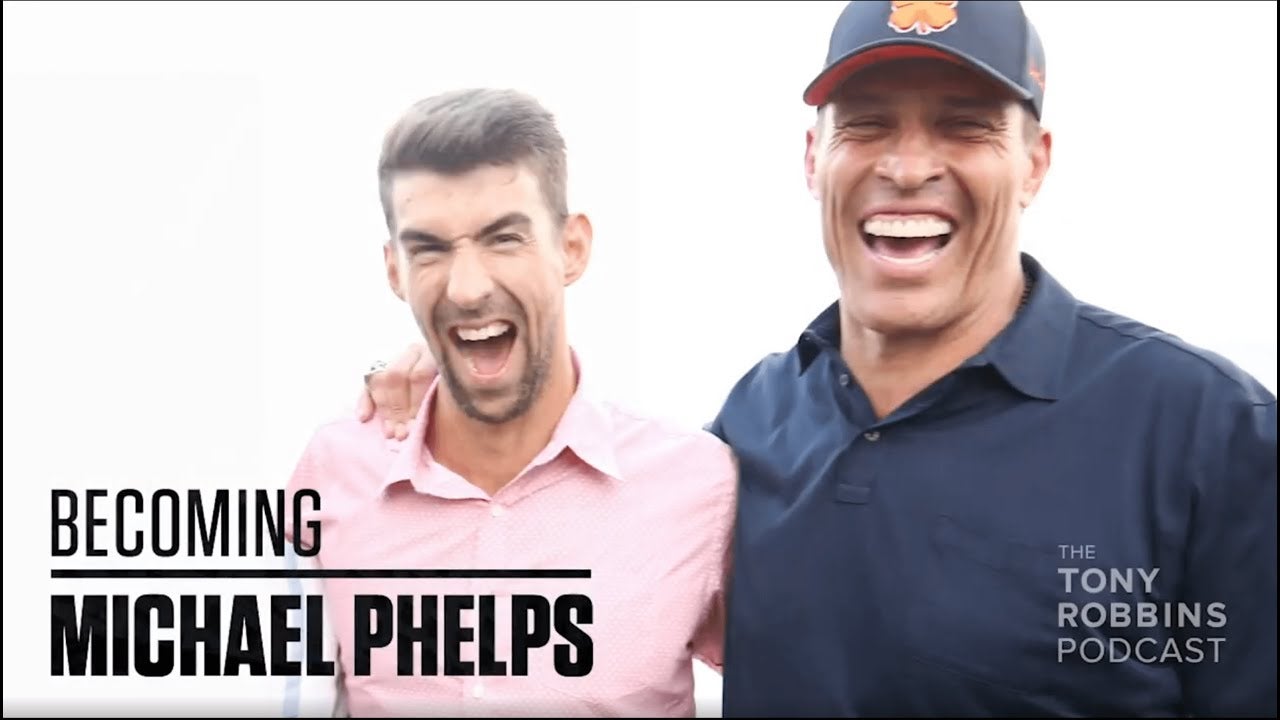
American swimmer Michael Phelps knows about paving the road to greatness. As the most decorated Olympian of all time, Phelps holds 28 medals. Additionally, he holds all-time records for Olympic gold medals, Olympic gold medals in individual events and Olympic medals in individual events. Uploaded 28-06-20 But getting to the top, and staying there, wasn’t easy. In this episode, Phelps sits down with Tony Robbins to discuss becoming one of the most successful athletes of all time. They talk about his training schedule, the highs of being an Olympic athlete and the let down that happens after the Olympics are over. Phelps also discusses the depressive states he would fall into because he wasn’t sure who he was outside of swimming. Raised mostly by his mother after his parents’ divorce, he had a lot of unresolved anger toward his father. These feelings of hurt and rejection played a big role in his decision to ask for help for his mental health struggles in 2012. During in-patient treatmen
In episode #207, Grand Canyon river guide and ocean rower Kelsey Pfendler joins host Kyla Channell to describe her solo, unsupported row from California to Hawaii. She shares what the 43-day crossing involved - from weather windows, water production and sleep, to food, fatigue and life at sea - and talks about her future ocean-rowing plans. KEY TOPICS: 5:13 — Background as a whitewater guide, and in raft racing and ocean rowing 9:40 — Why she chose a solo crossing of the Pacific 14:06 — What an unsupported row means 15:23 — Carrying supplies and making fresh water with a desalinator 17:54 — Planning food, eating about 4,000 calories a day 22:40 — Electrolytes, carb mixes and managing food offshore 24:06 — Rowing and sleeping in short blocks 31:03 — Menstruation and other practical realities of a long row at sea 32:53 — Storms, large waves and the self-righting boat 35:08 — Kelsey’s planned solo crossings of the Indian, Atlantic and Pacific Oceans 38:44 — Routine, goals and the mental s
To learn to think like a scientist check out http://Brilliant.org/SpaceTime (http://brilliant.org/SpaceTime) Uploaded 20-12-18 PBS Member Stations rely on viewers like you. To support your local station, go to: http://to.pbs.org/DonateSPACE Check out the new Space Time Merch Store! Support Space Time on Patreon There’s this idea that beauty is a powerful guide to truth in the mathematics of physical theory. String theory is certainly beautiful in the eyes of many physicists. Beautiful enough to pursue even if it’s wrong? Tweet at us! @pbsspacetime Facebook: facebook.com/pbsspacetime Email us! pbsspacetime [at] gmail [dot] com Comment on Reddit: http://www.reddit.com/r/pbsspacetime Help translate our videos! Previous Episode: Quantum Physics in a Mirror Universe https://www.youtube.com/watch?v=UyTqgnKD3sw&t=5s (https://www.youtube.com/watch?t=5s&v=UyTqgnKD3sw) Hosted by Matt O'Dowd Written by Matt O'Dowd Graphics by Luke Maroldi Assistant Editing and Sound Design by Mike Petrow Made by
Look at the confident person across the room. Most people assume that person was handed something they never received. But confidence is not a gift. It is a record. Uploaded 13-08-26 It is the accumulation of evidence you have gathered about yourself, over years, one small proof at a time. Every time you say you'll do something and then do it, that goes in a file your brain keeps on you. Every time you say you'll do it and then don't, that goes in the file too. And over a lifetime, that file becomes the source of what you call self-confidence — or the lack of it. Here is the truth: your brain grades you on completion, not intention. It is looking for a pattern, and it wants to know one thing — when this person says they will do something, do they do it? This seminar walks through ten small wins you must understand about rebuilding self-trust, one kept promise at a time. CHAPTERS 0:00 Intro — Confidence is a record, not a gift 2:06 Why small wins work when big goals don't 5:18 #1 — Make
In this calm and sleepy facts episode, we turn inward to explore the quiet, extraordinary science of human memory, the invisible system that holds together every experience, every face, and every half forgotten song from childhood. We begin with what memory actually is, not a recording stored neatly in a single place but a living reconstruction, rebuilt each time it is recalled and subtly reshaped in the process. We journey into the neuroscience behind it all, from the hippocampus, the small seahorse shaped structure at the center of memory formation, to the synapses that strengthen each time a memory is revisited, to the remarkable role sleep plays in moving the day's experiences from temporary storage into the deeper architecture of the brain. We explore the different kinds of memory, from the episodic memories that let us relive a moment in vivid detail to the procedural memories that let us ride a bicycle without thinking, to the brief sensory traces that hold the echo of a sound f
What happens when the CEO of one of the world's most influential AI companies becomes the target of a foreign intelligence operation? And what does that mean for the future of artificial intelligence, corporate leadership, and global technology security? In this episode of TechDaily.ai, host David and guest Sophia examine a dramatic Nvidia leadership story described in the episode: the November 23, 2026, reinstatement of CEO Jensen Huang following an alleged foreign intelligence targeting incident. The discussion explores the reported unanimous board decision, the involvement of senior United States government officials, and the sweeping corporate governance changes described as part of Nvidia's response to growing national security concerns. As AI infrastructure becomes increasingly important to global economic and technological competition, the conversation raises a critical question: Are the executives leading the AI revolution becoming high-value targets in an international intelli
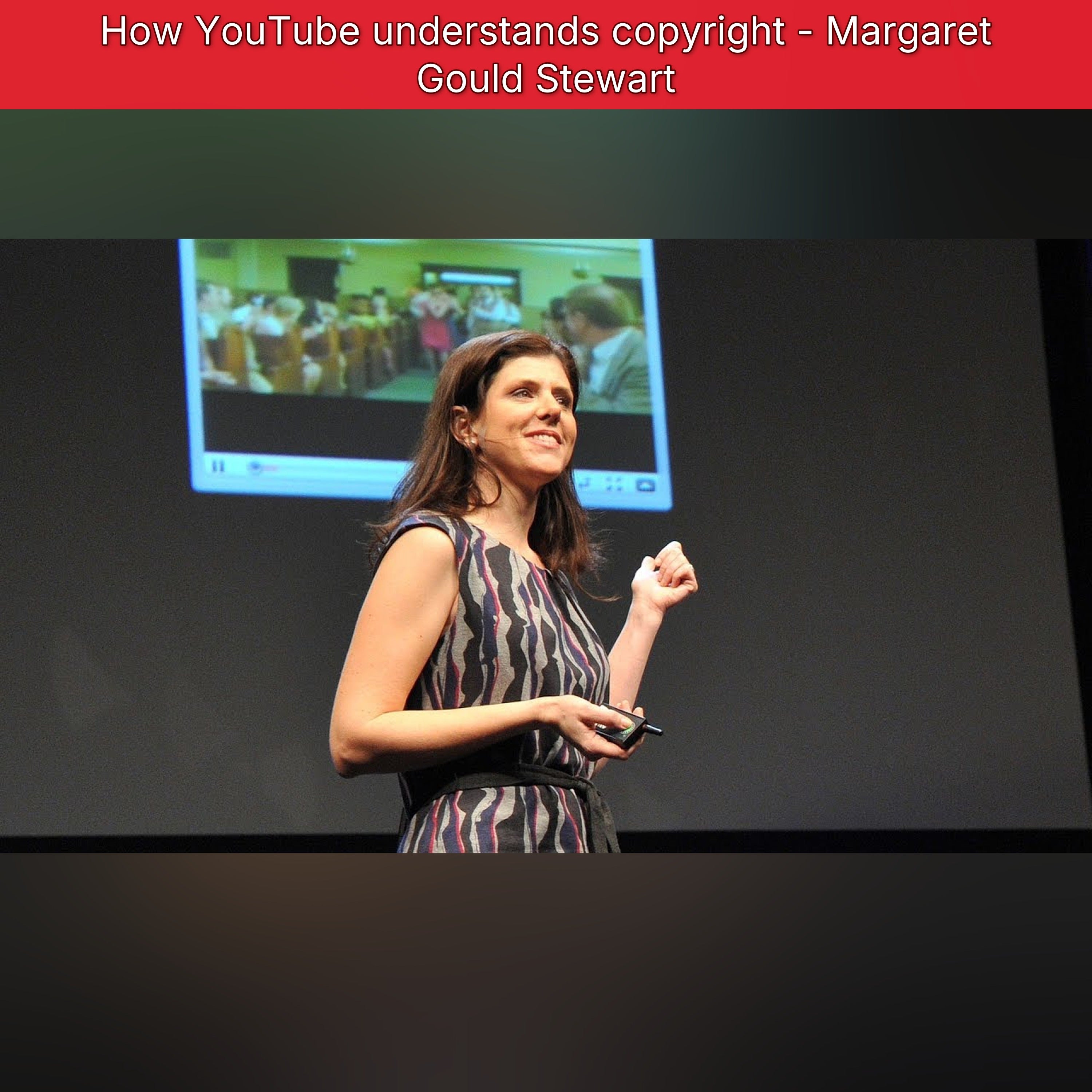
Margaret Gould Stewart, YouTube's head of user experience, talks about how the ubiquitous video site works with copyright holders and creators to foster (at the best of times) a creative ecosystem where everybody wins. Talk by Margaret Gould Stewart.
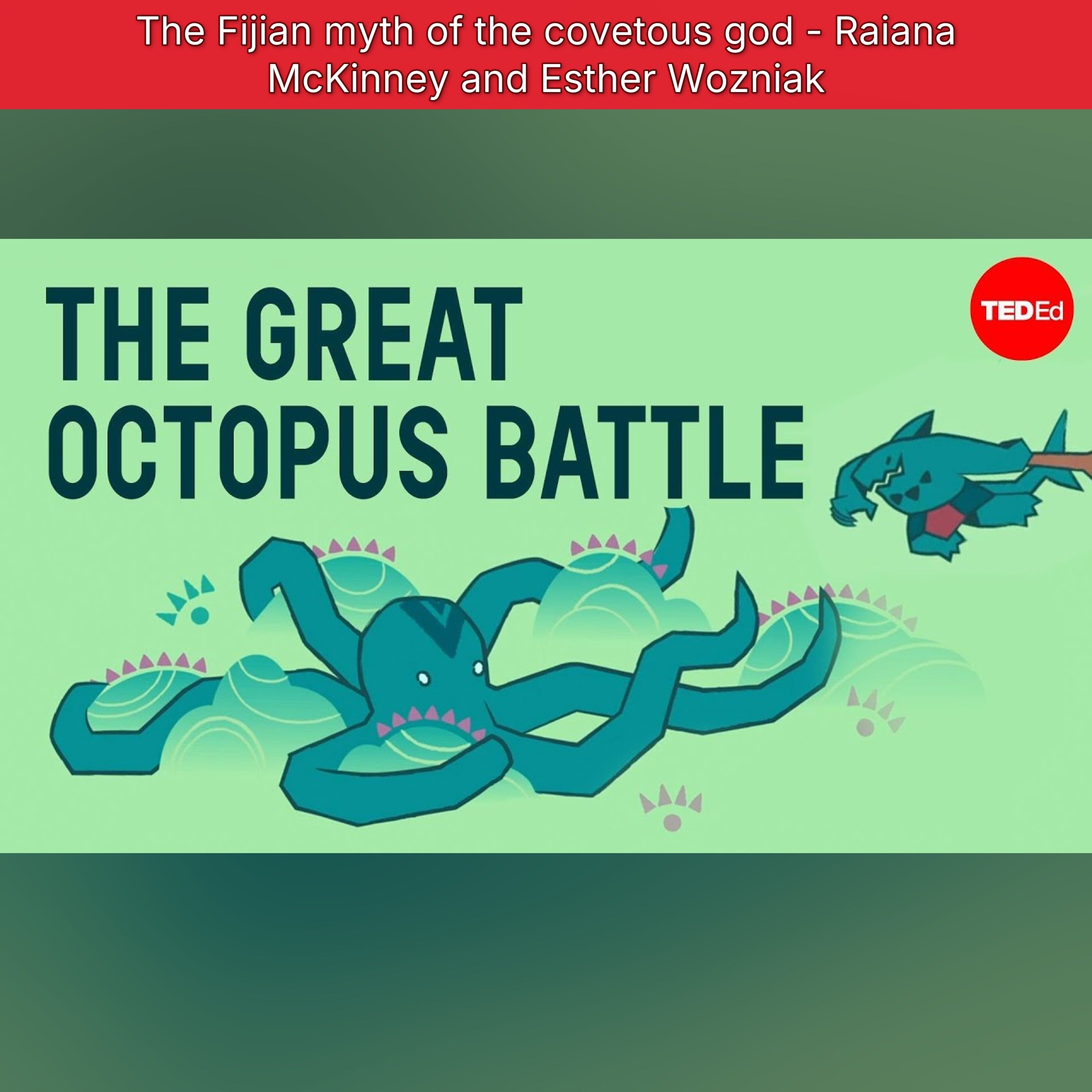
Dig into the Fijian myth of Dakuwaqa, the shape-shifting shark god who is determined to take over all of Fiji's islands. -- Long ago, the ancestral gods of Fiji settled on the Pacific archipelago. They eventually metamorphosed into various forms, with the god Dakuwaqa transforming into a shark. But he was unsatisfied. He became proud and greedy and wanted to establish himself as the mightiest god, and dominate all of Fiji’s islands. Raiana McKinney and Esther Wozniak share the tale of Dakuwaqa’s quest for power. Lesson by Raiana McKinney and Esther Wozniak, directed by KERO Animation. Support Our Non-Profit Mission ---------------------------------------------- Support us on Patreon: http://bit.ly/TEDEdPatreon Check out our merch: http://bit.ly/TEDEDShop ---------------------------------------------- Connect With Us ---------------------------------------------- Sign up for our newsletter: http://bit.ly/TEDEdNewsletter Find us on Twitter: http://bit.ly/TEDEdTwitter Peep us on Instagram
View full lesson: http://ed.ted.com/lessons/hiv-and-flu-the-vaccine-strategy-seth-berkley Seth Berkley explains how smart advances in vaccine design, production and distribution are bringing us closer than ever to eliminating a host of global threats -- from AIDS to malaria to flu pandemics. Talk by Seth Berkley.
Basic classroom needs should take priority over optional school programs when budgets are cut.
Share your view, then see how readers voted. No sign-in required. This poll is shared across stories.
Do you agree or disagree?
Common Quandary
A Common Quandary to discuss
Another conversation to explore, separate from this news story.
Would you want a doctor to give you a fake pill if the lie might make you feel better?
A patient has persistent symptoms that have not responded to standard treatments. A harmless placebo may help, but its effect could weaken if the clinician fully explains that it contains no active medicine.
Can a beneficial deception respect the person it helps?