Beach V. Parker "Outrage": SC Supreme Court Weighs In as Matney Fights Sanctions
35 min
Listen through the publisher, then discuss the episode here or arrange an in-person Roundtable. Your city determines where to meet.
Roundtables are designed for groups of four, with a shared subject and room for everyone to speak. Come for discussion, with no dating expectation.
"The Professor", Matt Siemebieda, explains the legal stakes in Mandy Matney’s contempt sanction and the ongoing Parker’s litigation connected to the Mallory Beach case. IOI discusses appeal bonds, First Amendment arguments, discovery disputes, and how out-of-state witnesses may testify. Look for Impact of Influence on Facebook and YouTube. Please support our sponsors Elevate your closet with Quince. Make sure you mention IOI Keywords #MandyMatney #Parker's #MalloryBeachcase, #SouthCarolinalaw, #FirstAmendment, #Truecrime Key Topics
Episode information is provided by the publisher. Listening takes place on the publisher’s service.
On November 17th, 2011, mother of three Michelle Parker disappeared in Orlando, Florida, on the same day an episode of The People's Court aired featuring a heated dispute between Michelle and her former fiancé. Michelle was last seen dropping off their twins at his home, but she never arrived at work that evening. The following day, her abandoned vehicle was discovered, sparking a missing persons investigation that would leave her family searching for answers for years. Watch The People’s Court episode here. (https://www.youtube.com/watch?v=6L1JEKloLmk) This episode is sponsored by: Ladder: If you have an iPhone, head to ladder.fit/TCKR (http://ladder.fit/TCKR) and take a quick quiz to find your perfect Ladder plan. Use my link and get a free 7-day trial with NO credit card, and $10 off your first month if you join. Aura Frames: For a limited time, visit auraframes.com (http://auraframes.com/) and get up to $50 off select frames plus an additional $5 off your order with the promo code
In The Well hosts Mark Geragos and Matt Murphy join the show to discuss their reunification after Matt’s trip to Cuba, Matt shares what it was like swimming with sharks, why he’s doing the show from a cruise ship, Mark and Matt discuss why the judge in the Russell Brand trial acted unfairly, looking at the Brand case through a sex crimes prosecutor’s lens, why the Brand case was prompted by the media not the criminal justice system, the lawyers discuss the Lindsay Clancy retrial hearing that happened earlier this week, how prosecutor Jen Sprague got “old boyed” and missed her chance to gain the upper hand, why rhetoric is the currency of the courtroom, why the Massachusetts Supreme Judicial Court has agreed to hear an appeal by Lindsay Clancy’s defense team, the moment Kevin Reddington lost Matt Murphy as a fan, how the prosecution failed in their closing argument, if a second trial will actually happen, and more. Mark Geragos: https://geragos.com Matt Murphy: https://www.mattmurphylaw
Becky Hill was the clerk of court in charge of Alex Murdaugh's jury. The Supreme Court says she told jurors not to be fooled by his side, and after the guilty verdict she put out a book about the trial, which was pulled when she admitted copying a reporter's work. That's one of the reasons Alex's murder conviction is gone. The other piece is David Owen, the lead state investigator, who admits he told the grand jury things about Alex's shirt and the shotgun shells that weren't true. Eric Faddis, a defense attorney and former prosecutor, helps me with the question in the middle of all of it: does what Hill and Owen did make the whole case look shaky, or were they just people with their own agendas while the evidence still stands? We also get into the no-blood lab result on Alex's T-shirt, the motive the Supreme Court said got far too much time at the first trial, and the reports about a police chief and the murder weapons. Alex is presumed innocent and goes back on trial in April. Listen
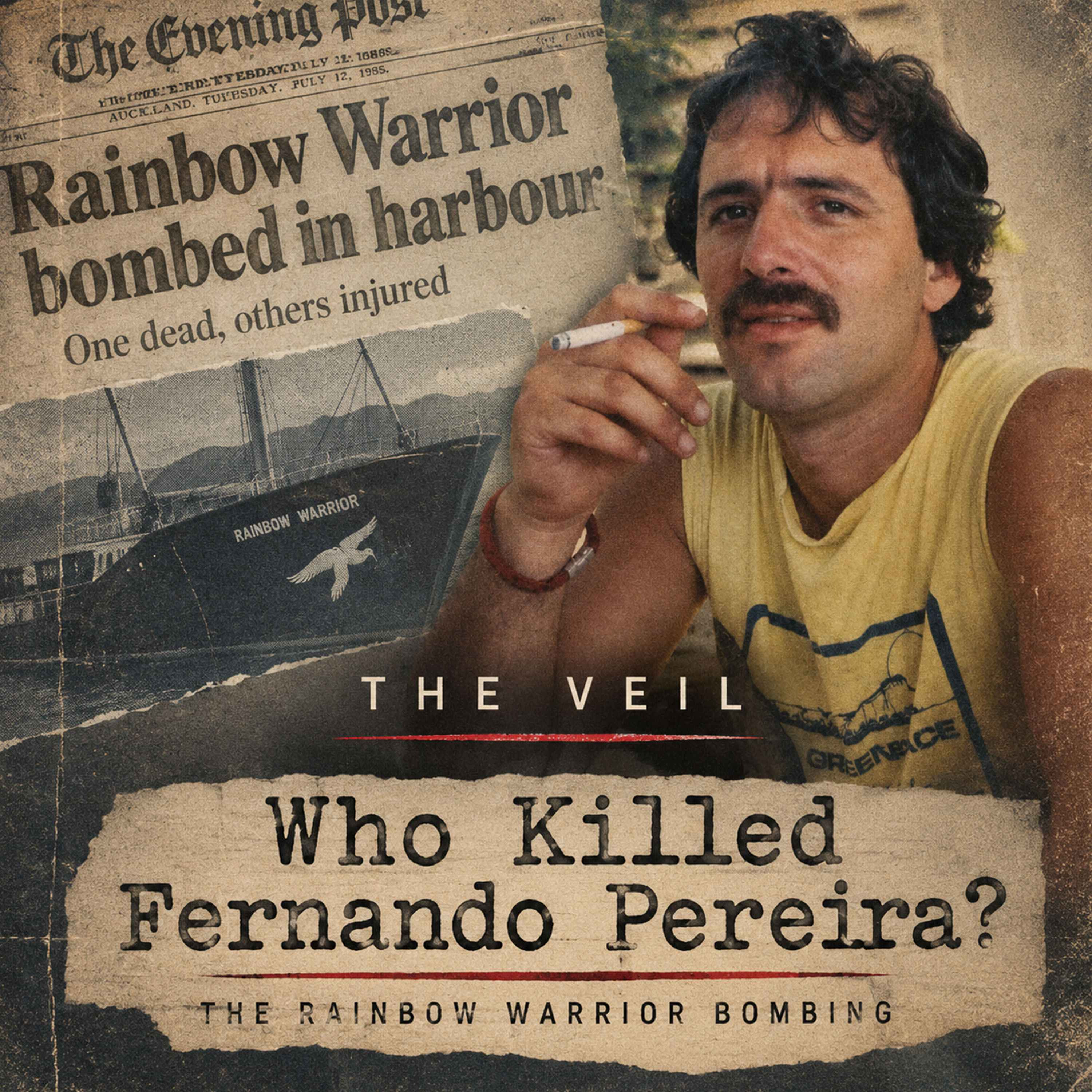
In November 1985, in front of the world's press, two French officers plead guilty to manslaughter and are sent to prison for ten years. Within eight months, a trade war and a United Nations ruling have put them on a Pacific atoll, and within three years both are home in France. Then come the arbitration, the arrest in Basel, the apology from a man who placed a bomb, and the question of who gave the order. The final part of A Friendly Country, and a daughter who remembers painting a red stripe. IN MEMORY Fernando Pereira, 1950 to 1985, photographer, father of Marelle and Paul. A national environmental award in Portugal, the Prémio Nacional de Ambiente Fernando Pereira, carries his name. A NOTE ON SOURCING Alain Mafart and Dominique Prieur are the only people ever convicted over the bombing. The man arrested in Basel in 1991 is not named: he was never tried, and New Zealand dropped the case. Jean-Luc Kister is named for his own public statements in 2015, Christine Cabon for her own 2017
In this special episode, Stocky brings together the original Mushroom Case Daily team for a live show, covering (almost) everything the team always wanted to say but hasn't, and answering questions from the studio audience. Kristian Silva and Rachael Brown also bring new insights and investigative tangents to the audience, in the final weeks before triple murderer Erin Patterson's High Court appeal window closes. If you have any questions you'd like Stocky to answer in future episodes, please email [email protected].
The murder of Julie Jensen is one of the most extraordinary cases in modern American crime. In the autumn of 1998, in Pleasant Prairie, Wisconsin, Julie Jensen, a devoted mother of two, sealed a letter and handed it to a neighbour with a chilling instruction: if anything happened to her, give it to the police. Weeks later she was dead, poisoned with antifreeze, and her letter named the person she feared would kill her, her husband, Mark Jensen. The case that followed turned on a question the law had never quite answered: can the dead give evidence? Julie's words from beyond the grave would convict her husband, then very nearly set him free, in a battle that reached the United States Supreme Court. On Crime at Bedtime, settle in, get comfortable, and let us tell you the story of the murder of Julie Jensen. All the details here Hosted on Acast.
"The Professor" joins IOI to analyze the prosecution’s response and the defense’s reply seeking dismissal of the indictments against Alex Murdaugh. The episode unpacks the alleged grand-jury errors involving blood-spatter and ammunition evidence, the demanding standard for dismissing an indictment, and what the dispute may mean for a retrial and the upcoming status hearing. #AlexMurdaugh, #Murdaughcase, #grandjury, #prosecutorialmisconduct, #South Carolinalaw #truecrime Look for Impact of Influence on Facebook and YouTube. Please support our sponsors Elevate your closet with Quince. Make sure you mention IOI #bloodspatter
"The Professor" Matt Siembieda, joins the Impact of Influence to assess Alex Murdaugh’s defense motion to dismiss the indictments ahead of an upcoming hearing. They examine disputed grand-jury testimony about blood spatter and ammunition, the timing and handling of Paul Murdaugh’s kennel video, and how those issues could shape the defense strategy and the judge’s decision. #AlexMurdaugh, #Murdaughcase, #grandjury, # kennelvideo, #prosecutorialmisconduct, #South Carolinalaw #truecrime Look for Impact of Influence on Facebook and YouTube. Please support our sponsors Elevate your closet with Quince. Make sure you mention IOI
People directly affected by a local change should have more influence than other residents.
Share your view, then see how readers voted. No sign-in required. This poll is shared across stories.
Do you agree or disagree?
Common Quandary
A Common Quandary to discuss
Another conversation to explore, separate from this news story.
A donor's family wants to hear their loved one's heart beating in you. Do you meet them?
A transplant recipient receives a letter from the donor's family asking to meet. The recipient feels profound gratitude but also discomfort and wants their recovery to remain private and separate from another family's grief.
Can receiving an extraordinary gift create a personal obligation to strangers?