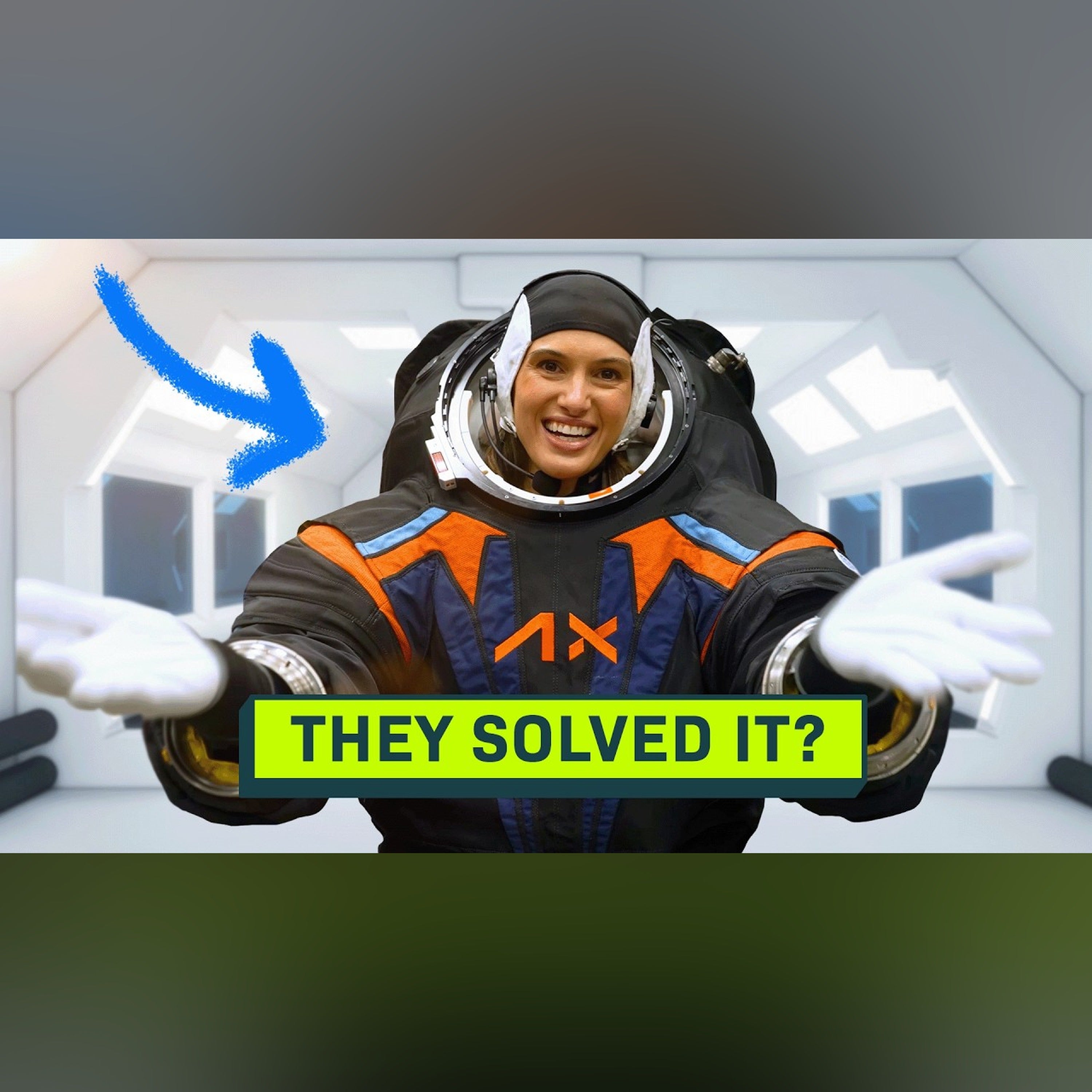
This will be the next space suit on the moon. What can it do? Only 12 people have ever walked on the moon and they all did it within just 4 years of each other. Then, for the last 50 years, no one has gone back… but that’s about to change. Soon, astronauts will return to the moon to prepare for people to live there long-term and to get us ready to send the first humans to Mars. But to do it, they need to survive outside in space and work for hours in one of the most dangerous conditions a human will ever face. The problem is, our spacesuits for the Moon haven’t been updated in decades! But now, to make this next chapter in space possible, space suits are getting a major upgrade. These new suits will give astronauts the superpower to do more, for longer… and I’m one of the first civilians to put one on. In this video, we’re taking you behind the scenes to show how Axiom Space is designing, building, and testing NASA’s new space suits. I am going to put myself and this suit to the test,
“A memorable and endearing experience” of “surprising depth” that “will steal your heart”, and a work of “artistry” depicting “the well-earned satisfaction of an authentic human bond”. Among near-universal rave reviews, that’s what the New York Times and The Guardian respectively said this week about an epic and singular global cultural phenomenon: the release - after 13 years - of a new edition of Grand Theft Auto: the ultra violent, sexually-explicit computer game once described as “the gravest assault upon children …since polio". Guest: David Kushner, author of Jacked: The unauthorized behind-the-scenes story of Grand Theft Auto.
Explore what makes polio so dangerous, what is causing the 21st century resurgence of cases, and how we can eradicate the disease. -- In 1952, polio was everywhere: killing or paralyzing roughly half a million people annually. Yet just 10 years later, paralytic polio cases in the US dropped by 96% and we were on track to get rid of polio for good. But in recent years, the virus started striking back. So, what’s behind these recent spikes? Explore the dangers of poliovirus and the possibility of eradicating this deadly disease. Directed by Anton Bogaty. This video made possible in collaboration with Gates Ventures Learn more about how TED-Ed partnerships work: https://bit.ly/TEDEdPartner A special thanks to Ananda Bandyopadhyay, Amber Zeddies, and Kathleen O'Reilly who provided information and insights for the development of this video. Support Our Non-Profit Mission ---------------------------------------------- Support us on Patreon: http://bit.ly/TEDEdPatreon Check out our merch: htt
Is the Republican Party heading for a major reckoning in 2028? Dave Rubin joins The Chicks on the Right for a brutally honest conversation about Trump's final two years, the future of the GOP, and the growing divisions threatening conservatives. Dave weighs in on the Republican Party's recent election losses, whether JD Vance, Marco Rubio, or Ron DeSantis can carry Trump's agenda forward, and why he's increasingly concerned about the political direction of America. The conversation heats up as Dave takes on Nick Fuentes, the rise of extremist voices on the right, and the socialist movement gaining influence within the Democratic Party. He also discusses radical Islamism, antisemitism, the dangers of online outrage, and why he believes Western civilization faces serious challenges. Plus, with cyberattacks, banking disruptions, and nationwide outages raising concerns, Dave shares his thoughts on whether Americans should be preparing for more chaos. And don't miss the lighter side of Dave
Peter Wildeford, Head of Policy at the AI Policy Network and a top forecaster, joins MTS to discuss accelerating AI R&D automation, timelines for replacing human AI researchers, and the growing bipartisan push in Congress and California to ban runaway recursive self-improvement. He also breaks down recent critical infrastructure outages caused by rushed patching of AI-discovered cyber vulnerabilities. MTS chronicles the singularity, live. Monitoring the situation of tech and AI. Follow MTS: Spotify |https://open.spotify.com/show/4HUNNmV1pjV7CW6Lphm1rM Apple |https://podcasts.apple.com/us/podcast/mts/id1891088763 – Brought to you by: Mongo DB - Anyone can prototype an agent. Lovable - Turn ideas into software people love with Lovable. Start today at https://lovable.dev/ Factory - A 24/7 system turning signals into production software. Visithttps://factory.com/ Neon (by Databricks) - Scale your startup on Neon. The Postgres backend for apps and agents. Built by Databricks.https://neon.co
Zvi does the reading on OpenAI’s system card for GPT-6.2 Astra and Sol: the first externally deployed model to meet OpenAI’s High threshold for AI self-improvement, already at Critical for cybersecurity. He works through the preparedness results, the safeguards against misuse, distillation and model escape, and the alignment and monitorability findings, including rising evaluation awareness, reasoning that happens without visible chain of thought, and UK AISI’s tour of misaligned behaviours, asking what the numbers do and don’t show. This has been an Askwho Casts audio conversion. Thanks for listening. * 00:00 - Introduction * 01:10 - Table of Contents * 02:45 - Safety Overview (1) * 05:19 - Internal Deployment (1.2) * 05:32 - Preparedness Assessment (2) * 06:40 - Biological Threats (2.1.1) * 09:55 - Cyber Threats (2.1.2) * 11:36 - AI Self-Improvement Threats (2.1.3) * 14:32 - OpenAI Epoch Capabilities Index (OECI) * 16:10 - Safeguards (2.2) * 17:34 - AI Self-Improvement Threat Modelin
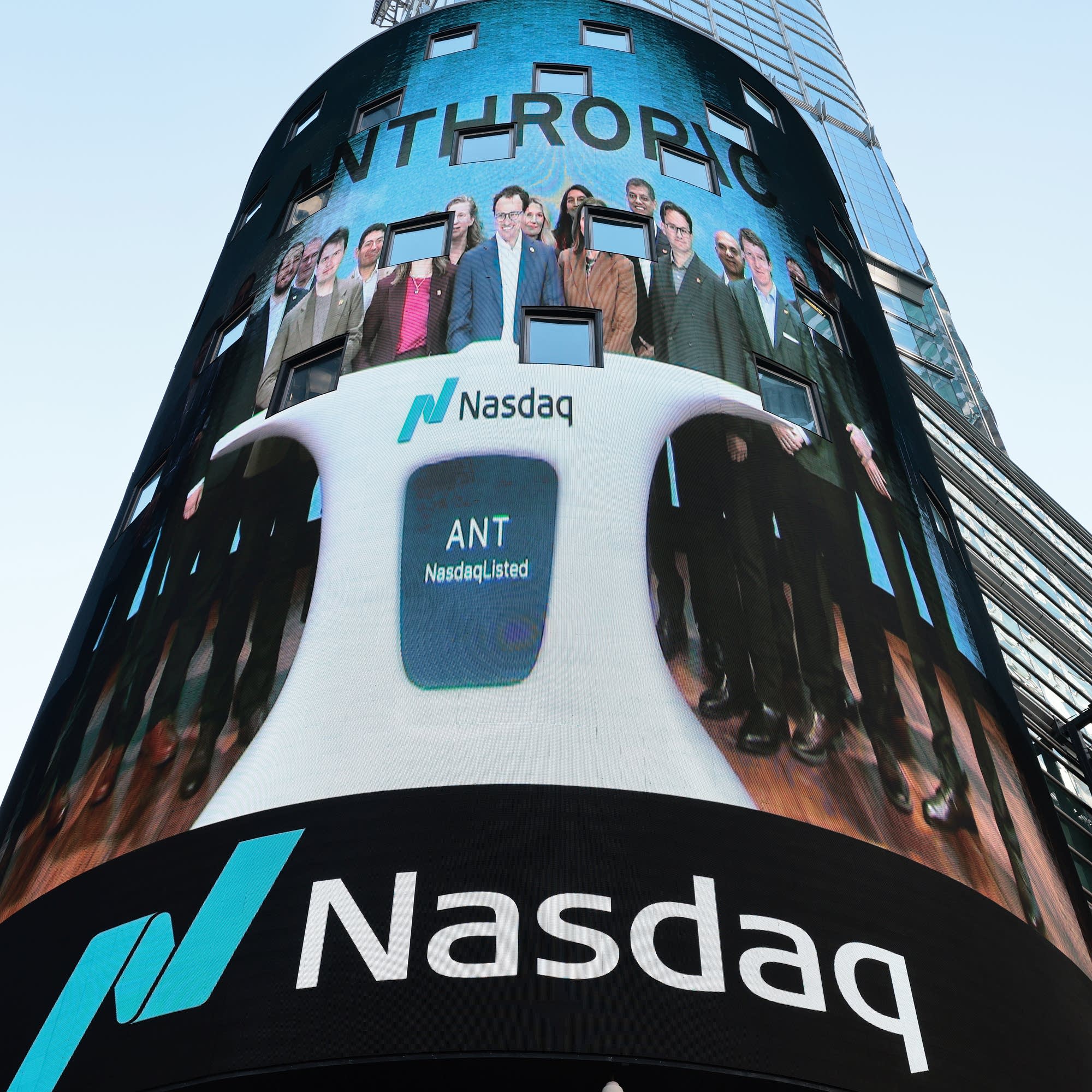
Anthropic, the maker of the Claude chatbot, is now a public company. Plus, inside Nvidia employees, have a lot of questions. And what in the world is going on with all these tech outages? Paresh Dave, senior writer at WIRED, joins Marketplace’s Meghan McCarty Carino to break down another busy week in tech.
The Internet Corporation for Assigned Names and Numbers, known as ICANN, is now sorting through more than 1,000 applications for new top-level domains. You know, like dot-com or dot-org. It's a big deal because controlling an in-demand domain can be a lucrative business. Just ask the tiny island territory of Anguilla, says Pete Millspaugh, who's working on a book about domains More on this You can’t spell Anguilla without AI (http://dotcom.press/archive/anguilla) — from Dot Com Press The Internet Runs on Cats and Porn. It’s About to Get Cattier and Pornier (https://www.wired.com/story/icann-top-level-domains-meow/) — from Wired Taylor Swift Applies for Top Level Domains That End in .Taylorswift (https://futurism.com/artificial-intelligence/taylor-swift-applies-top-level-domain-sites-dot-taylor-swift) — from Futurism And if you’re as interested in domains as we are, you can browse all the new applications submitted (https://newgtldprogram-aps.icann.org/applications). Our personal favori
It's almost impossible to overstate how dominant Nvidia has been amid the AI boom. The company supplied 70-90% of the chips used for the technology, leading to staggering profits that were used to invest in the overall AI economy. All that fueled more growth in the company’s own chip sales. But, in the last year or so, Nvidia's market share has been slipping. And the latest shakeup with its CEO Jensen Huang could see it slip even more, according to Chris Miller, historian at Tufts University and author of “Chip War: The Fight for the World’s Most Critical Technology.” More on this: “What will Nvidia’s post-Huang era look like? (https://www.ft.com/content/0e2720d7-ba0a-4469-a854-30931f907bd3)” from The Financial Times “The chip war never ended (https://www.fastcompany.com/91642012/the-chip-war-never-ended)” from FastCompany “Google Escalates Nvidia Rivalry With Specialized Versions of AI Chips (https://www.bloomberg.com/news/articles/2026-11-09/google-escalates-nvidia-rivalry-with-new-v
Officials should explain how public consultation changed their final decision.
Share your view, then see how readers voted. No sign-in required. This poll is shared across stories.
Do you agree or disagree?
Common Quandary
A Common Quandary to discuss
Another conversation to explore, separate from this news story.
You make a hilarious deepfake of a friend for their birthday. Must you ask first?
For a private birthday party, someone creates a convincing video of a mutual friend delivering an absurd speech. Everyone, including the subject, will immediately understand that it is fake.
Does obvious fiction eliminate the need for consent?