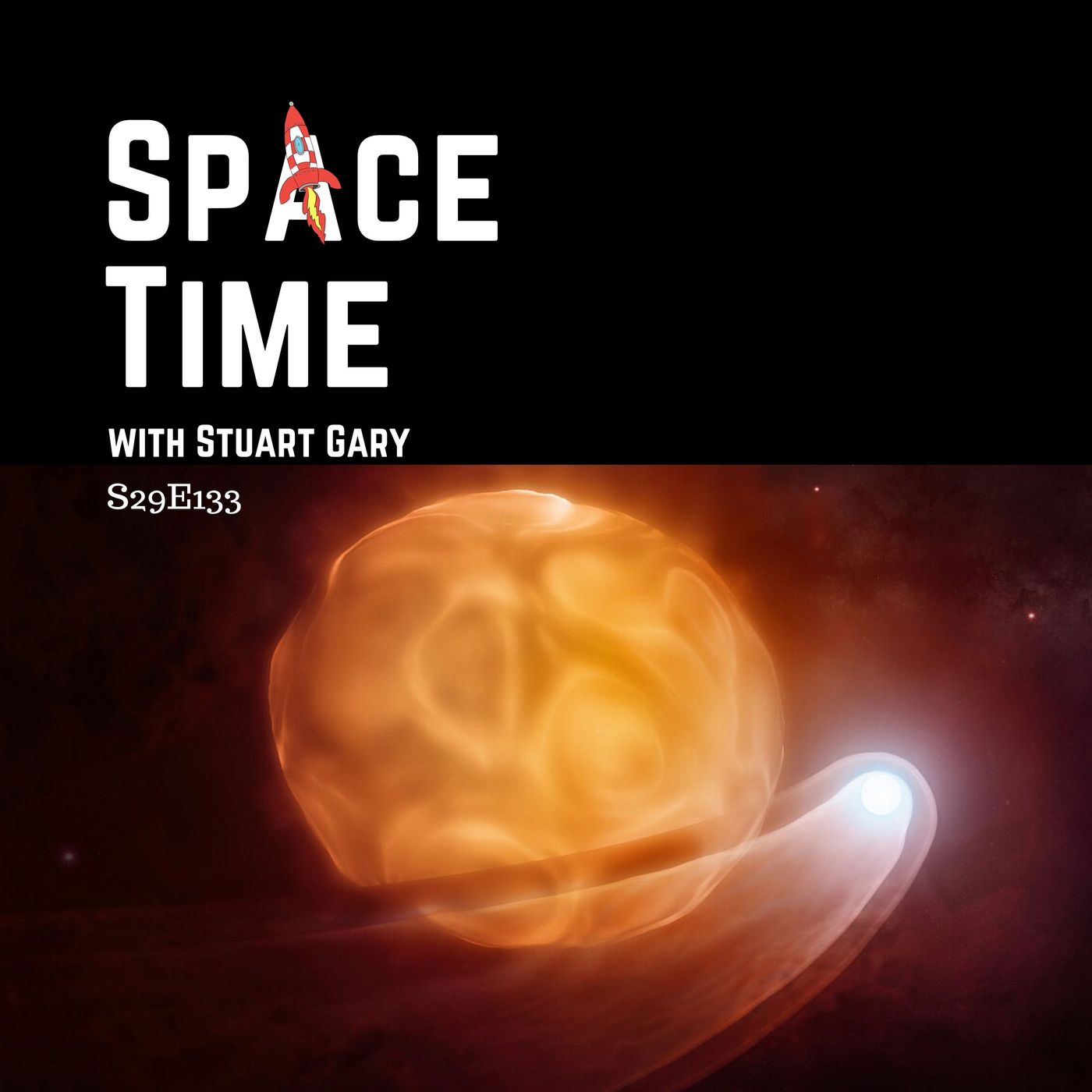
Betelgeuse’s Hidden Companion Is Stirring the Red Supergiant’s Atmosphere
36 min
Listen through the publisher, then discuss the episode here or arrange an in-person Roundtable. Your city determines where to meet.
Roundtables are designed for groups of four, with a shared subject and room for everyone to speak. Come for discussion, with no dating expectation.
Friday SpaceTime 20261106 Series 29 Episode 133 Mysterious disturbances from Betelgeuse Astronomers have detected strange happenings on the mysterious companion star that lurks in the shadows of Betelgeuse. Solving the mystery of the Orion Nebula Astronomers may have finally solved the mystery of the Orion Nebula the largest star forming region near Earth. X-37B Space Shuttle still on mission The U.S. Space Force's X-37B spaceplane is now almost 14 months into its latest mission testing new quantum inertial navigation technology. November Skywatch The giant spiral galaxy M31 Andromeda. the Crab Nebula M1 and three meteor showers are among the highlights of the November night skies on Skywatch. Our Guests This Week HERA Principal Investigator Patrick Michel from ESA Our regular guests: Alex Zaharov-Reutt from techadvice.life Tim Mendham from Australian Skeptics And Senior science writer and Sky and Telescope magazine contributor Jonathan Nally Get Our Exclusive NordVPN deal here www.bitesz.com/nordvpn (http://www.bitesz.com/nordvpn) . The discounts and bonuses are incredible! And it’s risk-free with Nord’s 30-day money-back guarantee! If you’d like to support the podcast and gain access to bonus content by becoming a SpaceTime crew member, you can do just that through The Big Bang editions on Patreon, Spotify and Apple Podcasts. Details on the Support page on our website https://www.bitesz.com/show/spacetime/support/ For more SpaceTime and show links: https://linktr.ee/biteszHQ If you love this podcast, please get someone else to listen too. Thank you…
Episode information is provided by the publisher. Listening takes place on the publisher’s service.
Where on Earth did life begin? Explore the hydrothermal vents in Earth’s crust as simple compounds gave way to complex life. Uploaded 26-08-19 -- Billions of years ago, simple organic compounds assembled into more complex coalitions that could grow and reproduce. At the time, Earth had widespread volcanic activity and a hostile atmosphere that made it almost devoid of a suitable environment for living things. So where did life begin? Luka Wright searches for the cradle of life that gave rise to the billions of species that inhabit our planet. Lesson by Luka Seamus Wright, directed by Nick Hilditch. Sign up for our newsletter: http://bit.ly/TEDEdNewsletter Support us on Patreon: http://bit.ly/TEDEdPatreon Find us on Twitter: http://bit.ly/TEDEdTwitter Peep us on Instagram: http://bit.ly/TEDEdInstagram View full lesson: https://ed.ted.com/lessons/the-mysterious-origins-of-life-on-earth-luka-seamus-wright Thank you so much to our patrons for your support! Without you this video would not
For the references, deeper nuances, and additional content the StayCurious Metabolism letter: https://staycuriousmetabolism.substack.com/p/can-visceral-fat-cause-depression?r=40ekz2 Hidden in this letter is a secret — a scientific breakthrough more than 75 years in the making. By the end of this video, I’ll show you exactly what’s inside it. But before we get there, understand this: I mean it literally. Scientists have just discovered that fat cells send secret letters to the brain — and the messages encoded inside them control your hunger, your energy, your metabolism, and potentially the root cause of obesity itself. These letters determine whether your brain feels satisfied and energized… or hungry, sluggish, and metabolically broken. Here’s the shocking part: if your biology writes the right message, you stay lean and healthy almost effortlessly. If it writes the wrong one, your brain goes blind to satiety, your metabolism slows, and your body enters a hormonal state that drives we
Viewers like you help make PBS (Thank you ) . Support your local PBS Member Station here: https://to.pbs.org/DonateSPACE Uploaded 22-02-17 Fomalhaut is a massive young star surrounded by a ring of dust debris that can tell us a great deal about the formation of our own solar system. Get your first two months of CuriosityStream free by going to http://curiositystream.com/spacetime and using the promo code “spacetime”. You can further support us on Patreon at https://www.patreon.com/pbsspacetime Get your own Space Time tshirt at http://bit.ly/1QlzoBi Tweet at us! @pbsspacetime Facebook: facebook.com/pbsspacetime Email us! pbsspacetime [at] gmail [dot] com Comment on Reddit: http://www.reddit.com/r/pbsspacetime Help translate our videos! https://www.youtube.com/timedtext_cs_panel?tab=2&c=UC7_gcs09iThXybpVgjHZ_7g (https://www.youtube.com/timedtext_cs_panel?c=UC7_gcs09iThXybpVgjHZ_7g&tab=2) Fomalhaut is an awe-inspiring star that could unlock many mysteries concerning how our own solar sys
THE SEARCH FOR THE ULTIMATE RED LIGHT THERAPY IS OVER! After decades of exploring wellness technologies, Michael Jaco sits down with Rob Rene, founder of Exodus Strong, to explore the Red Light+ Total Body Reset system, the science behind red and near-infrared light, and why this technology has become such an important part of their wellness conversation. Rob's remarkable personal journey—including surviving five near-death experiences—inspired his mission to develop practical wellness tools that people can incorporate into their everyday lives. Discover the full-body Red Light+ Mat, designed for convenient 20-minute sessions, and the portable Red Light+ Wand, created for targeted use on areas such as the knees, shoulders, hands, and lower back. Michael and Rob discuss the technology, personal experiences, and how red light therapy may support a daily wellness routine. BLACK FRIDAY–CYBER MONDAY LISTENER EXCLUSIVE! This is your opportunity to explore Exodus Strong's special holiday offe
When she was just five years old, a little girl began receiving terrifying nighttime visits from a mysterious man dressed in a dark cape and top hat. His face was completely hidden in darkness, and he would stand over her bed, watching her as she struggled to scream. The visits continued for years. Even moving to a different home didn't stop them. And when her mother finally witnessed the figure herself, she took action, hoping to put an end to whatever had been tormenting her daughter. Eventually, the encounters stopped. But when the young woman was eighteen, she met someone with whom she shared an extraordinary coincidence. And something she discovered during that meeting brought back every frightening memory of the dark man. Had she been haunted by something that was also visiting someone else? #RealGhostStoriesOnline #TrueGhostStories #TheHatMan #ShadowPeople #DarkMan #ChildhoodHauntings #GhostlyApparitions #ParanormalEncounters #ShadowFigures #UnexplainedMysteries Love real ghost
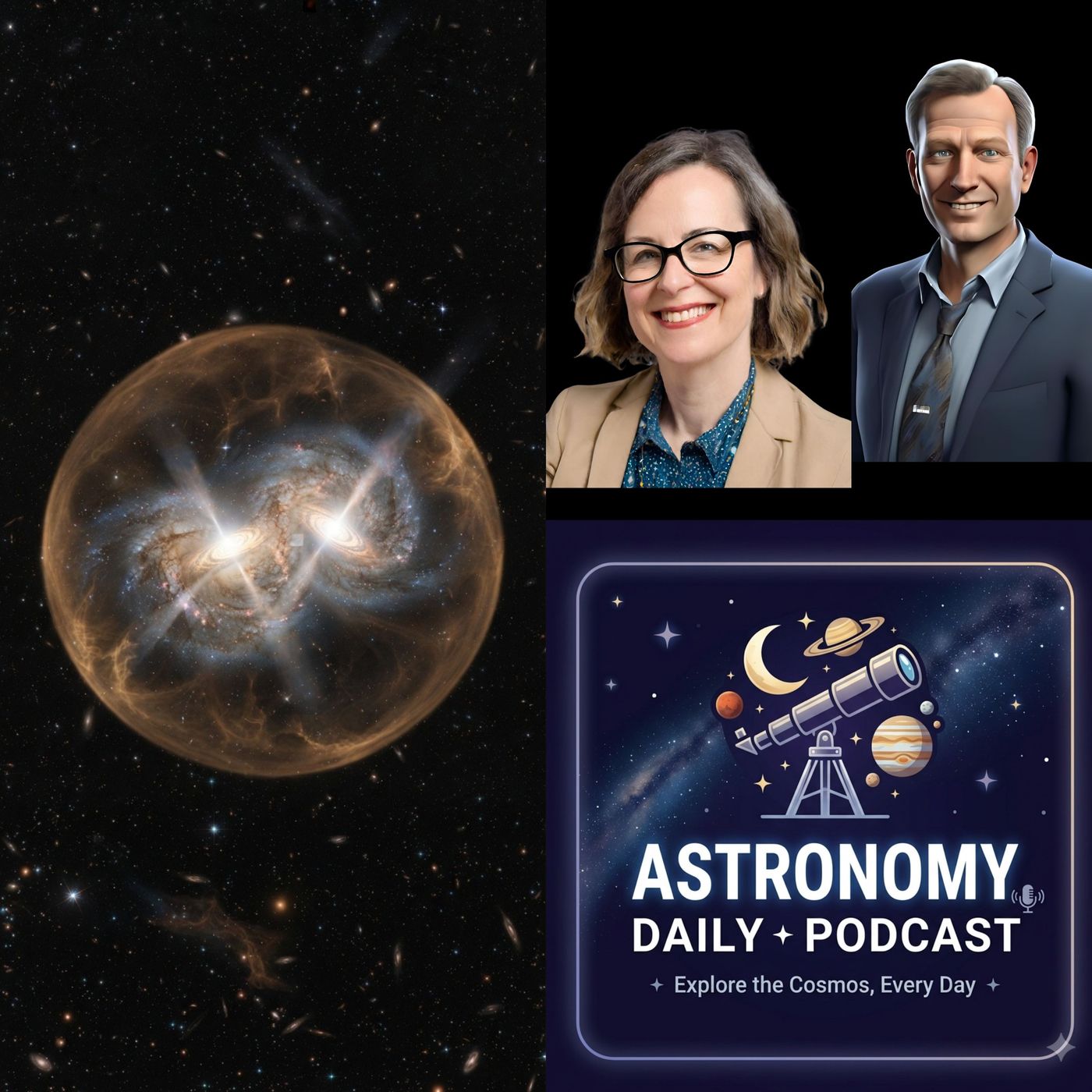
Eleven billion years ago two quasars blazed side by side, and this week astronomers weighed the invisible gas around them by the shadow it casts on the cosmic microwave background. There is 3.6 times more heat in it than gravity can explain. Plus a triple star 28 light-years away that 'should not exist', a pulsar found in ten hours with an algorithm borrowed from cryptography, The Week That Was, and the weekend sky from both hemispheres. In this episode Lead: Hot bubble around the dual quasar J1549+1245 at z = 2.37, measured with ALMA via the thermal Sunyaev–Zel'dovich effect (Hall, Zakamska et al., Nature Astronomy, 18 Nov 2026). Fresh item: Welopōʻai, the closest known triple with two white dwarfs, 28 light-years away (Artigau et al., A&A, 19 Nov 2026). Week That Was: Starship Flight 15 ship catch, CSIRO GenDIReCT and M87, SN 2026ahvu, failed supernovae in gravitational waves (E230); Voyager 1 one light-day, Beta Pictoris ices, heavy-oxygen water, Roman alignment (E231); Terra ends,
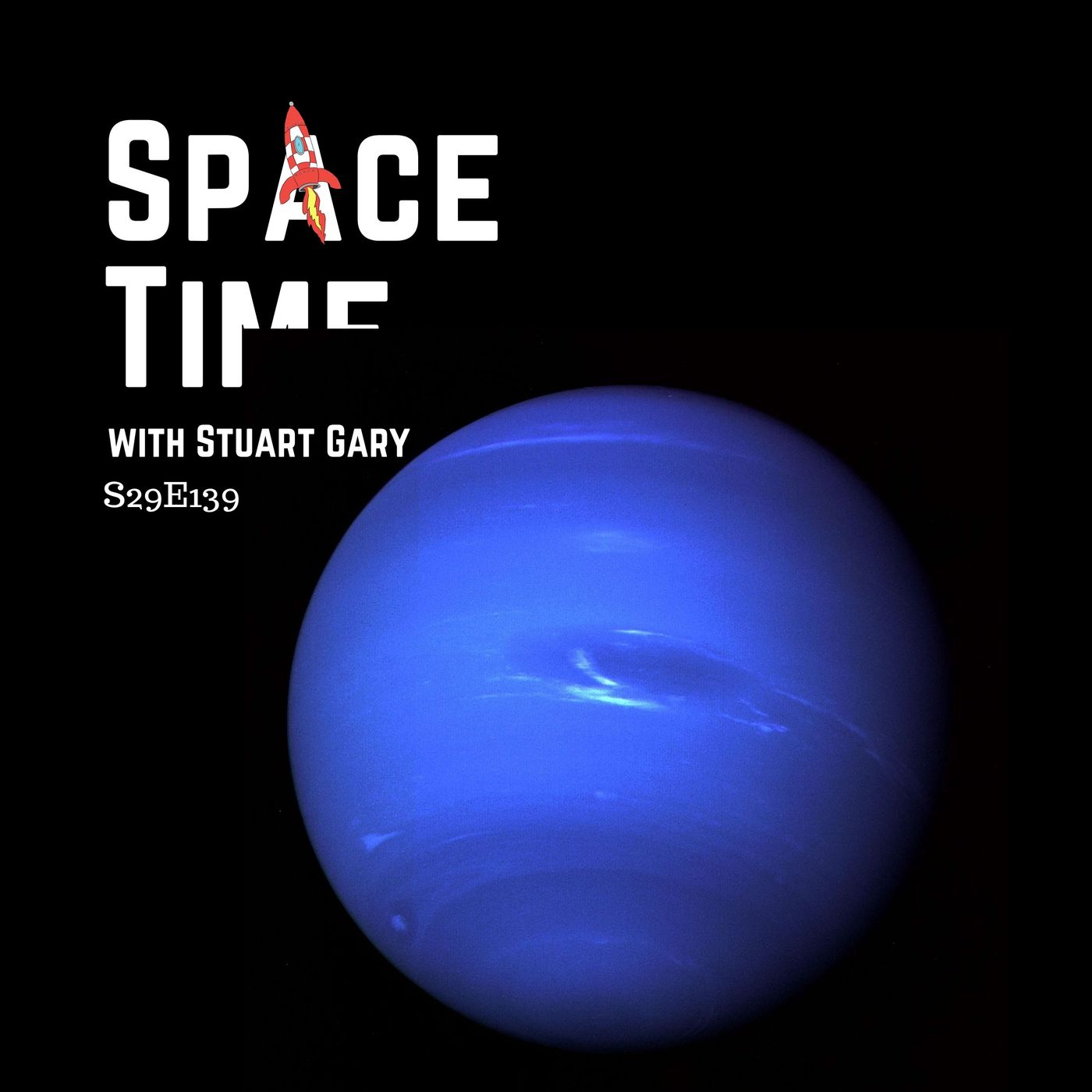
Friday SpaceTime 20261120 Series 29 Episode 139 New clues about origins of the ice giants Uranus and Neptune New study suggests the ice worlds of Uranus and Neptune had very different origins despite their similar locations on the outskirts of the solar system. Astronomers spy the heart of Comet Encke Astronomer have finally put a face to Comet Encke, the source of the Taurid meteor shower which the Earth is currently ploughing through. Fireballs lighting up the skies across America Fireballs have been reported across American skies, but NASA says they won’t associated with the currently active Taurid meteor shower. The Science Report People who frequently jolt awake while falling asleep may have higher anxiety and depression. The world can expect less overall rain, but more shorter, and more intense rainstorms. A new test to detect facial tumour disease in Tasmanian devils earlier. Study shows people on the Arabian peninsula 125 thousand years ago used complex technologies. Skeptics g
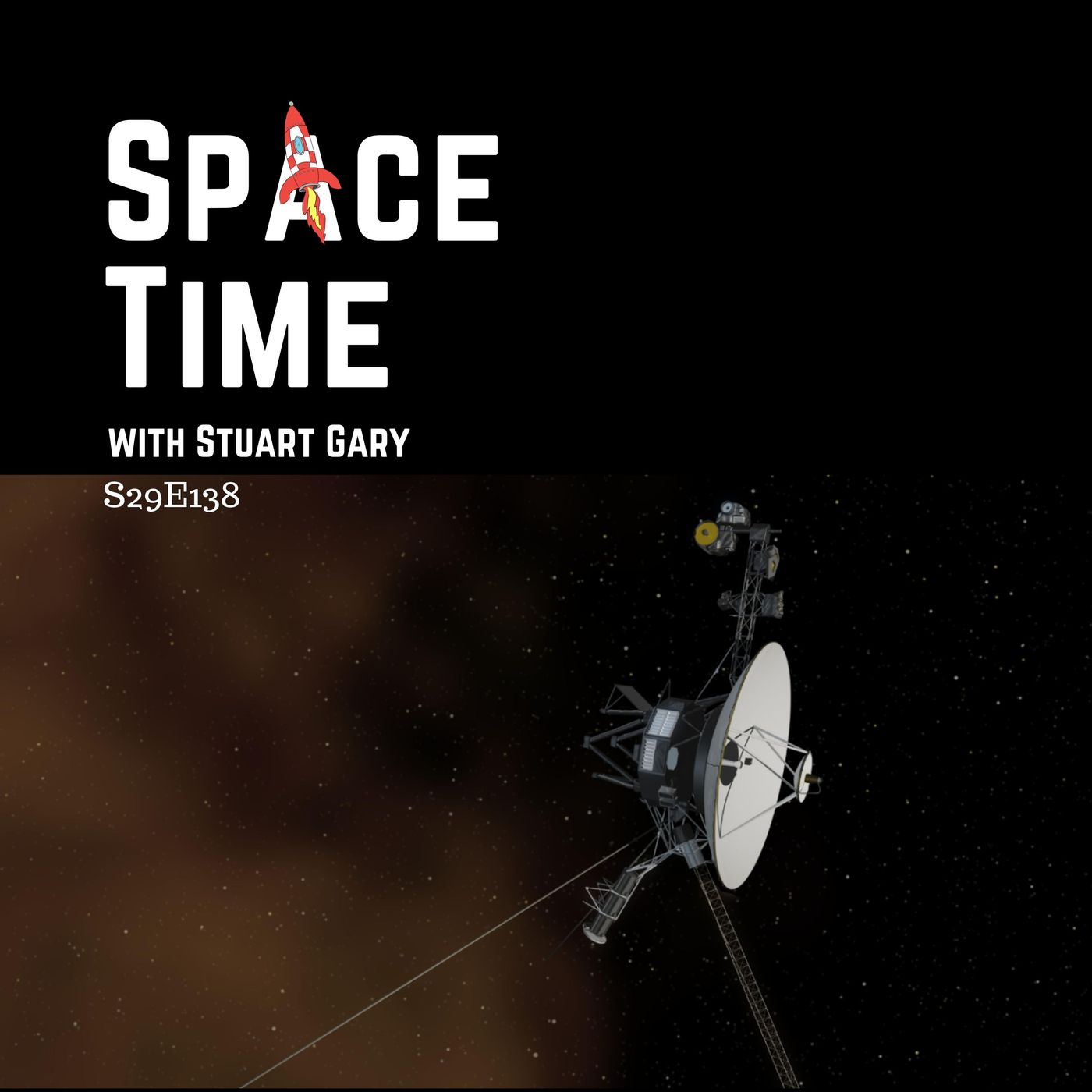
Wednesday SpaceTime 20261118 Series 29 Episode 138 Voyager 1 spacecraft reaches a full light day away from Earth NASA’s Voyager 1 spacecraft has made history today becoming the first man made object to reach a full light day away from Earth. Discovery of a supernova impostor in deep space Astronomers have finally worked out why a giant blue star some 33 time more massive than the Sun undergoes repeated outbursts shining as bright as a supernova. Two more experimental orbital payloads land in the South Australian outback Southern Launch has taken part in two more flights parachuting down into its Koonibba Test Range on the South Australian west coast. The Science Report Study shows vaping worsens your lungs increasing the risk of chronic lung disease. The southern hairy-nosed wombat found to deliver key environmental benefits. Micro plastics found in the blood of lowland tapirs and giant anteaters in the Amazon. Quantum computing pioneer Diraq installs Australia's first quantum computer
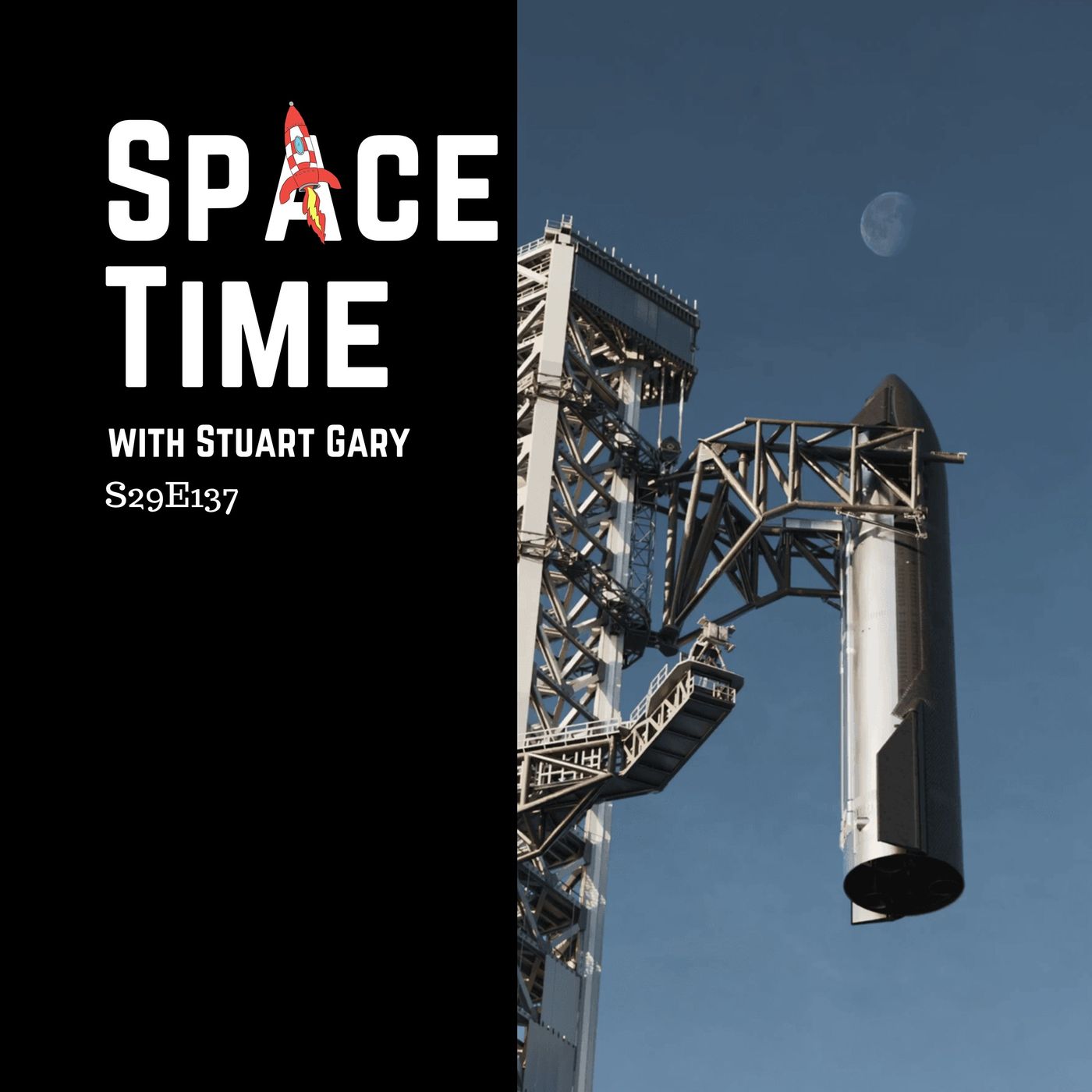
SpaceTime S29E137 S29E138 S29E139 w/c November 16, 2026 Monday SpaceTime 20261116 Series 29 Episode 137 Starship achieves an historic first orbital tower catch SpaceX has made history, successfully catching a Starship on its return from orbit -- back on the same launch pad it had blasted off from 22.5 hours and 14 orbits of the Earth earlier. Could there be life on Saturn’s ice moon Enceladus A new study claims Saturn’s ice moon Enceladus might be more supportive of life than was previously thought. Ancient rocks reveal when Earth’s tectonic engine ‘switched on’ A new study suggests plate tectonics began on planet Earth around two and a half billion years ago. Shiny lava planet challenging expectations Astronomers have discovered that a rocky lava planet once thought to be too extreme to have any atmosphere actually appears to be wrapped in a reflective layer of clouds forming a protective ‘sunscreen’ around the planet. The Science Report ibuprofen linked to a higher risk of acute kidn
Profitable companies should give workers extra support when reducing their workforce.
Share your view, then see how readers voted. No sign-in required. This poll is shared across stories.
Do you agree or disagree?
Common Quandary
A Common Quandary to discuss
Another conversation to explore, separate from this news story.
You inherit a fortune made in ways you despise. Can you keep it?
You inherit a substantial sum from a relative who accumulated it through practices you consider exploitative. Keeping it would improve your family's security; donating it could support people harmed by similar practices.
Can ownership be morally clean when its history is not?