Black Liverpool 'The Real Thing': West African, West Indian and Afro-American Culture at the End of the Twentieth Century with Stephen Small (Liverpool UP, 2026)
45 min
Listen through the publisher, then discuss the episode here or arrange an in-person Roundtable. Your city determines where to meet.
Roundtables are designed for groups of four, with a shared subject and room for everyone to speak. Come for discussion, with no dating expectation.
Why is Liverpool so different from other UK cities? In Black Liverpool 'The Real Thing': West African, West Indian and Afro-American Culture at the End of the Twentieth Century (https://bookshop.org/a/12343/9781805967521) (Liverpool UP, 2026), Stephen A. Small, a Professor Emeritus at the Graduate School in the Department of African American and African Diaspora Studies at the University of California, Berkeley (https://africam.berkeley.edu/people/stephen-a-small) explores the recent history of Liverpool's Black community, demonstrating both its distinctive cultural influence and influences. The book ranges widely, covering music, arts and culture, education, civil rights struggles, and social life, painting a rich picture of the range of Afro-American, West African, Rastafarian, and local Scouse influences on the people of Liverpool 8. Drawing on a range of sources, including new interviews with key community members, the book offers a new agenda for historians and social scientists interested in Black communities in the UK, and is essential reading for anyone interested in Liverpool's history, culture and society. Hosted by Simplecast, an AdsWizz company.
Episode information is provided by the publisher. Listening takes place on the publisher’s service.
In 1620, a small ship called the Mayflower crossed the Atlantic carrying English settlers in search of a new life. Their arrival in North America became one of the most familiar stories in American history, but the reality behind the legend was far more complicated than the traditional Thanksgiving tale suggests. Discover why the Pilgrims left England, what their dangerous voyage was really like, and how they survived their first winter in an unfamiliar land. Explore their encounters with the Wampanoag people, the role of Tisquantum, also known as Squanto, and the assistance that helped the struggling settlers establish their colony. Uncover what happened at the harvest gathering of 1621, who actually attended, what was served, and how this event became connected to the modern Thanksgiving holiday. Follow the history beyond the familiar celebration and discover the people, cultural encounters, and historical realities behind the Mayflower story. Boring History for Sleep — Soft stories
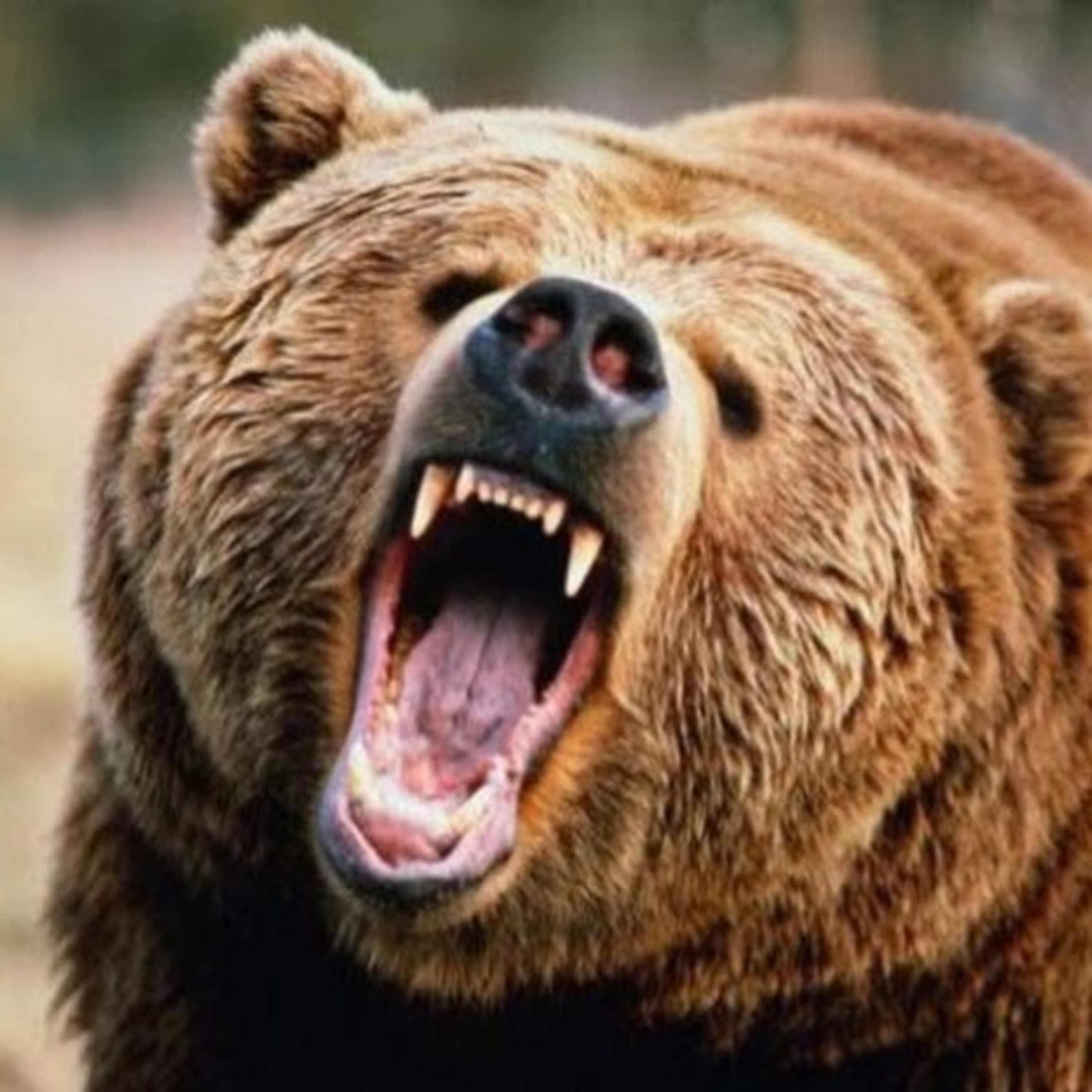
View pictures and support us on Patreon(https://www.patreon.com/user?u=73787379) This episode examines documented black bear encounters involving hikers, hunters, campers, homeowners, and backcountry workers. These incidents range from surprise encounters and defensive attacks to prolonged confrontations where bears returned repeatedly, testing human endurance, decision-making, and survival instincts.Black bears are often described as shy or non-aggressive, but these cases reveal how quickly circumstances can change when food sources, cubs, human behavior, or environmental pressure collide. Each story is carefully researched and presented to highlight what went wrong, what saved lives, and what these encounters reveal about black bear behavior in the wild.
Thanks to Brilliant for supporting PBS. Learn more at: https://brilliant.org/spacetime Uploaded 17-12-19 PBS Member Stations rely on viewers like you. To support your local station, go to: http://to.pbs.org/DonateSPACE What if every single black hole that formed in our universe sparked the big bang of a new universe? Cosmological natural selection proposes exactly this - but even better, it claims to be able to test the hypothesis. Sign Up on Patreon to get access to the Space Time Discord! Check out the Space Time Merch Store Physicists have been struggling for some time to figure out why our universe is so comfy. Why, for example, are the fundamental constants - like the mass of the electron or the strength of the forces - just right for the emergence of life? Tweak them too much and life, stars, galaxies, the universe as we know it wouldn’t exist. In recent episodes we explored one possible explanation for this - the anthropic principle and the idea of the multiverse. If there are c
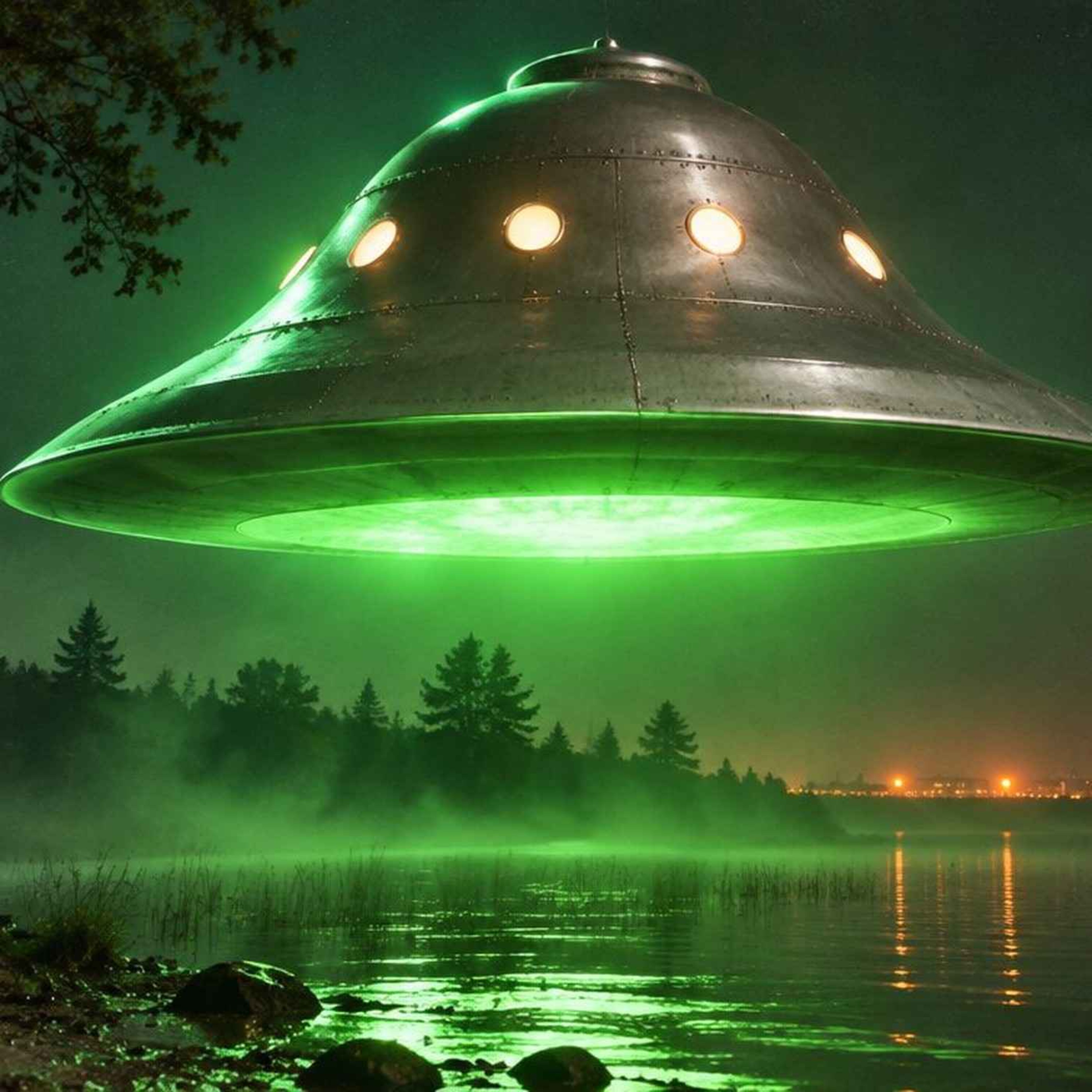
In today's brief: Lake Erie, 1957: a newly released Air Force report says two boys saw a humming, bell-shaped craft near the Enrico Fermi Atomic Plant. Skinwalker Ranch: owner Brandon Fugal calls the new files landmark and recalls a daylight saucer over the mesa. Warship footage: a 20-second 2020 infrared clip shows a light crossing a US Navy ship in the Middle East, with no Pentagon assessment. Martha's Vineyard, 1957: a spiked, nickel-coloured object that the Air Force put down to a radar-reflector balloon. Loch Ness: reported sightings jump to 15 this year, up from six in 2025. The Book of Miracles: a 16th-century manuscript of comets, blood rain and multiple suns heads to auction at Christie's. Quick hits: a 1952 file blames the saucer wave on temperature inversions; more Pentagon UFO files are on the way. Every story and source: https://believepod.com/ufo-paranormal-news-22-november-2026/ New episodes every morning. Keep your eyes on the sky. Sources: FOX 2 Detroit: https://www.fo
This is a Grave Talks CLASSIC EPISODE! In the heart of Calgary stands one of the city’s most infamous historic properties—Deane House. Built in 1906 by Captain Richard Burton Deane, the home’s history was marked by tragedy almost immediately, when Deane’s wife died during its construction. Decades later, the darkness deepened. In 1971, a brutal murder-suicide unfolded within its walls, casting a shadow that many believe still lingers today. Visitors and investigators report full-bodied apparitions, unexplained noises, sudden cold spots, and overwhelming feelings of unease. Some say they’ve encountered more than one spirit inside the historic residence. Others believe the energy there feels layered—built from grief, violence, and unresolved history. On this episode of The Grave Talks, we explore the chilling past of The Deane House, the paranormal experiences that continue to be reported, and the lingering question: what—if anything—still walks its halls? #DeaneHouse #HauntedCalgary #Ha
"Curing cancer," explained. We’re not looking for a “cure for cancer” anymore. Cancer is hundreds of diseases, so we’re really in a multi front fight against all of them. Cancer is a problem for us today in a way it wasn’t for previous generations. But, luckily, we also have more and more ways to fight back. I started this episode with endless questions: What is cancer? What causes it? How do we treat cancer? What are the symptoms? Why are some cancers easier to treat than others? Why is cancer so hard to cure? Why do so many people die of cancer? What I found is an incredible, complex, inspiring effort to treat and stop an insidious killer. In this video, we dive deep into how we treat cancer today. But I also found that we may not be helping the greatest number of people we can. In this episode of Huge If True, I want to make the case that while we have made enormous strides in the fight against cancer we have also largely ignored one of the single best ways to save the most lives. I
In Britain at the end of the nineteenth century, the new sexual sciences—from anthropological accounts of religion as rooted in ancient fertility cults to psychoanalytic theories that explained religious experience in terms of psychosexual development—characterized religion as closely connected to the sexual. The outcome, as Joy Dixon argues in Sexual Heresies: Religion, Science, and Sexuality in Modern Britain (https://bookshop.org/a/12343/9781503646681), was a new sense that religion itself could be sexually suspect. One result was an increasing concern to police "sexual heresies" to produce a supposedly normal (healthy, monogamous, and heterosexual) religiosity. The overall effect was a narrowing of the sexual possibilities inside "orthodox" religion and the association of alternative forms of religion with dissident sexualities that continues to shape both religion and secularism today. Drawing on a wide range of materials from diverse elements of British society, this book emphasi
Historians of political thought interested in partisanship have long privileged the perspective of male canonical thinkers. Scholars have turned to Thucydides and Plato for insights on stasis, Aristotle on civic friendship, Niccolò Machiavelli on tumults, David Hume and Edmund Burke on political parties, and The Federalist on faction. Even political theorists who are primarily concerned with contemporary theories of partisanship often turn to these “usual suspects” to strengthen their otherwise largely non-historical arguments. Yet this narrow focus on canonical men has led scholars to neglect an important if counterintuitive perspective on partisanship which we find in the political thought of eighteenth-century women, for whom partisanship offered an unexpected but essential means to political inclusion. Partisan Virtue: The Politics of Inclusion in Eighteenth-Century Women’s Political Thought (https://bookshop.org/a/12343/9780198989349)(Oxford UP, 2026) by Dr. Geertje Bol focuses on
Inspired by the humanist and Catholic martyr Thomas More, David Albertson and Jason Blakely imagine a new politics of hope In Thomas More's Utopia, a traveler from the New World delivers a shocking message: on a lost island beyond the horizon, people live far better lives than in Europe. A leading intellectual of his day, More was murdered by Henry VIII in 1535 for refusing to sign a loyalty oath, but his utopian vision inspired some of the most consequential movements in the modern world. In their provocative manifesto Utopia for Our Century: A Manifesto of Hope (https://bookshop.org/a/12343/9780300278088) (Yale UP, 2026), David Albertson and Jason Blakely retrieve More's insights and apply them to our moment. Amid the decline of liberalism and the rise of authoritarianism, Albertson and Blakely resist the dystopian fears taking root in the twenty-first century. Utopian politics, they argue, can help us break free of today's entrenched polarities and recast what is possible. They retu
Environmental marketing claims should require independent verification.
Share your view, then see how readers voted. No sign-in required. This poll is shared across stories.
Do you agree or disagree?
Common Quandary
A Common Quandary to discuss
Another conversation to explore, separate from this news story.
Your new television goes on sale elsewhere. Can you return it and buy the identical one cheaper?
A week after buying a television, another store offers the same model for much less. Your retailer refuses to match the price but allows unopened-looking returns. You could carefully repack the perfectly functional set.
Is a generous return policy permission to reverse a deal for any reason?