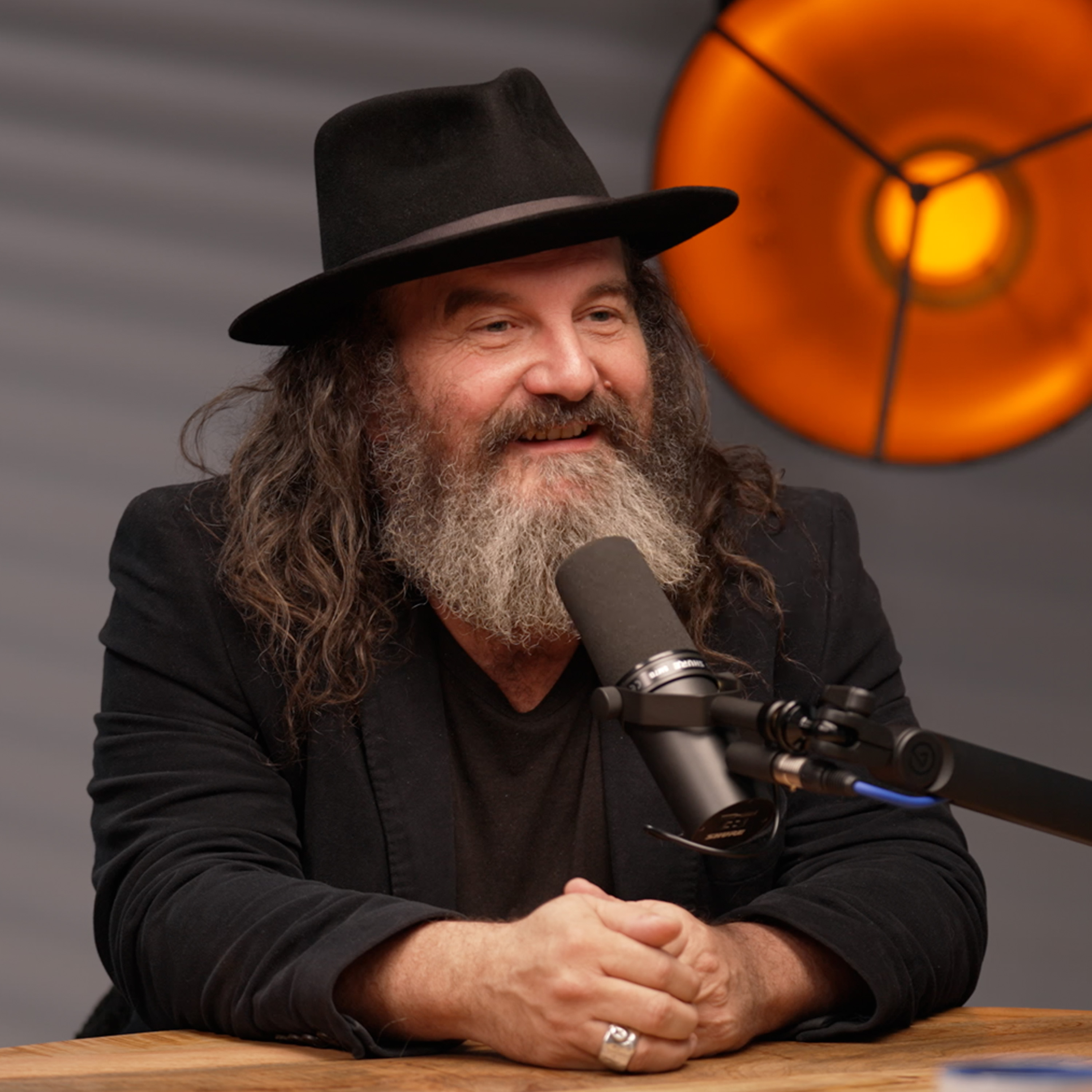
Can Christianity be trusted? Mark Meynell on depression, church scandals and doubt
74 min
Listen through the publisher, then discuss the episode here or arrange an in-person Roundtable. Your city determines where to meet.
Roundtables are designed for groups of four, with a shared subject and room for everyone to speak. Come for discussion, with no dating expectation.
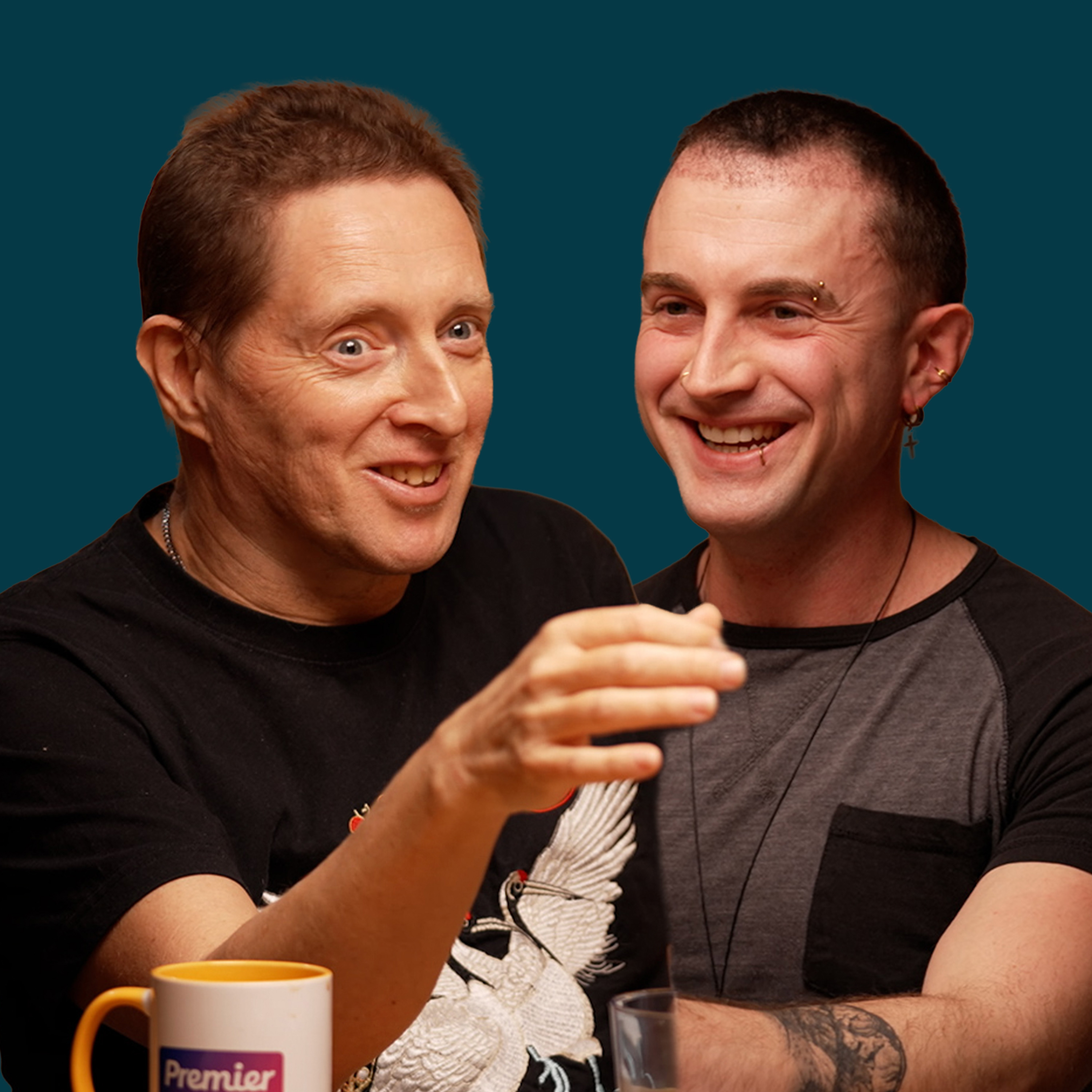
What happens to Christian faith when you experience depression, encounter abuse of power in the Church or find parts of the Bible deeply troubling? Mark Meynell joins Luke Martin for a wide-ranging and unusually candid conversation about Christianity in the real world. Mark discusses his experience of depression and ministry, the unexpected role of music and art in sustaining faith, and why beauty itself raises profound questions about God. He also explores the crisis of trust created by church scandals and spiritual abuse, arguing that many people now ask “Am I safe?” before they ever ask “Is Christianity true?” Finally, Luke presses Mark on one of Scripture’s hardest questions: slavery in the New Testament, Paul’s letter to Philemon and why the Bible does not simply say slavery is wrong.
Episode information is provided by the publisher. Listening takes place on the publisher’s service.
The great message of Christianity is that Christians are not only saved from their sin and made right before a holy God, but they are made new creatures as the first fruits of the new creation in Christ. In this sermon on Ephesians 5:3–5 titled “Distinct Roles of Church and State,” Dr. Martyn Lloyd-Jones demonstrates how Scripture undercuts all doctrines of antinomianism, because by the power of the Holy Spirit all who are true believers are renewed and transformed daily through God’s grace. For it is the gospel that truly transforms fallen men and women; it alone can overcome the depravity of fallen human nature and make them new in Christ. This is why all attempts to make people moral without the gospel fail to address the deepest need of humanity. When the church becomes more concerned with moralism than the gospel, it loses the focus of its mission. This has often happened throughout the history of the church, and today many are repeating this error. The remedy to this is to see th
The debate over Christian nationalism raises some uncomfortable questions about faith, politics, and the role of government. Al, Zach, John Luke, and Christian examine how Christianity transformed the Roman Empire and why the early church flourished despite intense persecution. The guys also revisit the Garden of Eden, questioning whether Adam's failure to protect Eve was the first sin and what his actions reveal about responsibility and obedience. They consider what history teaches us about the dangers of unchecked power and why Christians must put their allegiance to God's kingdom above any earthly government. In this episode: Genesis 2, verses 15–17; Genesis 3, verses 1–7; Daniel 2; John 1, verses 4–5; Matthew 5, verses 27–30; Matthew 28, verses 18–20; John 11, verses 49–52; Luke 23, verses 6–12; Galatians 3, verse 28; 1 Timothy 2, verses 11–14; Romans 13, verses 1–7 Today’s conversation is about Lesson 6 of Western Heritage: From the Book of Genesis to John Locke taught by various
Luke 20: 27-40 - 'In God all men are alive.' Catechism of the Catholic Church Paragraphs: - 330 (In 'Who are Angels'?) - As purely spiritual creatures angels have intelligence and will: they are personal and immortal creatures, surpassing in perfection all visible creatures, as the splendor of their glory bears witness. - 575 (In 'Jesus and Israel') - Many of Jesus’ deeds and words constituted a “sign of contradiction,” but more so for the religious authorities in Jerusalem, whom the Gospel according to John often calls simply “the Jews,” than for the ordinary People of God. To be sure, Christ’s relations with the Pharisees were not exclusively polemical. Some Pharisees warned him of the danger he was courting; Jesus praises some of them, like the scribe of Mark 12:34, and dines several times at their homes. Jesus endorses some of the teachings imparted by this religious elite of God’s people: the resurrection of the dead, certain forms of piety (almsgiving, fasting, and prayer), the c
Good morning, “I’m the king, and she’s my queen… she doesn’t get to usurp the throne.” Not words from a Shakespearian tragedy, but the words of Aaron Edwards, the Christian theologian and father of seven who features in a new documentary on the BBC this week. Edwards and his wife Molly are one of the families in filmmaker Poppy Jay’s Young British and Tradwife, exploring women embracing traditional gender roles, often showcased on Instagram. For some, this is more than a choice to stay at home rather than go to work – feminism’s aim was to give women choice, after all. But rather for some it’s also a belief rooted in their reading of the Bible that wives should submit to their husbands. As a Christian feminist, I won’t get into the debate here, but what struck me was how questions of sovereignty, submission and power are finding their ways into much of our public debate. In the home, in the Church, in the nation, in our politics, we’re asking: who exactly is in charge? Who should submi
Read: Jeremiah 17:7-10; Hebrews 4:13 (https://www.biblegateway.com/passage/?search=Jeremiah+17%3A7-10%3B+Hebrews+4%3A13) When two strange-looking people appeared in the doorway of the living room, three-year-old Vale quickly jumped up from where he was sitting on the floor and ran behind Mom’s chair. One of the newcomers laughed. “What’s wrong, Vale?” said a familiar voice. “Don’t you like the way we look?” Vale peeked out but stayed where he was. He certainly did not like the way these people looked! They were dressed funny and had masks over their faces. One looked like a giant green monster. The other wore a shimmery blue dress and had long blonde hair. Mom laughed. “You guys did a good job on your costumes for the party tonight. Take off your masks so Vale can see who you are.” The masks came off, and Vale saw his brother, Arlo, and…was that his sister, Elodie? She reached up and peeled off a blond wig. “Do you recognize me now, Vale?” she asked, running a hand through her short re
Do you ever feel named but unknown? Like you are invited but not necessarily included? You have a seat at the table, but you rarely speak? Let me tell you something, the behind the scenes people are needed. Jesus could have chosen a king to be in his inner circle. He could have chosen a military leader. He could have chosen a prominent business man. But instead, he chose James the son of Alphaeus, known as James the Less. For real, that was his title – James the Less. Why? Because there was already a James chosen for Jesus’ inner circle. Remember James the fisherman and brother of John? That James was given the title James the Great, so now we have this James known as James the Less. Maybe sometimes you feel like your name comes with the title “lesser than” too. You’re not as smart. You’re not as pretty. You’re not as successful. You’re not the first one everyone chooses. You’re named but mostly just unknown. Oh girl, how you are needed!!!!! This James, James the Less, is named but pre
Did the universe have a beginning? If so, does it need a creator? And could the fine-tuning of the cosmos make God more likely, while the history of animal suffering points in the opposite direction? John Nelson hosts an extended Unbelievable? debate with Oxford philosophy researcher Miles K. Donahue, host of The Uncertainty Podcast, and atheist astronomer Phil Halper, co-author of Battle of the Big Bang. Together they examine the limits of cosmology, competing ideas about the universe before the Big Bang, arguments from fine-tuning and the challenge of suffering in the natural world. Can science settle the question of God, or does the evidence leave room for more than one conclusion?
New York Times bestselling author Dr. Martin Shaw joins Luke Martin to share his extraordinary journey from a 101-day forest vigil to Eastern Orthodox Christianity. Drawing on Liturgies of the Wild, he explores why ancient stories matter, what C.S. Lewis and Tolkien understood about faith and imagination, and whether AI threatens our capacity for wonder. A compelling conversation about spiritual hunger, the power of storytelling and rediscovering what makes us human.
The Hidden Art of Early Christianity: Pompeii, Secret Symbols and Jesus. Did Christians leave evidence of their faith in Pompeii before AD 79? And why does an early image of Jesus appear alongside Egyptian magic? John Nelson speaks to Baylor University scholar Bruce Longenecker about the fascinating archaeological evidence for early Christianity. From mysterious crosses and coded messages to ancient church paintings and Christian graffiti, they explore how the first believers expressed their faith in a world of Roman gods, persecution and competing religious practices. Drawing on his book The Materiality of Early Christ Devotion, Longenecker reveals a much more surprising and diverse picture of early Christianity than we might expect.
Developing young players can be more important than winning in the current season.
Share your view, then see how readers voted. No sign-in required. This poll is shared across stories.
Do you agree or disagree?
Common Quandary
A Common Quandary to discuss
Another conversation to explore, separate from this news story.
Your teenager locks you out of their phone. When is it okay to look?
Your usually outgoing sixteen-year-old has withdrawn and stopped seeing friends. They insist they are fine and refuse to talk. You know their phone passcode and could read their messages without being discovered.
How serious must a fear be before protection outranks privacy?