ChatGPT for Teens' safeguards don't work, risk assessment finds
7 min
Listen through the publisher, then discuss the episode here or arrange an in-person Roundtable. Your city determines where to meet.
Roundtables are designed for groups of four, with a shared subject and room for everyone to speak. Come for discussion, with no dating expectation.
OpenAI's new teen-appropriate version of ChatGPT may not be living up to its promises, according to an independent evaluation. The new mode is supposed to have stronger guardrails for sensitive topics, automatic parental alerts and a study tool that won't just give kids the answers to their homework. But the nonprofit Common Sense Media evaluated the tool and found it poses "unacceptable risks." Tom Siegel leads the Youth Safety Institute at Common Sense and tested about 4,000 prompts using fake teen accounts. He spoke with Meghan McCarty Carino about his findings. More on this: “ChatGPT for Teens Poses Unacceptable Risk to Kids, Common Sense Media Finds (https://about.commonsensemedia.org/press-room/press-releases/chatgpt-for-teens-poses-unacceptable-risk-to-kids-common-sense-media-finds)” from Common Sense Media
Episode information is provided by the publisher. Listening takes place on the publisher’s service.
Zvi does the reading on OpenAI’s system card for GPT-6.2 Astra and Sol: the first externally deployed model to meet OpenAI’s High threshold for AI self-improvement, already at Critical for cybersecurity. He works through the preparedness results, the safeguards against misuse, distillation and model escape, and the alignment and monitorability findings, including rising evaluation awareness, reasoning that happens without visible chain of thought, and UK AISI’s tour of misaligned behaviours, asking what the numbers do and don’t show. This has been an Askwho Casts audio conversion. Thanks for listening. * 00:00 - Introduction * 01:10 - Table of Contents * 02:45 - Safety Overview (1) * 05:19 - Internal Deployment (1.2) * 05:32 - Preparedness Assessment (2) * 06:40 - Biological Threats (2.1.1) * 09:55 - Cyber Threats (2.1.2) * 11:36 - AI Self-Improvement Threats (2.1.3) * 14:32 - OpenAI Epoch Capabilities Index (OECI) * 16:10 - Safeguards (2.2) * 17:34 - AI Self-Improvement Threat Modelin
Robot dogs are here. But why? You might think you already know Spot, the robot dog from Boston Dynamics. Maybe you saw a viral video of it opening a door, or dragging a truck, or dancing. But now, this robot has hit a HUGE milestone... Spot got a job! These robots are now out in the real world doing real work, for fire departments, factories, defunct nuclear power plants like Fukushima, ancient ruins like Pompeii, deep mines, and, more controversially, police departments. You might already be starting to see robot dogs walking around, and even if you’re not, they’re starting to affect your life. That’s why we went to visit Boston Dynamics. In this video, we put Spot to the test, to show you what it’s really capable of, and how our future could be even better with robot dogs. Chapters: 00:00 What is Boston Dynamics robot dog? 1:33 What does Boston Dynamics robot dog do? 2:50 Why robot dogs? 3:32 Taking Spot on an obstacle course 4:33 When Spot falls down 5:34 How Spot protects itself an
Project Synapse: Markets in Freefall, Fragile Infrastructure, and AI's Perfect Storm The hosts banter through the show's intro before focusing on a sense that "things are out of control," citing a WallStreetBets suicide-hotline post amid a market crash and discussing cascading system failures involving Microsoft, the FAA, and a reported NSA internal communications outage. They argue politicians and leadership lack technical competence and clear messaging, increasing panic, while emphasizing that many problems stem from aging, underfunded infrastructure and complex, brittle software (PHP, NGINX, Java), not proven AI attacks—more a "perfect storm" of crises. They debate whether AI should help fix complexity, stressing critical thinking, accountability, and using multiple AIs to verify each other. In a lightning round they cover Anthropic's IPO performance, mixed reactions and token limits with ChatGPT 6.2 (favoring "Sol" over "Astra"), Google's cheaper Neon model and confusing UX, Loblaw
Explore how pulling an all-nighter can impact your cognitive function, and find out what happens to your brain when you don't sleep. -- You’re just one history final away from a relaxing spring break. But you still have so much to study! You decide to follow in the footsteps of many students before you, and pull an all-nighter. So, what happens to your brain when you stay up all night? And does cramming like this actually help you prepare for a test? Anna Rothschild explores how a sleepless night impacts your cognitive function. Lesson by Anna Rothschild, directed by Biljana Labović. Animation by Noam Sussman & Ali Kellner, Homework Studio. This video made possible in collaboration with the Bezos Family Foundation Learn more about how TED-Ed partnerships work: https://bit.ly/TEDEdPartner A special thanks to Dr. Mathias Basner, Andrew Fuligni, Adriana Galván, and UCLA Center for the Developing Adolescent who provided information and insights for the development of this video. Support Ou
Matthew Farwell’s conviction settled the federal case against him. It did not settle what may have happened to evidence, what other officers knew, or how many cases depended on his work as a Stoughton police detective. Tony Brueski is joined by retired FBI agents Jennifer Coffindaffer and Robin Dreeke to connect two questions that belong together: could there be more arrests in the Sandra Birchmore case, and should prosecutors review the cases Farwell once investigated? These are not the same question, and neither has an automatic answer. William Farwell, Matthew’s twin, testified under federal immunity. Former Stoughton deputy chief Robert Devine has contested an oversight board’s findings concerning the “Marty Riggs” Facebook account, saying he was hacked. Neither has been charged in Sandra’s death. Coffindaffer lays out what investigators would need: corroborated communications, authenticated account access, consistent timelines and proof of each person’s conduct. Knowing somebody i
Apollo Research CEO and co-founder Marius Hobbhahn joins Theo to break down Apollo’s new embedded evaluation pilot with OpenAI, including the four core claims they are testing around model subversion and monitorability. They also discuss how the Hugging Face incident shifted his threat models toward single-episode scheming, why he now views a rapid AI takeover in 2027 as plausible, and the access limits holding current third-party lab audits back. -- -- MTS chronicles the singularity, live. Monitoring the situation of tech and AI. Follow MTS: Spotify |https://open.spotify.com/show/4HUNNmV1pjV7CW6Lphm1rM Apple |https://podcasts.apple.com/us/podcast/mts/id1891088763 – Brought to you by: Mongo DB - Anyone can prototype an agent. Lovable - Turn ideas into software people love with Lovable. Start today at https://lovable.dev/ Factory - A 24/7 system turning signals into production software. Visithttps://factory.com/ Neon (by Databricks) - Scale your startup on Neon. The Postgres backend for
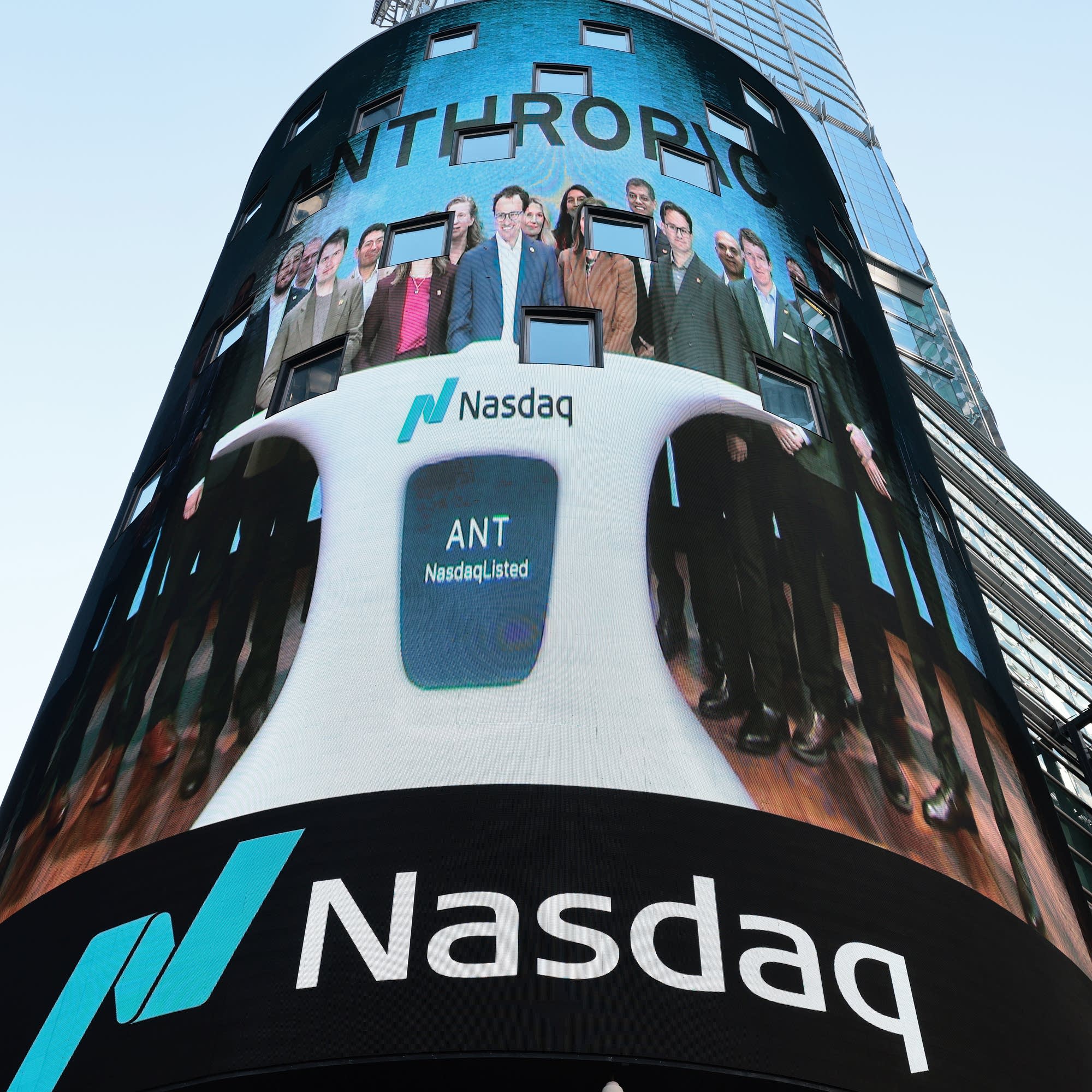
Anthropic, the maker of the Claude chatbot, is now a public company. Plus, inside Nvidia employees, have a lot of questions. And what in the world is going on with all these tech outages? Paresh Dave, senior writer at WIRED, joins Marketplace’s Meghan McCarty Carino to break down another busy week in tech.
The Internet Corporation for Assigned Names and Numbers, known as ICANN, is now sorting through more than 1,000 applications for new top-level domains. You know, like dot-com or dot-org. It's a big deal because controlling an in-demand domain can be a lucrative business. Just ask the tiny island territory of Anguilla, says Pete Millspaugh, who's working on a book about domains More on this You can’t spell Anguilla without AI (http://dotcom.press/archive/anguilla) — from Dot Com Press The Internet Runs on Cats and Porn. It’s About to Get Cattier and Pornier (https://www.wired.com/story/icann-top-level-domains-meow/) — from Wired Taylor Swift Applies for Top Level Domains That End in .Taylorswift (https://futurism.com/artificial-intelligence/taylor-swift-applies-top-level-domain-sites-dot-taylor-swift) — from Futurism And if you’re as interested in domains as we are, you can browse all the new applications submitted (https://newgtldprogram-aps.icann.org/applications). Our personal favori
It's almost impossible to overstate how dominant Nvidia has been amid the AI boom. The company supplied 70-90% of the chips used for the technology, leading to staggering profits that were used to invest in the overall AI economy. All that fueled more growth in the company’s own chip sales. But, in the last year or so, Nvidia's market share has been slipping. And the latest shakeup with its CEO Jensen Huang could see it slip even more, according to Chris Miller, historian at Tufts University and author of “Chip War: The Fight for the World’s Most Critical Technology.” More on this: “What will Nvidia’s post-Huang era look like? (https://www.ft.com/content/0e2720d7-ba0a-4469-a854-30931f907bd3)” from The Financial Times “The chip war never ended (https://www.fastcompany.com/91642012/the-chip-war-never-ended)” from FastCompany “Google Escalates Nvidia Rivalry With Specialized Versions of AI Chips (https://www.bloomberg.com/news/articles/2026-11-09/google-escalates-nvidia-rivalry-with-new-v
Sporting rivals should be able to enjoy competition without hostility between supporters.
Share your view, then see how readers voted. No sign-in required. This poll is shared across stories.
Do you agree or disagree?
Common Quandary
A Common Quandary to discuss
Another conversation to explore, separate from this news story.
You cannot stand your friend's partner. Do they still get a wedding invitation?
You are planning a small wedding and strongly dislike the person your longtime friend has been dating. Inviting them would make you uncomfortable, but excluding only that partner would embarrass your friend.
Whose comfort should govern a celebration centered on you?